

How to Never Worry About Emergency HVAC Repair Again
HVAC
When Your Heating or Cooling Fails: What Every South Shore Homeowner Needs to Know
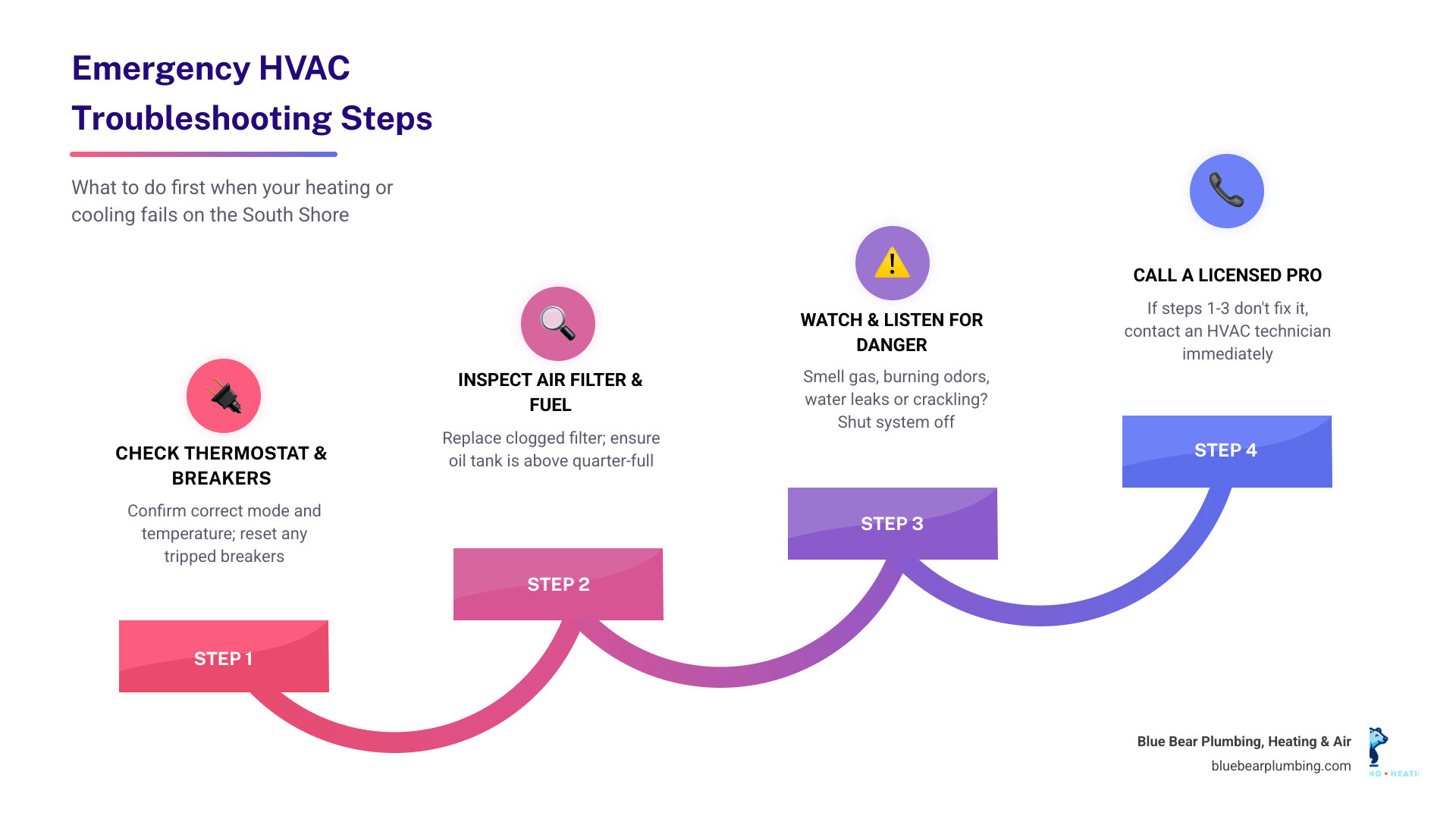
If you’re looking for emergency HVAC repair tips for the South Shore homeowners, here’s what to do first:
- Check your thermostat — confirm it’s set to the correct mode (heat or cool) and the temperature is set properly.
- Inspect your circuit breaker — look for any tripped breakers and reset once if needed.
- Check your air filter — a severely clogged filter can shut your system down completely.
- Check your fuel level (oil heat customers) — make sure your tank is above the quarter-full mark.
- Look and listen for danger signs — if you smell gas, notice burning odors, see water flooding, or hear electrical crackling, shut the system off and call for help immediately.
- Call a licensed HVAC professional — if the above steps don’t resolve the issue, especially during extreme temperatures or with vulnerable people in the home, don’t wait.
The South Shore of Massachusetts doesn’t give you much grace when your HVAC system fails. Winters here can be brutal — temperatures regularly drop below 20°F — and summers bring stretches of heat and humidity that can make a home genuinely unsafe without working air conditioning. When your furnace goes out at midnight in January, or your AC dies during a July heat advisory, it’s not just uncomfortable. It can be dangerous.
The frustrating truth is that most HVAC emergencies don’t come out of nowhere. They build quietly — a strange noise here, a spike in your energy bill there — until the system finally gives out at the worst possible time. And in those moments, most homeowners aren’t sure what to check first, whether the situation is truly urgent, or what to do while they wait for help to arrive.
That’s exactly what this guide is here to fix. You’ll find clear, practical steps to troubleshoot common problems, know when to call immediately, stay safe while you wait, and — most importantly — prevent these situations from happening in the first place.
I’m Marc Provenzano, Marketing Manager at Blue Bear Plumbing, Heating & Air, where I’ve worked closely with our licensed technicians to understand the most common emergency HVAC repair tips for the South Shore homeowners need when their systems fail at the worst possible time. From years of experience supporting South Shore families through heating and cooling crises, I’ll walk you through everything you need to know to protect your home and your comfort year-round.
Glossary for emergency hvac repair tips for the south shore homeowners:
Identifying True Heating and Cooling Emergencies
When your home heating or cooling system stops working, your first instinct might be to panic and call for immediate service. However, it helps to understand what constitutes a true emergency versus a situation that can comfortably wait for regular business hours.
True HVAC emergencies are defined by two main factors: extreme outdoor temperatures and immediate safety risks to your household. If the outdoor temperature is dropping below freezing in the dead of a New England winter, or climbing into the humid nineties during a coastal summer heatwave, a lack of climate control quickly becomes a hazard. This is especially true for households with vulnerable occupants, such as infants, elderly family members, or those with chronic health conditions. To understand the full scope of these critical situations, you can read more All About HVAC Failure Emergencies to help you make the right call.
Winter Heating Failures
A total loss of heat during a South Shore winter is almost always an urgent situation. When outdoor temperatures plunge below freezing, your home can lose its residual heat surprisingly fast. Beyond the obvious threat to your family’s comfort and safety, a freezing home poses a severe risk to your property: frozen pipes.
Water pipes running through unheated basements, crawlspaces, or exterior walls can freeze and burst within hours of a heating system failure, leading to catastrophic water damage and expensive structural repairs. To prevent this, we always emphasize the importance of proactive preparation, which you can review in our Massachusetts HVAC Plumbing Winterization Checklist. If your heating fails during a cold snap, taking immediate action is essential to protect both your family and your plumbing.
Summer Cooling Breakdowns
While winter emergencies often feel more urgent, summer cooling breakdowns can be just as hazardous. High humidity levels on the coast, combined with intense summer heatwaves, can drive indoor temperatures to dangerous levels.
Air conditioning accounts for roughly 6 percent of all electricity produced in the United States, and systems running under strain during peak summer months are far more likely to experience sudden failures. When indoor temperatures climb above 85°F, vulnerable individuals are at high risk for heat exhaustion or heat stroke. Ignoring the warning signs of a struggling cooling system doesn’t just impact your comfort; it can lead to severe operational issues. To understand how neglect impacts your system and your wallet, check out our guide on From Cold Showers to High Bills: The Risks of HVAC Neglect.
Essential Emergency HVAC Repair Tips for the South Shore Homeowners
Before you pick up the phone to call for an emergency dispatch, taking a few minutes to perform basic diagnostics can save you time, stress, and unnecessary service fees. Many perceived system failures are actually caused by simple, easily correctable issues that don’t require a technician.
Understanding how to troubleshoot safely is one of the most valuable emergency hvac repair tips for the south shore homeowners can learn. If you do end up needing a professional visit, knowing what steps to take beforehand will help you prepare. You can learn more about the process by reading about What to Expect During Your Emergency HVAC Service Visit.
Troubleshooting First: Emergency HVAC Repair Tips for the South Shore Homeowners
If your heating or cooling system suddenly shuts down, run through this quick checklist before calling for service:
- Verify Thermostat Settings: It sounds simple, but thermostats are frequently bumped or set incorrectly. Ensure the system is set to “Heat” or “Cool” rather than “Off” or “Fan Only.” Check that the target temperature is set lower than the room temperature for cooling, or higher for heating. If the display is blank, replace the batteries.
- Inspect the Circuit Breaker: Head to your electrical panel and check the breakers labeled for your HVAC equipment (indoor and outdoor units). If a breaker has tripped to the “Off” position, flip it back to “On” once. If it immediately trips again, do not attempt to reset it a second time, as this indicates a serious electrical fault that requires professional attention.
- Check the Air Filter: A heavily clogged, dirty air filter restricts airflow. This restriction can cause a furnace to overheat and shut down via its safety limit switch, or cause an air conditioning coil to freeze up and stop cooling. Replace any dirty filters immediately.
- Check Fuel Levels: If your home relies on heating oil or propane, verify that your storage tank isn’t empty. We recommend ordering fuel before your tank drops below one-quarter full to prevent sediment from entering your fuel lines and clogging your heating system.
For a comprehensive guide to keeping your heating system running smoothly during the coldest months, refer to our South Shore Winter Heating Checklist.
When to Call a Professional Immediately
While troubleshooting is highly encouraged, certain symptoms indicate severe hazards that should never be handled DIY. If you experience any of the following, shut down your system immediately and call for professional emergency service:
- The Smell of Gas: If you smell gas (often compared to rotten eggs) near your heating equipment, evacuate your home immediately. Do not flip any light switches or use your phone inside. Call your gas utility company and emergency services from a safe distance.
- Burning or Electrical Odors: A strong smell of burning plastic, sulfur, or electrical smoke suggests overheated wiring or a failing motor. Shut off the system at the circuit breaker immediately to prevent an electrical fire.
- Active Water Flooding: Heavy water leaking from your indoor unit can quickly ruin ceilings, floors, and drywall. This is often caused by a clogged condensate drain line, a cracked drain pan, or a frozen evaporator coil that is thawing.
- Repeated Breaker Trips: If your system repeatedly shuts down or trips the electrical breaker, there is an electrical malfunction within the compressor, fan motor, or wiring.
If your system is older and experiencing frequent breakdowns, it may be time to evaluate whether a repair is worth it. You can explore this further in our article on The Signs Your HVAC Needs Replacing and Not Just Another Quick Fix.
How to Stay Safe and Comfortable While Waiting for Service
Once you have determined that you need professional help and have scheduled an emergency service call, your main focus should shift to keeping your household safe and comfortable until the technician arrives.
Depending on weather conditions and service demand, response times can vary. While our local team always dispatches technicians as quickly as possible, having a plan to manage the indoor environment in the meantime is crucial.
Managing Extreme Cold or Heat
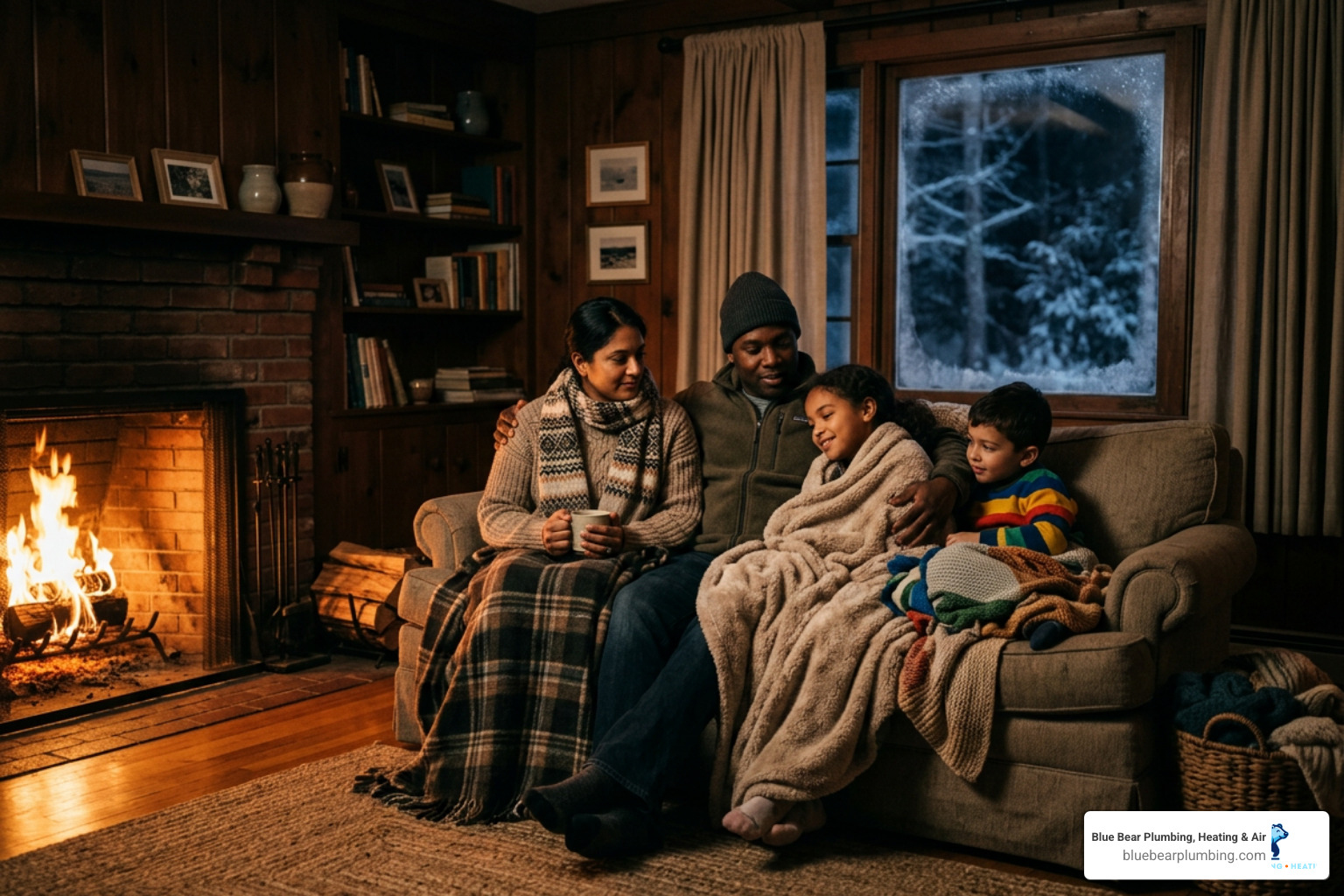
If your heating fails during freezing winter weather, prioritize retaining whatever heat is currently left inside your home:
- Close Off Unused Rooms: Keep doors closed to empty bedrooms, bathrooms, and hallways. Concentrate your family and any pets in a central room to pool body heat.
- Block Drafts: Place rolled towels or draft stoppers at the base of exterior doors and windows. Keep blinds and curtains closed to add an extra layer of insulation.
- Dress in Layers: Wear thermal undergarments, heavy sweaters, hats, and thick socks. Use sleeping bags and heavy blankets to stay warm.
- Utilize Safe Alternative Heat: If you have a functional, professionally swept fireplace or wood stove, you can use it for temporary warmth. Never use outdoor propane heaters, charcoal grills, or gas ovens to heat your home, as they present a deadly carbon monoxide hazard.
If your air conditioning fails during a summer heatwave, focus on keeping your body cool:
- Promote Air Circulation: Use ceiling fans and portable floor fans to create a breeze.
- Block Solar Heat: Close all drapes, blinds, and shades on windows that receive direct sunlight to prevent your home from turning into a greenhouse.
- Stay Hydrated: Drink plenty of cool water and avoid strenuous physical activity.
- Cool Your Body Directly: Take a cool shower, apply damp cloths to your neck and wrists, or use ice packs.
- Relocate if Necessary: If indoor temperatures rise above safe levels, especially for children or elderly family members, consider spending the hottest hours of the day at a local library, shopping center, or a friend’s air-conditioned home.
Preventing Property Damage
While waiting for your technician, take a few quick steps to protect your property from secondary damage:
- Shut Down the System: If your system was making loud grinding noises, smelling of electrical burn, or actively leaking water, ensure it is completely powered down at the thermostat and the circuit breaker.
- Clear the Work Area: Technicians need clear, unobstructed access to your indoor air handler, furnace, boiler, and outdoor condenser unit. Clear away any storage boxes, clutter, snow, or overgrown brush so the technician can begin diagnostics immediately upon arrival.
- Locate Your Main Water Shutoff: If you are dealing with a severe water leak from your HVAC system or suspect that your plumbing pipes are beginning to freeze, make sure you know exactly where your main water shutoff valve is located so you can turn off the water supply if a pipe bursts.
Proactive Maintenance to Avoid Unexpected Breakdowns
The single best way to handle an HVAC emergency is to prevent it from ever happening in the first place. Neglecting your heating and cooling equipment forces it to work harder to achieve the same level of comfort, accelerating wear and tear on critical components.
Well-maintained HVAC systems experience up to 95 percent fewer unexpected breakdowns compared to neglected units. By taking a proactive approach to your home comfort, you not only avoid the stress of sudden system failures but also extend the lifespan of your investment. To understand how the right approach to maintenance can save you money, check out our guide on how to Stop Overpaying for HVAC with the Right Service Model.
Seasonal Tune-Ups: Emergency HVAC Repair Tips for the South Shore Homeowners
We recommend scheduling professional maintenance for your HVAC system at least once a year for each system — ideally in the spring for your air conditioning and in the fall for your heating system.
During a professional tune-up, a technician will thoroughly clean coils, lubricate moving parts, test electrical connections, check refrigerant levels, and inspect heat exchangers for dangerous cracks. This allows us to identify and replace worn components before they fail during peak seasonal demand.
To see exactly what our technicians cover during a standard visit, you can read The Ultimate HVAC Maintenance Visit Checklist. If you are wondering whether it is time to get your system checked, our guide on Don’t Wait for the Smoke: How Often to Service Your HVAC provides excellent insight into proper scheduling.
Recognizing Warning Signs of System Failure
Your HVAC system will almost always drop hints that it is struggling before it shuts down completely. Paying close attention to these warning signs can help you schedule a standard repair visit and avoid an emergency situation:
- Strange Noises: Squealing, grinding, rattling, or loud banging noises are clear indicators of loose components, failing motor bearings, or a damaged blower wheel.
- Weak or Uneven Airflow: If some rooms are freezing while others are boiling, or if you can barely feel air coming out of your registers, you may have ductwork leaks, a failing blower motor, or a severely clogged filter.
- Short-Cycling: If your furnace or air conditioner turns on and off rapidly without ever completing a full heating or cooling cycle, it is undergoing extreme stress and may soon shut down permanently.
If your system is exhibiting these symptoms regularly, you’ll need to decide whether to repair the existing equipment or invest in a new system. To help you weigh your options, take a look at our guide on How to Decide Between HVAC Repair and Replacement Without Losing Your Cool.
Frequently Asked Questions About South Shore HVAC Emergencies
What should I do if I smell gas or burning from my HVAC system?
If you smell gas (a rotten egg odor) or notice a strong electrical burning smell, you must act quickly. For gas leaks, immediately evacuate all occupants from the home, leaving the door open behind you. Do not use landlines, cell phones, light switches, or anything that could create a spark inside. Once you are a safe distance away, call your local gas utility company and 911. For burning odors, turn off the system immediately at the circuit breaker and call a licensed professional to inspect the wiring and motor components.
How quickly do emergency HVAC technicians typically respond on the South Shore?
Response times can vary depending on the time of day, current weather conditions, and overall service call volume. During extreme weather events, such as winter blizzards or severe summer heatwaves, dispatch times may be longer due to high demand. However, a local, dedicated service provider will prioritize true emergencies — especially those involving vulnerable populations like the elderly or infants — and work diligently to get a technician to your home as quickly as possible.
Can a clogged air filter cause my entire HVAC system to shut down?
Yes, absolutely. A heavily soiled air filter restricts the vital airflow your system needs to operate. In the winter, this lack of airflow causes the heat exchanger to overheat, prompting the system’s safety limit switch to shut down the furnace to prevent a fire. In the summer, restricted airflow causes the temperature of the evaporator coil to drop below freezing, leading to ice buildup that completely blocks cooling and can damage the compressor. Changing your filters every 30 to 90 days is one of the simplest ways to prevent these sudden shutdowns.
Conclusion
Dealing with a sudden heating or cooling failure can be incredibly stressful, but being prepared makes all the difference. By understanding how to perform basic troubleshooting, recognizing the clear warning signs of system trouble, and knowing when to call in the professionals, you can navigate any New England weather event with confidence.
At Blue Bear Plumbing, Heating & Air, we are proud to serve our neighbors throughout South Boston and the South Shore, including communities like Norwell, Quincy, Braintree, and Weymouth. Our friendly, local team is committed to high-quality workmanship, attentive customer care, and absolute integrity. Whether you need an urgent repair or want to schedule preventative maintenance to keep your home comfortable year-round, we provide upfront pricing and reliable solutions you can trust.
If you are experiencing issues with your heating or cooling system, or want to prevent future emergencies with a professional tune-up, contact us today at Blue Bear Plumbing, Heating & Air to schedule your service.
Contact Us Today
Routine maintenance is vital for the longevity of your plumbing, heating, and air conditioning systems. Sign up for our Blue Care Maintenance Plan for annual service and exclusive membership benefits, including:
- Priority scheduling
- Waived service fee during normal business hours
- 10% discount on service calls
- 3% discount on new installations
- Two-year parts and labor warranty on new equipment