




How We Fix Sweating Toilets in Un-Air-Conditioned Bathrooms
general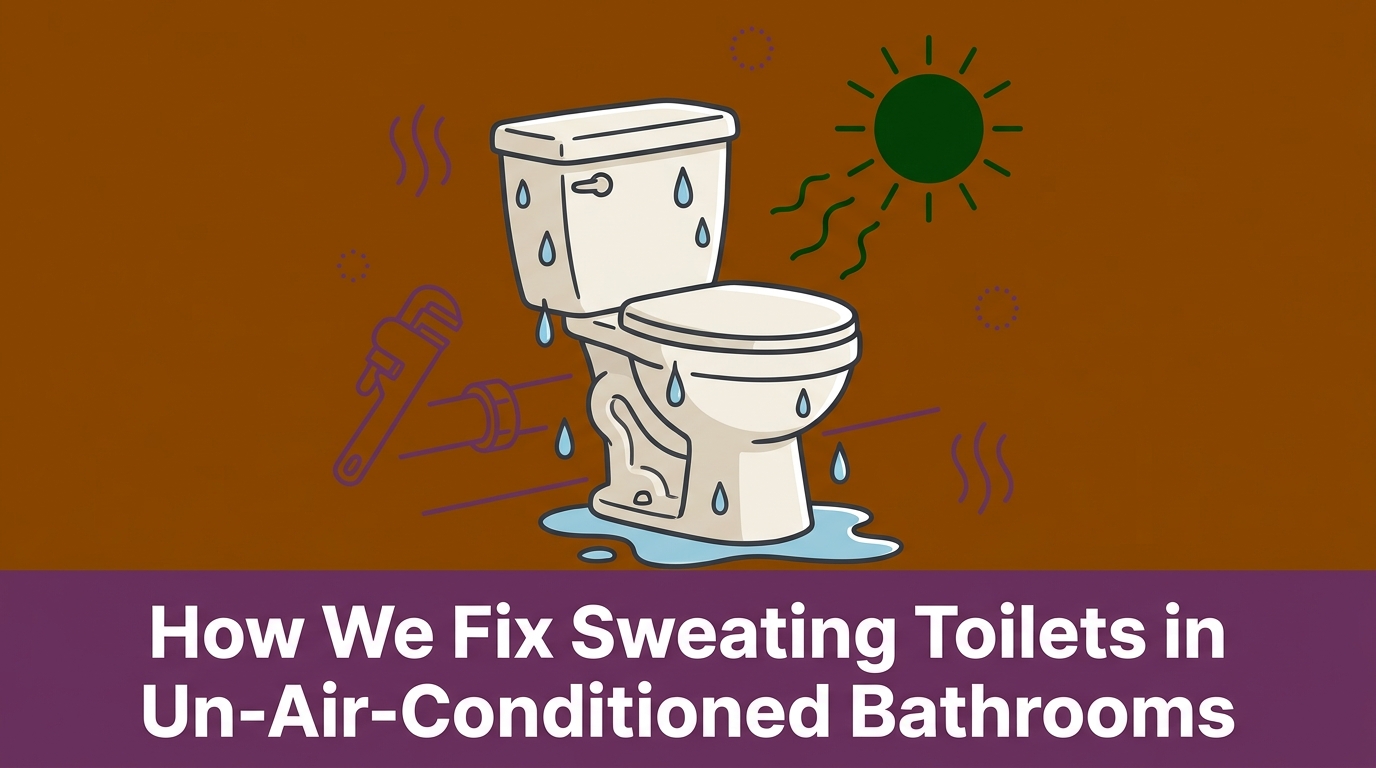
The Shocking Summer Puddle: Is It a Leak or Just Humidity?
Peak July humidity in Massachusetts is notorious for making everything feel sticky, but finding a puddle of water around the base of your commode adds panic to the discomfort. If you are wondering how we fix sweating toilets in un-air-conditioned bathrooms, you are not alone. In our years of serving Massachusetts homeowners, we’ve seen that it is a common seasonal phenomenon that sends many rushing for a wrench, assuming the worst. When you step into a puddle in an un-air-conditioned bathroom, the immediate fear is usually a mechanical failure. Most people assume they have a cracked porcelain tank, a deteriorating wax ring, or a failing supply line connection.
However, during the peak of summer heatwaves, our plumbers typically find that the real culprit is entirely different: heavy condensation forming on the outside of the tank. This is a thermodynamic reality, not a plumbing failure. The moisture from the heavy, humid air is literally being pulled out of the atmosphere and deposited onto the cold surface of your toilet tank. From there, it drips steadily onto your flooring.
Many homeowners try to manage this by constantly wiping the floor with towels or placing rags around the base of the toilet. In our experience, this is not a sustainable strategy. It requires constant vigilance, ruins your towels, and fails to address the actual problem. To truly resolve this issue, you need a professional, permanent approach. For comprehensive solutions, explore our Plumbing and HVAC Services to see how our team protects your home from seasonal extremes.
The Thermodynamics of a Sweating Toilet Tank
To understand why your toilet is dripping, our technicians always explain that we have to step away from plumbing mechanics and look at basic physics. The phenomenon of a sweating toilet tank is entirely driven by the dew point and the temperature differential in your bathroom.
Understanding the dew point: The dew point is the temperature at which air becomes completely saturated with water vapor. When the air cannot hold any more moisture, that water vapor condenses into liquid water. In a hot, un-air-conditioned bathroom, the air is holding a massive amount of moisture from summer humidity, hot showers, and a lack of ventilation. This pushes the indoor dew point significantly higher than in the rest of your home.
The physics problem triggers when cold well water temperatures meeting 80+ degree ambient bathroom air create a massive temperature clash. When you flush the toilet, the tank refills with frigid water from the municipal supply or your private well. This rapidly drops the surface temperature of the porcelain tank well below the ambient dew point of the room. The moisture in the hot bathroom air instantly condenses on the cold porcelain, forming heavy water droplets that eventually cascade down to the floor.
Recently, one local homeowner reached out with an unspecified plumbing problem, convinced their toilet tank had cracked overnight. Our technician Josh fixed the customer’s problem by installing a mechanical solution and explained everything regarding the underlying thermodynamics. At Blue Bear Plumbing Heating & Air, we believe in educating homeowners on the root cause, so you know exactly what is happening in your home. Contrast this natural physical reaction with an actual plumbing leak using the checklist our team uses below.
| Symptom | Likely Condensation (Sweat) | Likely Plumbing Leak |
|---|---|---|
| Location of Water | Droplets forming evenly across the entire upper tank and dripping down. | Water pooling specifically under the supply valve or seeping from the base. |
| Timing | Worsens immediately after multiple flushes or taking a hot shower. | Constant dripping or pooling regardless of recent plumbing usage or room temperature. |
| Water Temperature | The water on the outside of the tank is room temperature or slightly cool. | The water leaking from a supply line is distinctly cold to the touch. |
| Visual Check | Adding food coloring to the tank does NOT change the color of the puddle. | Adding food coloring to the tank results in colored water on the floor. |
Why Massachusetts Summers Create the Perfect Storm for Condensation
The severity of toilet condensation is highly regional. We see firsthand how Massachusetts summers create the perfect storm for this specific issue due to a unique clash between our local water infrastructure and our seasonal weather patterns. If you live in this region, the physics are stacked against your un-air-conditioned bathrooms.
First, as our service teams see every day, we have to look at the water entering your home. Massachusetts groundwater and well water temperatures remain incredibly cold year-round. Even in the dead of summer, the water traveling through underground municipal pipes or drawn from deep private wells typically averages between 47 and 54 degrees Fahrenheit. This water is frigid by the time it reaches your bathroom plumbing.
Second, we must factor in the July climate. Our HVAC technicians know that Massachusetts humidity is notorious for pushing indoor dew points into the upper 60s or low 70s. When you have an un-air-conditioned bathroom, you lack the crucial dehumidification benefits that a central HVAC system provides. Air conditioners naturally strip moisture from the air as they cool it. Without that mechanical dehumidification, the moisture from humid summer days and hot showers simply sits in the enclosed bathroom space.
The resulting clash:
- A porcelain tank chilled to roughly 50 degrees by incoming groundwater.
- Ambient bathroom air sitting at 80+ degrees with high relative humidity.
- A dew point hovering around 70 degrees.
Because the tank temperature (50 degrees) is drastically lower than the dew point (70 degrees), severe condensation is almost inevitable. The air simply cannot hold its moisture when it comes into contact with the cold porcelain. Without mechanical intervention to change the temperature dynamics, this specific regional clash will continue to produce puddles on your floor every summer.
The Hidden Dangers of Ignoring Toilet Condensation
It is easy to dismiss a sweating toilet as a minor seasonal nuisance. You might think that as long as you toss a towel on the floor during July heatwaves, you are managing the problem. However, when our crew repairs bathroom subfloors during summer service calls, a pattern we see often is severe, hidden structural damage caused by this exact issue.
Subfloor degradation and rot: Persistent moisture pooling around the base of the toilet does not just sit on the surface. Water is insidious; it finds its way into the smallest cracks and crevices. Over time, this condensation seeps under linoleum flooring or penetrates the grout lines of tile. Once water gets trapped between the finished flooring and the wooden subfloor underneath, the wood begins to absorb the moisture. This leads to hidden rot, softening the plywood or oriented strand board (OSB) that supports the weight of the toilet.
Structural failure at the flange: The toilet flange is the connection point that secures your toilet to the floor and the drainage pipe. It relies on a solid, dry subfloor to hold the bolts tight. If the subfloor rots from chronic condensation, the flange loses its anchor. The toilet will eventually start to rock back and forth when you sit on it. This rocking breaks the wax ring seal underneath, turning a condensation problem into a genuine, raw sewage leak.
Mold and mildew proliferation: Un-air-conditioned bathrooms are already humid environments. When you add a constant source of standing water behind and around the toilet base, you create the perfect breeding ground for mold and mildew. This fungal growth thrives in enclosed, damp, dark spaces. It can spread up the drywall behind the tank, under the baseboards, and into the flooring, significantly degrading your indoor air quality and requiring extensive professional remediation.
How an Anti-Sweat Valve Permanently Solves the Root Cause
Because a sweating toilet is a thermodynamic problem, the only true solution is to change the thermodynamics. At Blue Bear Plumbing Heating & Air, we approach plumbing as technical experts who solve root-cause physics problems with permanent mechanical solutions, rather than temporary fixes. Based on our extensive field experience, the definitive answer to severe summer condensation is the installation of an anti-sweat valve.
An anti-sweat valve (also known as a mixing valve) is a small, specialized mechanical device installed on the water supply lines leading to your toilet. Instead of just catching the condensation after it forms, this valve stops the condensation from ever forming in the first place by altering the temperature of the water inside the tank.
How the mechanical solution works:
- Dual connection: The anti-sweat valve is piped into both your cold water supply line and your hot water supply line.
- Controlled mixing: When the toilet is flushed and calls for water, the valve introduces a small, regulated amount of hot water into the cold water stream before it enters the toilet tank.
- Temperature elevation: This strategic mixing raises the overall temperature of the water filling the tank from a frigid 50 degrees to a temperate level that sits just above the room’s dew point.
- Condensation prevention: Because the surface of the porcelain tank is no longer colder than the dew point of the humid bathroom air, the moisture in the air remains as a vapor. The physics of condensation are neutralized, and the tank remains completely dry on the outside.
The Problem with Temporary Fixes
Many hardware stores sell DIY band-aids for sweating toilets, but we strongly recommend against them because they rarely provide long-term relief.
- Foam insulation panels: These kits require you to glue foam panels to the inside of the toilet tank to create a thermal barrier. However, submerged adhesive eventually degrades. The panels peel away, float around the tank, and frequently jam the flapper or fill valve, causing the toilet to run constantly.
- Drip pans: Plastic trays installed under the toilet base only catch the water; they do not stop the humid environment from causing secondary issues. The standing water in the pan becomes stagnant, harbors bacteria, and will eventually overflow if not manually emptied.
- Fuzzy tank covers: Fabric covers absorb the condensation, essentially turning into wet sponges wrapping your toilet. They stay damp, grow mildew, and start to smell musty very quickly.


Why Anti-Sweat Valve Installation Requires a Licensed Plumber
While understanding the physics of an anti-sweat valve is straightforward, our master plumbers will tell you that installing one is a complex process that demands professional expertise. This is not a weekend DIY project for the average homeowner. Upgrading to an anti-sweat valve requires tapping directly into the bathroom’s hot water supply line, which is often hidden behind drywall or located beneath the flooring.
The complexity of the installation: Our licensed plumbers handle the complex work of locating the nearest hot water line, modifying the existing copper or PEX piping, and installing new fittings to branch the hot water over to the toilet’s supply area. This requires precise pipe cutting, soldering or professional crimping, and a thorough understanding of water pressure dynamics. If the connections are not flawlessly sealed, you risk creating a high-pressure leak inside your walls.
The danger of incorrect mixing ratios: The most critical part of our installation process is calibrating the valve itself. The mixing ratio must be exact. If a valve allows too much hot water into the line, you risk sending scalding water into the toilet tank. This thermal shock can instantly crack the porcelain tank, leading to a catastrophic flood. Furthermore, excessively hot water will melt the wax ring sealing the toilet to the floor, causing raw sewage leaks. Professional installation protects your home’s plumbing integrity, prevents thermal shock, and ensures strict compliance with local Massachusetts plumbing codes.
Summer brings out many unique quirks in residential plumbing systems. The way your home handles water distribution changes drastically when the weather warms up and usage patterns shift. Speaking of seasonal plumbing quirks, you might also be wondering why summer sprinkler usage drops your indoor shower pressure.
Frequently Asked Questions About Toilet Condensation
Does a sweating toilet mean it is leaking?
No, our team usually finds that a sweating toilet is caused by condensation, not a mechanical leak. When cold water fills the tank, it cools the porcelain, causing moisture from the humid bathroom air to condense into water droplets on the outside of the tank. If the water is forming evenly across the upper tank and dripping down, it is sweat; if it is pooling specifically under a valve, it may be a leak.
How does an anti-sweat valve stop toilet condensation?
An anti-sweat valve stops condensation by raising the temperature of the water inside the toilet tank. It connects to both the hot and cold water supply lines, mixing a small amount of hot water into the cold stream before it enters the tank. This keeps the porcelain warmer than the room’s dew point, making it physically impossible for condensation to form.
Why is my toilet tank sweating so much in the summer?
Toilet tanks sweat heavily in the summer because of the extreme temperature difference between cold incoming water and hot, humid ambient air. Un-air-conditioned bathrooms lack dehumidification, meaning the air is saturated with moisture. When that moisture hits the cold porcelain, it instantly turns into heavy liquid condensation.
Can I just use a drip pan or tank cover instead of a valve?
While drip pans and fabric tank covers can temporarily manage the mess, we advise against them because they do not solve the root cause. Drip pans simply collect stagnant water that can overflow or harbor bacteria, while fabric covers act like sponges that stay damp and quickly grow mildew. An anti-sweat valve is the only permanent mechanical fix.
Will an anti-sweat valve make my toilet water hot?
No, a properly installed anti-sweat valve will not make the toilet water hot. A licensed plumber calibrates the valve to introduce only enough hot water to bring the tank temperature slightly above the room’s dew point—usually bringing the water to room temperature. This precise mixing prevents scalding water from cracking the porcelain tank or melting the wax ring.
Stop the Summer Puddles with a Permanent Solution
A sweating toilet is a solvable physics problem, not something you have to live with every time the humidity spikes. Ignoring the condensation puts your bathroom subfloors at risk for hidden rot and structural damage. Stop wasting your clean towels and worrying about the integrity of your flooring. Reach out and contact our plumbing team for a professional anti-sweat valve installation that permanently resolves the root cause.
Contact Us Today

Routine maintenance is vital for the longevity of your plumbing, heating, and air conditioning systems. Sign up for our Blue Care Maintenance Plan for annual service and exclusive membership benefits, including:
- Priority scheduling
- Waived service fee during normal business hours
- 10% discount on service calls
- 3% discount on new installations
- Two-year parts and labor warranty on new equipment