



What to Expect During Your Emergency HVAC Service Visit
HVAC
What to Expect During an Emergency HVAC Repair Visit
Emergency HVAC repair what to expect is something every homeowner should understand before a crisis hits — not in the middle of one. When your heating or cooling system fails at the worst possible moment, knowing what comes next can make a genuinely stressful situation feel a lot more manageable.
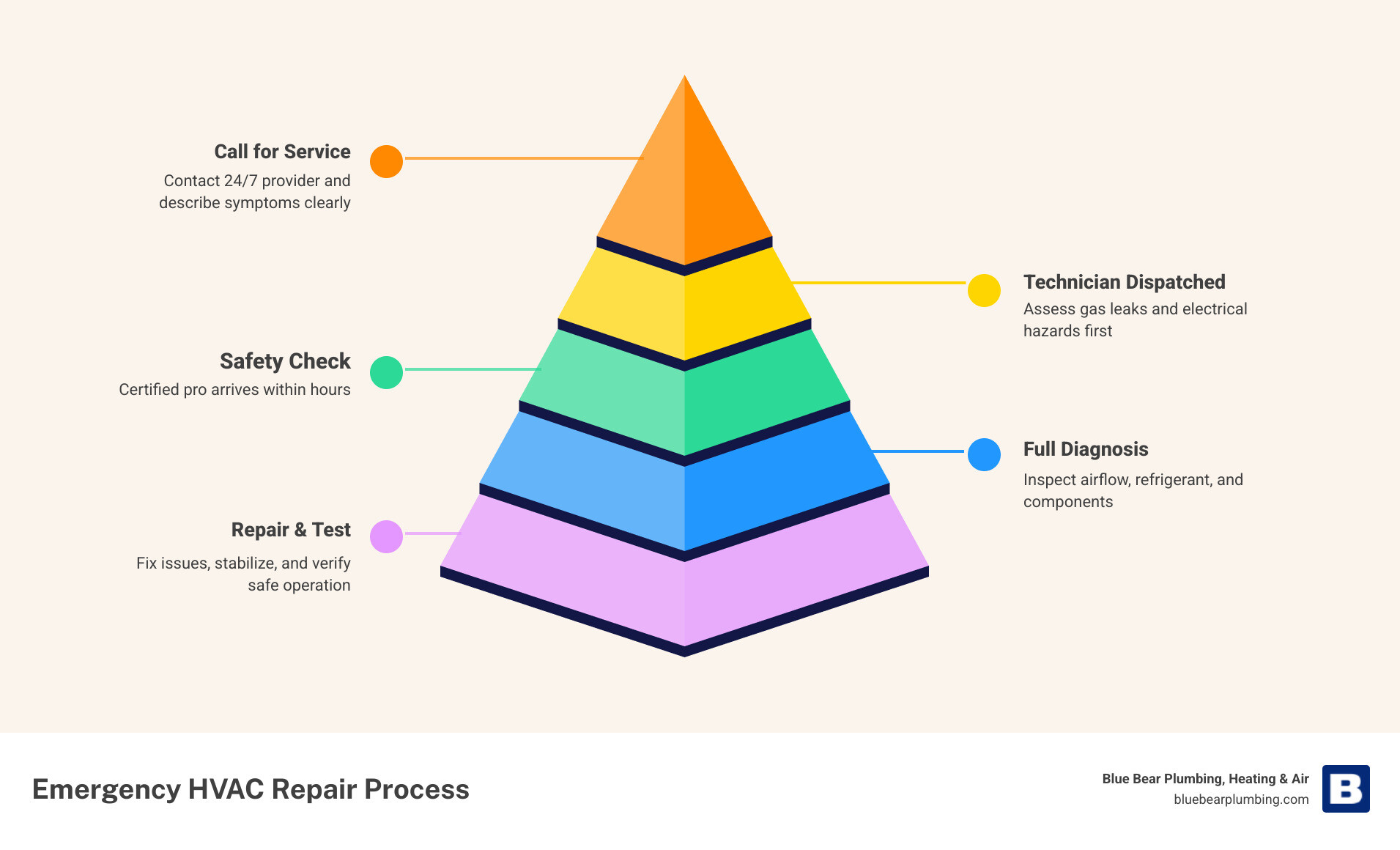
Here is a quick overview of what the emergency HVAC repair process typically looks like:
- Call for service – Contact a 24/7 HVAC provider and describe your symptoms clearly
- Technician dispatched – A certified technician is sent to your home, often within hours
- Initial safety check – The technician assesses for gas leaks, electrical hazards, and other immediate risks
- Full diagnosis – Airflow, electrical components, refrigerant levels, and thermostat function are all inspected
- Repair plan presented – You receive a clear explanation of what failed and what needs to happen next
- Repair completed or system stabilized – Most issues are resolved the same day; complex repairs may require a follow-up
- System tested – The technician verifies everything is running safely before leaving
The urgency is real. Over 60% of HVAC emergencies happen during peak seasons — exactly when systems are working hardest and technicians are in the highest demand. And while that statistic might sound alarming, the good news is that roughly 40% of those calls turn out to stem from something as simple as a thermostat malfunction or a tripped breaker. Knowing what to check — and what to leave to the professionals — can save you time, stress, and potentially serious damage to your home.
I’m Marc Provenzano, Marketing Manager at Blue Bear Plumbing, Heating & Air, and I’ve spent years working alongside our team of licensed technicians to understand exactly what homeowners go through when an HVAC emergency strikes — so when it comes to emergency HVAC repair what to expect, I know what separates a smooth service experience from a frustrating one. I’ll walk you through every stage of the process so you feel confident and informed from the moment you pick up the phone.
Identifying a True HVAC Emergency in Massachusetts
Living on the South Shore or in the Greater Boston area, we experience some of the most dramatic seasonal shifts in the country. From bitter Nor’easters in January to those sticky, humid August afternoons, our HVAC systems are the only thing standing between us and the elements. But how do you know if that weird rattle is a “call Monday morning” problem or a “call right now” crisis?
A true emergency is defined by risks to your health, your safety, or the structural integrity of your property. In our region, if indoor temperatures are expected to drop below 50°F in the winter or rise above 95°F in the summer, it’s an emergency—especially if you have infants, elderly family members, or pets in the home.
Safety hazards are the most critical indicators. If you smell “rotten eggs” or sulfur near your furnace, this is a likely gas leak. Natural gas is odorless, but utilities add mercaptan to give it that distinct scent for your protection. Similarly, a carbon monoxide (CO) detector sounding is a non-negotiable emergency. This colorless, odorless gas can be produced by a cracked heat exchanger in your furnace. For more specific guidance on handling these winter crises, check out our Norwell Emergency Furnace Repair Survival Guide or our advice for those in Natick with a boiler emergency.
Emergency HVAC Repair: What to Expect During a System Failure
When your system fails during a peak season, it’s rarely a quiet event. You might notice electrical sparks, a pungent burning odor (which often indicates a failing blower motor or electrical short), or a complete, sudden shutdown. About 70% of homeowners experience some form of breakdown during these high-demand periods because the equipment is under maximum stress.
If you see smoke or smell burning plastic, the first thing you should do is shut the system off at the circuit breaker. This prevents a mechanical failure from turning into a house fire. For those using older heating systems common in towns like Norwell, understanding the nuances of your equipment is key. We’ve put together a Norwell Emergency Boiler Repair Survival Guide to help you navigate these specific failures.
Common Signs Requiring Emergency HVAC Repair: What to Expect
Beyond a total shutdown, there are several “red flags” that indicate your system is in distress:
- Loud, Unusual Noises: Screeching often points to a failing blower motor belt, while heavy banging or grinding suggests a loose or broken component inside the compressor.
- Frozen Coils: If you see ice on your outdoor AC unit or indoor evaporator coils—even in the middle of a July heatwave—your system is suffering from restricted airflow or a refrigerant leak.
- Refrigerant Leaks: Hissing or whistling sounds, combined with warm air coming from the vents, are classic signs. Refrigerant leaks don’t just stop your cooling; they can destroy the compressor if left unaddressed.
- No Airflow: If the system is humming but nothing is coming out of the registers, your blower motor may have seized.
For residents in Quincy dealing with modern systems, our guide on Emergency Heat Pump Repair Services in Quincy MA covers these symptoms in detail.
Troubleshooting Steps for Emergency HVAC Repair: What to Expect
Before you call for emergency service, take ten minutes to run through these basic checks. You’d be surprised how many “emergencies” are actually just a bumped switch!
- Check the Thermostat: Ensure it has fresh batteries and is set to the correct mode (Heat or Cool). Sometimes a blank screen just means it needs two AAs.
- Inspect the Circuit Breaker: Check your electrical panel for a tripped breaker. Flip it back once. If it trips again immediately, stop and call us—that indicates a dangerous electrical short.
- Look at the Air Filter: A clogged, filthy filter is the leading cause of system overheating and frozen coils. If it’s discolored or thick with dust, replace it.
- Verify Power Switches: Many Massachusetts homes have a “service switch” near the furnace or air handler that looks exactly like a light switch. It’s easy to accidentally flip this off while reaching for something in a closet.
If you’ve checked these and you’re still without climate control, it’s time to find out what to do if the heat goes out and call in the pros.
The Step-by-Step Process of an Emergency Service Call
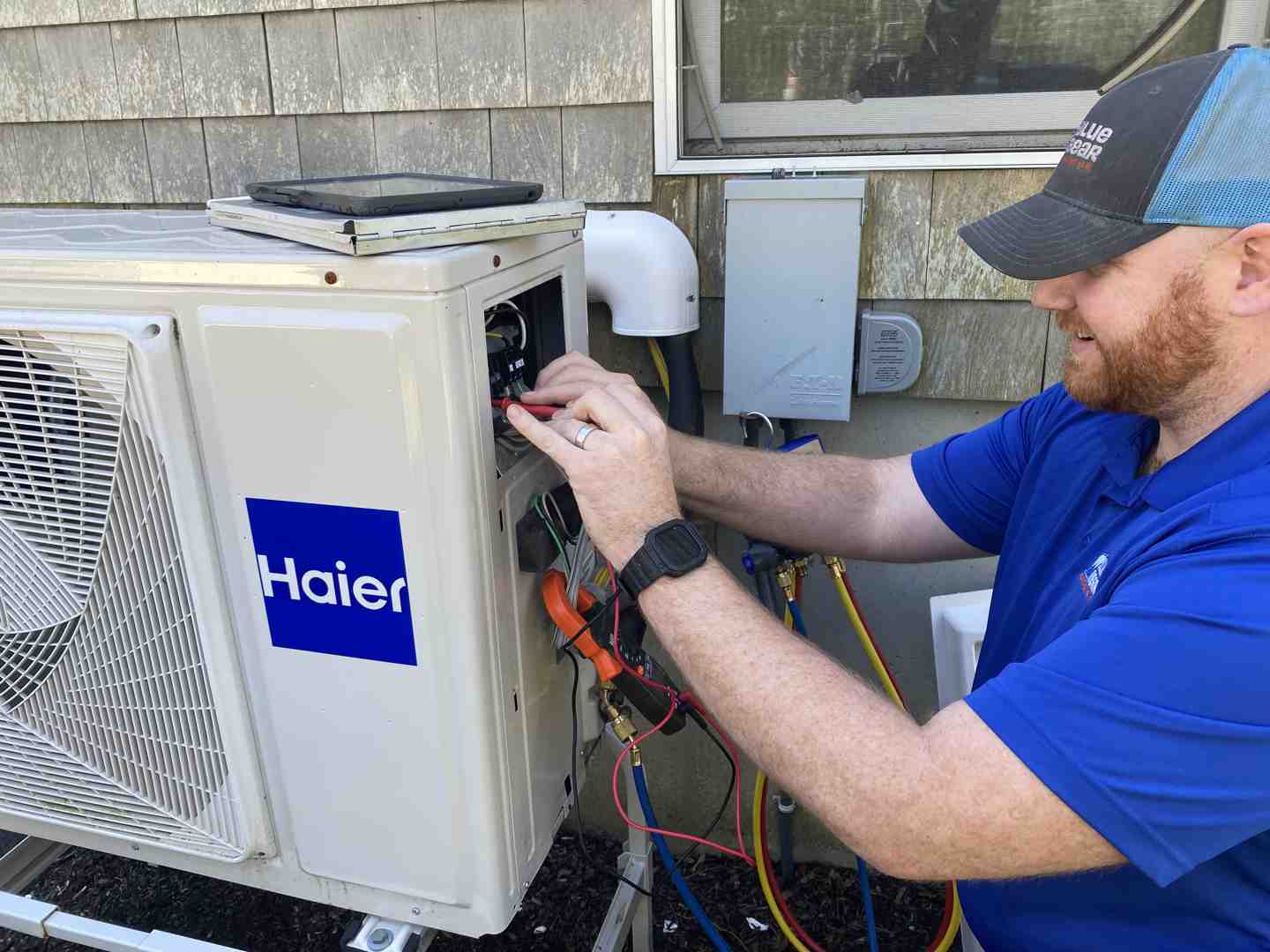
When you contact us for an emergency, we move your request to the front of the line. Here is what that process looks like on our end:
- Dispatcher Assessment: Our dispatcher will ask about your symptoms and if anyone in the home is at risk due to the temperature. This helps us prioritize the most critical safety hazards.
- Technician Arrival: Our technician will arrive in a fully stocked service vehicle. Most emergency repairs are completed within 1 to 3 hours of arrival because we carry common parts like capacitors, ignitors, and fan motors.
- System Diagnosis: Using multimeters and pressure gauges, the tech will perform a “triage.” We don’t just look at the part that broke; we look for the “cascading failure”—the small issue that stressed the larger part.
- Stabilization vs. Permanent Repair: If a specialized part needs to be ordered, our priority is making your home safe. This might involve providing temporary heating solutions or “patching” the system to get you through the night.
- Final Testing: We never just swap a part and leave. We verify airflow, check safety controls, and ensure the thermostat is communicating correctly.
How to Prepare Your Home for a Rapid Repair Visit
When every minute counts, you can help our technicians work faster by preparing your home before we arrive. This is especially important during frozen nights in Natick when temperatures are dropping fast.
- Clear the Path: Ensure there is a 2-foot clearance around your outdoor unit. Clear away snow, overgrown bushes, or storage boxes. Inside, make sure the area around the furnace or air handler is accessible.
- Secure Your Pets: We love your furry friends, but for their safety and ours, please keep them in a separate room while we are working with electrical components and tools.
- Document Everything: Note exactly when the problem started. Did you hear a loud pop? Was there a strange smell? Having this “medical history” for your HVAC system helps us diagnose the issue much faster.
- Gather Information: If you have previous service records or warranty information handy, it can save time if we need to determine if a part is covered.
Preventing Future System Failures with Proactive Care
The best emergency is the one that never happens. Homeowners who invest in regular maintenance are 50% less likely to experience a total system breakdown. In fact, members of maintenance programs often see 73% fewer emergency calls than those who skip service entirely.
A well-maintained system can last 15 to 20 years, whereas a neglected one may fail in as little as 8 to 10 years. Beyond longevity, a clean system operates 15-20% more efficiently, which shows up directly on your monthly utility bills. When deciding whether to repair or replace your HVAC in Massachusetts, the history of its maintenance is often the deciding factor.
Maintenance Comparison: Why Proactive Care Matters
| Feature | Well-Maintained System | Neglected System |
|---|---|---|
| Lifespan | 15–20 Years | 8–10 Years |
| Breakdown Risk | 50% Lower | High (especially in peak season) |
| Efficiency | 15–20% Higher | Decreases annually |
| Air Quality | High (clean filters/coils) | Lower (dust/allergen buildup) |
| Safety | Safety controls tested annually | Higher risk of CO or electrical issues |
Frequently Asked Questions about Emergency HVAC Services
What qualifies as a true HVAC emergency?
An emergency is any situation that threatens your safety, your health, or your property. This includes gas leaks, electrical sparking, total system failure during extreme weather (below 32°F or above 90°F), and major water leaks from condensate lines that could cause structural damage.
How long does an emergency repair usually take?
Most emergency repairs are resolved within 1 to 3 hours once the technician is on-site. Simple fixes like replacing a capacitor or a blower belt are quick. If a specialized part isn’t on the truck, we will focus on stabilizing the home and providing a temporary solution until the part arrives.
What should I do if I smell gas near my furnace?
Stop what you are doing and leave the house immediately. Do not flip any light switches, use a phone inside, or start your car in the garage, as a tiny spark could ignite the gas. Once you are a safe distance away, call 911 and your gas utility company. Only after the area is cleared should you call for professional HVAC repair.
Conclusion
At Blue Bear Plumbing, Heating & Air, we understand that an HVAC failure is more than an inconvenience—it’s a disruption to your family’s safety and comfort. Whether you’re dealing with a frozen heat pump in Natick or a furnace failure in Quincy, our 24/7 team is ready to provide the local expertise and reliable solutions you need.
Don’t wait in the cold or suffer through the Massachusetts humidity. If your system is showing red flags, contact us for emergency support today. We’re here to get your home back to the comfort level you deserve with upfront pricing and workmanship you can trust.
Contact Us Today

Routine maintenance is vital for the longevity of your plumbing, heating, and air conditioning systems. Sign up for our Blue Care Maintenance Plan for annual service and exclusive membership benefits, including:
- Priority scheduling
- Waived service fee during normal business hours
- 10% discount on service calls
- 3% discount on new installations
- Two-year parts and labor warranty on new equipment