




Why Summer Sprinkler Usage Drops Your Indoor Shower Pressure
general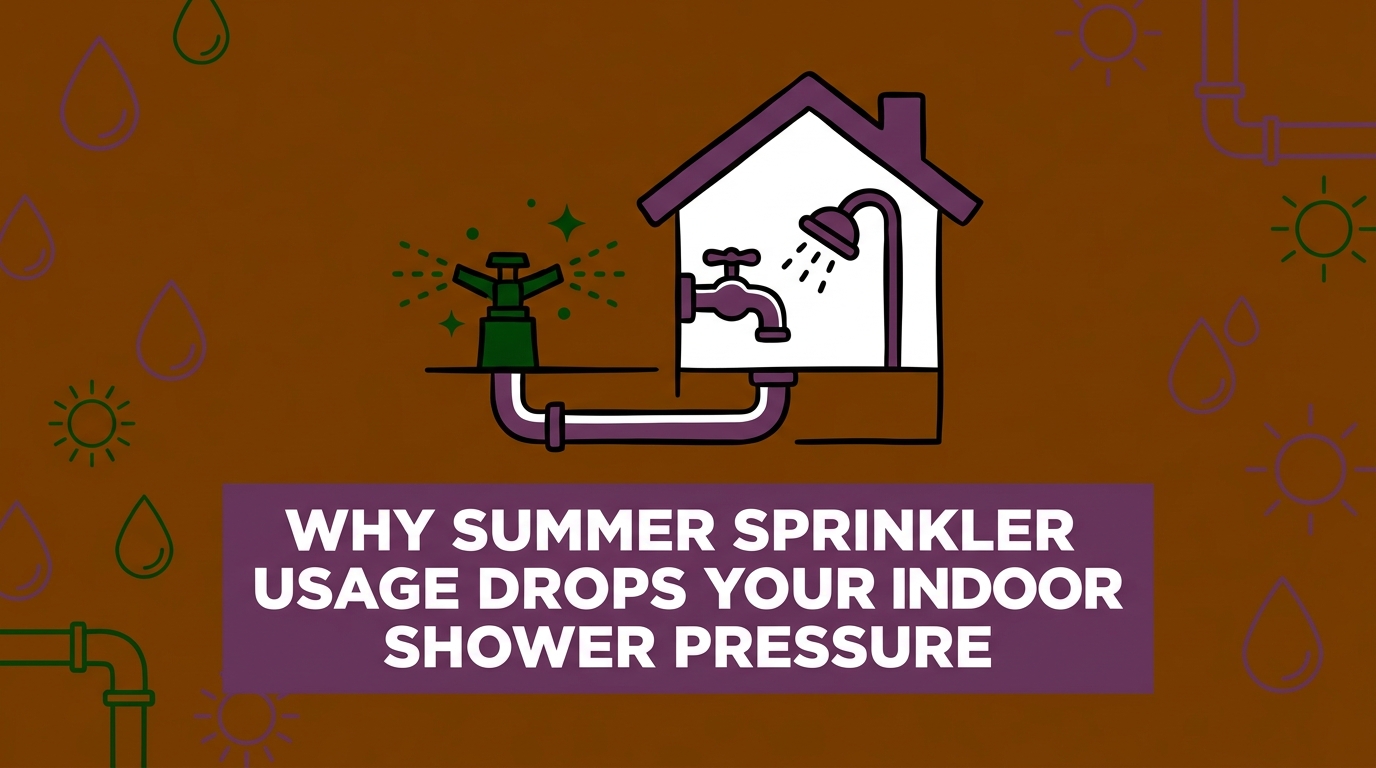
The Shock of a Low-Pressure Summer Morning Shower
July peak summer irrigation schedules are in full effect across Massachusetts, which means your lawn is finally getting the hydration it needs to survive the intense heat. But this seasonal routine often comes with a frustrating morning surprise. You step under the showerhead to start your day, turn the handle, and instead of a robust spray, you are greeted with a weak, sputtering trickle. If you have ever wondered why summer sprinkler usage drops your indoor shower pressure, you are experiencing a common mechanical conflict that happens in thousands of homes every morning.
The timing of this pressure drop is no coincidence. It aligns perfectly with the activation of your automated lawn irrigation system. The core mechanical reality of residential plumbing is that your indoor fixtures and your outdoor sprinkler zones pull from the exact same municipal water supply line. When the sprinklers click on, they demand a massive amount of water all at once.
While a slight, momentary fluctuation in water pressure is completely normal when a heavy-use appliance turns on, severe and sustained drops indicate a system imbalance. This sudden loss of flow leaves homeowners facing a critical decision point: understanding whether this indoor pressure drop is just an unfixable reality of having a shared main water line, or a symptom that the home requires a professional adjustment to balance the flow. Fortunately, you do not have to suffer through weak showers until autumn. By scheduling professional plumbing services, you can often correct this imbalance and restore harmony to your home’s water supply.
The Physics of Your Home’s Shared Main Water Line
To understand why your shower suddenly loses its power, you have to look at the physical limitations of your home’s plumbing infrastructure. Every drop of water you use—whether it is washing dishes, flushing a toilet, or watering the front lawn—enters your property through a single municipal main water line.
The Limits of Pipe Diameter: Standard residential water mains are typically constructed from copper, PEX, or older galvanized steel, and usually measure between 3/4 of an inch to 1 inch in diameter. This specific size creates a hard maximum flow rate capacity. A pipe of this diameter can only physically push a certain amount of water through it at any given moment, regardless of how many fixtures you open inside the house.
Understanding Gallons Per Minute (GPM): Plumbers measure water volume in Gallons Per Minute (GPM). If your municipal water meter and main line can supply a maximum of 15 GPM to your property, that is your absolute ceiling. Every fixture you turn on subtracts from that total available volume.
The Physical Split and the Path of Least Resistance
Just past your water meter, the main line typically splits. One branch feeds the outdoor irrigation manifold, while the other continues into the house to serve your indoor plumbing network. When multiple high-demand fixtures open simultaneously, water will always follow the path of least resistance.
Because irrigation valves are large and located closer to the municipal source, they offer very little resistance. When they open, the water rushes out to the lawn, leaving the indoor branch of your plumbing system starved for volume. The water simply cannot split itself equally when the outdoor demand is so aggressive, resulting in the sudden drop you feel in your second-floor shower.
How Multi-Zone Sprinkler Systems Consume Available Flow
The sheer volume of water demanded by outdoor irrigation is staggering when compared to the fixtures you use inside your home. Many homeowners underestimate just how thirsty a lawn can be, but the math behind the flow rate paints a very clear picture of why your indoor plumbing struggles to keep up during a watering cycle.
The Scale of Outdoor Demand: A standard, modern indoor showerhead is federally regulated to use no more than 2.5 GPM. A high-efficiency kitchen faucet uses even less, often around 1.5 GPM. In stark contrast, a single multi-zone irrigation system can easily demand 12 to 15 GPM the moment its valves snap open. During peak summer months, outdoor water use can account for up to 60% of a household’s total water consumption.
| Plumbing Fixture / Appliance | Average Flow Rate Demand (GPM) | Impact on Main Line Capacity |
|---|---|---|
| Standard Showerhead | 2.0 – 2.5 GPM | Low |
| Kitchen Faucet | 1.5 – 2.2 GPM | Low |
| Washing Machine (Filling) | 3.0 – 5.0 GPM | Moderate |
| Multi-Zone Lawn Sprinklers | 12.0 – 15.0+ GPM | Severe / Maximum |
When your automated timer hits 6:00 AM, the sudden opening of those irrigation valves creates a massive, immediate draw on the main line. If your home’s main line only supplies 15 GPM, and the sprinklers instantly demand 14 GPM, you are left with a single gallon per minute to run your shower, flush toilets, and wash hands. The math simply does not allow for a comfortable shower under those conditions.
The Difference Between Pressure and Volume
It is crucial to distinguish between water pressure (measured in PSI) and water volume (measured in GPM). Pressure is the force pushing the water, while volume is the actual amount of water available. Sprinklers heavily deplete the available volume. When the volume is exhausted by the lawn, the pressure behind your showerhead drops drastically because there is simply not enough water left in the pipes to maintain a forceful spray.


Understanding the Role of Your Pressure Reducing Valve (PRV)
While the laws of physics dictate that sprinklers will take the lion’s share of your water volume, your home does have a built-in mechanism designed to manage these fluctuations. This critical component is called the Pressure Reducing Valve (PRV). Located on the main water line shortly after it enters your home, the PRV is the gatekeeper of your indoor plumbing.
The Function of the PRV: Municipal city water is often pumped through street mains at extremely high pressures—sometimes exceeding 100 PSI—to ensure it can reach fire hydrants and distant neighborhoods. This pressure is far too violent for residential pipes, appliance hoses, and fixture seals. The primary function of the PRV is to reduce this volatile, high municipal pressure down to a safe, consistent level, usually between 50 and 70 PSI.
When the PRV Fails to Balance the Load
Inside the PRV is a heavy mechanical spring and a rubber diaphragm. As water flows through, the diaphragm flexes to maintain a steady pressure. However, when a massive demand like a sprinkler system hits the line, the PRV has to adjust rapidly to keep the indoor pressure stable.
An aging, failing, or improperly calibrated Pressure Reducing Valve (PRV) struggles to make these rapid adjustments. Over time, mineral deposits from the water supply can cause the internal components to stiffen. When the sprinklers turn on and the incoming volume drops, a failing PRV cannot open wide enough to compensate, resulting in a severe pressure drop indoors. In fact, PRV issues are one of the leading causes of dramatic indoor pressure loss during irrigation cycles.
The Impact of Neighborhood Watering Habits on Municipal Lines
Your home does not operate in a vacuum. The pressure issues you experience inside your house are heavily influenced by the environment outside of it. Massachusetts summer heat drives entire neighborhoods to run their irrigation systems simultaneously, usually in the early morning or late evening hours to prevent rapid evaporation.
Taxing the Municipal Infrastructure: When dozens of homes on your street all activate their 15 GPM sprinkler systems at 5:30 AM, this synchronized demand places an enormous strain on the municipal water infrastructure. The city water tower and street mains can only push so much volume at once. As a result, temporary, localized pressure drops occur directly in the city mains.
Compounding the Strain on Your Plumbing
When the municipal supply pressure drops in the street, it compounds the strain on your home’s PRV. Your valve is now trying to balance the heavy demand of your own sprinklers with a significantly weaker incoming supply from the city. This double-impact makes the indoor shower pressure drop even more pronounced.
It is important to differentiate between an issue inside your home’s plumbing boundary and a municipal supply fluctuation. While you cannot control the city’s water tower, ensuring your own home’s valves are operating at peak efficiency is critical. If you have recently experienced city utility work on your street, you might also find value in diagnosing a sputtering kitchen faucet after a municipal water main repair, as sediment from street work frequently clogs PRVs and fixture aerators, worsening pressure problems.
Professional Diagnostics vs. Dangerous DIY Valve Adjustments
When faced with a weak shower, a homeowner’s first instinct is often to head to the basement, locate the bell-shaped PRV, and grab a wrench to tighten the adjustment bolt. We strongly warn homeowners against attempting to manually turn or adjust the PRV themselves.
The Catastrophic Risks of DIY Adjustments: Turning the bolt on a PRV without the proper diagnostic gauges is incredibly dangerous. If you increase the pressure while the sprinklers are running to compensate for the drop, you are setting a trap for your plumbing. The moment those sprinklers turn off, the full force of the municipal supply will hit your indoor pipes. Over-pressurizing the system can easily blow out indoor pipe joints, rupture washing machine hoses, and destroy the delicate internal seals of your dishwasher and water heater, leading to catastrophic basement flooding.
The Professional Diagnostic Process
At Blue Bear Plumbing Heating & Air, our expertise in diagnosing complex residential water pressure issues allows us to safely balance plumbing systems without unnecessary overhauls. A professional evaluation is a precise, calculated process.
- Static vs. Dynamic Testing: A licensed technician will attach specialized pressure gauges to test your static pressure (when no water is running) and your dynamic pressure (when fixtures and sprinklers are active).
- Evaluating the Diaphragm: We assess whether the internal diaphragm of the PRV is functioning smoothly or if it has calcified and locked into place.
- Safe Calibration: If the valve is healthy, we perform a professional calibration to optimize flow. If it has failed, replacing the PRV is a straightforward, non-invasive solution that restores balance and protects your home.
Frequently Asked Questions About Summer Water Pressure
Why does my water pressure drop when the sprinklers turn on?
Your water pressure drops because your indoor plumbing and outdoor sprinklers share a single main water line. Sprinklers require a massive volume of water to operate efficiently. When they turn on, they pull the majority of the available water volume away from the house, leaving your indoor fixtures with significantly reduced flow and pressure.
Can a sprinkler system cause low water pressure in the house?
Yes, a sprinkler system is one of the most common causes of temporary low water pressure in a house. Because multi-zone irrigation systems demand up to 15 gallons per minute, they exhaust the capacity of standard residential water mains. If your home’s Pressure Reducing Valve (PRV) is failing, it cannot compensate for this sudden draw, making the indoor pressure drop even more severe.
How do I fix low water pressure when watering the lawn?
The safest and most effective fix is to have a licensed professional inspect and calibrate your home’s Pressure Reducing Valve (PRV). If the PRV is aging or clogged with mineral buildup, replacing it will help your system adapt to heavy outdoor demand. Additionally, staggering your irrigation zones so they do not run concurrently with your morning routine can provide immediate relief.
Does sprinkler use affect indoor water pressure?
Sprinkler use directly affects indoor water pressure by consuming the available gallons per minute (GPM) supplied by your city water meter. Because water follows the path of least resistance, the wide-open valves of an irrigation system will always pull water away from the more restrictive pipes leading to your indoor showers and faucets.
How do I know if my Pressure Reducing Valve (PRV) is failing?
Signs of a failing PRV include sudden and extreme fluctuations in water pressure, a complete loss of pressure when a single appliance turns on, or a loud humming and vibrating sound coming from your pipes. If your shower pressure drops to a trickle every time the sprinklers activate, your PRV is likely struggling to regulate the flow and requires a professional diagnostic.
Can adjusting my sprinkler schedule fix my shower pressure?
Adjusting your sprinkler schedule is a highly effective way to avoid the symptom of low shower pressure. By programming your irrigation timer to run at 3:00 AM instead of 6:30 AM, the massive water demand occurs while you are asleep. However, this does not fix an underlying PRV mechanical issue, which should still be inspected by a professional.
Restore Your Home’s Water Pressure Balance Today
Suffering through a weak, low-pressure shower every morning is not a mandatory part of summer lawn care. While it is true that your sprinklers demand a high volume of water, a properly functioning plumbing system should be able to manage that demand without starving your indoor fixtures.
Reiterating the importance of professional care, having a licensed expert evaluate your home’s Pressure Reducing Valve and main line capacity is the only safe way to correct the imbalance. Do not risk a blown pipe by attempting dangerous DIY adjustments. Instead, contact our team to schedule a comprehensive pressure diagnostic, so we can restore the harmony between your indoor plumbing and outdoor irrigation today.
Contact Us Today

Routine maintenance is vital for the longevity of your plumbing, heating, and air conditioning systems. Sign up for our Blue Care Maintenance Plan for annual service and exclusive membership benefits, including:
- Priority scheduling
- Waived service fee during normal business hours
- 10% discount on service calls
- 3% discount on new installations
- Two-year parts and labor warranty on new equipment