

How to Handle HVAC Breakdown Unexpectedly in 5 Steps
HVAC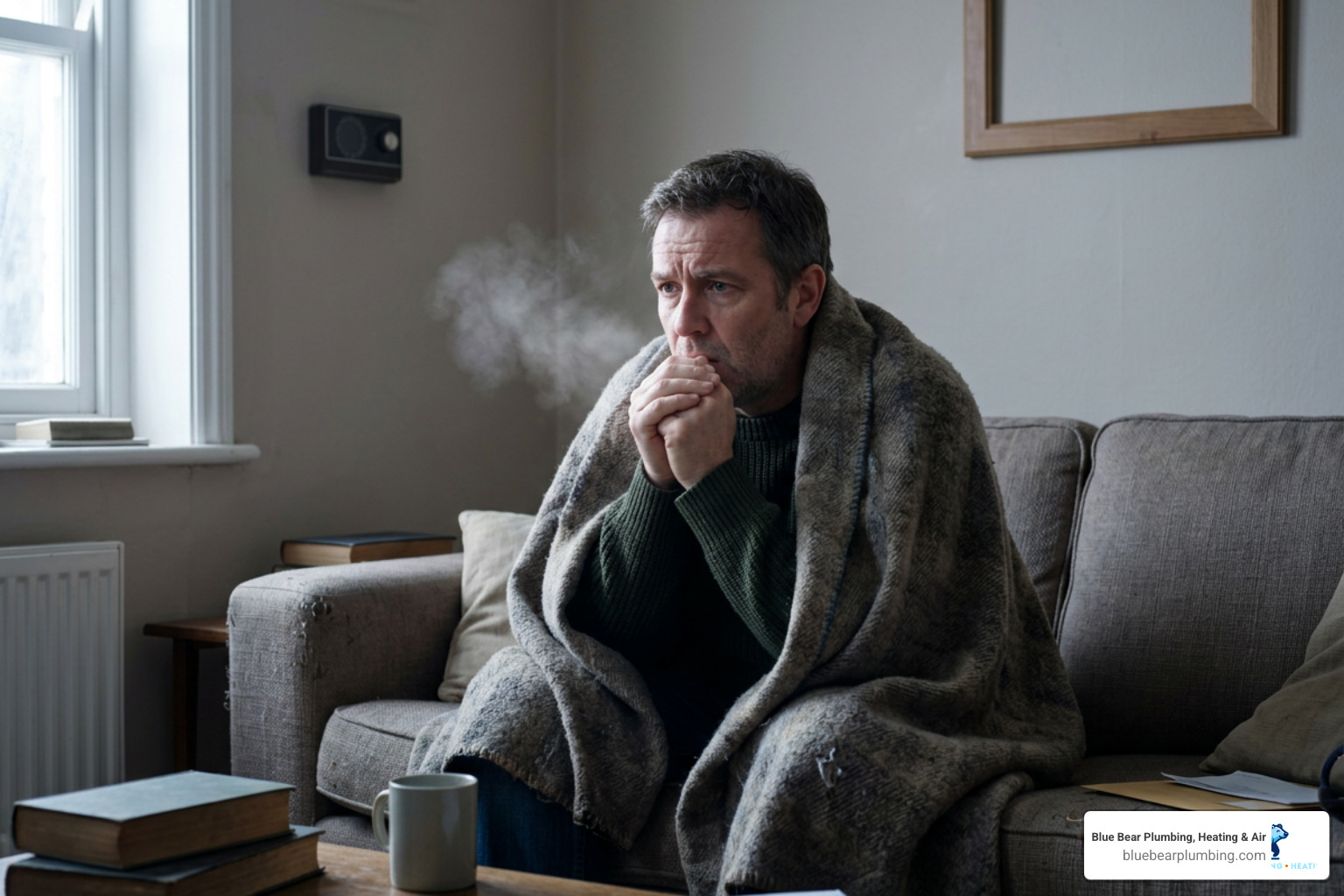
My Heating and Cooling Stopped Working: What to Do When Your HVAC Breaks Down Unexpectedly in Quincy
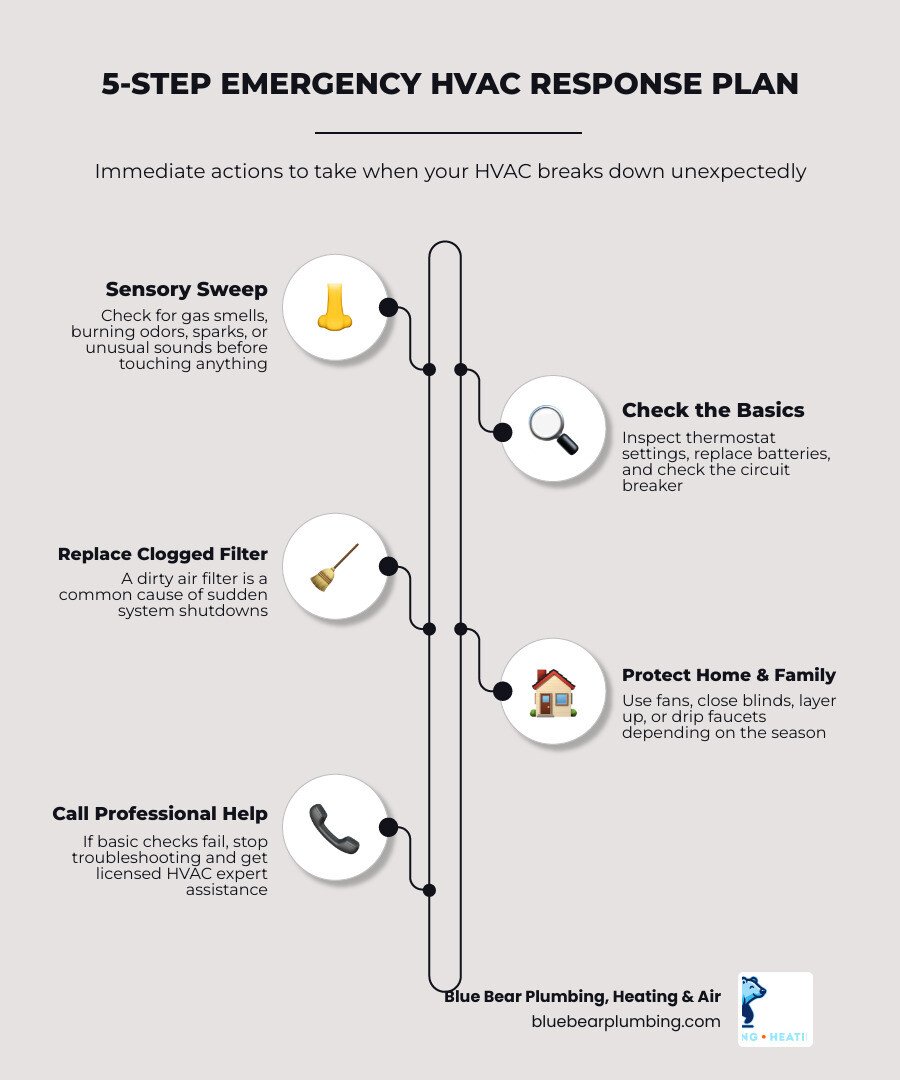
What to do when your HVAC breaks down unexpectedly can feel overwhelming in the moment — but the steps are simpler than you think. Here is a quick overview:
- Do a sensory sweep — check for gas smells, burning odors, sparks, or unusual sounds before touching anything.
- Check the basics — inspect your thermostat settings, replace the batteries, and look at your circuit breaker.
- Replace a clogged air filter — a dirty filter is one of the most common causes of sudden shutdowns.
- Protect your home and family — use fans, close blinds, layer up, or drip faucets depending on the season.
- Call a licensed HVAC professional — if the basic checks don’t resolve the issue, stop troubleshooting and get expert help.
It almost never happens at a convenient time. It’s a sweltering summer afternoon on the South Shore, or a freezing January night, and your heating or cooling system suddenly goes quiet. According to industry data, roughly 70% of homeowners experience an HVAC breakdown during peak seasons — and the panic that follows can lead to hasty decisions that make things worse. The good news? Knowing exactly what to do in the first ten minutes can protect your family, prevent further damage to your system, and get your home back to comfortable faster.
I’m Marc Provenzano, Marketing Manager at Blue Bear Plumbing, Heating & Air, and after working closely with our team of licensed HVAC technicians, I’ve seen what what to do when your HVAC breaks down unexpectedly really looks like from both the homeowner’s side and the professional’s side. Let’s walk through it together so you’re ready before it ever happens again.
What to Do When Your HVAC Breaks Down Unexpectedly: The First 10 Minutes
When the air suddenly stops moving in your home, your immediate instinct might be to race over to the thermostat and start frantically pressing buttons. However, the first ten minutes are critical for establishing safety and diagnosing the scale of the issue. Before you try to force the system back on, you need to perform a quick “sensory sweep” of your surroundings.
Take a moment to listen, smell, and look around. Do you hear a loud, metallic grinding noise or a strange electrical hiss? Is there a subtle smell of sulfur or rotten eggs near your basement stairs? Do you smell plastic burning? Performing this sensory sweep allows you to rule out severe hazards immediately.
If there are no immediate warning signs of a hazard, you can transition to a basic physical assessment of the system. Check if your entire home has lost electrical power or if the shutdown is isolated strictly to your heating and cooling equipment. Sometimes, local grid strain during extreme New England weather can cause minor, temporary voltage drops that prompt modern HVAC systems to initiate a safety lockout.

Safety Protocols for What to Do When Your HVAC Breaks Down Unexpectedly
Your safety and the safety of your family must always come first. If your sensory sweep reveals any of the following red flags, do not attempt to troubleshoot the system. Instead, shut down the power at the main breaker if it is safe to do so, evacuate your home immediately, and call for professional emergency assistance:
- The Smell of Rotten Eggs (Natural Gas): Natural gas is naturally odorless, so utility providers add a chemical called mercaptan to give it a distinctive sulfur or rotten egg smell. If you smell this, do not turn on any lights, use your phone inside, or flip any switches. Evacuate immediately and call 911 and your gas company from outside.
- Burning Odors or Visible Smoke: A strong plastic or electrical burning smell indicates that wires are overheating, a blower motor has seized, or a capacitor has failed. Continuing to run the system can spark a dangerous electrical fire.
- Screeching, Clanging, or Loud Hissing: Screeching or metal-on-metal clanging usually means a fan blade has broken loose or a motor bearing has failed. A loud hissing sound can point to a high-pressure refrigerant leak or a compromised gas line.
- Carbon Monoxide (CO) Alarm Activation: Carbon monoxide is a colorless, odorless gas that can leak from a cracked furnace heat exchanger. Treat any CO alarm as a life-threatening emergency. If your heating system fails in the dead of winter and you are unsure what steps to take, read our guide on What to Do If the Heat Goes Out for detailed cold-weather safety protocols.
Troubleshooting What to Do When Your HVAC Breaks Down Unexpectedly
If your home is safe and there are no signs of smoke, gas, or electrical hazards, you can perform a few basic checks. Remarkably, about 25% of all emergency service calls are resolved by these simple, non-technical steps.
First, look at your thermostat. If the screen is completely blank, the batteries may have died. Replace them with fresh ones and wait a few minutes to see if the display restores and communicates with your system. Next, make sure the thermostat is set to the correct mode (“Cool” for summer, “Heat” for winter) and that the temperature setting is at least five degrees above or below the current room temperature to prompt the system to kick on.
Second, check your electrical panel. HVAC systems pull a massive amount of power, especially when starting up on hot summer afternoons in towns like Quincy or Weymouth. Look for a tripped circuit breaker. If you find one, flip it completely to the “Off” position and then back to “On” once. The “One Reset” Rule: if the breaker immediately trips again, do not reset it a second time. Repeated tripping indicates a serious electrical fault, and forcing it can cause permanent damage or a fire.
Third, inspect your air filter. A heavily clogged air filter acts like a wall, choking off airflow. In the summer, this lack of airflow causes the indoor evaporator coil to drop below freezing, turning it into a block of ice. In the winter, it causes the furnace to overheat rapidly, triggering a safety limit switch that shuts the entire system down.
Finally, step outside and inspect your outdoor condenser unit. Ensure it has at least two feet of clear space around all sides. Overgrown brush, fallen autumn leaves, or blowing winter snow can block heat transfer, causing the system to overheat and shut off.
| Checkpoint | What to Look For | Immediate DIY Action | When to Call a Professional |
|---|---|---|---|
| Thermostat | Blank screen, wrong mode, or incorrect temperature settings. | Replace batteries; verify mode is set to “Heat” or “Cool”. | Screen remains blank after battery change; system ignores commands. |
| Circuit Breaker | Tripped switch in the main electrical panel. | Reset the breaker exactly once. | Breaker trips immediately a second time (indicates a short circuit). |
| Air Filter | Grey, dusty surface blocking light. | Replace with a fresh, clean filter. | System remains locked out or evaporator coil is frozen solid. |
| Outdoor Unit | Leaves, snow, brush, or debris crowding the cabinet. | Clear a 2-foot perimeter around the unit. | Fan motor isn’t spinning or copper lines are covered in thick ice. |
Step 3: Protect Your Home and Family While Waiting for Help
If your basic troubleshooting checks don’t resolve the issue, it is time to call in the professionals. When you contact us for assistance, it helps to have your system’s make and model ready, along with a brief description of the symptoms (such as whether the fan is blowing warm air or if the outdoor unit is making a buzzing sound). While our dispatchers work quickly to send a technician to your door, your priority shifts to keeping your family safe and protecting your property from extreme indoor temperatures.
If you are wondering what happens next, you can read about What to Expect During Your Emergency HVAC Service Visit so you are fully prepared when our team arrives.
Summer Cooling and Thermal Fortress Strategies
If your air conditioning breaks down during a humid July heatwave on the South Shore, your home can heat up surprisingly fast. You can manage the heat by turning your home into a temporary “thermal fortress”:
- Block the Sun: Close all blinds, shades, and heavy curtains immediately, especially on the south- and west-facing windows. Blocking direct sunlight prevents the greenhouse effect from rapidly warming your living spaces.
- Utilize Ceiling Fans Wisely: Ensure your ceiling fans are rotating counter-clockwise. This direction pushes air straight down, creating a wind-chill effect that makes the air feel 4 to 6 degrees cooler on your skin.
- Stay Hydrated: Drink plenty of water and avoid using the oven, stove, or clothes dryer, which generate massive amounts of indoor heat.
- Pulse Point Cooling: If you start feeling overheated, apply cold, damp towels or ice packs to your “pulse points” — your wrists, the back of your neck, and behind your knees. This rapidly cools your bloodstream and provides quick relief.
Winter Heat Retention and Pipe Protection
A winter furnace failure in Massachusetts is not just a comfort issue; it is a direct threat to your home’s infrastructure. If the temperature inside your home drops below 50°F, your plumbing pipes are at risk of freezing and bursting, which can lead to catastrophic water damage.
- Drip Your Faucets: Open your kitchen and bathroom faucets to a very slow, warm drip. Moving water is much harder to freeze, and relieving the pressure in the lines prevents pipes from bursting even if the water does freeze.
- Open Vanity and Cabinet Doors: Keep the cabinet doors under your sinks open. This allows the residual warmth of your home’s air to circulate around the plumbing pipes.
- Create a Warm Zone: Gather your family into a single, centrally located room with insulated walls. Close the doors to unused rooms, seal the cracks beneath doors with towels, and wear multiple thin layers of clothing to trap body heat.
- Use Space Heaters Safely: If you use portable electric space heaters, plug them directly into a wall outlet rather than an extension cord. Always maintain at least a three-foot clearance from blankets, curtains, and furniture, and never leave them running unattended or while you sleep.
Step 4: Decide Between HVAC Repair and Replacement
Once our technician diagnoses the issue, you may find yourself standing at a crossroads. If your system has suffered a major component failure — such as a cracked heat exchanger, a seized compressor, or a failed blower motor — you will need to decide whether to invest in a repair or replace the unit entirely.
Making this decision under stress can be challenging. To help you weigh your options objectively, check out our comprehensive guides on How to Decide Between HVAC Repair and Replacement Without Losing Your Cool and The Signs Your HVAC Needs Replacing and Not Just Another Quick Fix.
The Age and Frequency Rule of Thumb
To make the repair-versus-replace decision simple and objective, professionals often look at the age of your system and how often it requires attention.
- The Age Factor: If your system is under 10 years old, a repair is generally the more sensible decision because the unit is still in the first half of its expected operating life. However, if your air conditioner or furnace is over 10 to 15 years old, it is nearing the end of its useful life, and a replacement may be more reliable in the long run.
- The Frequency of Repairs: Is this the first time your system has broken down, or have you had to call for service multiple times recently? Frequent breakdowns, rising utility bills, and uneven temperatures throughout your home are all indicators that the system’s overall reliability has declined, making replacement a smarter long-term investment.
Beyond these factors, consider the system’s history. Is this the first time it has broken down, or have you had to call a technician multiple times over the past year? Frequent repairs, rising energy bills, and uneven temperatures throughout your home are all indicators that the system’s overall reliability has declined.
Step 5: Prevent Future Sudden Failures with Proactive Care
The most effective way to handle an unexpected HVAC breakdown is to prevent it from ever happening in the first place. Studies show that homeowners who invest in regular, professional HVAC maintenance are 50% less likely to experience a sudden, catastrophic system failure during peak seasons.
To understand why this simple step is so critical for your peace of mind and your home budget, read our detailed article on Why Paying for HVAC Maintenance Now Saves Your Wallet Later.
Proactive Care Best Practices
Preventative care does not have to be complicated. By incorporating a few simple habits into your home maintenance routine, you can maximize your system’s lifespan and efficiency:
- Change Filters Every 60 to 90 Days: This is the single most important task a homeowner can perform. If you have pets, allergies, or a busy household, check your filters every 30 days during peak summer and winter usage.
- Schedule Annual Professional Tune-Ups: Ideally, you should have your air conditioner serviced in the spring (April) and your heating system inspected in the autumn (September). To learn more about the ideal timing, check out Don’t Wait for the Smoke: How Often to Service Your HVAC.
- Understand the Risks of Neglect: Skipping routine service can lead to weak airflow, poor indoor air quality, and sudden system failures. Learn about these hazards in our guide on From Cold Showers to High Bills: The Risks of HVAC Neglect.
- Invest in a Maintenance Plan: A structured upkeep plan takes the guesswork out of home care. Discover how these programs protect your budget by reading Do Maintenance Plans Actually Save You Money in the Long Run? and how they provide peace of mind in How a Maintenance Plan Extends Equipment Life and Your Sanity.
Frequently Asked Questions About HVAC Emergencies
What qualifies as a true HVAC emergency?
A true HVAC emergency is any situation where a lack of climate control poses an immediate threat to the safety of your family, the structural integrity of your home, or your personal health. This includes:
- Total loss of heat when outdoor temperatures drop below 32°F, which can lead to hypothermia or frozen, burst plumbing pipes.
- Total loss of air conditioning during extreme heat advisories (above 90°F), especially if your household includes vulnerable individuals such as infants, the elderly, pets, or family members with chronic medical conditions.
- Any situation involving active gas leaks, carbon monoxide alarms, burning odors, or sparks.
Can a dirty air filter cause a whole system to shut down?
Yes, absolutely. A heavily soiled air filter restricts the volume of air flowing through your HVAC system. In the summer, this restriction prevents warm indoor air from passing over the cold evaporator coil, causing the condensation on the coil to freeze solid and block all cooling.
In the winter, a clogged filter prevents the heat generated by your furnace from escaping, causing the internal temperature of the heat exchanger to skyrocket. When this happens, a safety device called a high-limit switch automatically shuts the system down to prevent a fire or cracked heat exchanger.
Is it safe to use a space heater if my furnace fails?
Yes, electric space heaters are a safe and effective way to warm your home temporarily, provided you follow strict safety guidelines:
- Always plug the space heater directly into a wall outlet. Never use an extension cord or power strip, which can easily overheat and spark a fire.
- Maintain a strict three-foot safety clearance around the heater. Keep it far away from blankets, clothes, paper, upholstery, and curtains.
- Place the heater on a flat, level, non-flammable floor surface.
- Never leave a space heater running unattended or while you are sleeping. Turn it off when you leave the room.
Conclusion
Facing an unexpected heating or cooling breakdown is never easy, but with a clear plan, you can navigate the situation safely and keep your home protected. By performing a quick sensory sweep, completing basic troubleshooting checks, and knowing when to call in the professionals, you can minimize stress and avoid costly mistakes.
At Blue Bear Plumbing, Heating & Air, we are proud to serve families throughout South Boston and the South Shore, MA. Our friendly, local team is committed to delivering high-quality workmanship, attentive customer care, and upfront, honest solutions when you need them most. If you are experiencing a system failure or simply want to prevent the next one, contact us today at Blue Bear Plumbing, Heating & Air to schedule your service.
Contact Us Today
Routine maintenance is vital for the longevity of your plumbing, heating, and air conditioning systems. Sign up for our Blue Care Maintenance Plan for annual service and exclusive membership benefits, including:
- Priority scheduling
- Waived service fee during normal business hours
- 10% discount on service calls
- 3% discount on new installations
- Two-year parts and labor warranty on new equipment