




The Ultimate Guide to How Old Is Too Old for an HVAC System
HVAC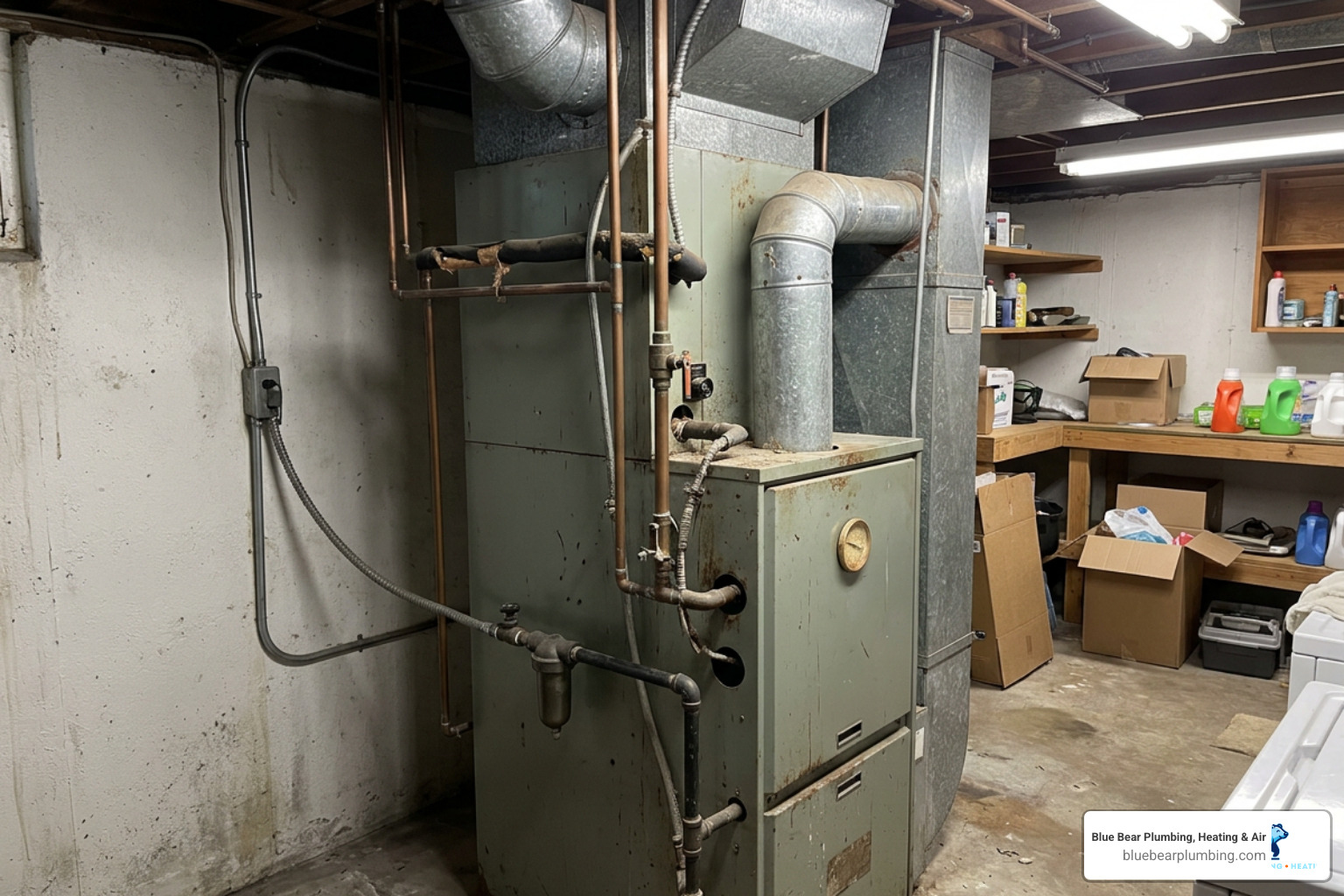
I’m wondering how old is too old for an HVAC system. Who in the South Shore specializes in heating and cooling upgrades?
Wondering how old is too old for an HVAC system is one of the most common questions homeowners ask — and for good reason. Most systems are designed to last between 15 and 20 years, but age alone does not tell the whole story. Here is a quick-reference breakdown to answer the question right away:
HVAC System Lifespan at a Glance
| System Type | Typical Lifespan | Start Evaluating Replacement |
|---|---|---|
| Central Air Conditioner | 15-20 years | After year 12-15 |
| Gas Furnace | 15-20 years | After year 15 |
| Heat Pump | 10-16 years | After year 10-12 |
| Boiler | 15-25 years | After year 15 |
| Ductless Mini-Split | 15-20 years | After year 15 |
The short answer: If your system is pushing 15 years, showing signs of strain, or demanding frequent repairs, it is time to seriously evaluate whether repair still makes sense — or whether replacement is the smarter move.
That said, age is just the starting point. Nearly one in three homeowners faces a major HVAC breakdown before their system even reaches its expected lifespan. And by year 10 or 12, many systems are already running at only 80 to 85 percent of their original efficiency — quietly adding to your monthly energy bills while delivering less comfort than they used to.
Whether your system just had its first big repair or has been limping along for a few years, the decision to repair or replace is rarely black and white. It involves your system’s age, what refrigerant it uses, the frequency and severity of recent repairs, and whether any safety issues — like a cracked heat exchanger — have come up.
This guide walks you through all of it, clearly and without the pressure.
I’m Marc Provenzano, Marketing Manager at Blue Bear Plumbing, Heating & Air, and I’ve spent years working alongside our licensed technicians to help South Shore homeowners understand exactly how old is too old for an HVAC system before making one of the biggest home investment decisions they’ll face. Let’s break it down so you can make a confident, informed call.
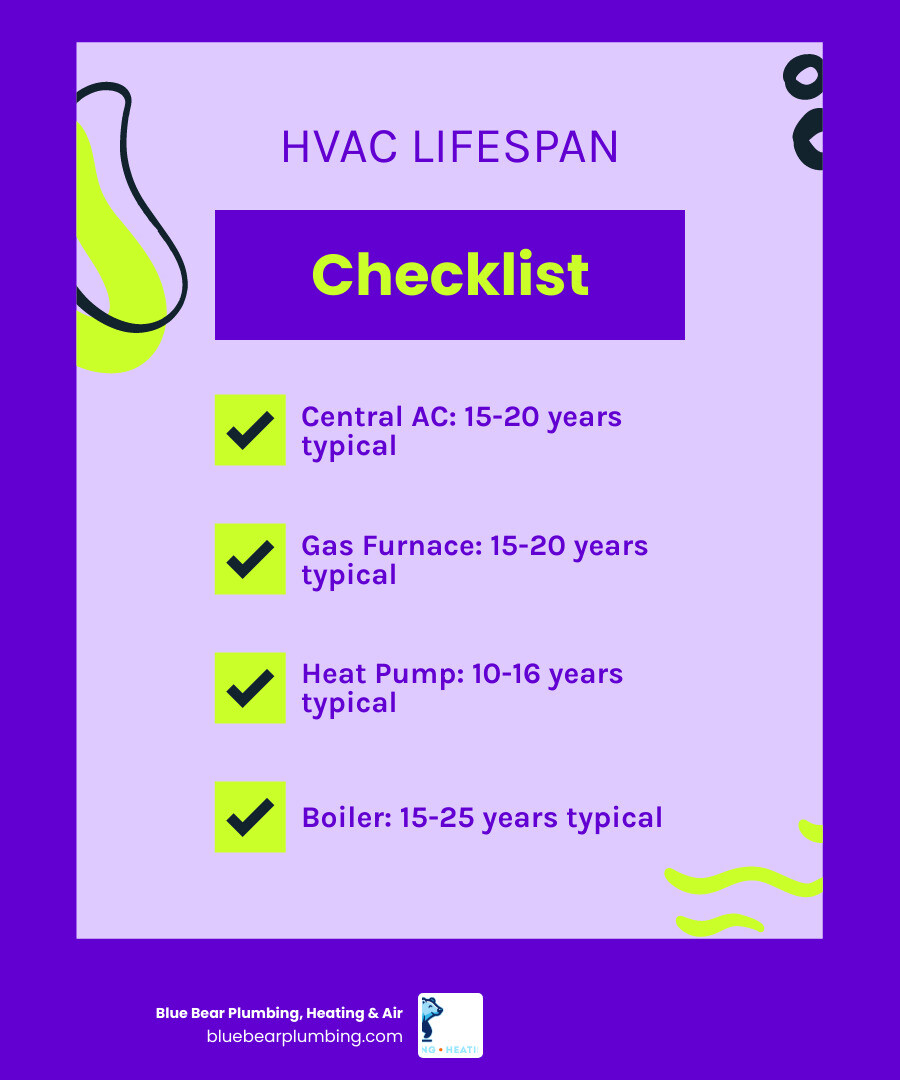
Typical Lifespan of Heating and Cooling Equipment
When evaluating your home comfort setup, it is helpful to understand that different types of heating and cooling systems age at different rates. In our New England climate—where we experience freezing winters in towns like Weymouth and Quincy, and hot, humid summers in Hingham and Norwell—our HVAC systems work incredibly hard.
Here is a look at what you can expect from the typical lifespan of various equipment types:
- Gas Furnaces: A reliable gas furnace is the backbone of many South Shore homes. Typically, a well-maintained gas furnace can last between 15 and 20 years. Some high-quality units can push past the two-decade mark, but their interior components will experience significant thermal stress over time.
- Central Air Conditioners: Standard cooling systems generally have a functional lifespan of 15 to 20 years under optimal conditions. However, in coastal Massachusetts areas, salt air and high summer humidity can accelerate corrosion, sometimes reducing that functional limit to 10 to 12 years if the system is neglected.
- Air-Source Heat Pumps: Because heat pumps provide both heating in the winter and cooling in the summer, they run year-round. This constant operation means they log double the hours of a single-season system. Consequently, their typical lifespan is slightly shorter, ranging from 10 to 16 years.
- Boilers: Boilers are highly durable, particularly cast-iron models. A standard residential boiler typically lasts 15 to 25 years. However, older boilers lack modern safety valves and electronic ignitions, making them highly inefficient as they cross into their twilight years.
- Ductless Mini-Splits: These versatile systems have become incredibly popular in historic New England homes that lack ductwork. A ductless mini-split system typically lasts 15 to 20 years, provided the outdoor compressor unit and indoor air handlers are kept clean and clear of debris.
Understanding these baselines is crucial when planning your long-term home investments. If you want to dive deeper into how different systems age and what to expect as they reach these milestones, read our detailed guide on HVAC System Age Replacement.
Determining How Old Is Too Old for an HVAC System
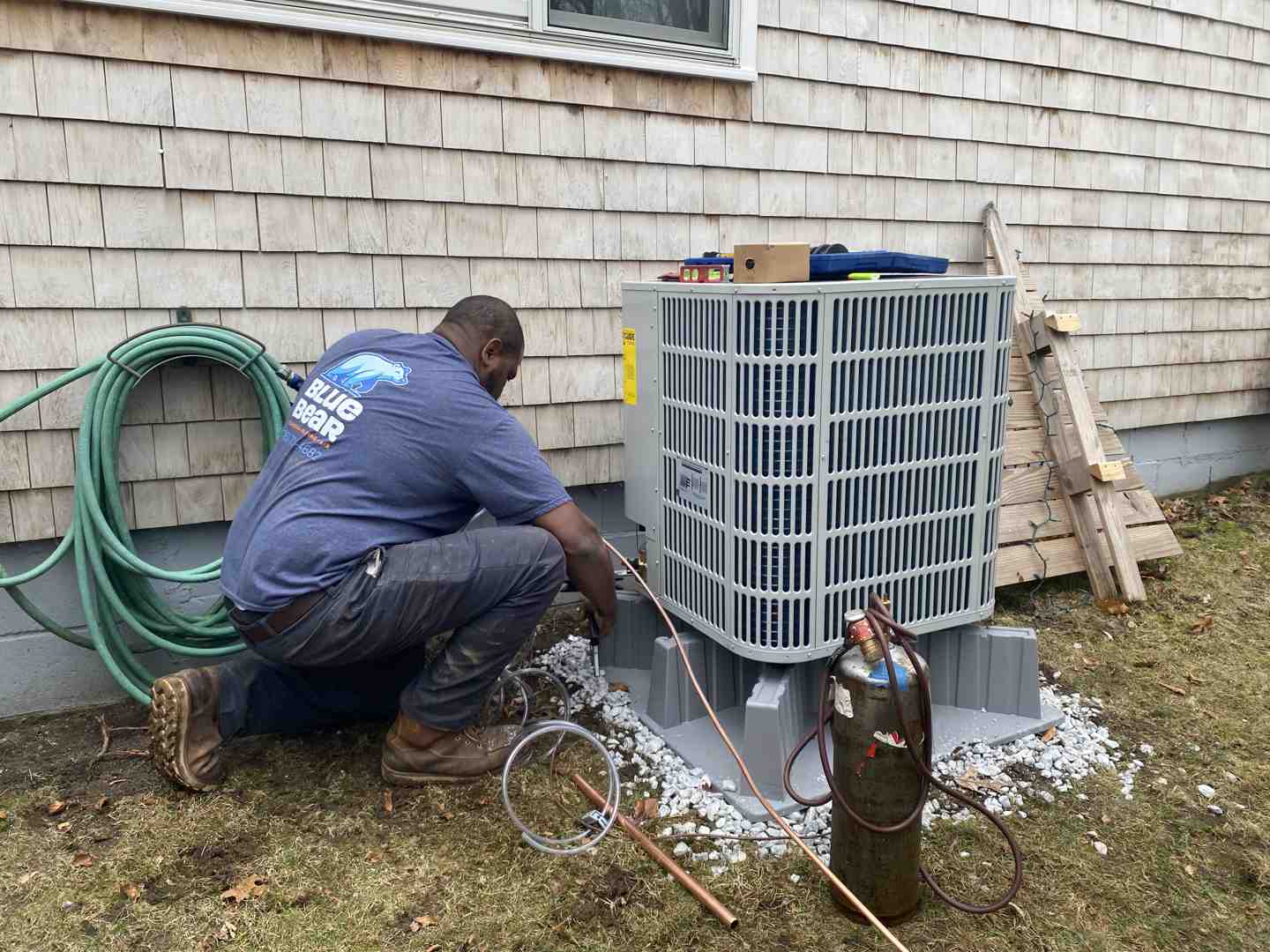
As your system gets older, its internal mechanics naturally begin to degrade. Metal fatigue, electrical wear, and constant expansion and contraction from temperature swings take a toll. While a system might technically still turn on, it may no longer be capable of keeping your home comfortable or safe.
When trying to determine if your unit is past its prime, we recommend looking at the 15-year threshold. This is the point where major component failures—such as a failed compressor or a cracked heat exchanger—become statistically much more common. Additionally, efficiency degradation is a major factor. Over a decade of operation, dirt accumulation, minor motor wear, and coil corrosion can easily reduce a system’s operating efficiency by 15 to 20 percent.
If you are experiencing persistent comfort issues alongside these age markers, it is a clear sign that your system is struggling. To learn more about identifying these structural issues early, check out our article on The Signs Your HVAC Needs Replacing and Not Just Another Quick Fix.
Why 15 Years Is Often How Old Is Too Old for an HVAC System
By the time an HVAC system reaches 15 years of age, it has completed thousands of heating and cooling cycles. In Massachusetts, this means enduring rapid temperature swings—often referred to as the classic New England weather shift—which places immense physical stress on metal components.
At this stage, the risk of a cascade failure increases. A failing blower motor can cause the system to overheat, which in turn stresses the heat exchanger or compressor. Investing in major repairs on a 15-year-old system is often a temporary band-aid rather than a long-term solution. When you are weighing whether to keep patching up an older unit or invest in a modern replacement, there are several key factors to keep in mind. We have outlined these considerations in our resource on Things to Think About When You Want to Replace Your HVAC System.
How to Tell If Your Unit Is Past Its Prime
If you moved into a home in Hanson, Braintree, or Natick and are unsure of your system’s exact age, you can easily find out by decoding the manufacturer’s nameplate.
- Locate the Nameplate: This is a metal sticker or plate attached to the outdoor AC condenser or the indoor furnace/boiler cabinet.
- Find the Serial Number: Look for the “Serial No.” or “S/N” line.
- Decode the Date: For many major brands, the manufacture date is embedded directly in the serial number. Often, the first four digits represent the week and year. For example, a serial number starting with “1211” might indicate the unit was manufactured in the 12th week of 2011.
- Look Up the Brand: If the date isn’t obvious, you can easily search the brand name and “serial number age decoder” online, or simply snap a photo of the tag and send it to our team for a quick assessment.
Key Indicators Your Aging System Needs Attention
Age is just a number, but your system’s daily performance speaks volumes. If your heating or cooling system is nearing the end of its reliable lifespan, it will usually send several warning signals before failing completely.
- Frequent Breakdowns: If you find yourself scheduling service visits multiple times a year just to keep the heat or AC running, you are caught in a “repair spiral.”
- Rising Utility Bills: Have your monthly energy bills climbed steadily over the last few winters or summers, even though your local utility rates have remained relatively stable? This points directly to declining system efficiency.
- Uneven Temperatures: If your upstairs rooms are sweltering in July while the downstairs feels like an icebox, or if you have persistent cold spots in your living room during a January freeze, your system’s blower and ductwork may no longer be distributing air effectively.
- Strange Noises: Banging, rattling, squealing, or buzzing sounds are not normal. They typically indicate loose components, failing motor bearings, or a compressor under extreme stress.
- Safety Risks: This is the most critical factor. Aging gas furnaces and boilers can develop stress cracks in their heat exchangers. When a heat exchanger cracks, it can leak dangerous carbon monoxide gas directly into your home’s indoor air supply.
If you are trying to decide whether to hold onto an aging heating system or make a clean break, our guide can help you weigh the risks: Should You Keep Your Ancient Furnace or Just Start Over?
The Repair vs. Replace Decision Framework
When an older system breaks down, you don’t have to rely on guesswork or high-pressure sales pitches to make a decision. Instead, you can use structured guidelines to determine if the unit is truly past its prime.
One common industry standard is evaluating the frequency and severity of breakdowns. If a system requires multiple major component replacements within a short period, upgrading is almost always the smarter long-term choice.
Another major variable in this framework is the type of refrigerant your air conditioner or heat pump uses. Systems manufactured before 2010 typically run on R-22 Freon, which was completely phased out due to environmental regulations. Because R-22 is no longer produced, recharging a leaking older system is incredibly difficult and often impossible.
Even if your system uses R-410A, keep in mind that the ongoing phase-down of this refrigerant (which began transitioning to lower-GWP alternatives like R-454B and R-32) means that R-410A supplies will tighten, gradually making leak repairs on mid-life systems more challenging to source.
To explore these decision-making steps in more detail, read our practical advice on How to Decide Between HVAC Repair and Replacement Without Losing Your Cool and our localized overview of Repair Replace HVAC Massachusetts.
Efficiency and Performance Factors to Decide How Old Is Too Old for an HVAC System
While the immediate reliability of your system is a major factor, you should also consider long-term energy performance. A modern, high-efficiency system can dramatically lower your monthly energy consumption. Upgrading from an older, low-SEER system to a modern high-efficiency model can reduce your cooling energy use by 20 to 40 percent. On the heating side, upgrading from an old, standard-efficiency furnace to a high-efficiency condensing model means that nearly all of the energy used goes directly into warming your home.
To make sense of these performance metrics and see how they impact your home’s energy footprint, check out our guides on Decoding Efficiency Ratings for Every Savvy Homeowner and The Ultimate Guide to Higher Efficiency Rating Worth the Extra Cost.
Frequently Asked Questions About HVAC Longevity
Navigating the final years of your heating and cooling equipment can bring up plenty of questions. Here are some of the most common inquiries we hear from homeowners across the South Shore.
Can an HVAC system last 30 years?
While it is theoretically possible, it is extremely rare. Some cast-iron boilers or heavily over-engineered older furnaces can physically survive for 30 years if they receive meticulous, annual professional maintenance. However, even if they still run, a 30-year-old system is incredibly inefficient compared to modern standards. Keeping a system this old usually means you are wasting significant energy on your monthly utility bills and risking a sudden, catastrophic failure during extreme winter or summer weather.
Does a heat pump last as long as a central AC?
Generally, no. A standard central air conditioner only runs during the warm summer months. A heat pump, however, operates year-round—providing cooling in the summer and reversing its cycle to provide heat all winter long. Because the compressor and outdoor fan motor log significantly more operating hours each year, a heat pump will naturally reach the end of its useful lifespan a few years sooner than a dedicated air conditioner.
What are the safety risks of keeping an obsolete system?
An aging heating system poses several hidden dangers. The primary concern with older gas furnaces and boilers is a cracked heat exchanger. Over years of heating and cooling, the metal expands and contracts, eventually leading to structural cracks. This allows carbon monoxide to leak into your home’s air. Additionally, old wiring can degrade, increasing the risk of electrical shorts or fire hazards inside the cabinet.
Conclusion
Determining how old is too old for an HVAC system ultimately comes down to balancing safety, daily comfort, and practical logic. While it can be tempting to schedule just one more repair, investing in a modern, energy-efficient system provides immediate peace of mind, lower monthly utility bills, and consistent home comfort.
Additionally, upgrading your heating and cooling equipment is an excellent investment in your property. A new, reliable system is a major selling point that can significantly boost your home’s market appeal. To understand this connection better, read The Ultimate Guide to How a New HVAC System Increases Home Value.
If you do decide that it is time to move forward with an upgrade, we can guide you through every step of the process. You can learn exactly what to expect on installation day by reviewing our guide: What Does a New HVAC Installation Include?.
Whether you want to keep your current system running safely for a few more seasons or are ready to explore your replacement options, our friendly, local team at Blue Bear Plumbing, Heating & Air is here to help. We proudly serve South Boston, the South Shore, and surrounding communities with honest advice, clear communication, and dependable workmanship.
Don’t wait for your system to fail during a heatwave or a winter storm. Reach out to us today to Schedule a High-Mileage HVAC Checkup and ensure your home stays comfortable all year long!
Contact Us Today

Routine maintenance is vital for the longevity of your plumbing, heating, and air conditioning systems. Sign up for our Blue Care Maintenance Plan for annual service and exclusive membership benefits, including:
- Priority scheduling
- Waived service fee during normal business hours
- 10% discount on service calls
- 3% discount on new installations
- Two-year parts and labor warranty on new equipment