




Should You Keep Your Ancient Furnace or Just Start Over
HVAC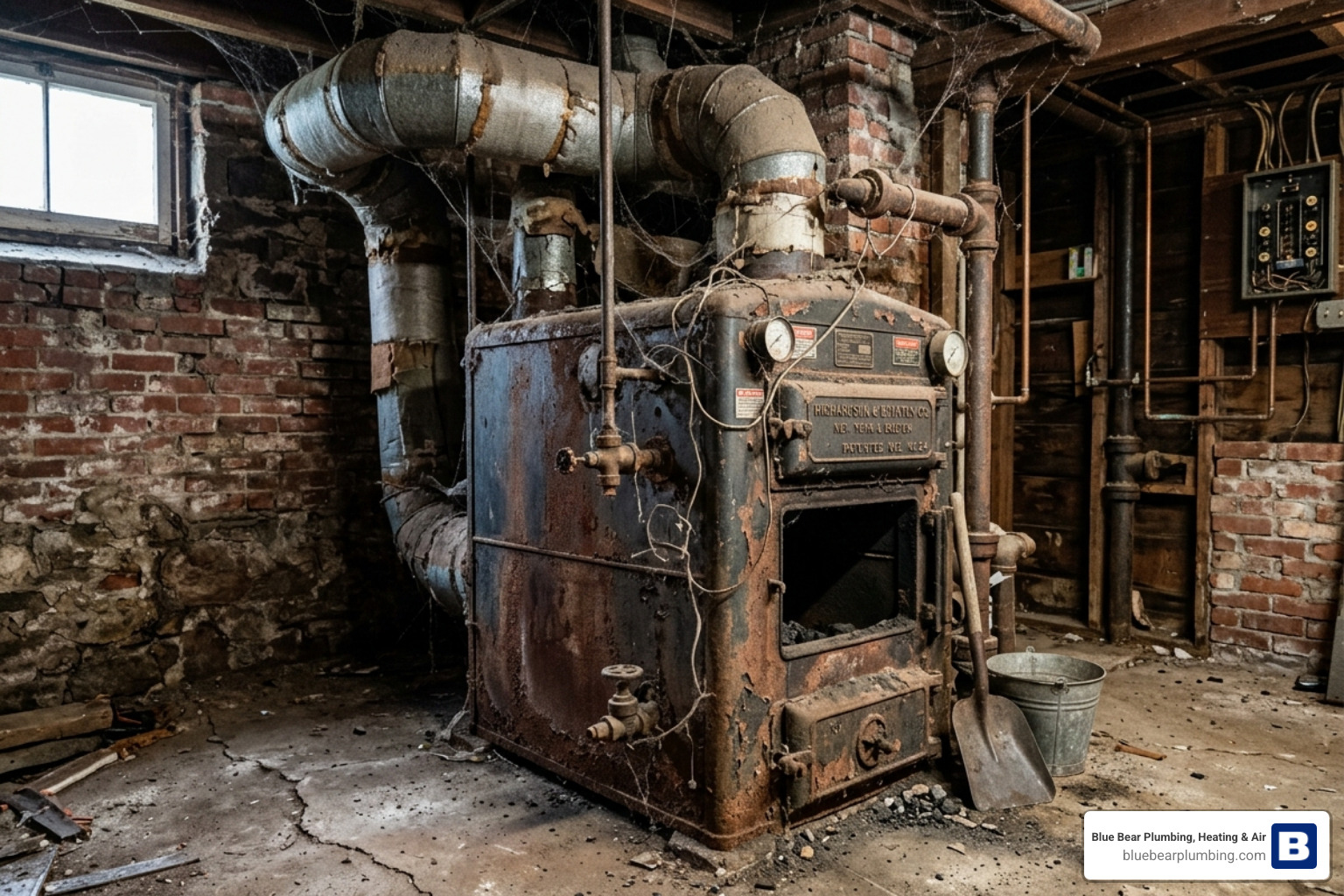
Is It Worth Fixing an Old Furnace or AC? Here’s the Quick Answer
Is it worth fixing an old furnace or AC depends on a few key factors you can check right now:
- System age: If your furnace is over 15-20 years old or your AC is past 15 years, replacement is often the smarter move
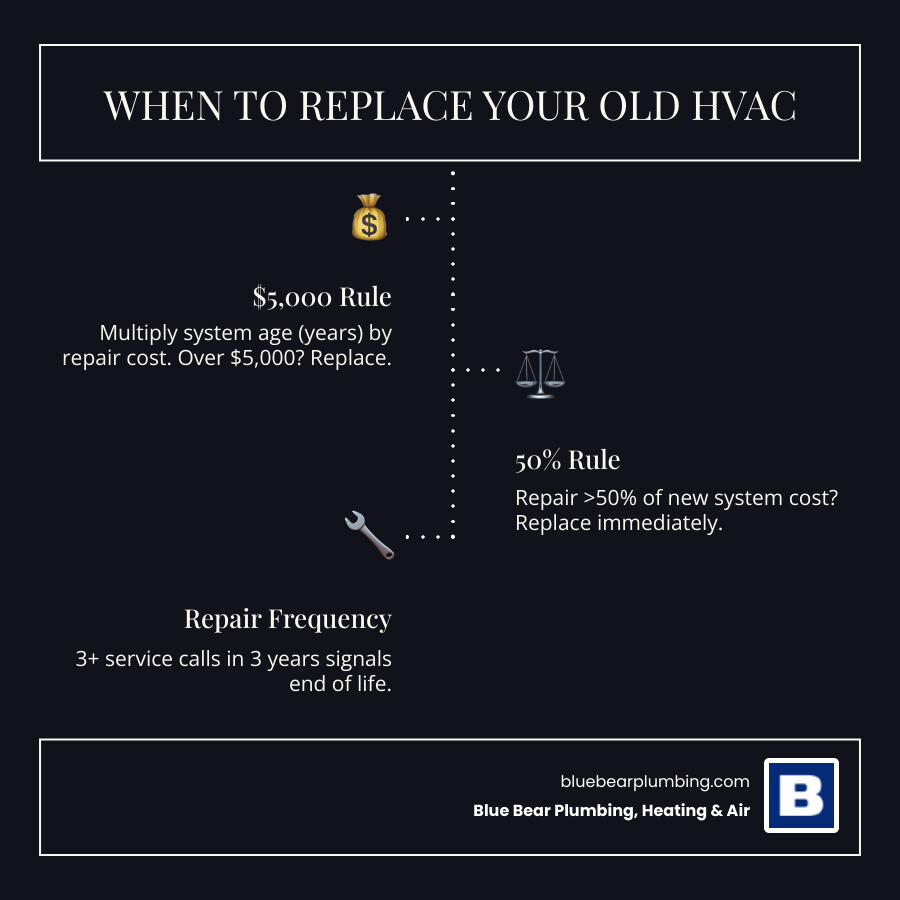
- The $5,000 Rule: Multiply your system’s age by the repair cost — if the result exceeds $5,000, lean toward replacement
- The 50% Rule: If a single repair costs more than half the price of a new system, replace it
- Repair frequency: Three or more service calls in three years signals the system is in systemic decline
- Safety red flags: A cracked heat exchanger or R-22 refrigerant leak changes the math entirely — replacement becomes urgent
If your system is under 10 years old and the repair is minor, fixing it almost always makes sense. If it’s older and the problems are stacking up, you’re likely throwing good money after bad.
South Shore winters don’t give you a lot of margin for error. A furnace that limps through April 2026 may not make it to next January — and an emergency replacement in the middle of a nor’easter costs more and gives you fewer options. That’s the real risk of waiting.
This guide walks you through every factor that matters — age, efficiency, safety, parts availability, and the incentives that can make a new system more affordable than you think.
I’m Marc Provenzano, Marketing Manager at Blue Bear Plumbing, Heating & Air, and after working closely with our team of licensed HVAC technicians across the South Shore, I’ve seen how the question of is it worth fixing an old furnace or AC plays out for real homeowners — and the answer is rarely one-size-fits-all. Let’s break it down so you can make a confident, informed decision for your home.
Understanding HVAC Lifespan in Massachusetts
Living in the Northeast means our HVAC systems work harder than in many other parts of the country. Between the humid, salty air of the South Shore and the bone-chilling winters of Natick or Quincy, your equipment is under constant stress. When we talk about Hvac System Age Replacement, we have to look at the typical “expiration dates” for these units.

Generally, here is what you can expect for longevity in our local climate:
- Gas Furnaces (15-20 years): These are the workhorses of Massachusetts. While some can stretch to 25 years with perfect maintenance, they often lose 1-2% efficiency every year after age 10.
- Electric Furnaces (20-25 years): Because they don’t involve a combustion process, electric units often last slightly longer, though they can be more expensive to operate.
- Central Air Conditioners (15-20 years): In extreme heat or coastal areas, this lifespan can drop by 3-5 years due to accumulated runtime and salt air corrosion.
- Heat Pumps (10-15 years): Since heat pumps provide both heating and cooling, they run year-round. This double-duty means they usually need replacement sooner than a single-purpose furnace.
If your system is approaching these milestones, even if it’s currently running, you are likely in the “failure zone.” Industry data shows that maintenance costs typically triple after a system turns 15 years old.
Is it worth fixing an old furnace or ac?
The decision to repair or replace often comes down to a battle between immediate savings and long-term value. To help our neighbors in Norwell and the surrounding areas, we use a few standard industry frameworks to take the guesswork out of the math.
The $5,000 Rule
This is a quick “gut-check” for any repair. Multiply the age of your system by the repair estimate. If the total is over $5,000, it is usually time to start over. For example:
- A 12-year-old AC with a $300 repair = $3,600 (Fix it!)
- A 15-year-old furnace with a $600 repair = $9,000 (Replace it!)
The 50% Rule
This rule is even simpler: If a single repair costs 50% or more of what a new system would cost, you are better off investing that money into a new unit with a fresh warranty.
Repair Frequency and “Slow Bleed”
We often see homeowners get caught in a “repair spiral.” This is when you have three or more service calls within a three-year window. You might spend $400 this year, $300 next year, and $500 the year after. This “slow bleed” of cash doesn’t make the system more reliable; it just delays the inevitable while your energy bills continue to climb. For more on this, check out our guide on Repair Replace Hvac Massachusetts.
Deciding if it is worth fixing an old furnace or ac based on the 50% Rule
When we apply the 50% Rule, we look at the “big ticket” items. There are certain failures that almost always signal the end of the road for an older unit.
- Compressor Failure: The compressor is the heart of your AC. On a unit over 10-12 years old, replacing a failed compressor is rarely a good investment.
- Cracked Heat Exchanger: This is a terminal diagnosis for a furnace. Not only is the part expensive, but it poses a lethal safety risk (which we will cover below).
- Leaking Evaporator Coils: If your system is older and the coils are leaking, you aren’t just paying for the metal; you’re paying for the refrigerant, which has become incredibly expensive.
If you are currently staring at a four-figure repair bill, you have to ask: “What is the chance another major part fails this year?” On a 20-year-old system, that chance is very high. You can read more about these specific AC dilemmas in Do I Need A New Ac.
Evaluating if it is worth fixing an old furnace or ac when parts are obsolete
Sometimes, the choice is made for you by the manufacturer or environmental regulations. This is a major factor for anyone Finding The Best Furnace Repair In Quincy Without Getting Burned.
The Refrigerant Factor If your air conditioner was installed before 2010, it likely uses R-22 refrigerant (often called Freon). R-22 was phased out because it depletes the ozone layer. It is no longer produced, and the remaining supply is reclaimed and extremely expensive. A single recharge can cost a significant portion of a new system’s price. Even the successor, R-410A, is currently undergoing a phase-down, with prices expected to rise through 2026. Modern systems are moving toward R-32 or R-454B, which are more efficient and future-proof.
Part Availability As technicians retire and manufacturers move on to new designs, finding parts for a 30-year-old furnace becomes a treasure hunt. If a circuit board or blower motor for your antique unit is discontinued, you could be left without heat for weeks while a technician searches for a refurbished part. That is a dangerous gamble during a Massachusetts winter.
Safety Risks and Efficiency Gains
Beyond the dollars and cents, there is the matter of your family’s safety. Older furnaces, particularly those over 20 years old, are at a significantly higher risk for cracked heat exchangers.
The heat exchanger is the component that keeps combustion gases (like carbon monoxide) separate from the air being blown into your home. Metal fatigue from decades of heating and cooling cycles causes cracks. Because carbon monoxide is colorless and odorless, a cracked heat exchanger is a “silent killer.” For our friends in Natick, we always emphasize that Keeping Your Natick Home Warm Expert Residential Furnace Repair must prioritize safety inspections.
The Efficiency Gap Modern technology has made massive leaps. Older systems were typically rated at 8-10 SEER (for cooling) and roughly 80% AFUE (for heating).
- Modern AC units can reach up to 23 SEER2. Upgrading from SEER 13 to SEER2 17 can reduce energy usage by roughly 30%.
- Modern Furnaces can reach up to 95-98% AFUE. That means 98 cents of every dollar you spend on gas goes directly into heating your home, whereas an old 65% AFUE unit wastes 35 cents of every dollar.
The Benefits of Coordinated Replacement
If your AC dies, should you replace the furnace too, even if it’s still working? In many cases, the answer is yes. This is what we call a “matched system.”
| Factor | Replacing Single Unit | Coordinated Full System Upgrade |
|---|---|---|
| Labor Costs | Pay for two separate installs | Reduced labor (one visit, shared components) |
| Efficiency | New unit may be limited by old parts | Maximum SEER2 and AFUE ratings achieved |
| Warranty | Only one unit covered | Full system covered by 10-20 year warranties |
| Compatibility | Risk of mismatched blower/coils | Guaranteed performance and airflow |
| Reliability | Old unit could fail next month | Peace of mind for the next 15+ years |
Replacing both units together ensures that the new air conditioner’s high-efficiency evaporator coil isn’t being choked by an old, weak furnace blower. To understand the full scope of what this process looks like, see What Does A New Hvac Installation Include.
Maximizing Incentives for South Shore Homeowners
In 2026, there are more ways than ever to offset the cost of a new system. Between federal programs and local Massachusetts initiatives, the “real” cost of replacement is often much lower than the sticker price.
- Federal Tax Credits: Under the Inflation Reduction Act, you can claim up to 30% of the project cost (up to $2,000 annually) for qualifying high-efficiency heat pumps or $600 for high-efficiency central AC and furnaces.
- Mass Save Rebates: Residents in our service area can often access significant rebates and even 0% financing for energy-efficient upgrades.
- Energy Savings: Replacing an old system with an ENERGY STAR certified model can reduce your monthly energy consumption by 20% to 40%. Over 10 years, these savings can effectively pay for a large portion of the system.
When you are weighing Things To Think About When You Want To Replace Your Hvac System, always factor in these rebates. They turn a “maybe” into a “definitely.”
Frequently Asked Questions about Aging HVAC Systems
How do I know if my furnace is too old to be safe?
If your furnace is over 20 years old, it is past its intended safety lifespan. Look for signs like a flickering or yellow burner flame (it should be steady blue), excessive soot, or frequent headaches/nausea among family members. You should have a working carbon monoxide detector on every floor, but a professional inspection is the only way to verify the integrity of the heat exchanger.
Is it better to repair or replace a 15-year-old AC?
At 15 years, an AC unit is in its “golden years.” If the repair is minor (like a $200 capacitor), fix it. But if the repair involves the compressor or a refrigerant leak, replacement is almost always the better financial move. A 15-year-old unit is likely using outdated refrigerant and operating at half the efficiency of a new model.
Can I replace just the AC and keep my old furnace?
You can, but it isn’t always recommended. HVAC systems share components like the blower motor and ductwork. A brand-new, high-efficiency AC coil paired with an old, inefficient furnace blower is like putting a Ferrari engine in a golf cart — you won’t get the performance or the energy savings you paid for.
Conclusion
At Blue Bear Plumbing, Heating & Air, we understand that deciding is it worth fixing an old furnace or AC is a big financial choice. Our goal isn’t to sell you something you don’t need; it’s to provide the high-quality workmanship and honest advice that our neighbors in Norwell, Natick, and Quincy have come to expect.
Whether you need a minor repair to get through the season or a full system upgrade to protect your home for the next decade, our team is here to help with upfront pricing and attentive customer care. Don’t wait for a total system failure in the middle of a blizzard.
If your system is acting up, start with a professional assessment. You can schedule our High Mileage HVAC Checkup today to get a clear picture of your system’s health and make the decision that’s right for your home and your budget.
Contact Us Today

Routine maintenance is vital for the longevity of your plumbing, heating, and air conditioning systems. Sign up for our Blue Care Maintenance Plan for annual service and exclusive membership benefits, including:
- Priority scheduling
- Waived service fee during normal business hours
- 10% discount on service calls
- 3% discount on new installations
- Two-year parts and labor warranty on new equipment