




The Ultimate Guide to How a New HVAC System Increases Home Value
HVAC
Why Understanding How a New HVAC System Increases Home Value Matters Before You List
How a new HVAC system increases home value is one of the most practical questions a homeowner can ask before putting a property on the market — and the answer is more significant than most people expect.
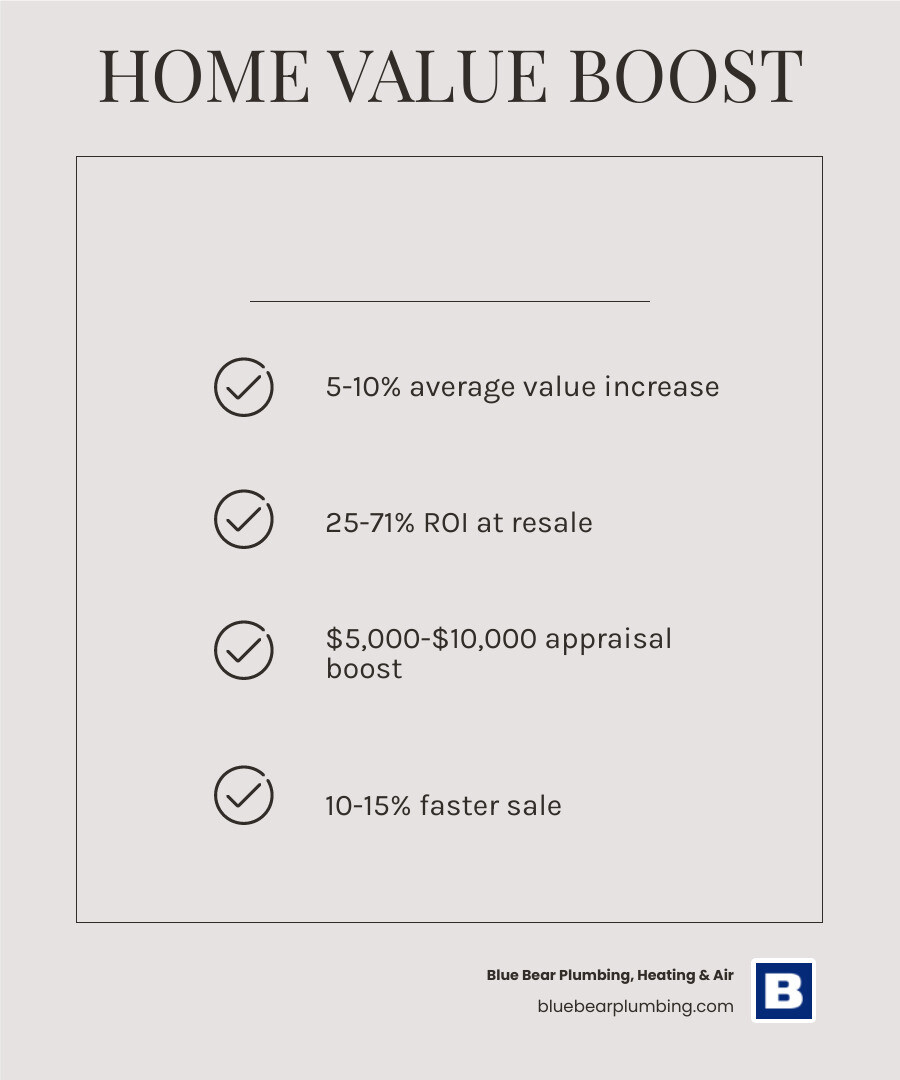
Here’s a quick snapshot of what the data shows:
| Factor | Impact |
|---|---|
| Average home value increase | 5% to 10% |
| Typical ROI at resale | 25% to 71% |
| Appraised value boost | $5,000 to $10,000 |
| Faster sale potential | 10 to 15% quicker |
| Energy bill reduction | 20% to 40% lower |
Buyers treat an HVAC system the same way they treat a roof — it’s one of the first things they mentally budget for when walking through a home. A system that’s aging, inefficient, or flagged during inspection can become a negotiating weapon in the buyer’s hands, leading to price reductions, seller concessions, or deals falling apart entirely. On the flip side, a modern, high-efficiency system signals something powerful: this home has been taken care of.
In 2026, that signal matters more than ever. Buyers are increasingly focused on energy costs, sustainability, and move-in-ready status. Regulatory changes — including the EPA’s ongoing refrigerant phase-outs — mean that older systems aren’t just inconvenient; they can actively complicate financing and appraisals.
Whether you’re planning to sell soon or simply want to protect your investment for the long term, understanding exactly how your HVAC system affects your home’s value is worth your time.
I’m Marc Provenzano, Marketing Manager at Blue Bear Plumbing, Heating & Air, and I’ve spent years helping South Shore homeowners understand how smart home system decisions — including knowing how a new HVAC system increases home value — translate into real financial outcomes. In this guide, I’ll walk you through everything you need to know to make a confident, informed decision.
How a New HVAC System Increases Home Value: Appraisal and ROI
When we talk about home value, we are looking at two distinct but related things: the appraised value (what a bank says it’s worth) and the market value (what a buyer is willing to pay). A new HVAC system hits both out of the park.
From an appraisal standpoint, experts often use Fannie Mae Form 1004 to compare your home to others that have recently sold in the South Shore area. Appraisers look at the “effective age” of your home’s mechanical systems. If your neighbors’ homes have 20-year-old furnaces and yours is brand new, the appraiser will make a positive “condition adjustment.” This can add several thousand dollars to your home’s official valuation, often ranging from $5,000 to $10,000.
The return on investment (ROI) is also impressive. While some luxury upgrades like high-end kitchen marble might only recoup 50% of their cost, a comprehensive HVAC upgrade can recover approximately 71% of project costs during a home resale. This is because a working, efficient climate control system is a necessity, not a luxury. To understand the full scope of what goes into this investment, you might wonder, What Does a New HVAC Installation Include? It’s more than just a box in the basement; it’s a total home comfort overhaul.
Documenting How a New HVAC System Increases Home Value for Appraisers
You can’t just tell an appraiser the system is new; you have to prove it. To maximize the value boost, we recommend creating a “Home Health Folder.” This should be a physical or digital file that includes:
- Installation Permits: Proof that the work was done to code in your specific town, whether you’re in Quincy, Natick, or Norwell.
- Service History: Documentation of regular maintenance.
- Warranty Transfers: Information showing the new owner will be covered if something goes wrong.
- Model Numbers and Energy Ratings: Highlight that SEER2 rating!
Professional documentation transforms a “new-looking unit” into a certified financial asset.
Strategic Timing: Should You Replace Your System Before Selling?
Timing is everything in real estate. If your system is less than 10 years old and running perfectly, a full replacement likely won’t provide the ROI you’re looking for. However, we suggest following the “15-year rule.” If your system is 15 years or older, it is officially a “red flag” for modern buyers.
In May 2026, we are also dealing with significant regulatory shifts. Older systems using R-22 refrigerant (often called Freon) are now considered “dinosaurs.” Even systems using R-410A are being phased out in favor of eco-friendly alternatives like R-454B. If you list a home with an obsolete refrigerant system, savvy buyers will likely demand “seller concessions”—essentially asking you to drop your price by $10,000 or more to cover the inevitable replacement they’ll have to do.
By replacing it before you list, you take that “negotiating weapon” out of their hands. If you’re on the fence, check out our guide on Repair vs Replace HVAC Massachusetts to see where your system stands.
Signs an Old System is Hurting Your Home Value
If you notice any of the following, your current HVAC might be “killing” your resale price:
- Short-cycling: The unit turns on and off constantly, which signals mechanical fatigue.
- Uneven Temperatures: If the upstairs is a sauna while the downstairs is a fridge, buyers will assume the ductwork or the unit is failing.
- Inspection Hurdles: Cracked heat exchangers or refrigerant leaks can disqualify a home from FHA or VA loans, which requires primary systems to be in good working order.
When a buyer’s inspector finds these issues, it creates “functional obsolescence,” a fancy term for a house that doesn’t work the way it should. Learning How to Decide Between HVAC Repair and Replacement Without Losing Your Cool can save you from a deal falling through at the eleventh hour.
Maximizing Resale Appeal with Energy Efficiency and Modern Features
In the current market, “green” is the new “gold.” Buyers aren’t just looking for a system that works; they want one that lowers their monthly overhead. This is where how a new HVAC system increases home value becomes a marketing story about sustainability.
Modern systems are now rated using SEER2 (Seasonal Energy Efficiency Ratio 2) standards, which are more stringent and accurate than old ratings. A high SEER2 rating, paired with a variable-speed motor, allows the system to run at lower, more efficient speeds rather than just “full blast” or “off.” This leads to quieter operation and much better humidity control—a huge plus for our humid Massachusetts summers.
Adding a smart thermostat is another low-cost, high-impact move. It allows for zoned cooling and heating, meaning you aren’t wasting energy on empty rooms. These tech-forward features appeal to the “Smart Home” generation of buyers. Before you pull the trigger, read up on Things to Think About When You Want to Replace Your HVAC System to ensure you’re picking the right features for your specific floor plan.
How a New HVAC System Increases Home Value for Modern Buyers
Sustainability is no longer a niche preference; it’s a top priority. Homes with Energy Star certification and a smaller carbon footprint stand out in competitive listings.
Furthermore, the financial incentives available in 2026 are significant. Between federal tax credits and local Massachusetts programs, the net investment for a homeowner is often much lower than the “sticker price.” You can learn more about how to offset your costs here: 2023 HVAC Installation Tax Credits Massachusetts. (Note: While the link mentions 2023, many of these electrification incentives have been extended or expanded through 2026).
Alternatives to Full Replacement and Marketing Your Upgrade
If a full system replacement isn’t in the cards before you sell, you can still protect your value through “mechanical detailing.” Think of it like detailing a car before you sell it.
- Professional Maintenance: Have a licensed technician perform a full tune-up. A clean, well-oiled machine looks and sounds better to a buyer.
- Filter Upgrades: Install a fresh, high-quality HEPA filter right before showings.
- Duct Sealing: Fixing leaky ducts can improve efficiency by up to 20% without replacing the actual HVAC unit.
| HVAC System Type | Buyer Appeal Level | Main Selling Point |
|---|---|---|
| High-Efficiency Heat Pump | Very High | Future-proof, Heating & Cooling in one, Eco-friendly |
| Central AC (High SEER2) | High | Classic reliability, Lower utility bills |
| Ductless Mini-Splits | High (for older homes) | Zoned comfort, No invasive ductwork needed |
| Geothermal | Niche / Premium | Ultimate sustainability, Longest lifespan |
Strategic Marketing of Mechanical Upgrades
When your home hits the MLS, don’t let the HVAC system be a footnote. Use phrases like “Brand New High-Efficiency HVAC (2026)” or “Transferable 10-Year Warranty Included.”
This provides “buyer peace of mind.” Most buyers are cash-strapped after a down payment; the last thing they want is a $15,000 surprise six months after moving in. By highlighting the new system, you position your home as a “turn-key” property, which often acts as a tie-breaker when a buyer is choosing between two similar houses.
Common Questions About HVAC and Property Value
How much value does a new HVAC system add?
While every market is different, a new HVAC system typically adds 5% to 10% to a home’s resale value in the South Shore area. Beyond the raw numbers, it prevents “valuation drag.” If your home is worth $600,000 but has a failing furnace, it might only appraise for $585,000. Replacing the system brings you back to full market potential and avoids the concessions that eat into your equity.
Does a heat pump increase home value more than central AC?
In 2026, the answer is increasingly “yes.” With the push toward electrification and the availability of significant federal incentives, heat pumps are seen as “future-proof” investments. They offer both heating and cooling, often replacing two separate older systems (like an oil furnace and a window AC unit), which simplifies maintenance for the new owner.
Will a new HVAC help my home sell faster?
Absolutely. Data from Zillow and the National Association of Realtors suggests that homes mentioning “New HVAC” can sell up to 11 to 15% faster. It removes the “inspection anxiety” that often slows down a closing. When a buyer’s inspector says, “The HVAC is brand new and perfectly installed,” it builds a level of trust that carries through the rest of the negotiation.
Conclusion
At Blue Bear Plumbing, Heating & Air, we understand that your home is your largest investment. Whether you are in Braintree, Weymouth, or any of our South Shore communities, we are committed to helping you maximize that investment with high-quality workmanship and integrity.
We pride ourselves on being a friendly, local team that provides upfront pricing and reliable solutions. We don’t just install equipment; we build long-term relationships based on attentive customer care. If you’re looking to boost your property’s value or simply want to ensure your family’s comfort for the years to come, we’re here to help.
Contact us for expert HVAC solutions in the South Shore and let’s make sure your home is the most valuable one on the block.

Contact Us Today

Routine maintenance is vital for the longevity of your plumbing, heating, and air conditioning systems. Sign up for our Blue Care Maintenance Plan for annual service and exclusive membership benefits, including:
- Priority scheduling
- Waived service fee during normal business hours
- 10% discount on service calls
- 3% discount on new installations
- Two-year parts and labor warranty on new equipment