



The Definitive Guide to HVAC System Lifespan
HVAC
How Long Does an HVAC System Last on the South Shore?
The average lifespan of an HVAC system in the South Shore is shorter than the national average — and if you own a home near the coast, that gap is even wider. Here’s a quick-reference breakdown before we dig into the details:
| System Type | National Average | South Shore Estimate |
|---|---|---|
| Central Air Conditioner | 15-20 years | 12-16 years |
| Gas Furnace | 15-20 years | 15-20 years |
| Boiler | 20+ years | 15-20 years |
| Air-Source Heat Pump | 15-20 years | 10-15 years |
| Ductless Mini-Split | 15-20 years | 12-18 years |
Bottom line: South Shore homeowners — especially those within a mile or two of the ocean — should plan for HVAC systems to reach end-of-life on the earlier end of these ranges without proper maintenance and corrosion protection.
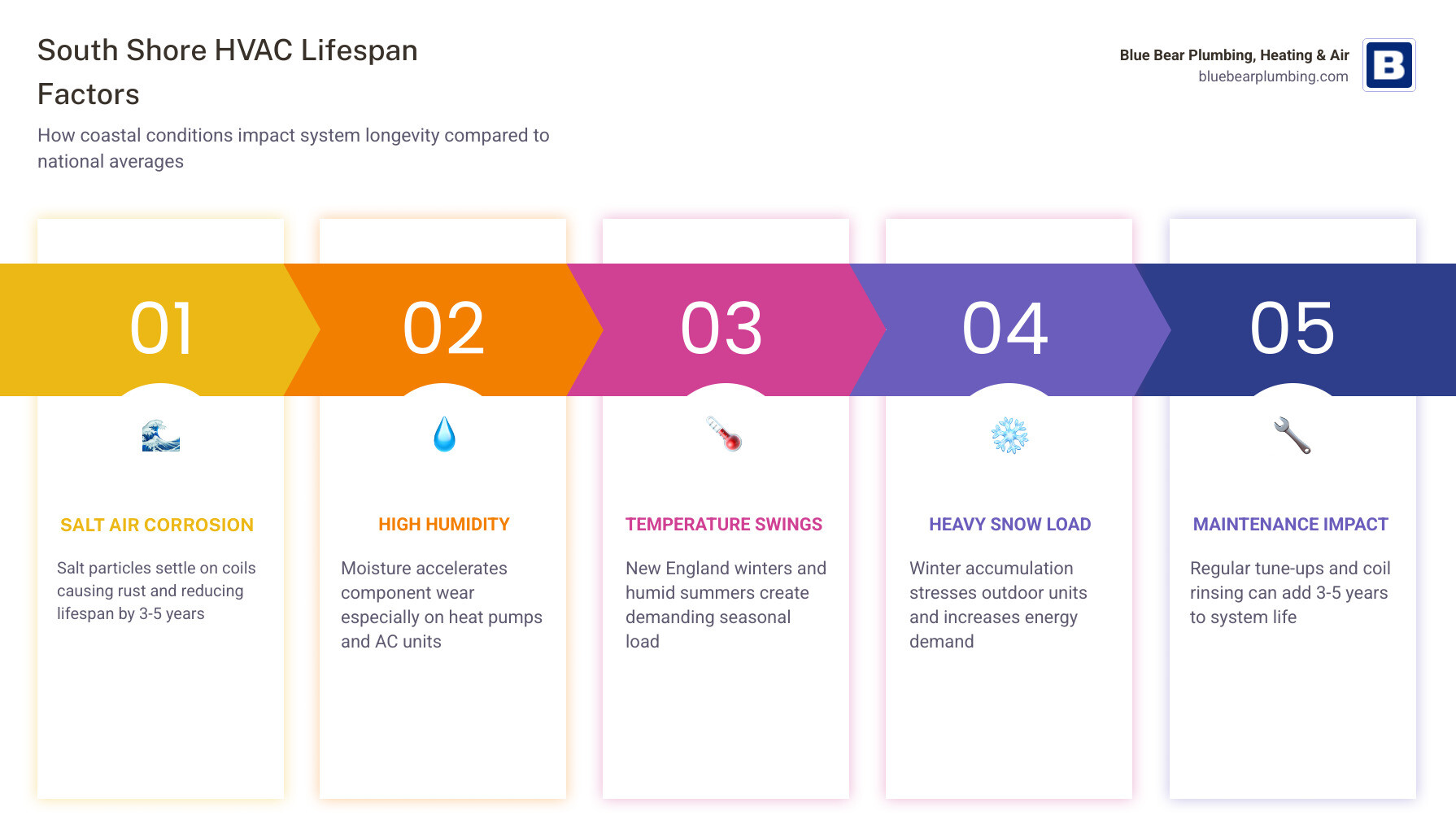
Living on the South Shore means ocean views, cool breezes, and a quality of life that’s hard to beat. But that same salty, humid air that makes the region so appealing is quietly working against your heating and cooling equipment every single day. Salt particles settle into condenser coils, moisture accelerates rust, and systems that might last 20 years in a drier inland climate start showing their age in 12 to 15. Throw in New England’s demanding winters and humid summers, and your HVAC system is working harder — and wearing faster — than most homeowners realize.
I’m Marc Provenzano, Marketing Manager at Blue Bear Plumbing, Heating & Air, and through my work with our South Shore teams I’ve seen how coastal conditions shape average lifespan of an HVAC system in the South Shore — from Hingham to Hanson to Quincy. In the sections ahead, we’ll walk you through everything you need to know to make smart decisions about your system.
What is the Average Lifespan of an HVAC System in the South Shore?

When evaluating how long your home comfort equipment will last, it is important to recognize that New England’s regional climate is incredibly demanding. We experience major temperature swings, heavy winter snowstorms, and dense summer humidity. Because of these distinct seasonal demands, local systems do not enjoy the mild, steady runtimes of other regions.
Understanding the HVAC System Age Replacement timeline is the first step toward smart home management. In Massachusetts, we run heavy heating cycles for nearly six months of the year, followed by intense, humid cooling cycles in July and August. This dual-demand cycle places immense mechanical stress on both heating and cooling components. When deciding on the best physical setup for your property, reading The South Shore Guide to Choosing Between Central Air and Mini Splits can help you weigh your options against the local climate.
Understanding the average lifespan of an hvac system in the south shore for heating units
Heating units are the workhorses of the South Shore. Gas furnaces and boilers in our area carry the heavy burden of keeping historic Colonials and modern coastal homes warm through freezing winters.
- Gas Furnaces: A high-quality gas furnace typically lasts between 15 to 20 years in New England. With rigorous professional preventive maintenance, some well-built systems can even push past the 20-year mark. However, around year 15, key components like the heat exchanger, blower motor, or ignitor may begin to show significant wear.
- Boilers: Traditional boilers are known for their exceptional durability. Cast-iron boilers can easily provide 20 or more years of service. However, high-efficiency condensing boilers, while saving energy, often have a slightly shorter mechanical lifespan of 15 to 20 years due to their complex electronic controls and high condensation levels.
Our long heating seasons mean these systems accumulate thousands of operating hours quickly. If your heating system is approaching its fifteenth winter, you might find yourself asking: Should You Keep Your Ancient Furnace or Just Start Over?
The average lifespan of an hvac system in the south shore for cooling and heat pump systems
Cooling systems face a different kind of environmental pressure on the South Shore. Because many local homes are close to the ocean, outdoor condensing units are constantly exposed to moisture and salt air.
- Central Air Conditioners: Under standard inland conditions, a central AC can last up to 20 years. On the South Shore, however, the practical lifespan of a central air conditioning unit is closer to 12 to 16 years. Continuous exposure to salty coastal air accelerates coil pitting and fins degradation, which reduces heat transfer efficiency long before the compressor physically fails.
- Air-Source Heat Pumps: Heat pumps handle both heating and cooling duties, meaning they run almost year-round. Because they accumulate twice as many operating hours as a stand-alone AC or furnace, their average operational lifespan is compressed to 10 to 15 years in coastal areas.
- Ductless Mini-Splits: Ductless systems are highly resilient and typically last between 12 to 18 years. Because they use variable-speed inverter compressors, they cycle on and off less frequently, which reduces mechanical wear. To understand how these systems compare for your specific home layout, check out Ductless vs Ducted Cooling Pros and Cons for Every Homeowner and learn if Will a Mini Split Save You More Money Than Central Air?
How Coastal Conditions and Usage Patterns Affect HVAC Longevity
Living within close proximity to the ocean means your outdoor HVAC components are subject to a harsh environment. Salt air and high humidity are a highly corrosive combination for metal. When salt-laden moisture settles on the aluminum fins and copper tubing of your outdoor condenser, it initiates a chemical reaction known as galvanic corrosion.
This corrosion leads to several issues:
- Coil Corrosion: As the aluminum fins corrode, they begin to turn to powder and flake away. This reduces the surface area available for heat transfer, forcing your compressor to work much harder and run longer cycles to cool your home.
- Electrical Damage: Salt deposits are highly conductive. Over time, salt dust can migrate into the outdoor unit’s electrical cabinet, damaging contactors, capacitors, and wire connections. This can lead to electrical shorts, component failures, and even potential safety hazards.
- Biological Growth: The high humidity of the South Shore summer creates a damp environment inside dark air handlers and condensate pans. Without proper drainage and airflow, this moisture can promote mold and bacterial growth, which restricts airflow and impacts indoor air quality.
When systems are forced to run continuously under these conditions, the mechanical strain increases exponentially. Running a system with restricted airflow or corroded coils leads directly to reduced efficiency, increased energy consumption, and premature compressor failure. Homeowners who ignore these environmental factors often experience the transition From Cold Showers to High Bills: The Risks of HVAC Neglect.
Key Signs Your System is Nearing End-of-Life and How to Decide
It is rarely a surprise when an HVAC system finally stops working, as aging systems usually drop several hints before their final breakdown. Recognizing these warning signs early gives you the time to plan an upgrade rather than dealing with an emergency replacement during a January freeze or a July heatwave.
Key warning signs include:
- Frequent Breakdowns: If you are calling for repairs multiple times a season, those individual service calls quickly add up compared to a new system replacement.
- Rising Energy Usage: As components age and coils corrode, the system loses its efficiency. If your energy consumption is steadily climbing but your usage habits haven’t changed, your system is working too hard.
- Uneven Temperatures: An aging blower motor or a degrading compressor will struggle to push conditioned air to the furthest rooms of your home, leaving you with uncomfortable hot or cold spots.
- Strange Noises: Squealing, banging, or grinding noises from your outdoor unit or indoor furnace indicate failing bearings, loose belts, or a compressor nearing its end.
To help you decide whether to keep repairing your current unit or invest in a new one, use this simple comparison table:
| Repair Indicators | Replacement Indicators |
|---|---|
| System is under 10 years old | System is over 12-15 years old |
| Repair is a simple component (e.g., run capacitor or contactor) | Key component failure (e.g., cracked heat exchanger or failed compressor) |
| Energy usage is stable | Energy usage is rising steadily |
| System still keeps the home consistently comfortable | Frequent breakdowns and uneven temperatures |
| The repair is straightforward relative to the system’s age | The repair is complex relative to the system’s age |
If you are struggling to find the right balance between fixing an older unit and upgrading, our guides on How to Decide Between HVAC Repair and Replacement Without Losing Your Cool and Repair Replace HVAC Massachusetts offer clear, practical advice. Additionally, reviewing Things to Think About When You Want to Replace Your HVAC System will help you prepare for the installation process.
Proactive Steps to Extend the Life of Your Coastal HVAC System
While you cannot change the coastal weather on the South Shore, you can take practical steps to protect your heating and cooling equipment from its effects. Regular, proactive care can add several years to the average lifespan of an HVAC system in the South Shore.
Here are the most effective strategies for coastal homeowners:
- Perform Regular Outdoor Coil Rinsing: One of the simplest ways to fight salt-air corrosion is to rinse your outdoor condenser unit with fresh water every few months. Before you start, turn off the power to the unit at the outdoor disconnect box or breaker panel. Use a standard garden hose with a gentle spray pattern—never use a high-pressure washer, as high pressure will bend and damage the delicate aluminum fins. Gently rinse the coils from top to bottom to wash away salt deposits and debris.
- Change Filters Regularly: Restricted airflow is a leading cause of system strain. Check your air filters every month, especially during high-use winter and summer seasons, and replace them at least every 90 days.
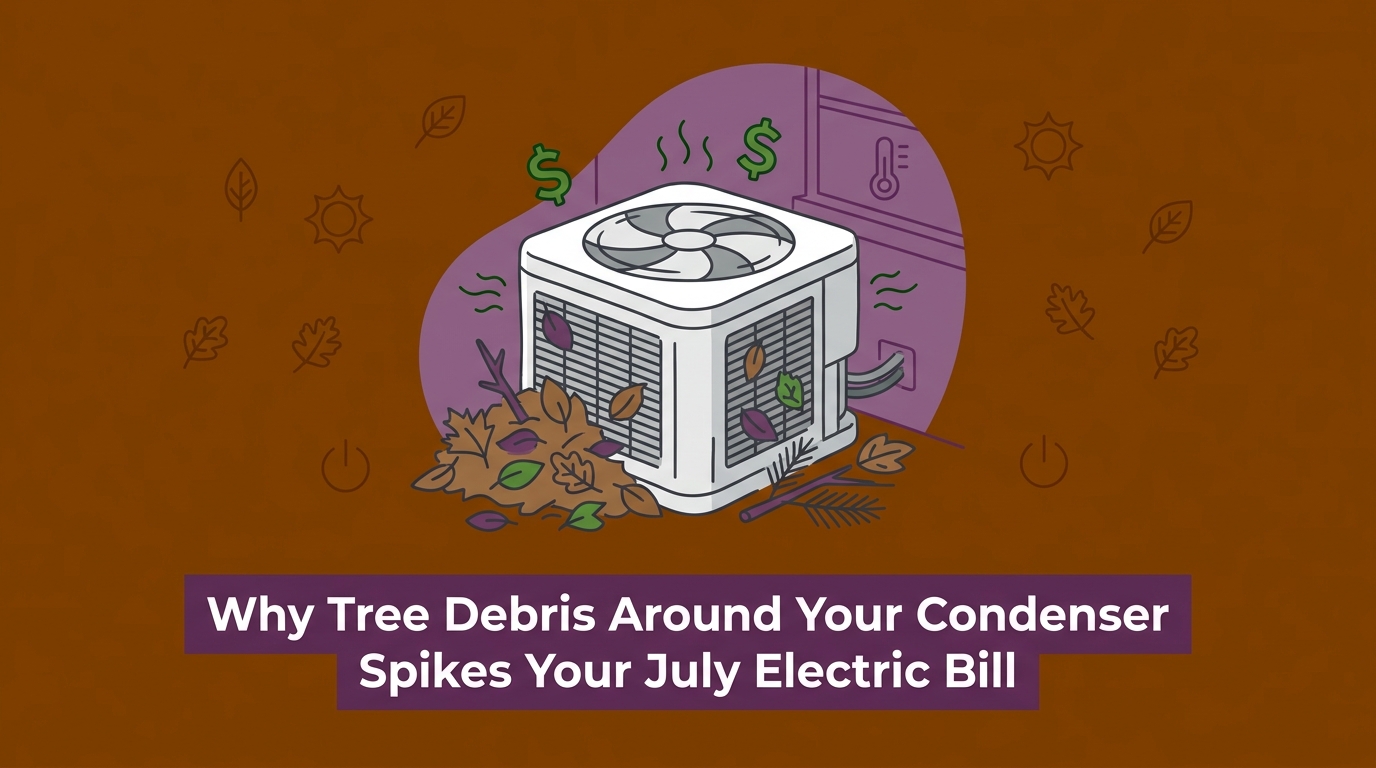
- Keep the Area Around the Outdoor Unit Clear: Maintain at least two feet of clear space around your outdoor condenser. Trim back shrubs, cut back weeds, and clear away fallen leaves or windblown sand to ensure unrestricted airflow.
- Schedule Professional Tune-Ups Twice a Year: A certified technician can identify minor issues, such as a weak capacitor or a small refrigerant leak, before they turn into major component failures.
To help you stay on top of these tasks, we have put together several resources, including Why South Shore Homes Need a Seasonal HVAC Tune-Up and our comprehensive Seasonal Plumbing HVAC Maintenance Checklist for South Shore Residences. If you want to simplify your annual maintenance, you can also explore how Do Maintenance Plans Actually Save You Money in the Long Run? to protect your investment.
Frequently Asked Questions About South Shore HVAC Lifespans
Can coastal salt air really cut my air conditioner’s lifespan in half?
Yes, in extreme coastal environments within a mile of the ocean, unprotected air conditioning systems can fail in as little as 7 to 10 years, compared to 15 to 20 years inland. The combination of salt spray and high humidity causes rapid coil corrosion, which reduces heat transfer and places heavy strain on the compressor.
To prevent this, we recommend investing in coastal-rated outdoor units that feature factory-applied anti-corrosive coil coatings. Regular maintenance is also key; scheduling Essential Spring Maintenance for South Shore Comfort helps clear away winter salt accumulation and prepares your system for the summer heat.
How often should I change my HVAC filters in a humid coastal environment?
In the humid South Shore climate, we recommend checking your air filters every 30 days and replacing them at least every 3 months. High humidity can cause airborne dust and pollen to clump together on the filter surface, which restricts airflow much faster than in drier climates.
Keeping a fresh filter in place prevents airflow restrictions, protects your indoor air quality, and keeps your system running efficiently. You can find more tips on keeping your system clean by reviewing The Ultimate HVAC Maintenance Visit Checklist.
Is it better to repair or replace a 12-year-old heat pump?
At 12 years of age, an air-source heat pump in our coastal region is entering its typical replacement window. If the system requires a major repair, such as a new compressor, reversing valve, or outdoor coil, replacing the unit is usually the more practical choice.
Upgrading to a modern system allows you to take advantage of significant efficiency gains, quieter operation, and current eco-friendly refrigerants. Choosing to replace rather than pour money into an aging unit helps you avoid The High Price of Cheap Repairs and How to Avoid It.
Conclusion
Maximizing the average lifespan of an HVAC system in the South Shore requires a combination of regular homeowner care and professional support. While our coastal environment presents unique challenges like salt air and high humidity, taking a proactive approach to maintenance can keep your heating and cooling systems running reliably for years to come.
At Blue Bear Plumbing, Heating & Air, we are proud to serve our neighbors throughout South Boston and the South Shore. Our friendly, local team is committed to high-quality workmanship, attentive customer care, and transparent communication. Whether you need a seasonal tune-up to protect your current system or are ready to explore a high-efficiency replacement, we are here to provide reliable, honest solutions.
Don’t wait for the next extreme weather event to check on your system. Schedule a High-Mileage HVAC Checkup with us today, and let our experienced team make sure your home stays comfortable in every season.
Contact Us Today
Routine maintenance is vital for the longevity of your plumbing, heating, and air conditioning systems. Sign up for our Blue Care Maintenance Plan for annual service and exclusive membership benefits, including:
- Priority scheduling
- Waived service fee during normal business hours
- 10% discount on service calls
- 3% discount on new installations
- Two-year parts and labor warranty on new equipment