




How to Get the Right HVAC Size for South Shore Homes
HVAC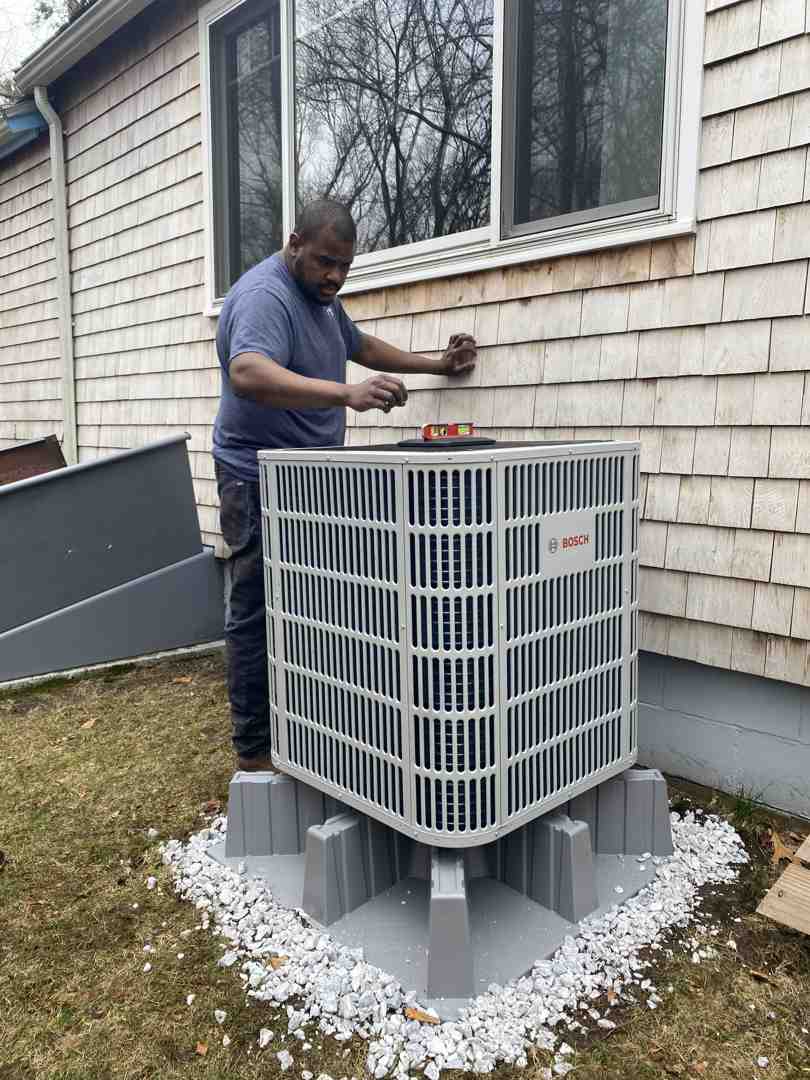
Why Getting the Right Size HVAC for the South Shore Homes Is More Complex Than You Think
Getting the right size hvac for the south shore homes is one of the most important decisions you’ll make as a homeowner in this region — and it’s more nuanced than most people expect. The South Shore’s unique mix of coastal humidity, salt air, unpredictable New England winters, and older housing stock means that a generic sizing approach simply won’t cut it.
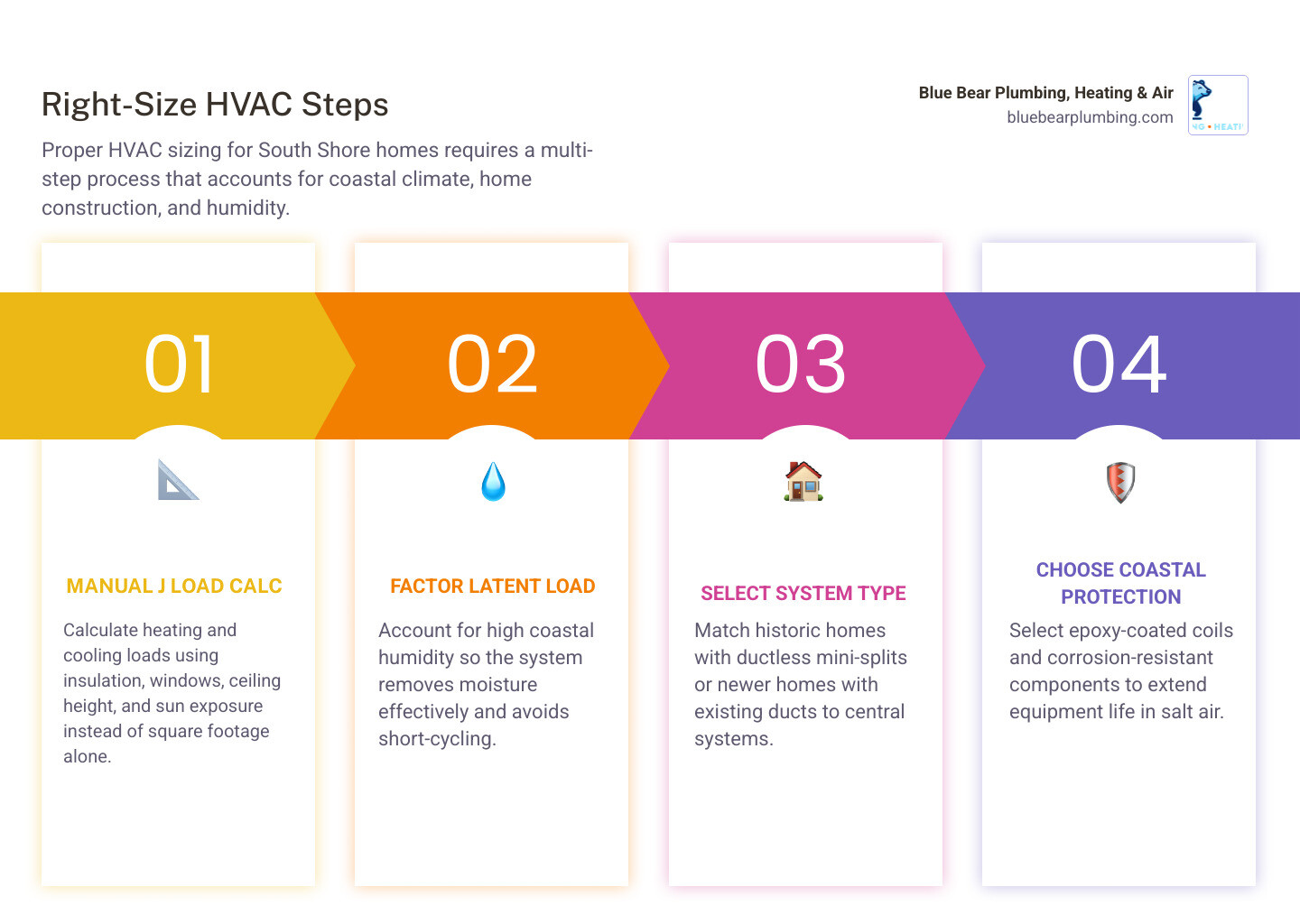
Here’s a quick snapshot of what proper HVAC sizing for South Shore homes involves:
- Run a Manual J load calculation — this accounts for your home’s insulation, windows, ceiling height, sun exposure, and more, rather than relying on square footage alone
- Account for latent load — coastal humidity means your system must remove moisture, not just cool or heat air
- Match the system type to your home — historic Capes and Colonials often need ductless mini-splits; newer homes with existing ducts may do well with central systems
- Choose coastal-rated equipment — epoxy-coated coils and corrosion-resistant components extend system life in salt air environments
- Explore Mass Save rebates — qualifying heat pump upgrades can unlock significant financial incentives for South Shore homeowners
Most sizing mistakes come down to one thing: oversimplification. A contractor who sizes your system based on square footage alone — without factoring in your home’s age, insulation, orientation, or proximity to the coast — is setting you up for short-cycling, poor humidity control, and higher energy bills. Even going half a ton too large can cause real comfort and efficiency problems.
I’m Marc Provenzano, Marketing Manager at Blue Bear Plumbing, Heating & Air, where I’ve worked closely with our team of local HVAC experts to understand what South Shore homeowners really face when getting the right size hvac for the south shore homes. In this guide, I’ll walk you through everything you need to make a confident, informed decision.
Why Sizing Matters: The Science of Getting the Right Size HVAC for the South Shore Homes
When it comes to home heating and cooling, there is a common misconception that “bigger is always better.” Many believe that buying a larger system will cool or heat the home faster. In reality, an oversized system is one of the most expensive mistakes a homeowner can make.
To understand why, we have to look at the science of thermodynamics and how modern air conditioners and heat pumps operate. Your home’s comfort depends on managing two distinct types of heat loads:
- Sensible Load: This is the actual temperature of the air that you read on your thermostat.
- Latent Load: This is the moisture or humidity suspended in the air.
In coastal Massachusetts, managing the latent load is just as critical as lowering the temperature. An oversized system will blast cold air into your home and rapidly satisfy the thermostat’s temperature setting. However, because it runs for such a short period—a phenomenon known as short-cycling—it shuts off before it has completed a full dehumidification cycle. This leaves you with cold, clammy air and creates a prime breeding ground for mold and mildew in your drywall and ductwork.
Conversely, an undersized system will run continuously without ever reaching your desired temperature setpoint. This puts immense strain on the compressor and electrical components, leading to premature system failure, uneven temperatures, and skyrocketing monthly utility bills.
To avoid these extremes, professional HVAC technicians perform an ACCA Manual J load calculation. This engineering standard calculates the exact BTU (British Thermal Unit) capacity your home needs by evaluating your home’s unique thermal envelope. When thinking about these variables, it helps to review Things to Think About When You Want to Replace Your HVAC System to understand how insulation, windows, and ductwork factor into the equation.
Once the load calculation is complete, we can determine What Does a New HVAC Installation Include? to ensure that the physical equipment, ductwork modifications, and air distribution systems are precisely matched to your home’s scientific requirements.
Coastal Climate Challenges: Salt Air, Humidity, and Storms
Living on the South Shore—whether in Scituate, Marshfield, Cohasset, or Plymouth—means enjoying beautiful ocean views and refreshing sea breezes. However, that same coastal environment presents severe challenges for standard HVAC systems.
The primary culprit is salt air. High-velocity winds carry microscopic salt crystals inland. When these crystals settle on the metallic surfaces of your outdoor condenser, they dissolve into a highly conductive brine. This brine strips away the protective oxide film of copper and aluminum coils, accelerating galvanic corrosion. Left unprotected, a standard outdoor unit that might last 15 years inland can fail in as little as 5 to 7 years along the coast.
Additionally, our high summer humidity levels increase the latent load on your system. To combat this, coastal HVAC systems must be engineered with specialized protective features:
- Epoxy or Phenolic-Coated Coils: Factory-applied coatings (such as Marine-grade or Seacoast protection) shield copper tubes and aluminum fins from salt-driven corrosion.
- Corrosion-Resistant Cabinets: Powder-coated or heavy-gauge aluminum cabinets resist rust.
- Sealed Electrical Compartments: Protecting sensitive controls from moisture and salt intrusion prevents electrical shorts.
Because coastal systems work harder and face harsher conditions, regular maintenance is non-negotiable. Understanding Why Paying for HVAC Maintenance Now Saves Your Wallet Later is key to protecting your investment, as routine cleanings can prevent salt buildup from eating away at your components. To keep your system running efficiently, homeowners should follow The Ultimate HVAC Maintenance Visit Checklist to ensure professional technicians check for early signs of coastal wear and tear.
Protecting Your System from Coastal Elements
If your home is in a high-salt or flood-prone zone, physical installation safeguards are required by local building codes and common sense:
- Elevation: Elevating the outdoor unit on a sturdy, code-compliant platform or wall mount keeps it safe from coastal flooding, storm surges, and heavy snow drifts.
- Anchoring: Securing the unit to its pad with wind-resistant, heavy-duty stainless steel or polymer hardware prevents shifting during high-velocity coastal storms.
- Coil Rinsing: Homeowners should gently rinse the outdoor condenser coils with fresh water every few weeks during the peak salt season to wash away salt deposits. Always avoid using high pressure, which can bend the delicate aluminum fins.
System Types: Heat Pumps, Furnaces, and Packaged Units
Selecting the right heating and cooling technology depends heavily on your home’s existing infrastructure, layout, and comfort goals.
Choosing Your HVAC System
- If you have existing ductwork:
- Gas Furnace: Traditional, reliable heating.
- Central Heat Pump: Efficient year-round heating and cooling.
If you do not have existing ductwork:
- Ductless Mini-Split: Flexible, zoned comfort.
- Dual-Fuel System: Hybrid efficiency combining a heat pump and furnace.
Cold-Climate Heat Pumps: These systems have revolutionized home comfort in Massachusetts. Unlike older models that struggled when temperatures dropped below freezing, modern cold-climate heat pumps utilize variable-speed inverter compressors to extract heat from outdoor air even when temperatures dip well below zero. They are incredibly efficient, often delivering two to three times more heat energy than the electricity they consume.
- Gas Furnaces: Natural gas remains a highly common heating source across the South Shore. Modern condensing gas furnaces achieve AFUE (Annual Fuel Utilization Efficiency) ratings of up to 98%, converting nearly all fuel directly into heat.
- Packaged Units: Often used in commercial spaces or homes with limited indoor space, packaged units house all heating and cooling components in a single outdoor cabinet.
If your current heating or cooling system is struggling to keep up with the changing New England seasons, it is important to know How to Decide Between HVAC Repair and Replacement Without Losing Your Cool so you don’t spend money patching up an inefficient, improperly sized system.
Central AC vs. Mini-Splits for Historic South Shore Properties
The South Shore is famous for its rich history, which is reflected in beautiful historic Colonials, Craftsman bungalows, and classic Cape Cod-style homes. While these homes possess unmatched architectural charm, they present a major challenge: they were built long before central air conditioning existed, meaning they lack the ductwork or wall cavities required to install traditional ducted systems.
For these properties, the debate between central air and ductless mini-splits is highly relevant:
- Central Air Conditioning: If your historic home already has a ducted forced-hot-air heating system, retrofitting it with central AC can be a seamless way to achieve uniform, invisible cooling. However, if you have hot water radiators or baseboards, installing central air requires cutting through historic plaster walls, dropping ceilings, or sacrificing closet space to run ducts. Central systems can also lose 20% to 30% of their energy through duct leakage.
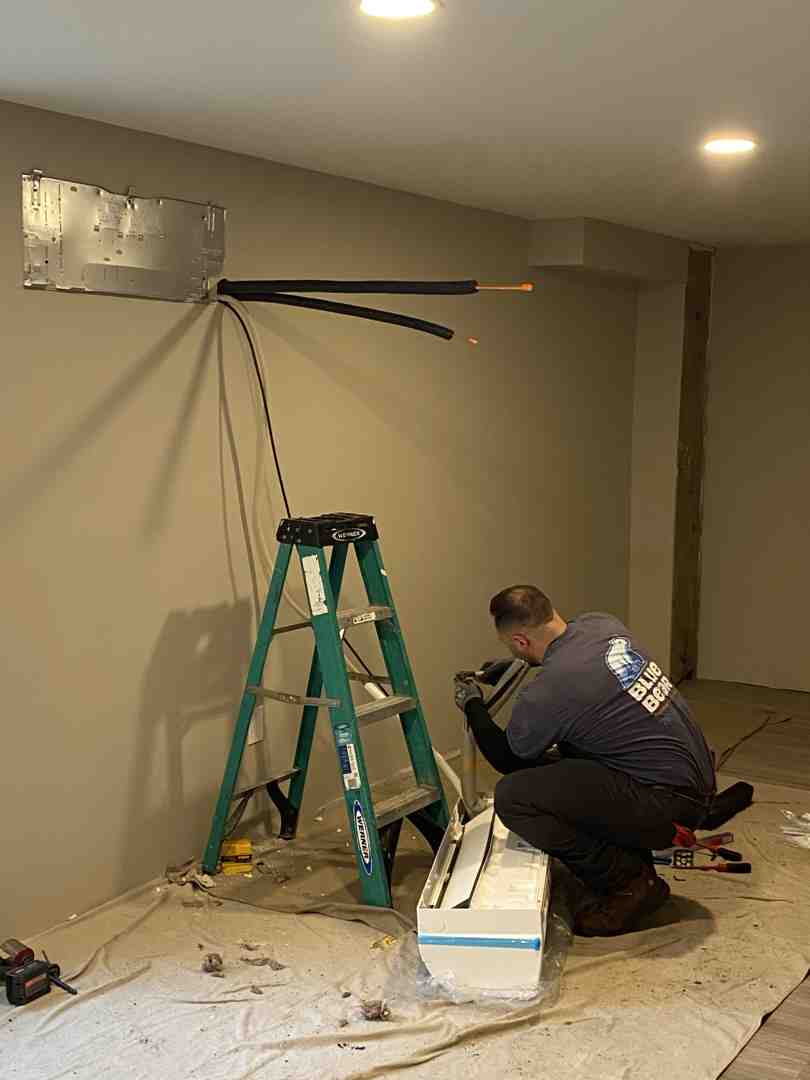
- Ductless Mini-Split Systems: Mini-splits are often the ideal solution for older South Shore properties. They consist of an outdoor condenser connected to one or more indoor air handlers via small refrigerant lines that only require a 3-inch hole through an exterior wall. They offer whisper-quiet operation (typically between 19 and 26 decibels) and allow for precise zone control, meaning you can cool or heat only the rooms you are currently using.
To weigh your options, read The South Shore Guide to Choosing Between Central Air and Mini Splits for a localized breakdown of how these systems perform in our regional climate. For a broader look at the mechanical advantages and disadvantages of both approaches, check out Ductless vs Ducted Cooling Pros and Cons for Every Homeowner to see which configuration aligns with your long-term goals.
Sizing Methodology: Moving Beyond Square Footage
For decades, many contractors relied on a simplified “rule of thumb” to size HVAC systems: typically allocating 1 ton of cooling capacity (12,000 BTUs/hour) for every 500 to 600 square feet of living space.
While this math is easy, it is incredibly inaccurate. A 1,500-square-foot home built in Hingham in 1790 has completely different thermal dynamics than a highly insulated 1,500-square-foot new construction home built in Norwell in 2026.
| Sizing Factor | Rule of Thumb Estimate | Professional Manual J Calculation |
|---|---|---|
| Primary Metric | Square footage only | Comprehensive thermal envelope analysis |
| Infiltration Rate | Ignored | Evaluates air leakage based on building age |
| Window Evaluation | Ignored | Factors in window area, glazing (double-pane), and orientation |
| Ceiling Height | Assumes standard 8-foot ceilings | Calculates exact air volume (including vaulted ceilings) |
| Insulation Levels | Ignored | Evaluates actual R-values in walls, floors, and attics |
| Climate Data | Generic regional estimates | Precise local ASHRAE weather design parameters |
To get a truly accurate measurement, a professional must evaluate several critical factors:
- Building Vintage & Air Leakage: Older homes naturally have higher infiltration rates, requiring more heating and cooling capacity unless significant air sealing has been completed.
- Insulation Levels: Upgraded insulation in the attic (R-49+) and walls (R-21+) significantly reduces the required BTU load of your HVAC system.
- Window Orientation & Solar Heat Gain: Large, west-facing windows will absorb massive amounts of radiant heat in the afternoon, increasing the summer cooling load compared to a shaded, north-facing home.
- Ceiling Height & Air Volume: A room with 12-foot vaulted ceilings contains 50% more air volume to heat and cool than a room with standard 8-foot ceilings, even if their floor square footage is identical.
The Pitfalls of Getting the Right Size HVAC for the South Shore Homes
When getting the right size hvac for the south shore homes, ignoring these variables leads directly to comfort issues.
An oversized system will cycle on and off constantly, spiking your electric bills because the initial startup draw is the most energy-intensive part of an electrical cycle. It also subjects the compressor to excessive wear, shortening the system’s lifespan by up to 30%.
An undersized system will run continuously on hot July days or during freezing January nights, failing to keep your family comfortable while wearing out its mechanical components.
Sizing Ductless Systems: Getting the Right Size HVAC for the South Shore Homes Room-by-Room
Unlike central ducted systems, which rely on a single, whole-house load calculation, ductless mini-split systems require a room-by-room Manual J calculation. Each indoor air handler must be perfectly matched to the specific heat loss and gain of the room it serves.
For example, a master bedroom with insulated walls and minimal sun exposure may only require a 6,000 BTU unit, while a sunroom with vaulted ceilings and extensive glass window walls might require a 12,000 BTU unit, despite having the same square footage.
By utilizing variable-speed inverter technology, modern multi-zone heat pumps can dynamically adjust their output to match the real-time load of each individual room, saving energy and providing highly consistent comfort. If you are ready to upgrade your home’s cooling setup, you can learn more about finding the right fit by exploring how to Chill Out with the Best AC Installation in Norwell MA.
Thermostat Settings, Humidity Control, and Indoor Air Quality
Getting the right size HVAC system is only the first step; operating it correctly is what ensures long-term comfort and energy savings.
- Winter Thermostat Strategies: During New England winters, the U.S. Department of Energy recommends setting your thermostat to 68°F while you are awake and at home. Lowering the thermostat by 7 to 10 degrees for 8 hours a day (such as when you are asleep or at work) can save up to 10% annually on your heating costs. However, if you use a cold-climate heat pump, it is best to maintain a steady temperature (between 65°F and 68°F) rather than making large adjustments, as heat pumps operate most efficiently when maintaining a constant temperature.
- Summer Thermostat Strategies: In the summer, setting your thermostat to 78°F when you are at home balances comfort with energy efficiency. If you are away, raising the temperature prevents unnecessary cooling while keeping humidity levels in check.
- Managing Relative Humidity: Indoor relative humidity should ideally be kept between 30% and 50%. In the winter, low humidity can make the air feel colder than it actually is, while high summer humidity makes the air feel sticky and warm.
- Whole-Home Dehumidifiers: In our humid coastal climate, pairing a properly sized air conditioner or heat pump with a whole-home dehumidifier can be a game-changer. By independently managing the latent load, you can keep your home feeling cool and comfortable at higher thermostat settings, saving money on your utility bills.
For homeowners in our western service areas looking for professional cooling system design and installation, you can read Natick AC Installation: How to Stay Cool Without Breaking a Sweat to discover how proper sizing and humidity control are integrated into our local installations.
Mass Save Rebates and Financial Incentives
Upgrading to an energy-efficient heating and cooling system is a significant investment, but Massachusetts homeowners have access to some of the most robust financial incentives in the country.
The Mass Save program offers substantial rebates to encourage homeowners to transition to high-efficiency heat pumps. Depending on your home’s current heating fuel and the type of system you install, you could qualify for thousands of dollars in whole-home or partial-home heat pump rebates.
In addition to state-level rebates, federal incentives under the Inflation Reduction Act provide tax credits of up to 30% of the total installation cost (up to $2,000 annually) for qualifying high-efficiency heat pumps. To understand how these state and federal programs work together, check out our guide on the 2023 HVAC Installation Tax Credits Massachusetts for a detailed breakdown of eligibility requirements.
Navigating these incentives can feel overwhelming, but our team is here to help you maximize your savings. For those living in the South Boston area, The Quincy Guide to Affordable AC Installation provides excellent local tips on utilizing rebates and financing to make your system upgrade highly affordable.
Frequently Asked Questions about South Shore HVAC Sizing
How does the coastal salt air affect my HVAC system’s lifespan?
Coastal salt air accelerates corrosion on standard copper and aluminum coils, forming a conductive brine that eats away at the metal. Without proper protection, an unprotected outdoor unit near the water can fail in 5 to 7 years. To maximize your system’s lifespan, choose coastal-rated units with factory-applied epoxy or phenolic coil coatings, elevate the unit above flood levels, and gently rinse the coils with fresh water every few weeks during the summer.
Can I use my old HVAC system’s size to choose a replacement?
No, you should never assume your old system was sized correctly. Many older systems were oversized by default. Furthermore, if you have made any upgrades to your home’s envelope—such as installing double-pane windows, adding attic insulation, or sealing air leaks—your home’s heating and cooling load has likely decreased. Installing the same size unit as before could result in an oversized system that short-cycles and fails to control humidity.
What is the Mass Save rebate for upgrading to a heat pump?
Mass Save offers significant rebates for homeowners upgrading to qualified energy-efficient heat pumps. These rebates can range from several thousand dollars for partial-home systems to even larger amounts for whole-home conversions, depending on your existing heating fuel. To ensure you select a qualifying system and maximize your savings, read How to Pick the Best AC Installation in Quincy MA for expert advice on choosing the right equipment and navigating the local rebate process.
Conclusion
Getting the right size hvac for the south shore homes is not a matter of guesswork or simple square footage calculations. It is a precise science that requires a deep understanding of local coastal climates, building materials, and modern thermodynamic engineering.
At Blue Bear Plumbing, Heating & Air, our team of friendly, local experts is committed to helping you find the perfect comfort solution for your home. We serve communities across the South Shore and South Boston, providing upfront pricing, attentive customer care, and unmatched technical expertise.
Whether you are looking to install a ductless mini-split in a historic Scituate Cape or need a comprehensive Manual J load calculation for a new home in Quincy, we are here to help. If you are ready to partner with a trusted local team, check out our guide on Finding a Reliable AC Installation Company in Quincy MA to learn what to look for, or visit our website at bluebearplumbing.com to schedule your professional home comfort assessment today!


Contact Us Today

Routine maintenance is vital for the longevity of your plumbing, heating, and air conditioning systems. Sign up for our Blue Care Maintenance Plan for annual service and exclusive membership benefits, including:
- Priority scheduling
- Waived service fee during normal business hours
- 10% discount on service calls
- 3% discount on new installations
- Two-year parts and labor warranty on new equipment