

Step-by-Step Guide to New HVAC Health Benefits
HVAC
I’m looking to upgrade my home’s heating. Who in Quincy, Natick, and Norwell specializes in energy-efficient systems?
The new HVAC benefits beyond comfort are more significant than most homeowners realize — and if you’ve been on the fence about upgrading your system, the reasons to act go well beyond simply staying warm in winter or cool in summer.
Here’s a quick look at what a modern HVAC system actually delivers:
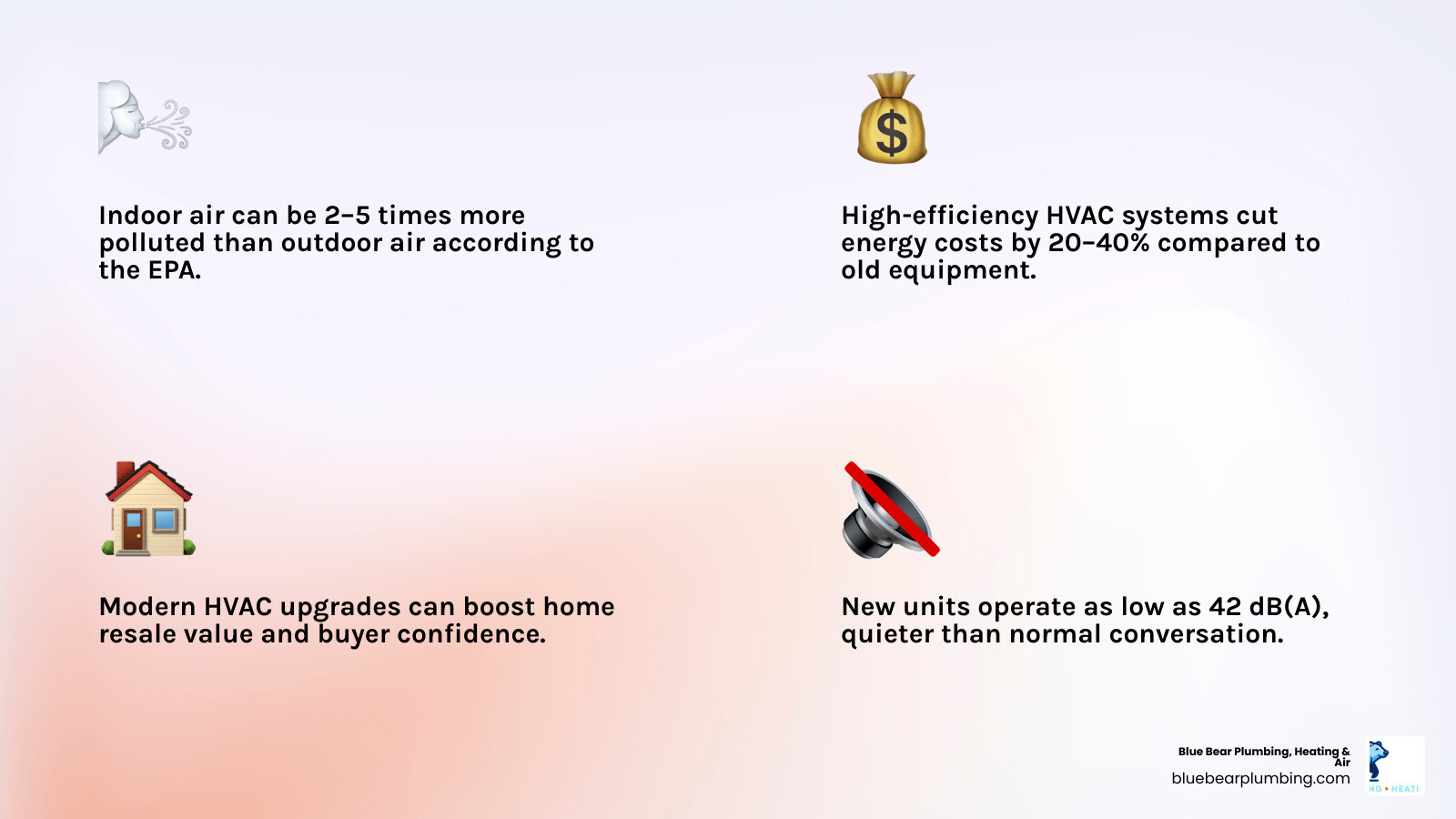
- Cleaner indoor air — Advanced MERV 13 and HEPA filtration captures dust, pollen, pet dander, and mold spores that older systems miss entirely.
- Lower energy bills — High-efficiency systems can reduce heating and cooling costs by 20–40% compared to outdated equipment.
- Better humidity control — Precise moisture management keeps indoor humidity in the healthy 30–50% range, reducing mold risk and respiratory irritation.
- Higher home value — A new, efficient system is a major selling point that can improve marketability and buyer confidence during inspections.
- Quieter operation — Modern outdoor units run as low as 42 dB(A), quieter than a normal conversation, which can meaningfully improve sleep quality.
- Environmental impact — Newer systems use low-GWP refrigerants and consume significantly less electricity, reducing your home’s carbon footprint.
- Smart controls and zoning — Programmable and AI-assisted thermostats, plus zoning systems, can cut energy use by an additional 10–42% depending on your home’s layout.
Most people think of their HVAC system as a temperature machine — something that keeps the house from being miserable in July or January. But heating and cooling already account for about 43% of the energy used in the average American home, and that’s before you factor in what your system is (or isn’t) doing for your air quality, your health, and your home’s long-term value.
The EPA estimates that indoor air can be two to five times more polluted than outdoor air. Americans spend roughly 90% of their time indoors. When you put those two facts together, the performance of your HVAC system starts to look less like a comfort question and more like a health question.
I’m Marc Provenzano, Marketing Manager at Blue Bear Plumbing, Heating & Air, and I’ve spent years helping South Shore homeowners understand exactly how new HVAC benefits beyond comfort can translate into real, measurable improvements in their daily lives. In this guide, I’ll walk you through each of those benefits step by step so you can make a confident, informed decision about your home.
Breathe Easier: Indoor Air Quality and New HVAC Benefits Beyond Comfort
When we talk about the air inside our homes, we are talking about what our families breathe for hours on end. In tightly sealed Massachusetts homes—especially during our freezing winters in Quincy and humid summers in Weymouth—stale air gets trapped. A modern HVAC system does not just push this air around; it serves as the primary defense system for your household’s respiratory health.
Advanced Filtration and Contaminant Removal
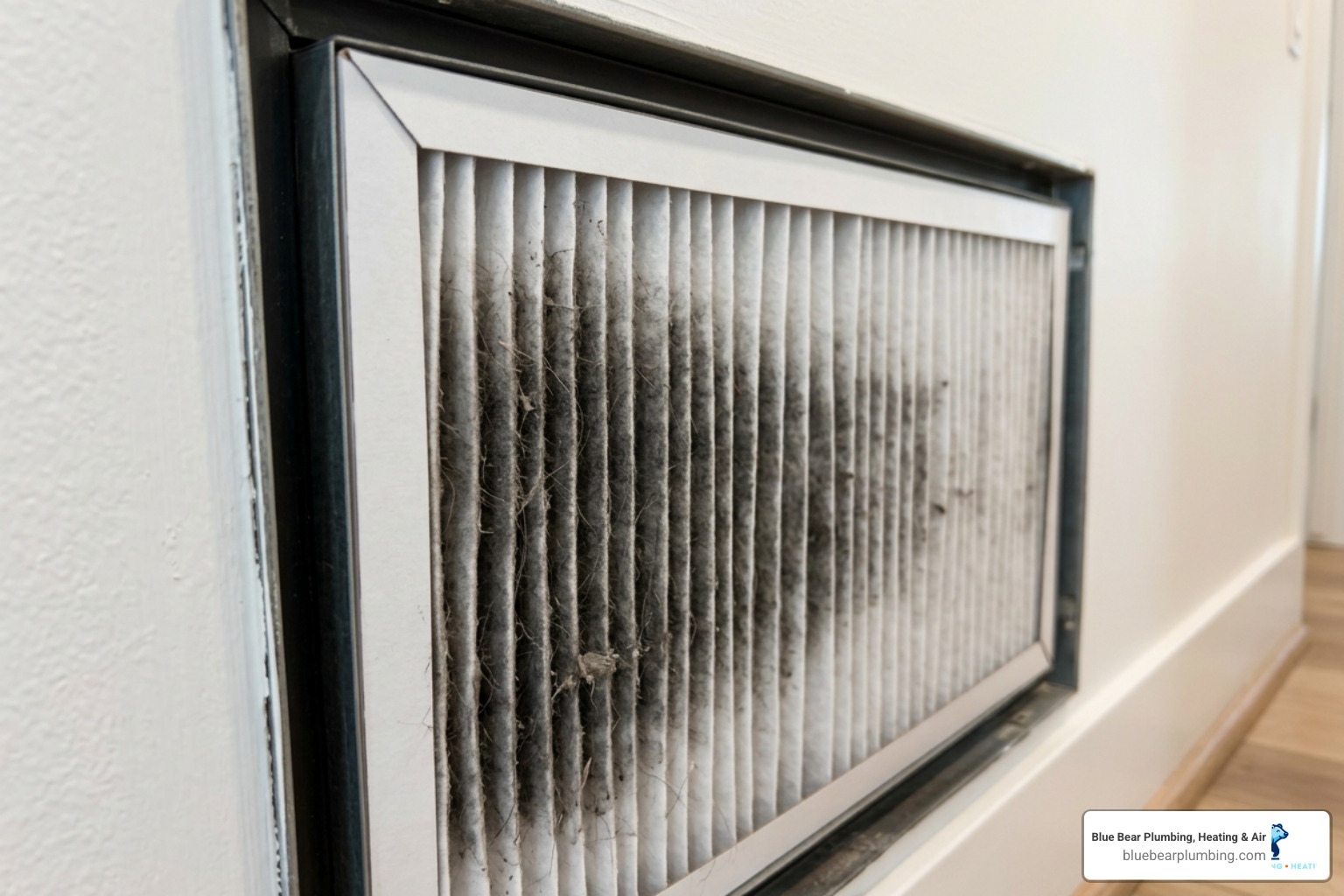
Standard, one-inch fiberglass filters found in older HVAC units are designed to protect the equipment itself from large dust bunnies, not to protect your lungs. They catch the “basketballs” while letting the microscopic “gnats”—like pollen, pet dander, and mold spores—fly right through.
Modern high-efficiency systems are engineered to accommodate thicker, denser MERV 13 and HEPA filters. These advanced filters capture up to 99.97% of airborne particles as small as 0.3 microns. If your home has residents who struggle with asthma or seasonal allergies, upgrading your system can lead to an immediate and noticeable reduction in symptoms.
Furthermore, upgrading from an outdated, failing system is critical for your home’s overall safety. If you are still running a unit that relies on obsolete chemical compounds, understanding What the R-22 Phase Out Means for Your Home is essential. These older systems are not only bad for the environment, but they are also increasingly difficult and expensive to maintain, making a transition to a modern, high-filtration system a smart health and financial move.
Precision Humidity Control and Mold Prevention
In places like Braintree and Marshfield, coastal humidity can make indoor spaces feel sticky and encourage the growth of biological contaminants. Conversely, winter heating can dry out the air, leading to itchy skin and irritated sinuses. Modern HVAC systems equipped with variable-speed compressors handle moisture management beautifully.
Instead of turning fully on and then shutting off abruptly (which leaves humidity levels swinging wildly), a variable-speed system runs continuously at lower, highly efficient speeds. This constant, gentle circulation draws moisture out of the air during hot humid days, keeping your relative humidity consistently in the ideal 30% to 50% range.
Maintaining this balanced moisture level prevents several health and structural hazards:
- Mold and Mildew Proliferation: Mold spores thrive when relative humidity climbs above 60%. Keeping moisture low prevents mold from taking root in your drywall and carpets.
- Dust Mite Control: Dust mites struggle to survive in environments where the humidity is kept below 50%.
- Respiratory Comfort: Air that is too dry or too damp irritates the throat and lungs, making you more susceptible to winter colds and summer allergies.
- Structural Preservation: Balanced humidity protects your home’s wooden framing, hardwood floors, and plaster from expanding, warping, or cracking.
Maximizing Energy Efficiency and Environmental Sustainability
With the cost of energy on the South Shore, efficiency is no longer just a green talking point—it is a financial necessity. In July 2026, efficiency regulations require systems to meet strict performance metrics.
Modern systems utilize advanced inverter-driven compressors and variable-speed blower motors. To understand how these components save you money, it helps to look at the ratings. The industry measures cooling efficiency using SEER2 (Seasonal Energy Efficiency Ratio 2) and heating efficiency using HSPF2 (Heating Seasonal Performance Factor 2).
To give you an idea of the leap in technology, let’s compare older units to what is available today:
| System Era | Cooling Rating (SEER / SEER2) | Heating Rating (AFUE / HSPF2) | Estimated Energy Waste |
|---|---|---|---|
| Pre-2010 Systems | 10–13 SEER | 80% AFUE / Low HSPF | 30% to 40% waste |
| Standard Modern Systems | 14–16 SEER2 | 90% AFUE / 7.5–8.8 HSPF2 | 15% to 20% waste |
| High-Efficiency Systems (2026) | 18–25 SEER2 | 95%+ AFUE / 9.0–10.0+ HSPF2 | Minimal waste (highly optimized) |
If you want a deeper dive into what these numbers mean for your monthly budget, take a look at our guide on Decoding Efficiency Ratings for Every Savvy Homeowner.
Understanding New HVAC Benefits Beyond Comfort in Utility Savings
Because heating and cooling make up nearly half of your home’s energy consumption, upgrading to a high-efficiency system can reduce your monthly utility bills by 20% to 40%.
These savings are achieved through a combination of smart technology and proper installation. For instance, older single-stage units operate like a light switch—they are either 100% on or completely off. This constant cycling creates massive energy spikes. Variable-speed motors, on the other hand, act like cruise control for your home, adjusting output incrementally to maintain a steady temperature with minimal power draw.
To maximize these savings, we also recommend looking at your home as a complete system. Leaky ducts can cause a home to lose 20% to 30% of its conditioned air before it ever reaches your living spaces. By sealing those leaks and pairing your new unit with a smart thermostat, you can capture even greater savings. Learn more about how these pieces fit together in our article on Everything You Need to Know About How High Efficiency Systems Reduce Summer Costs, and find out if investing in The Ultimate Guide to Higher Efficiency Rating Worth the Extra Cost is the right move for your South Shore home.
Leveraging Massachusetts Energy Rebates and Tax Credits
Living in Massachusetts comes with a major financial advantage when it comes to upgrading your HVAC system. Through the Mass Save® program, local homeowners can access some of the most generous energy-efficiency incentives in the country.
Because the state is actively pushing for decarbonization, there are substantial rebates available for transitioning to high-efficiency heat pumps. Additionally, qualifying upgrades can be financed using the Mass Save HEAT Loan, which offers 0% interest financing for up to $25,000 with highly favorable repayment terms.
To make sure you don’t leave any money on the table, check out our resources on 2023 HVAC Installation Tax Credits Massachusetts and our step-by-step instructions on How to Apply for Energy Rebates in Massachusetts. The absolute first step to unlocking these savings is scheduling one of our certified Mass Save Energy Audits, which will pinpoint exactly where your home is losing energy and qualify you for these excellent programs.
Boosting Property Value and Home Marketability
If you plan to sell your home in Natick, Norwell, or anywhere on the South Shore in the near future, a new HVAC system is one of the smartest investments you can make. Unlike cosmetic upgrades that are subject to personal taste, a clean, modern, and highly efficient heating and cooling setup is a universally appreciated asset.
When prospective buyers tour a home, one of their biggest fears is inheriting an old, failing mechanical system. Seeing a brand-new heat pump or high-efficiency furnace instantly eliminates that anxiety. It signals to buyers and home inspectors alike that the property has been meticulously maintained. To understand how this translates to a faster sale and a stronger asking price, read The Ultimate Guide to How a New HVAC System Increases Home Value.
Smart Controls and Zoned Comfort Systems
One of the most exciting aspects of modern HVAC technology is the level of control it gives you over your living spaces. Gone are the days when a single thermostat in a drafty hallway ruled the temperature of every room in your house.
With smart thermostats and zoning systems, we can divide your home into distinct comfort zones. Using motorized dampers inside your ductwork, a zoned system directs conditioned air only to the rooms that need it.
The benefits of integrating smart thermostats and zoning include:
- No More Thermostat Wars: Family members can adjust temperatures in their own zones without affecting the rest of the house.
- Elimination of Hot and Cold Spots: Two-story homes often suffer from hot upstairs bedrooms and freezing basements. Zoning balances these temperature differences perfectly.
- Automated Energy Savings: Smart thermostats learn your daily routine, automatically lowering the heat or cooling when you are away at work, saving you up to 10% to 15% annually on energy bills.
- Remote Access: You can monitor and adjust your home’s temperature from your smartphone, whether you are commuting home on the MBTA or vacationing on Cape Cod.
Quiet Operation and New HVAC Benefits Beyond Comfort for Sleep Quality
If your current air conditioner sounds like a jet engine preparing for takeoff every time it kicks on, you know how disruptive older mechanical systems can be. This noise pollution does more than just interrupt your favorite TV show—it can actively degrade your sleep hygiene.
Modern high-efficiency systems are designed with sound-dampening technology, insulated compressor blankets, and variable-speed blowers that ramp up and down gradually. Many of these units operate at noise levels as low as 42 dB(A). To put that in perspective, a normal conversational voice is about 60 dB(A), and a quiet library is around 40 dB(A). A new system runs so quietly that you will barely notice it is operating, allowing for deeper, more restful sleep and a calmer home environment.
Frequently Asked Questions About Modern HVAC Upgrades
We hear a lot of great questions from homeowners in towns like Abington, Hanson, and Quincy when they are considering an upgrade. Here are some of the most common inquiries we receive:
How does a new HVAC system improve indoor air quality?
A new system improves indoor air quality through three main mechanisms:
- Superior Filtration: Modern air handlers are designed to handle MERV 13 and HEPA filters, which capture microscopic allergens, dust, and pet dander.
- Continuous Air Circulation: Variable-speed blowers run on low-energy cycles to continuously pass your home’s air through the filtration system, preventing stagnant air pockets.
- Advanced Humidity Control: By keeping relative humidity between 30% and 50%, a new system prevents the growth of mold, mildew, and dust mites.
Will upgrading my HVAC system really increase my home’s resale value?
Yes, absolutely. Buyers in 2026 are highly focused on energy efficiency and low maintenance costs. A new HVAC system with transferable manufacturer warranties provides peace of mind, makes your home stand out in real estate listings, and prevents buyers from asking for steep price concessions during the home inspection phase.
What are the environmental advantages of upgrading in 2026?
Modern systems are significantly more eco-friendly because they consume up to 40% less electricity than older units, directly shrinking your home’s carbon footprint. Additionally, systems manufactured in 2026 comply with the AIM Act, utilizing next-generation, low-GWP (Global Warming Potential) refrigerants that are far safer for the ozone layer and the environment.
Conclusion
When you look closely at the new HVAC benefits beyond comfort, it becomes clear that upgrading your heating and cooling system is not just an appliance purchase—it is a comprehensive investment in your family’s health, your financial peace of mind, and the value of your property. From breathing cleaner, allergen-free air to watching your monthly utility bills drop, the advantages of modern climate technology touch almost every aspect of your daily life.
At Blue Bear Plumbing, Heating & Air, we pride ourselves on being the friendly, local team that South Shore homeowners trust. Whether you are in Quincy, Norwell, Natick, or anywhere else in our South Shore service area, our licensed experts are here to help you design a customized comfort and wellness solution for your home.
If you are ready to experience these incredible health and financial benefits for yourself, we are here to guide you through every step of the process. Contact us at Blue Bear Plumbing, Heating & Air today to schedule your consultation and take the first step toward a healthier, happier home!
Contact Us Today

Routine maintenance is vital for the longevity of your plumbing, heating, and air conditioning systems. Sign up for our Blue Care Maintenance Plan for annual service and exclusive membership benefits, including:
- Priority scheduling
- Waived service fee during normal business hours
- 10% discount on service calls
- 3% discount on new installations
- Two-year parts and labor warranty on new equipment