




Liquid Gold: Slashing Bills with Hydronic Heating Systems
HVAC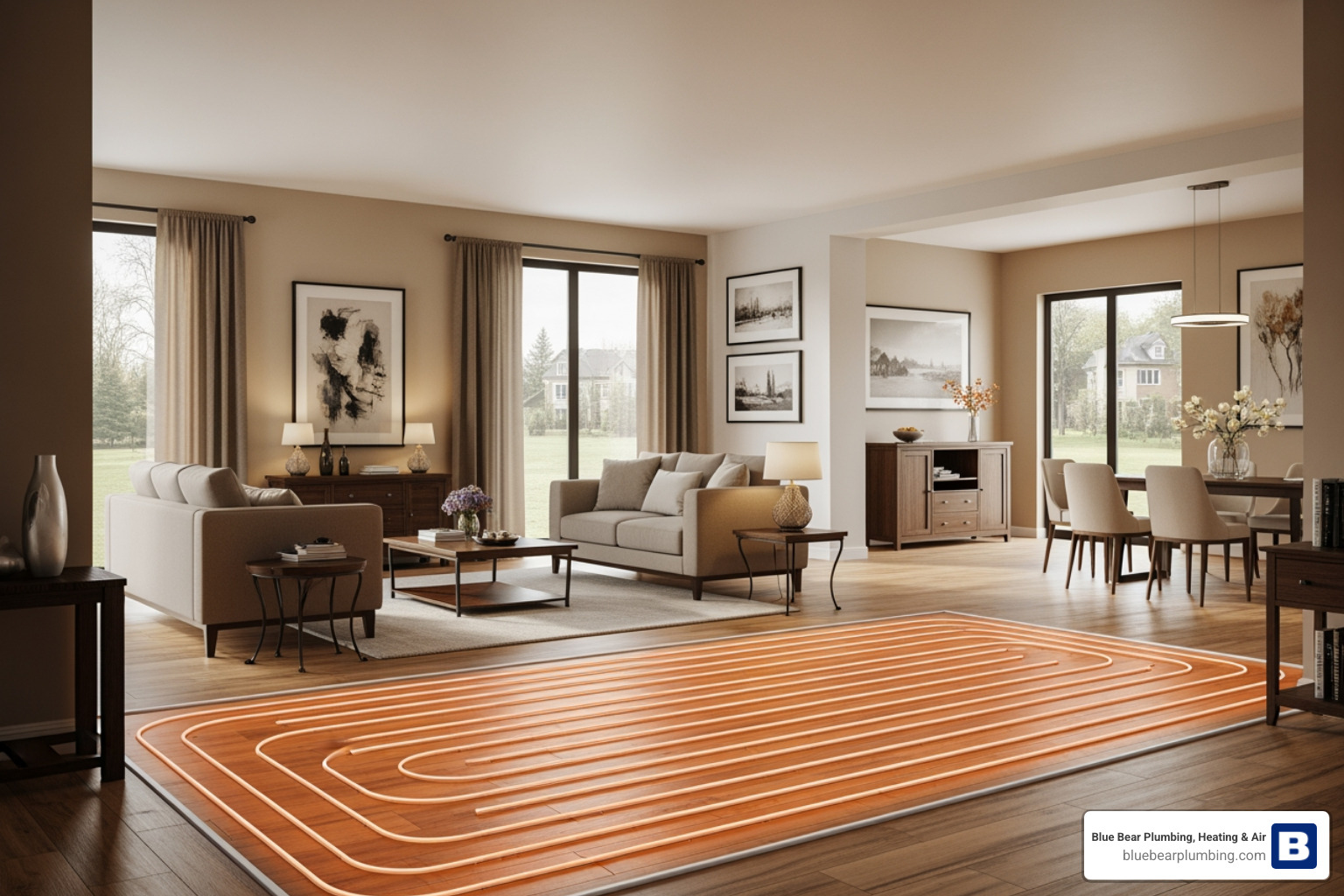
How Much Hydronic Heating Can Actually Save on Your Energy Bills
If you’ve been wondering how much does hydronic heating save on energy, here’s the short answer:
| Scenario | Typical Energy Savings |
|---|---|
| Homeowners switching from forced-air to hydronic | 20% to 40% on operating costs |
| Radiant floor heating (most homeowners) | 10% to 30% on energy use |
| Commercial hydronic installations | Up to 60% or more |
| Floor heating (30°C) vs. conventional radiator (45°C) | 22% less heat pump electricity |
| Ventilation radiator (33°C) vs. conventional radiator (45°C) | 17% less heat pump electricity |
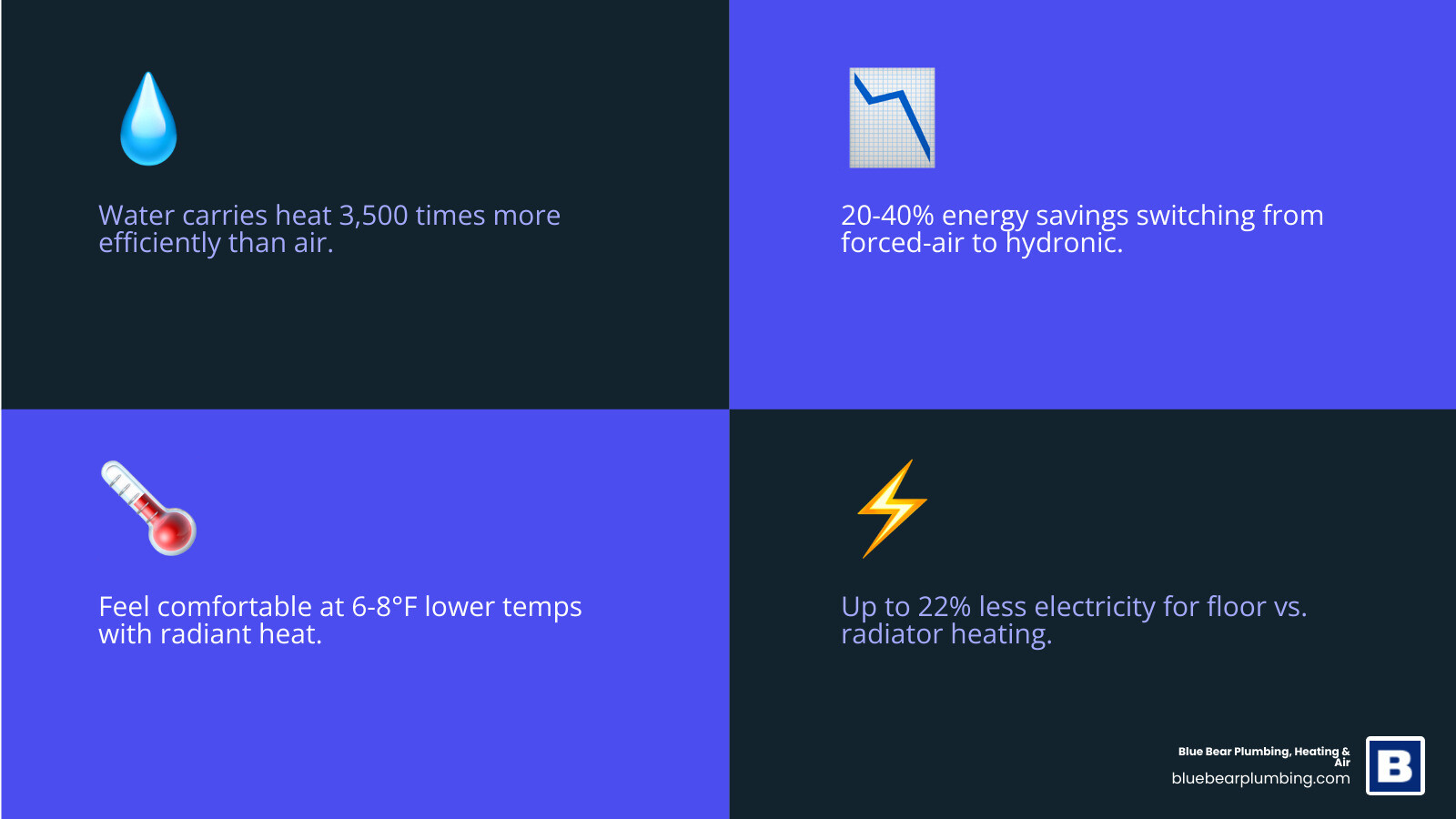
Those aren’t small numbers. For a South Shore homeowner spending a significant portion of their budget on heating every winter, a 20% to 40% reduction is real, meaningful money — year after year.
Here’s why it works: hydronic heating moves warmth through water instead of air. And water carries heat roughly 3,500 times more efficiently than air for the same volume. That fundamental physics difference is what drives the savings. Instead of blasting hot air through ducts that leak and lose heat along the way, a hydronic system quietly delivers warmth right where you need it — through floors, radiators, or panels.
There’s also a comfort factor that directly ties to efficiency. Research from ASHRAE shows that people feel comfortable at temperatures 6 to 8°F lower with radiant heat than with forced-air systems. That means you can turn your thermostat down and still feel perfectly warm — and a lower thermostat setting means a lower energy bill.
I’m Marc Provenzano, Marketing Manager at Blue Bear Plumbing, Heating & Air, and I’ve spent years learning the ins and outs of home comfort systems — including how much does hydronic heating save on energy for homeowners right here in Massachusetts. In this guide, I’ll walk you through exactly how to size up your potential savings and what factors matter most.
What Hydronic Heating Is and Why It Can Use Less Energy
Hydronic heating is a system that heats water and circulates it through tubing, baseboards, panel radiators, or radiant floors to warm your home. Instead of pushing hot air through ductwork, it uses water as the heat-transfer medium.
That difference matters more than most homeowners realize.
With forced air, heat can be lost through leaky ducts, temperature can vary from room to room, and warm air tends to rise quickly toward the ceiling. With hydronic heating, warmth is delivered more evenly and often more directly to the occupied part of the room. That can reduce wasted heat and improve comfort at lower thermostat settings.
In practical terms, hydronic systems often save energy because they:
- Avoid duct leakage losses
- Deliver more even room-to-room temperatures
- Work well with zoning
- Pair efficiently with low-temperature heat sources
- Keep occupants comfortable at lower thermostat settings
Research also shows hydronic distribution efficiency can be far higher than forced-air distribution, with some findings putting it at roughly 3.8 to 10 times better. That does not mean every home will magically slash bills overnight, but it helps explain why properly designed hydronic systems often outperform conventional ducted heat.
How hydronic heating works in a typical Massachusetts home
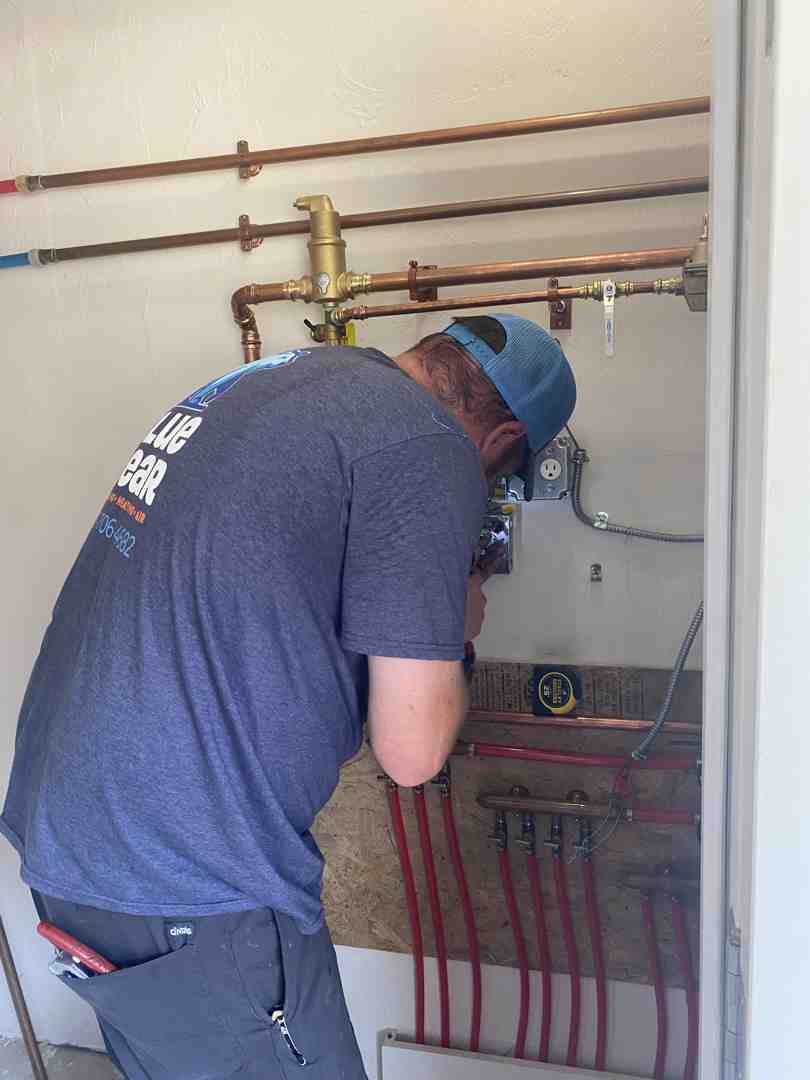
A hydronic system usually includes:
- A heat source such as a boiler or heat pump
- A circulator pump
- Piping or tubing
- Heat emitters such as radiators, baseboards, or in-floor tubing
- Thermostats and zone controls
The heat source warms the water. The pump moves that water through the system. The emitters release heat into the living space. The cooled water then returns to be heated again.
In South Boston and across the South Shore, we often see hydronic systems in older homes with baseboard or radiator heat, as well as in newer renovations with radiant floors in bathrooms, kitchens, and additions.
Why radiant heat can feel warmer at a lower thermostat setting
This is one of hydronic heating’s secret weapons.
Radiant systems warm surfaces and people more directly instead of mainly heating the air. Because of that, many homeowners feel comfortable with the thermostat set 2 to 4 degrees lower, and research cited by ASHRAE suggests comfort can be maintained even when room temperatures are 6 to 8°F lower than with convective heating.
That does not mean everyone should immediately drop the thermostat and start bragging to the neighbors. But it does mean comfort and efficiency can work together instead of fighting each other.
How Much Energy and Money Hydronic Heating Typically Saves
The most realistic answer is: it depends on the system design, the home, and what you’re comparing it to.
Still, the research gives us useful planning ranges.
Typical savings ranges homeowners can expect
For most homeowners, hydronic heating savings usually fall into these ranges:
| Hydronic setup | Typical savings range |
|---|---|
| Whole-home hydronic vs. forced-air | 20% to 40% operating cost savings |
| Radiant floor heating in homes | 10% to 30% energy savings |
| Well-designed commercial systems | Up to 60% or more |
A case study involving 50 homes found homeowners averaged about a 25% reduction in heating costs after converting from forced-air to hydronic. That is a helpful real-world benchmark because it lands right in the middle of the broader savings range.
A simple way to estimate your own potential savings
If you want a rough estimate, use this formula:
- Find your annual heating cost.
- Multiply it by a likely savings range of 10%, 20%, 25%, or 30%.
- Adjust up or down based on your home’s insulation, current system efficiency, and whether you plan to add zoning or low-temperature emitters.
For example, a homeowner with high winter heating bills, uneven temperatures, and aging ductwork may land toward the higher end of the range. A tightly sealed home with a newer heating system might see more modest savings.
Why the comparison system matters
Hydronic may save a lot compared with:
- Older forced-air systems with leaky ducts
- Poorly balanced ducted systems
- Homes with hot-and-cold room problems
- Systems that overheat some spaces while underheating others
Savings may be smaller if you’re comparing hydronic to:
- A very efficient modern system already operating well
- A home with excellent duct design and sealing
- A house where the building envelope is the real problem
That last point is important. If your insulation is weak and your air sealing is poor, a new heating system alone cannot win a battle your walls and attic are losing.
The Biggest Factors That Change Hydronic Heating Savings
Not every hydronic system performs the same. The biggest drivers of savings are usually design decisions, not just equipment labels.
Supply water temperature makes a huge difference
Lower water temperatures generally improve efficiency, especially when hydronic systems are paired with heat pumps.
Research highlighted two especially useful comparisons:
- Floor heating with a 30°C supply temperature used 22% less heat pump electricity than a conventional radiator using 45°C supply temperature
- Ventilation radiators using 33°C supply temperature used 17% less heat pump electricity than conventional 45°C radiators
That tells us something important: low-temperature hydronic systems are especially efficient. The lower the required water temperature, the easier the job for the heat source.
This is one reason radiant floor heating is so attractive in energy-focused homes.
Insulation and air sealing affect the result more than people expect
Hydronic heating can be excellent, but it cannot fix a drafty home by itself.
Savings are usually stronger when the house has:
- Good attic insulation
- Air sealing around windows, doors, and penetrations
- Proper slab or subfloor insulation for radiant floors
- Insulated piping where appropriate
For slab-on-grade installations, under-slab insulation is especially important. Without it, some of your heat heads downward instead of upward, which is a terrible roommate to have.
Climate and home layout matter
Massachusetts winters are not shy. In colder climates, efficient heating choices matter more because the system runs longer and works harder. That can increase the payoff from hydronic design improvements.
Hydronic can be especially beneficial in:
- Homes with high ceilings
- Larger homes needing multiple zones
- Older homes with uneven temperatures
- Additions or remodels where radiant floors are being considered
At the same time, small, well-insulated homes with mild heating loads may see smaller absolute savings, even if the system itself is efficient.
Home size and occupancy patterns change the math
A family using many rooms on different schedules benefits more from zoning. A single-level home with predictable occupancy may have less room for control-related savings.
The more your heating needs vary by room and time of day, the more useful zoning and smart controls become.
Why Low-Temperature Hydronic Systems Pair So Well With Heat Pumps
If we had to pick one modern hydronic efficiency theme, this would be it.
Heat pumps perform best when they do not have to produce very hot water. Low-temperature emitters like radiant floors and some oversized panel radiators let the heat pump operate more efficiently.
Radiant floors are a strong efficiency match
Radiant floor systems spread heat over a large area, so they can provide comfort with lower supply water temperatures than conventional high-temperature radiators.
That is why the 30°C floor-heating setup in the research showed 22% lower heat pump electricity use than the 45°C conventional radiator comparison.
Ventilation radiators can also improve performance
Ventilation radiators are another example of a lower-temperature emitter improving system efficiency. In the research, a 33°C setup used 17% less heat pump electricity than the 45°C radiator comparison.
Why this matters for homeowners planning long-term upgrades
If you are considering future electrification or improved efficiency, hydronic design should not be thought of only as “boiler heat.” The emitter type matters a lot. A low-temperature-ready system gives you more flexibility and better odds of long-term savings.
Upfront Installation Tradeoffs vs. Long-Term Operating Savings
Hydronic systems often require more planning and more installation work than conventional forced air, especially in retrofits. That is the biggest reason not every home has one already.
We are not talking pricing here, because every home is different, but we can say this with confidence: hydronic usually asks for a bigger initial commitment and aims to pay that back over time through comfort, control, and lower operating costs.
Where hydronic tends to make the most sense
Hydronic is often most attractive when:
- You plan to stay in the home for years
- You are already remodeling or building an addition
- Your current system heats unevenly
- You value quiet operation and less airborne dust
- You want room-by-room zoning
- You are pairing the system with efficient low-temperature emitters
When the return may be less impressive
Hydronic may save less energy than hoped if:
- The home has poor insulation
- The system is badly designed or oversized
- Water temperature is set higher than necessary
- Controls are basic or zoning is missing
- The current heating system is already very efficient
- You are planning to move soon and will not benefit from long-term savings
In other words, hydronic is not magic. It is physics plus design plus installation quality.
Real-World Examples and Research Findings
Good heating advice should not sound like wishful thinking in a fleece vest. The research gives us several solid data points.
Residential savings benchmarks
Published findings and industry guidance point to:
- 10% to 30% energy savings for many radiant-heated homes
- Around 20% to 40% operating savings for hydronic compared with forced-air in many applications
- An average 25% heating-cost reduction in one 50-home conversion case study
These numbers line up well with what we would expect when a home moves from a duct-loss-prone system to a well-designed hydronic layout.
Commercial applications can save even more
Commercial buildings can see much larger gains, with some examples reaching 60% or more. That is partly because large buildings often have bigger distribution losses and more zoning opportunities. Residential homeowners should not assume those same results, but the principle is the same: better heat delivery can cut waste.
Thermal mass can help in radiant slab systems
Concrete slab systems can store heat and release it gradually over time. This “thermal battery” effect can improve comfort and smooth temperature swings. It is especially useful when the slab is properly insulated and the control strategy matches the slower response time.
One caution: slab systems are usually not ideal for aggressive thermostat setbacks. They tend to perform better when maintained at a steady temperature.
Boiler Efficiency, Zoning, and Smart Controls
The heat source matters, but so do the controls.
Boiler or heat source efficiency
If your hydronic system uses a boiler, the boiler’s efficiency directly affects operating savings. An efficient heat source paired with correctly sized emitters and proper water temperatures will usually outperform a less efficient setup.
But even a good boiler can waste energy if the system is running hotter than it needs to.
Zoning can prevent wasted heat
One of hydronic heating’s best advantages is zoning. You can heat occupied rooms more and rarely used rooms less.
That matters in larger Massachusetts homes where family rooms, bedrooms, finished basements, and additions may all have different heating needs.
Useful zoning strategies include:
- Lowering temperature in guest rooms
- Separating first and second floor control
- Giving bathrooms their own comfort zone
- Reducing heat in little-used formal spaces
Smart controls help fine-tune performance
Smart thermostats and reset controls can improve savings by adjusting water temperature and heating schedules more precisely. Outdoor reset, in particular, can lower water temperature during milder weather, which can reduce fuel or electricity use.
The basic rule is simple: deliver only as much heat as the home needs, no more.
Maintenance Needed to Protect Long-Term Savings
Hydronic systems are durable, but neglect is expensive in slow motion.
Key maintenance tasks
To keep efficiency high over the long term, hydronic systems should be checked for:
- Proper boiler or heat source operation
- Correct pressure
- Air in the lines
- Pump performance
- Zone valve operation
- Thermostat accuracy
- Water quality
- Leaks or corrosion
- Safe venting where applicable
Radiant floor systems generally have fewer exposed components in living areas, but the mechanical equipment still needs routine attention.
Why maintenance matters for energy savings
A system with trapped air, scale buildup, control problems, or circulator issues may still run, but it will not run as efficiently. That means comfort suffers and bills creep upward.
Seasonal checkups help catch these issues before winter does. For related cold-weather prep, homeowners in our area may also find these guides helpful:
- 10 steps to prepare your heating system for the cold season
- South Shore winter heating checklist
- Tips for reducing your fall heating bills
- Seasonal heating guide Massachusetts
Government Rebates and Incentives That Can Improve ROI
Availability changes over time, but rebates and tax incentives can improve the long-term value of high-efficiency heating upgrades.
For Massachusetts homeowners, it is worth checking current state, utility, and federal programs before making a final decision. Incentives may apply to certain high-efficiency heating equipment or related upgrades.
A useful starting point is this local resource:
Even if program details change after publication, the idea remains the same: incentives can shorten the payback window and improve overall return.
When Hydronic Heating May Not Save as Much
To answer how much does hydronic heating save on energy honestly, we also need to talk about where savings may disappoint.
Common limitations
Hydronic may not deliver dramatic savings when:
- The home envelope is inefficient
- The system is installed without room-by-room heat-loss calculations
- Radiators or tubing are not matched to the load
- Water temperatures are kept unnecessarily high
- Occupants use extreme setbacks on slow-response slab systems
- The house is small and already easy to heat
- Installation constraints force compromises
Retrofits can be trickier than new construction
Hydronic is often easiest to optimize in new builds or major renovations. In retrofits, existing floors, finishes, and layouts may limit emitter options. In many existing homes, panel radiators or baseboards may be more practical than full radiant floor retrofits.
That does not make hydronic a bad choice. It just means the right type of hydronic system depends on the home.
Frequently Asked Questions About Hydronic Heating Savings
Does radiant floor heating always save more than radiators?
Not always. Radiant floors often enable lower supply temperatures, which is great for efficiency, especially with heat pumps. But well-sized panel radiators or other low-temperature emitters can also perform very efficiently. The best option depends on the home and the design.
Can older Massachusetts homes benefit from hydronic heating?
Yes, often very much so. Older homes in South Boston and the South Shore frequently have uneven temperatures, drafts, or room-by-room comfort issues. Hydronic can help, especially when paired with envelope improvements and thoughtful zoning.
Should I set the thermostat back aggressively with radiant floors?
Usually not with slab-based radiant floors. These systems respond slowly because the floor mass stores heat. Many perform better at a steady setting. Fast-response hydronic emitters may allow more scheduling flexibility.
Does hydronic heating improve air quality?
It can help compared with forced air because it does not rely on blowing heated air through ducts. That can mean less movement of dust and fewer drafts. For many homeowners, the quiet operation is a bonus too.
How can I compare hydronic to a mini split or other options?
That depends on your home layout, existing equipment, and comfort goals. If you are comparing heating and cooling strategies more broadly, you may also want to read Will a mini split save you more money than central air.
Conclusion
So, how much does hydronic heating save on energy?
For many homeowners, the realistic answer is about 10% to 30% for radiant systems and around 20% to 40% in operating savings when switching from forced air to a well-designed hydronic system. In the right setup, especially with low supply temperatures, zoning, and strong insulation, the results can be even better.
The key is not just choosing hydronic. It is choosing the right hydronic design for your home.
If you live in South Boston or anywhere on the South Shore and want help thinking through heating efficiency, comfort, and long-term value, Blue Bear Plumbing, Heating & Air is here to help with honest guidance, upfront communication, and quality workmanship.
For more information about our home service solutions, visit Blue Bear Plumbing, Heating & Air.



Contact Us Today

Routine maintenance is vital for the longevity of your plumbing, heating, and air conditioning systems. Sign up for our Blue Care Maintenance Plan for annual service and exclusive membership benefits, including:
- Priority scheduling
- Waived service fee during normal business hours
- 10% discount on service calls
- 3% discount on new installations
- Two-year parts and labor warranty on new equipment