




How to Prevent Mold via HVAC Maintenance in 5 Easy Steps
HVAC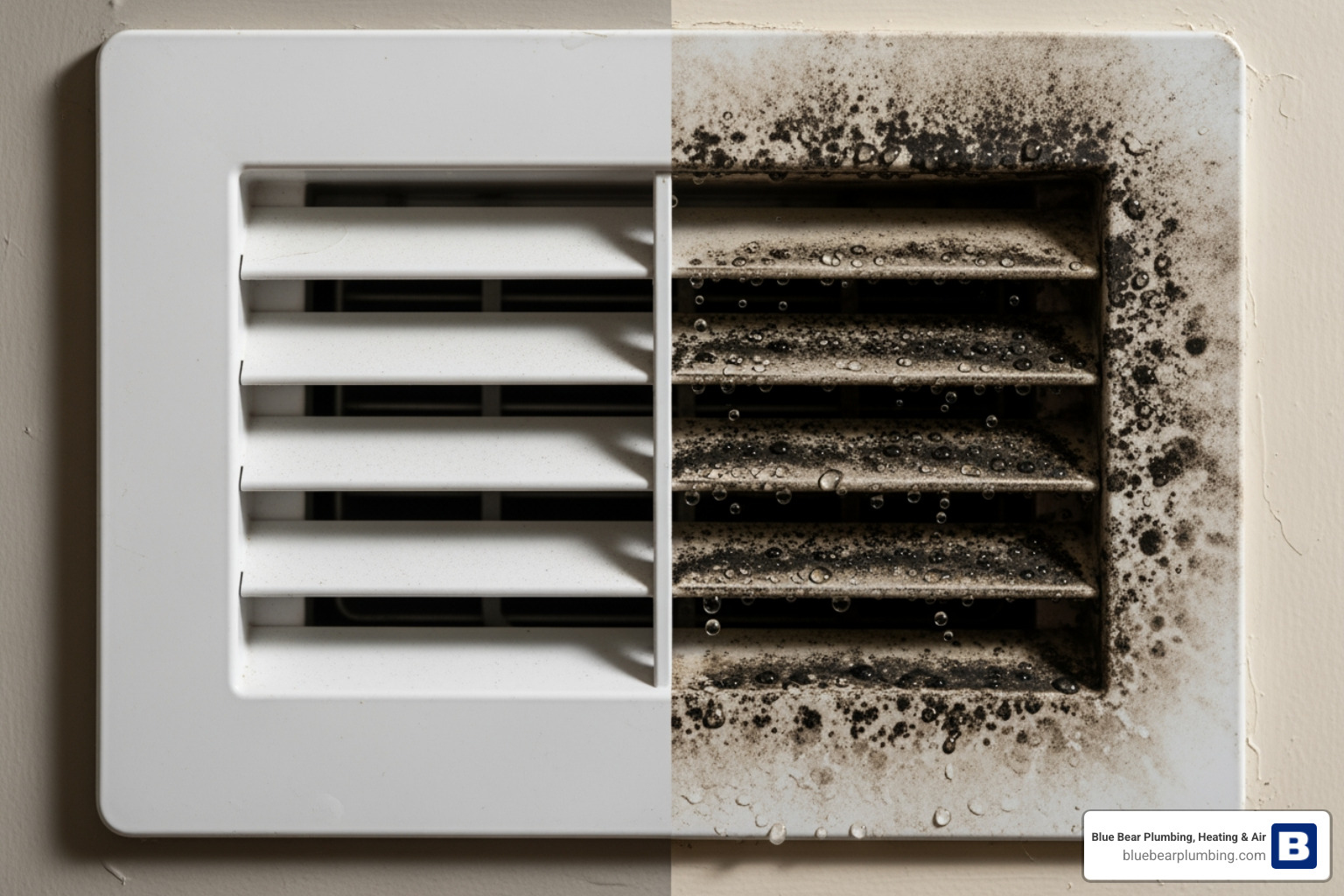
Why Understanding How Proper HVAC Maintenance Prevents Mold Growth Could Save Your Home and Your Health
How proper HVAC maintenance prevents mold growth comes down to one core principle: controlling moisture. Here is a quick overview of how it works:
- Control indoor humidity – Keep relative humidity between 30-50% so mold spores never activate
- Replace filters regularly – Clean filters maintain airflow and reduce excess condensation on evaporator coils
- Clean condensate drain lines – Clear drains prevent standing water, the number one fuel for mold inside your system
- Schedule seasonal tune-ups – Professional inspections catch moisture problems before mold takes hold
- Act on early warning signs – Musty odors and allergy flare-ups are your first clues that something is growing inside
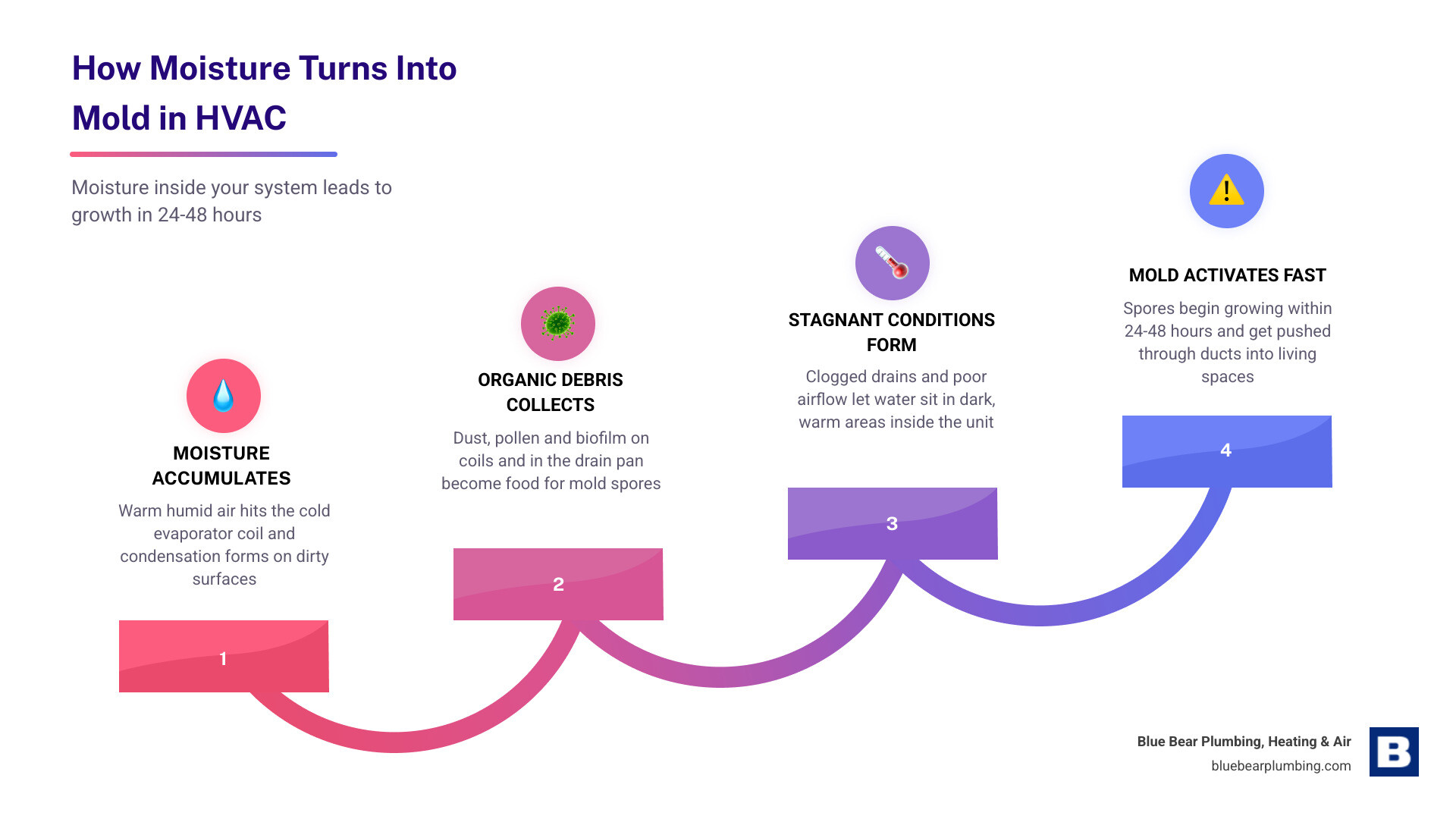
Mold is a sneaky problem. It does not start on your walls or your ceiling — it often starts deep inside your HVAC system, in places you cannot see. The evaporator coil, the condensate drain pan, and the ductwork running through your attic or crawl space are all dark, damp, and dusty — exactly the conditions mold needs to get going. And once moisture sits on those surfaces, mold can begin growing in as little as 24 to 48 hours.
For homeowners on Massachusetts’ South Shore, this risk is not abstract. Coastal humidity, warm summers, and damp shoulder seasons create the kind of persistent indoor moisture that keeps HVAC systems working overtime — and when those systems are not properly maintained, they can quietly become a source of mold spores circulating through every room in your home.
The good news? Most HVAC-related mold problems are entirely preventable with the right routine.
I’m Marc Provenzano, Marketing Manager at Blue Bear Plumbing, Heating & Air, and working alongside our team of experienced technicians has given me a front-row seat to how proper HVAC maintenance prevents mold growth in real South Shore homes every season. In the steps below, I’ll walk you through exactly what to do — and when to do it — so your system stays clean, efficient, and mold-free.
How Proper HVAC Maintenance Prevents Mold Growth
Your HVAC system can either help control mold or help spread it. The difference usually comes down to maintenance.
Air conditioners naturally remove moisture from indoor air as warm air passes over the evaporator coil. That is a good thing. But if the coil stays dirty, the drain line clogs, the pan holds water, or the ductwork pulls in humid air from an attic, crawl space, or basement area, the system can become a perfect mold habitat.
Mold needs a few simple things to thrive:
- Moisture
- A surface to grow on
- Dust or organic debris as a food source
- Enough time
Unfortunately, neglected HVAC systems often provide all four. That is why the Environmental Protection Agency recommends keeping indoor humidity between 30% and 50%. Once indoor humidity climbs above 50%, mold spores can activate more easily, and at 60% or above, growth becomes much more likely.
How proper HVAC maintenance prevents mold growth at the source
The key is stopping wet, dusty, stagnant conditions before they turn into colonies.
Regular HVAC maintenance helps by:
- Keeping evaporator coils clean so condensation drains off properly
- Preventing standing water in drain pans and condensate lines
- Maintaining airflow so moisture does not linger on components
- Reducing dust buildup that feeds microbial growth
- Limiting spore circulation through clean filters and sealed ductwork
This matters because mold can begin growing within 24 to 48 hours after moisture reaches duct or coil surfaces. In other words, a small drainage problem can turn into a bigger indoor air quality issue surprisingly fast.
Why neglected HVAC systems create ideal mold conditions
When a system is overdue for service, several problems often stack up at once:
- Dirty filters restrict airflow
- Restricted airflow can make the evaporator coil too cold and too wet
- Clogged drain lines leave water sitting in the cabinet
- Leaky ducts pull in humid outside air
- Poor insulation causes ducts to sweat
- Oversized or short-cycling AC systems cool quickly but do not dehumidify well
- Thermostat fan settings on “On” can re-evaporate moisture off the coil and send it back into the home
That combination is why mold is such a sneaky little bugger. It loves hidden places, and HVAC systems have plenty of them.
Step 1: Control Indoor Humidity Levels Through Your AC System

Humidity control is the foundation of mold prevention. If the air in your home stays too damp, even a relatively clean HVAC system has a harder time staying mold-free.
For most homes in South Boston and the South Shore, the sweet spot is 30% to 50% relative humidity. That range helps keep mold spores dormant while still maintaining indoor comfort. If you want a deeper look at this topic, see How to Keep Your House from Getting Too Humid and Understanding How Humidity Impacts Indoor Air.
How proper HVAC maintenance prevents mold growth through humidity control
Your AC does more than cool the air. It also removes moisture during the cooling cycle. But that only works well if the system is operating correctly.
A maintained system can:
- Run long enough to remove latent moisture
- Drain condensate away efficiently
- Move air properly across the coil
- Keep indoor humidity in the EPA-recommended 30% to 50% range
This is especially important during Massachusetts spring and early summer, when homes can feel damp even before the hottest weather hits. Those shoulder-season conditions often create a lot of humidity without enough cooling demand to dry the house well.
Maintaining your system for consistent moisture removal
If your home feels clammy, smells musty, or has humidity that stays high even when the AC runs, your system may not be removing moisture effectively.
We recommend:
- Using a hygrometer to monitor indoor humidity
- Running bathroom and kitchen exhaust fans during moisture-heavy activities
- Keeping vents open and unobstructed
- Having the air handler checked for drainage and airflow issues
- Considering a whole-home dehumidifier if humidity stays high during mild but damp weather
In some homes, persistent moisture points to system sizing or control issues. An oversized AC can short cycle, lowering the temperature quickly without running long enough to remove enough moisture. That leaves the air cool but still muggy, which mold loves.
Step 2: Replace Filters and Keep Evaporator Coils Clean
Air filters and evaporator coils do more for mold prevention than most homeowners realize. They directly affect airflow, moisture removal, and how much dust collects inside the system.
For seasonal prep, we also recommend reading Spring Maintenance Tips to Prevent a Summer Meltdown and Essential Spring Maintenance for South Shore Comfort.
Why dirty filters and coils raise mold risk fast
A clogged filter does not just make the system work harder. It can also raise mold risk by reducing airflow across the coil.
That can lead to:
- Excess condensation
- Longer wet time on coil surfaces
- Dust buildup inside the cabinet
- Strain on the blower and system performance
- Poor humidity control
Dust is also a food source for mold. So when dirt, moisture, and restricted airflow come together, growth can start quickly.
As a general rule, homeowners should check filters monthly and replace them every 1 to 3 months depending on system use, pets, allergies, and season. During heavier-use periods, more frequent changes may make sense.
MERV ratings matter too, but higher is not always better if the filter is too restrictive for your system. A compatible filter, often in the MERV 8 to 13 range depending on equipment, helps trap particles without choking airflow.
The role of a clean coil in preventing organic growth
The evaporator coil is one of the most common HVAC mold hotspots because it regularly gets wet during cooling.
A clean coil helps by:
- Allowing proper heat exchange
- Shedding condensation more effectively
- Reducing biofilm and debris buildup
- Improving overall system hygiene
- Supporting better dehumidification
When coils stay dirty, moisture tends to cling to grime longer instead of draining away. That extends the damp window mold needs to get started. Professional cleaning is the safest way to clean coils thoroughly without damaging delicate fins or other components.
Step 3: Ensure Condensate Drain Lines and Pans are Clear
If there is one hidden trouble spot we never ignore, it is the condensate system.
Every time your AC pulls moisture out of the air, that water has to go somewhere. It should collect briefly in the drain pan and flow out through the condensate line. If that path is blocked, poorly sloped, or dirty, water can sit inside the unit and create exactly the conditions mold needs.
For more seasonal upkeep tips, see The Great Spring Switch Transitioning Your HVAC System and Seasonal Plumbing HVAC Maintenance Checklist for South Shore Residences.
How drain line cleaning stops hidden mold
Drain lines often develop slime, algae, and debris over time. Once the line narrows or clogs, moisture backs up and sits in the pan or air handler.
Regular drain maintenance helps prevent:
- Standing water
- Overflow into surrounding components
- Biofilm buildup
- Mold growth in dark cabinet areas
- Water damage around the unit
This is one of the most common HVAC-related causes of mold in homes, especially during humid cooling months.
Preventing moisture backup in the air handler
A proper mold-prevention routine includes checking:
- Drain pan condition
- Drain line flow
- Drain slope
- Secondary drain pan performance, if present
- Float switches and safety shutoffs
- Condensate pumps, where applicable
The goal is simple: water should move out of the system quickly and completely. A moisture-free cabinet is a much less inviting place for mold to settle in.
Step 4: Schedule Professional HVAC Tune-Ups on a Seasonal Timeline
Homeowners can do a lot on their own, but professional maintenance is where hidden mold risks often get caught early.
We recommend routine service before cooling season and before heating season. For more guidance, read How Often to Service Your HVAC and our Seasonal Heating Guide Massachusetts.
How often homeowners should schedule HVAC inspections and maintenance
For most homes in our Massachusetts service area, a smart schedule looks like this:
- Professional HVAC maintenance twice a year
- Monthly filter checks
- Extra humidity monitoring during spring and summer
- Prompt service any time you notice moisture, odor, or airflow changes
Twice-yearly tune-ups are especially helpful in coastal and high-humidity areas, where systems work hard through long cooling stretches and damp seasonal transitions.
What a mold-prevention maintenance visit should include
A mold-focused HVAC service visit should include inspection and cleaning of the parts that tend to stay damp or hidden, such as:
- Evaporator coil
- Condensate drain line and pan
- Blower compartment
- Airflow and static pressure
- Thermostat settings
- Supply and return vents
- Duct leakage concerns
- Humidity performance
In some cases, we may also recommend improvements such as duct sealing, better insulation around ducts in unconditioned spaces, or UV lights near the evaporator coil. UV lights can help reduce mold growth on wet coil surfaces by damaging microbial DNA, but they work best as part of a bigger moisture-control plan, not as a magic wand.
Step 5: Catch Warning Signs Early and Act Before Mold Spreads
Mold rarely announces itself politely. It usually sends hints first.
Signs that indicate mold growth in an HVAC system
Watch for these warning signs:
- Musty odor when the AC starts
- Dark spots around supply vents or registers
- Green or black discoloration near the air handler or drain pan
- Recurring water around the indoor unit
- Worsening allergy or asthma symptoms indoors
- Irritated eyes, nose, or throat when the system runs
- Damp or sweaty vents
- A persistent “dirty sock” smell
Not every odor means mold. Dust, dirty coils, and something called dirty sock syndrome can create similar smells. But if the odor keeps returning, do not ignore it.
| Issue | Typical appearance | Common smell | What it usually means |
|---|---|---|---|
| Dust buildup | Gray, dry film | Dusty or stale | Cleaning or filtration issue |
| Mold growth | Fuzzy, blotchy, dark or green patches | Musty, earthy | Moisture problem plus contamination |
| Dirty sock syndrome | Often little visible growth | Locker-room or sour smell | Bacteria on damp coils |
If you see visible growth or smell mustiness every time the system runs, it is time for a professional inspection. Surface cleaning around vents usually does not fix the source if growth is deeper in the system.
Health risks and long-term benefits of preventive maintenance
Mold in HVAC systems can affect both comfort and health. Spores moving through forced air can trigger:
- Allergy symptoms
- Asthma flare-ups
- Respiratory irritation
- Headaches
- Eye, nose, and throat irritation
Some people are more sensitive than others, especially children, older adults, and anyone with asthma or other respiratory conditions.
The long-term benefits of preventive HVAC maintenance go well beyond mold prevention:
- Better indoor air quality
- More consistent humidity control
- Cleaner system operation
- Longer equipment life
- Fewer moisture-related repairs
- Improved efficiency
If you want to learn more about the value of prevention, see Why Paying for HVAC Maintenance Now Saves Your Wallet Later, How a Maintenance Plan Extends Equipment Life and Your Sanity, and Do Maintenance Plans Actually Save You Money in the Long Run?.
Frequently Asked Questions About HVAC Mold Prevention
Can mold in HVAC ducts really spread through the whole house?
Yes. In a forced-air system, mold spores can circulate through return ducts, air handlers, and supply vents into multiple rooms. That does not mean every room will develop visible mold, but it does mean indoor air quality can be affected throughout the home.
Should the thermostat fan be set to Auto or On to reduce mold risk?
In humid weather, “Auto” is usually the better setting. When the fan is set to “On,” it can keep blowing air across a wet evaporator coil after the cooling cycle ends. That may re-evaporate moisture and raise indoor humidity. “Auto” lets the coil drain and supports better moisture control.
What should homeowners do if they notice a musty smell from vents?
Start by paying attention to when it happens. If the smell appears when the AC starts or after the system runs for a while, shut the system off if the odor is strong and arrange for a professional inspection. The goal is to identify the moisture source quickly, whether that is a dirty coil, clogged drain line, wet duct insulation, or contamination inside the air handler.
Conclusion
Preventing HVAC mold is really about staying ahead of moisture before moisture turns into a problem. When we control humidity, keep filters fresh, clean coils and drain lines, inspect ductwork, and respond quickly to warning signs, we make it much harder for mold to get comfortable inside the system.
That matters for homes across South Boston, the South Shore, and nearby communities we serve from Norwell, Natick, and Quincy. Our local climate brings enough humidity and seasonal dampness on its own. Your HVAC system should help protect your home from that moisture, not trap it.
If it has been a while since your last system inspection, now is a smart time to get back on a yearly routine. You can also explore the benefits of The Blue Care Priority Plan or learn more about our home service solutions.
When homeowners ask us about how proper HVAC maintenance prevents mold growth, our answer is always the same: clean, dry, well-maintained systems are far less likely to become mold problems later. And that means healthier air, better comfort, and one less sneaky little bugger to worry about.
Contact Us Today

Routine maintenance is vital for the longevity of your plumbing, heating, and air conditioning systems. Sign up for our Blue Care Maintenance Plan for annual service and exclusive membership benefits, including:
- Priority scheduling
- Waived service fee during normal business hours
- 10% discount on service calls
- 3% discount on new installations
- Two-year parts and labor warranty on new equipment