




The South Shore guide to choosing between central air and mini splits
HVAC
Understanding the core differences: central air vs mini split for the south shore homes

Living in the South Shore, MA, homeowners know the importance of a reliable heating and cooling system. From humid summers to chilly winters, your home’s comfort and energy bills depend on the right choice. When upgrading or installing a new system, many residents find themselves weighing the pros and cons of two popular options: central air conditioning and ductless mini-split systems. Understanding the differences is key to making an informed decision that suits your specific home and lifestyle. This guide will help you navigate the central air vs mini split for the south shore homes comparison to achieve year-round comfort and efficiency.
Ready to explore your options for a more comfortable home? Learn more about our HVAC solutions or contact Blue Bear Plumbing, Heating & Air today for a consultation.
When deciding between central air and mini-splits for your South Shore home, consider these key differences:
- Ductwork: Central air uses a network of ducts to distribute air throughout the entire house. Mini-splits are ductless, delivering air directly into specific rooms or zones.
- Coverage: Central air provides uniform, whole-home cooling. Mini-splits offer zoned cooling, allowing individual temperature control for different areas.
- Energy Efficiency: Mini-splits often achieve higher efficiency ratings and can save energy by cooling only occupied spaces, avoiding duct losses common in central systems.
- Installation: Central air installation can be complex if ductwork needs to be added or replaced. Mini-splits are less invasive, ideal for homes without existing ducts or additions.
- Heating: Most mini-splits function as heat pumps, providing both heating and cooling. Traditional central AC typically only cools, requiring a separate furnace for heat.
As Marketing Manager at Blue Bear Plumbing, Heating & Air, I’ve seen how challenging it can be for South Shore homeowners to choose between these key comfort systems. My role involves understanding how factors like home layout and local climate influence the best choice in the central air vs mini split for the south shore homes debate, helping families find optimal solutions.
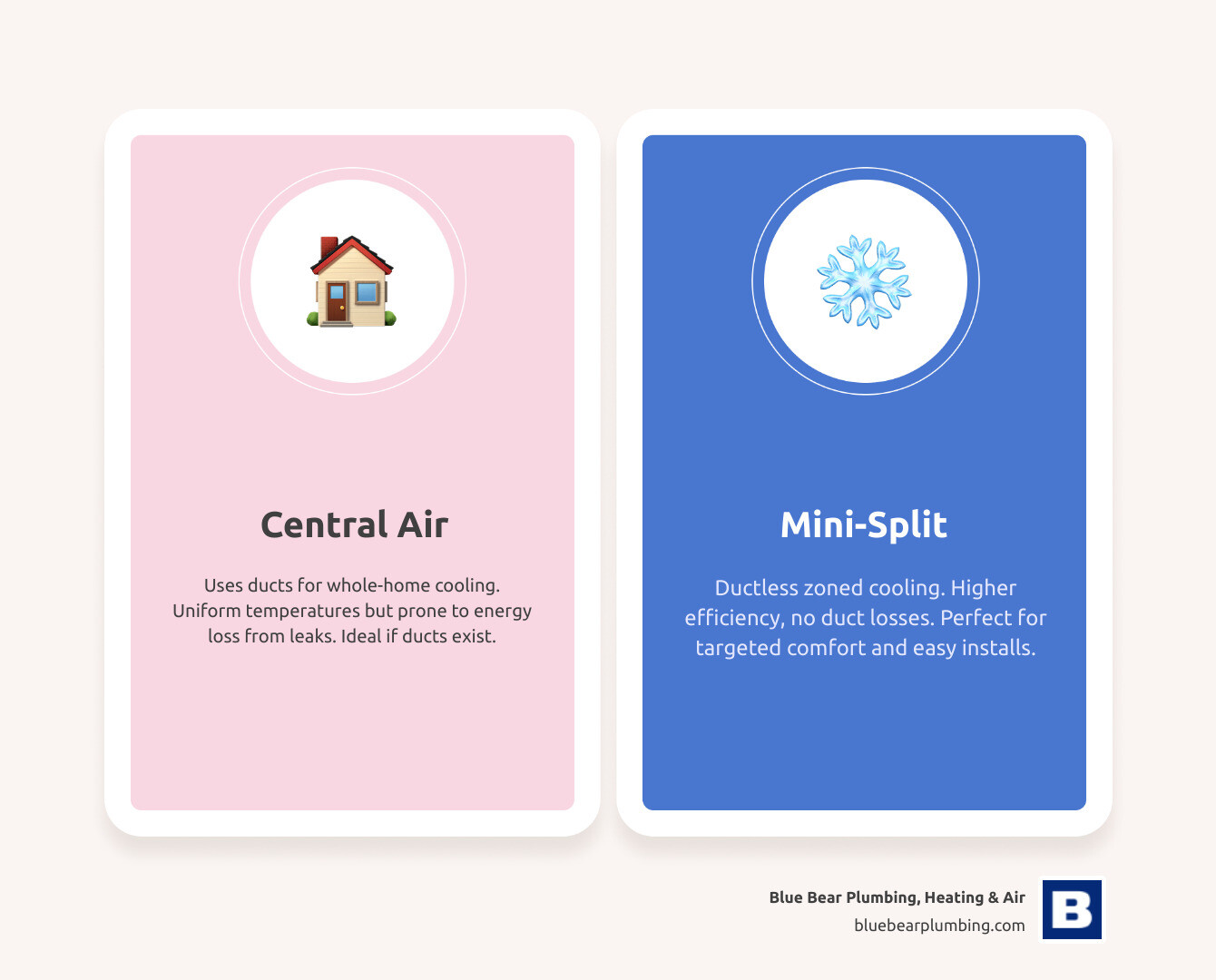
When we talk about central air vs mini split for the south shore homes, we are really looking at two different philosophies of home comfort. Central air conditioning is the “all-in-one” approach. It relies on a large outdoor condenser and an indoor air handler (usually tucked away in a basement or attic) to push cooled air through a network of ducts. If you are finding a reliable AC installation company in Quincy, MA, they will likely tell you that central air is the gold standard for uniform, “invisible” cooling. You don’t see the equipment; you just feel the results through the vents in your floor or ceiling.
On the other hand, ductless mini-splits—often called “heat pumps”—take a localized approach. These systems consist of a smaller outdoor unit connected to one or more indoor air handlers mounted directly on your walls or ceilings. Because they don’t use ducts, they avoid the energy loss associated with leaky ductwork. This makes them a fantastic alternative for those who realize their old window units are outdated and want a more permanent, efficient solution.
The biggest functional difference is “zoning.” Central air cools the whole house to one temperature. If your teenager wants their room at 68 degrees but you prefer 72, someone is going to be unhappy. Mini-splits solve this by allowing each room (or “zone”) to have its own thermostat. This flexibility is a major reason why many are learning how to pick the best AC installation in Quincy, MA by looking toward ductless technology.
Efficiency, humidity control, and Mass Save incentives
In our coastal climate, efficiency isn’t just about the temperature—it’s about managing that thick South Shore humidity. As of April 2026, the industry standard for measuring this is SEER2 (Seasonal Energy Efficiency Ratio 2). While a high-end central AC might reach 21 SEER2, mini-splits can soar up to 33 or even 38 SEER2.
Why does this matter for your wallet? Central systems can lose 20% to 30% of their energy through duct leaks. Mini-splits eliminate this loss entirely. Furthermore, mini-splits use inverter technology, which allows the system to run at variable speeds—much like a dimmer switch for your lights—rather than just “full blast” or “off.” This leads to much better humidity removal, which is essential for homes near the water in Scituate or Hingham.
One of the most compelling reasons to choose mini-splits in Massachusetts is the availability of Mass Save rebates. Because they use high-efficiency heat pump technology, qualifying systems can often net homeowners between $10,000 and $16,000 in rebates. This significantly offsets the initial investment compared to traditional systems that may not qualify for such aggressive incentives. If you are asking yourself, “Do I need a new AC?“, the potential for these rebates often makes the answer a resounding “yes.”
Efficiency Comparison Table
| Feature | Central Air Conditioning | Ductless Mini-Split |
|---|---|---|
| Typical SEER2 Range | 15 – 21+ | 20 – 33+ |
| Duct Energy Loss | 20-30% potential loss | 0% (Ductless) |
| Zoning Capability | Limited/Requires Add-ons | Built-in (Room by Room) |
| Mass Save Rebates | Minimal to None | Up to $10k – $16k |
| Dehumidification | Good (Standard) | Excellent (Inverter Tech) |
To keep these high-efficiency systems running perfectly, we always recommend following a seasonal plumbing HVAC maintenance checklist for South Shore residences. Proper care ensures you don’t have to decide whether to repair or replace HVAC in Massachusetts prematurely. Plus, understanding our seasonal heating guide for Massachusetts helps you see how these heat pumps provide value even when the snow starts to fall.
Best cooling solutions for historic colonials and capes
The South Shore is famous for its beautiful, historic architecture. From 18th-century colonials in Duxbury to cozy mid-century Capes in Norwell, our homes have character—but they often lack the space for bulky ductwork. Installing central air in a home built in 1920 often requires dropping ceilings or sacrificing closet space to hide ducts. This can be invasive and can diminish the historic integrity of the property.
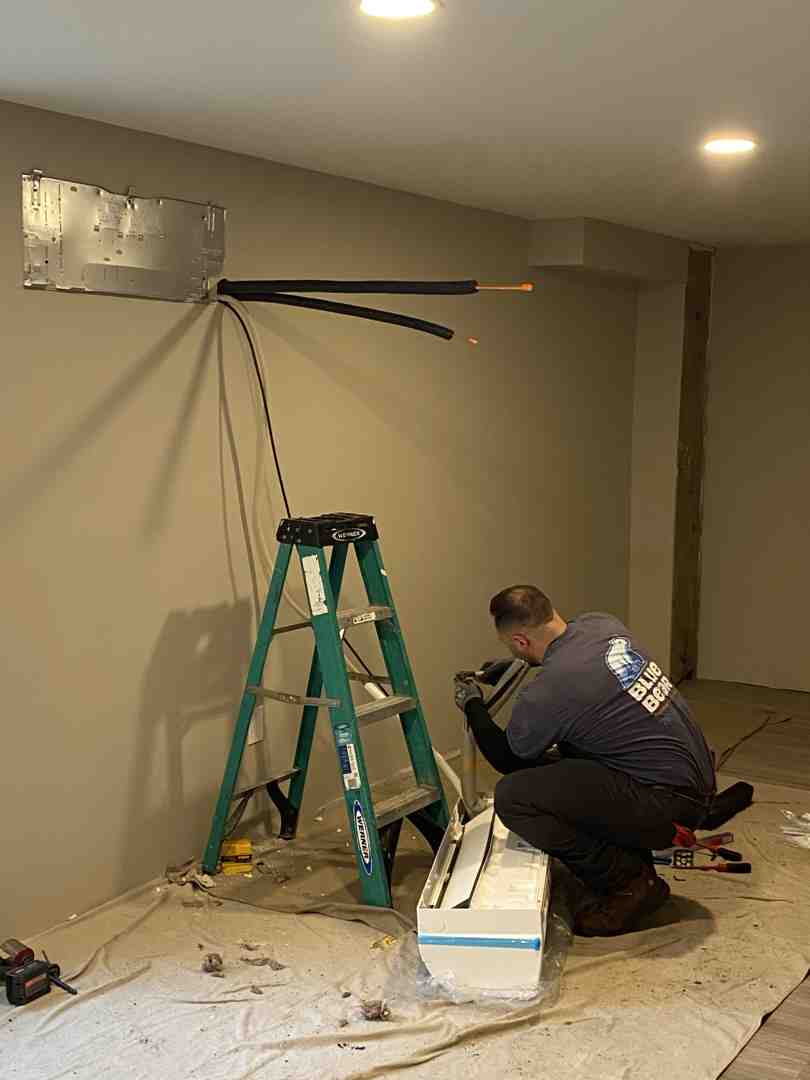
For these properties, mini-splits are often the hero. We can chill out with the best AC installation in Norwell, MA by using small, 3-inch refrigerant lines that can be snaked through walls with minimal disruption. It’s a non-invasive way to bring 21st-century comfort to a 19th-century home. If you are looking for a Quincy guide to affordable AC installation, you’ll find that the “hidden” cost of central air in an old home—the carpentry and drywall repair—often makes ductless the more cost-effective choice.
Why mini split for the south shore homes are ideal for older properties
Ductless systems offer a level of flexibility that central air simply can’t match in a retrofit scenario.
- Architectural Preservation: No need to cut large holes in original plaster walls or build unsightly “soffits” to hide ducts.
- Quiet Operation: Modern indoor units are whisper-quiet, often operating at decibel levels lower than a human whisper (19-26 dB).
- Targeted Comfort: You can cool the bedrooms at night while leaving the downstairs uncooled, saving significant energy.
- Low Maintenance: While they still need a pro, you can easily keep your cool with a Norwell AC maintenance guide by cleaning the filters yourself every few weeks.
When to choose central air vs mini split for the south shore homes with existing ducts
Of course, central air still has its place. If your home was built in the last 30 years and already has a functional duct system for your furnace, upgrading to a high-efficiency central AC unit is often the most straightforward path. It provides uniform temperatures throughout the house, which many large families prefer.
Central air is also the winner for those who prioritize aesthetics above all else. With central air, the only thing visible in your room is a small, discreet vent. If you want to master AC maintenance in Natick, MA, a central system allows you to manage one set of filters and one outdoor unit. To ensure it stays in top shape, you should work with the best AC maintenance experts Natick has to offer to clean the ducts and coils regularly.
Frequently Asked Questions about South Shore AC upgrades
Which system handles South Shore humidity better?
Both systems are capable, but mini-splits with inverter technology generally have the edge. Because they can run at lower speeds for longer periods, they are constantly pulling moisture out of the air without “short-cycling” (turning on and off rapidly). This constant dehumidification is vital for coastal air quality. To maintain this, learning how to clean your AC and keeping the drain lines clear is essential for every homeowner.
Do mini-splits provide reliable heating during Massachusetts winters?
Yes! Modern “cold-climate” heat pumps are designed specifically for our region. Many models can provide 100% heating capacity even when outdoor temperatures drop to 5°F, and they continue to operate efficiently well below zero. For many South Shore residents, this allows the mini-split to become the primary heat source, with the old boiler or furnace kept only as a backup. We recommend checking our South Shore winter heating checklist to see how a heat pump fits into your total winter readiness plan.
How often do these systems require professional maintenance?
We recommend an annual tune-up for both systems. For central air, this usually happens in the spring. For mini-splits that provide both heating and cooling, a bi-annual check is even better. Knowing when to get an AC tuned up in Massachusetts can prevent mid-summer breakdowns when the heat is at its worst. Regular maintenance is the single best way to protect your investment and ensure system longevity.
Conclusion
Choosing between central air vs mini split for the south shore homes doesn’t have to be a headache. Whether you live in a historic colonial in Milton or a modern build in Plymouth, the “right” system is the one that fits your home’s structure, your comfort goals, and your budget.
At Blue Bear Plumbing, Heating & Air, we pride ourselves on being more than just installers—we are your neighbors. Our local South Shore expertise means we understand the unique challenges of coastal living. We offer personalized home assessments to look at your insulation, your existing ductwork (or lack thereof), and your energy goals to recommend the perfect solution. With our commitment to high-quality workmanship and transparent communication, we’ll help you stay cool all summer and warm all winter.
Ready to find the perfect cooling solution for your home? Contact us at Blue Bear Plumbing, Heating & Air today to schedule your home comfort assessment!



Contact Us Today

Routine maintenance is vital for the longevity of your plumbing, heating, and air conditioning systems. Sign up for our Blue Care Maintenance Plan for annual service and exclusive membership benefits, including:
- Priority scheduling
- Waived service fee during normal business hours
- 10% discount on service calls
- 3% discount on new installations
- Two-year parts and labor warranty on new equipment