


How to Apply for Energy Rebates in Massachusetts
HVAC
Understanding the Main Energy Rebate Programs in Massachusetts
Knowing how to apply for energy rebates in Massachusetts can save you thousands of dollars on home upgrades — but the process has a few important steps you don’t want to skip. Here’s the quick version:
- Schedule a no-cost Home Energy Assessment through Mass Save at masssave.com
- Install qualifying equipment using an approved contractor
- Submit your rebate application within 60 days of installation (online or by mail)
- Stack additional savings by combining utility rebates with federal tax credits
- Check income eligibility for enhanced or no-cost program options
Massachusetts is one of the best states in the country for energy incentive programs. Mass Save — the statewide collaborative backed by utilities like Eversource and National Grid — delivered a staggering $3.6 billion in benefits to Massachusetts residents and businesses in 2025 alone. Add in $56 million in federal HOMES funding and $43 million in HEAR allocations, and there’s genuinely significant money on the table for homeowners who know where to look and how to apply.
The catch? Each program has its own eligibility rules, deadlines, and documentation requirements. Navigating all of that without a clear roadmap can feel overwhelming — which is exactly why this guide exists.
I’m Marc Provenzano, Marketing Manager at Blue Bear Plumbing, Heating & Air, and through my work helping South Shore homeowners understand how to apply for energy rebates in Massachusetts, I’ve seen how the right information at the right time turns a confusing process into real savings. Let’s walk through everything you need to know, step by step.
Before we dive into the “how-to,” we need to look at the “what.” Massachusetts residents have access to a powerful combination of state, utility-led, and federal programs. The backbone of these efforts is Mass Save, a collaborative of electric and natural gas utilities including Eversource, National Grid, Berkshire Gas, Cape Light Compact, Liberty, and Unitil.
Because Massachusetts has consistently ranked in the top two nationally for energy efficiency for over a decade, the infrastructure for these rebates is very robust. In 2026, we are seeing the continued impact of the 2025–2027 Energy Efficiency and Decarbonization Plan, which aims to disburse billions in benefits to help the Commonwealth reach its net-zero goals.
Beyond the standard utility programs, the Massachusetts Department of Energy Resources (DOER) manages several federal allocations. This includes the HOMES (Home Owner Managing Energy Savings) program and the HEAR (Home Electrification and Appliance Rebates) program. These are specifically designed to help low-to-moderate-income households reduce their reliance on fossil fuels.
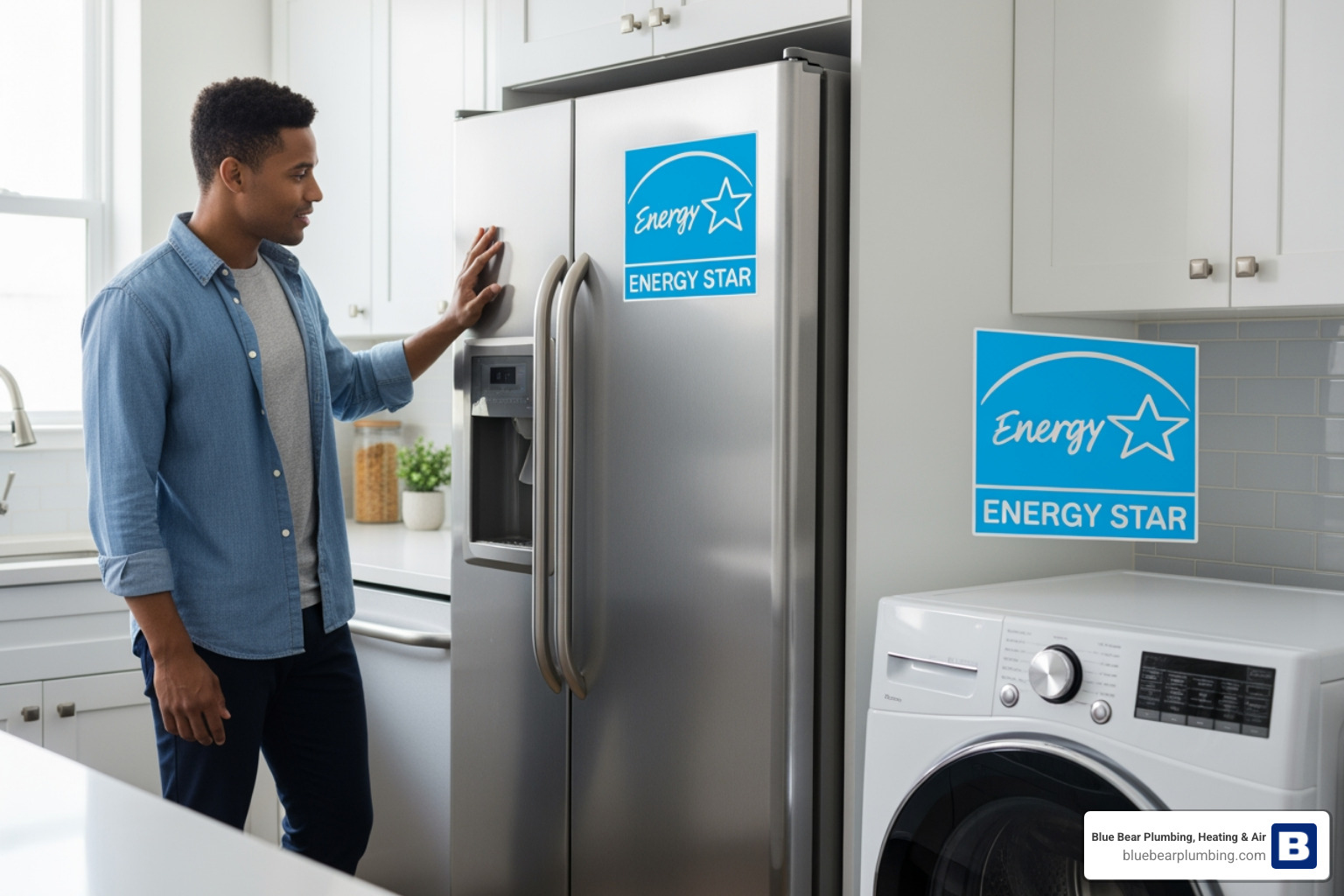
Comparing Major Massachusetts Rebate Programs (2026)
| Program | Best For | Typical Incentives |
|---|---|---|
| Mass Save | Whole-home efficiency, insulation, and heat pumps | Up to $10,000+ for whole-home heat pumps; 75–100% off insulation |
| HOMES (Federal) | Performance-based energy savings for low/mod income | Up to $8,000 for low-income households |
| HEAR (Federal) | Point-of-sale rebates for electrification | Rebates for heat pump water heaters and electric stoves |
| MassCEC | Specialized clean energy like ground-source heat pumps | Up to $15,000+ for geothermal systems |
To get started with any of these, the first and most vital step is often one of the Mass Save Energy Audits. This assessment acts as your “golden ticket” to unlock the majority of these financial incentives.
How to Apply for Energy Rebates in Massachusetts: A Step-by-Step Guide
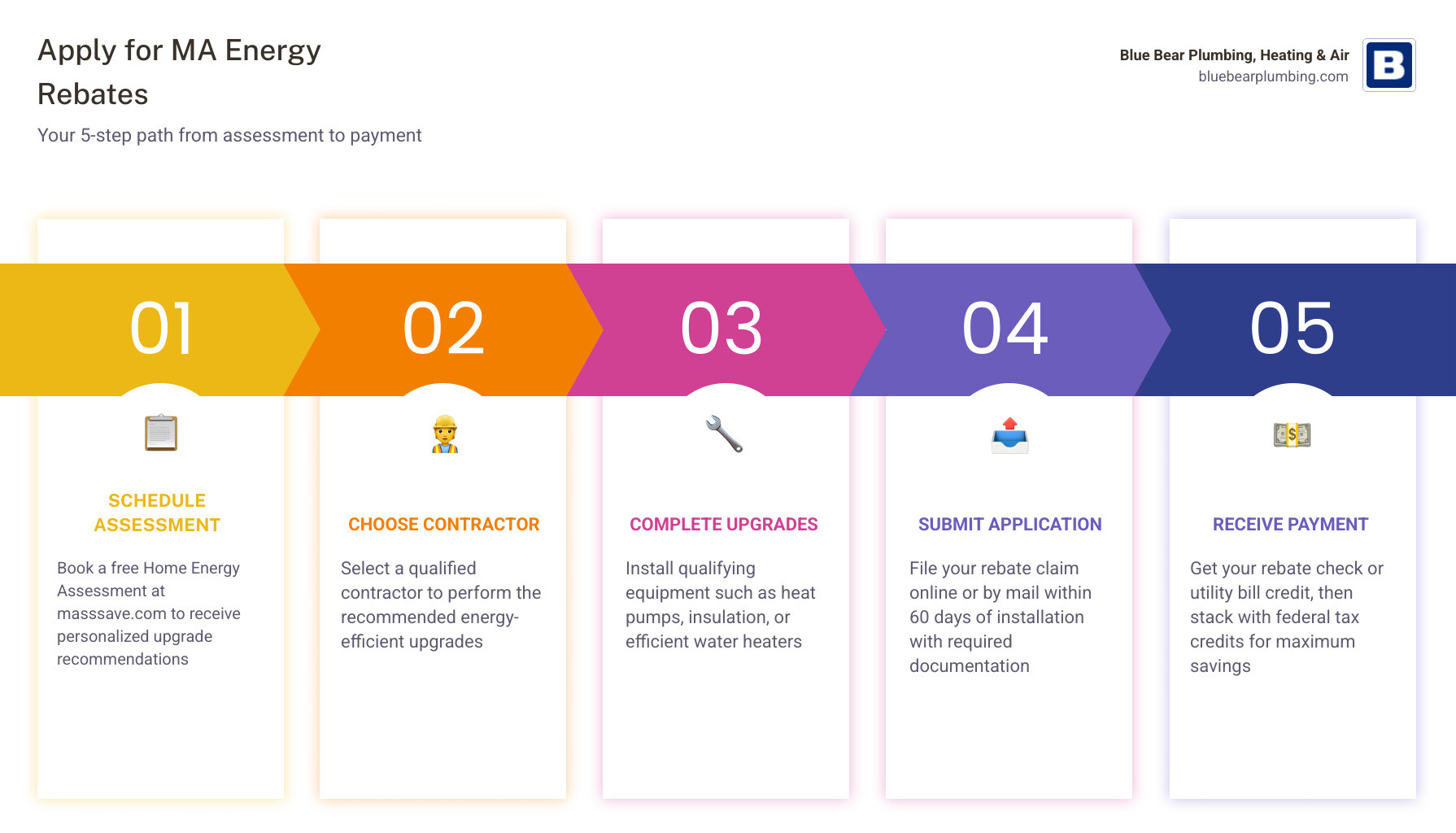
If you are wondering how to apply for energy rebates in Massachusetts without getting a headache, the secret is following the established order of operations. Many homeowners make the mistake of buying equipment first and asking about rebates later, only to find they missed a pre-approval requirement.
Here is the foolproof path to your rebate check:
Step 1: How to apply for energy rebates in Massachusetts starting with an assessment
You cannot build a house without a blueprint, and you generally can’t get a major Massachusetts rebate without a Home Energy Assessment. This is a no-cost, professional evaluation of your home’s current energy performance.
During this visit, an energy specialist will:
- Identify areas of air leakage and heat loss.
- Check your insulation levels in the attic and walls.
- Evaluate the efficiency of your heating, cooling, and water heating systems.
- Provide a personalized list of recommended upgrades and the specific rebates you qualify for.
For National Grid customers in areas like Quincy, Hingham, or Weymouth, tools like MyHEAT aerial maps can even show you exactly where your roof is leaking heat before the specialist even arrives. Scheduling this through the Mass Save website or a participating partner is the official “Start” button for your application.
Step 2: Choose Your Upgrades and Contractor
Once you have your assessment report, you’ll see which upgrades are recommended. This is the time to decide if you want to tackle insulation, windows, or a full system upgrade. If you’re debating whether to Repair or Replace HVAC Massachusetts systems, the rebate amounts available in 2026 often make replacement the much smarter financial move.
It is critical to work with a participating contractor. For many rebates, especially heat pumps, the equipment must be on the Qualified Products List (QPL), and the installer must be certified by the program. You should always ask your contractor, “What does a new HVAC installation include regarding rebate paperwork assistance?” A good contractor will help you navigate the technical details.
Finalizing your submission: how to apply for energy rebates in Massachusetts successfully
After the installation is complete, the clock starts ticking. You typically have 60 days from the date of installation to submit your application.
To ensure a smooth approval, gather these items first:
- Your Utility Bill: You’ll need your account number.
- The Paid Invoice: This must show the model numbers, install date, and total cost.
- The Assessment ID: From your initial Home Energy Assessment.
- Proof of Decommissioning: If you are applying for a “whole-home” heat pump rebate, you may need to prove that your old fossil fuel system has been removed or disabled.
Most applications are submitted through the online Mass Save rebate portal. If you prefer paper, mail-in forms are available, but online submission is significantly faster for tracking and processing.
Qualifying Upgrades and Incentive Amounts for 2026
The “menu” of rebates in Massachusetts is quite extensive. In 2026, the focus has shifted heavily toward decarbonization — which is a fancy way of saying the state wants to help you move away from oil and propane.
Heat Pumps (Air Source and Ground Source)
Heat pumps are the stars of the show. For whole-home systems that replace your existing heating, rebates can reach up to $10,000 for standard residents. If you are looking for an Affordable Heat Pump Installation Guide Norwell, you’ll find that these incentives can cover a massive portion of the upfront cost. For income-eligible residents, these rebates can jump as high as $16,000, and in some cases, the system may even be no-cost through turnkey programs.
Insulation and Air Sealing
Proper insulation can lower your heating and cooling expenses by approximately 15%. Because this is so effective, Mass Save often covers 75% to 100% of the cost of insulation installation. This is one of the easiest ways to see an immediate return on your investment.
Windows and Appliances
While not as large as heat pump incentives, you can still find rebates for:
- Energy Star Windows: Up to $75 per window.
- Heat Pump Water Heaters: Often receiving rebates up to $1,500.
- Smart Thermostats: Often available with instant rebates or at a highly discounted price through the utility’s online marketplace.
Leveraging Federal Tax Credits and Income-Eligible Programs
One of the most important tips for how to apply for energy rebates in Massachusetts is to remember that you can “stack” your savings.
Federal Tax Credits (25C and 25D)
Under the Inflation Reduction Act, federal tax credits are available through 2032.
- 25C Credit: Allows you to claim 30% of the project cost, capped at $2,000 per year for heat pumps and $1,200 for other weatherization measures.
- 25D Credit: Offers a 30% credit for “clean energy” expenditures like solar panels or battery storage, with no annual cap.
When you combine a $10,000 Mass Save rebate with a $2,000 federal tax credit, the financial barrier to high-efficiency equipment almost disappears. You can learn more about how these work in our guide on 2023 HVAC Installation Tax Credits Massachusetts (which remain relevant in 2026 under the same federal law).
Enhanced Incentives for Low-to-Moderate Income
If your household income is below 60% of the Area Median Income (AMI), you may qualify for “Enhanced” rebates. For example, a family of four earning less than approximately $94,600 may be eligible for much higher coverage on equipment and 100% coverage on weatherization. We recommend checking the Quincy Heat Pump Installation Deals and Rebates for Your Budget for specific local examples of how these tiers work.
Frequently Asked Questions about Massachusetts Energy Rebates
How long does the rebate approval and payment process take?
Typically, the rebate application process takes between 4 to 8 weeks from the time you submit your paperwork to the time you receive a check or a direct deposit. Using the online portal allows you to track the status of your claim in real-time.
Can I combine federal tax credits with Mass Save rebates?
Yes! This is known as “stacking.” You can apply for your Mass Save rebate through the state/utility portal and then claim your federal tax credit when you file your annual income taxes. Just ensure your total incentives do not exceed 100% of the project cost.
Are there specific energy rebates available for renters in Massachusetts?
Absolutely. While renters may need landlord approval for major structural changes like insulation, they can independently apply for rebates on appliances, smart thermostats, and window AC units. Renters are also eligible for no-cost Home Energy Assessments, which include free LED bulbs, low-flow showerheads, and advanced power strips.
Conclusion
Mastering how to apply for energy rebates in Massachusetts is all about timing and documentation. By starting with a professional assessment and choosing the right equipment, you can transform your home into a model of efficiency while keeping your bank account happy.
At Blue Bear Plumbing, Heating & Air, we take pride in being more than just installers. We are your neighbors in the South Shore, from Norwell to Quincy and all the way down to the Cape. Our team is committed to providing upfront pricing and high-quality workmanship, helping you navigate every step of the rebate process so you don’t leave money on the table.
Ready to see how much you could save? Start by scheduling one of the Mass Save Energy Audits today, and let us help you bring 2026-level efficiency to your Massachusetts home!
Contact Us Today

Routine maintenance is vital for the longevity of your plumbing, heating, and air conditioning systems. Sign up for our Blue Care Maintenance Plan for annual service and exclusive membership benefits, including:
- Priority scheduling
- Waived service fee during normal business hours
- 10% discount on service calls
- 3% discount on new installations
- Two-year parts and labor warranty on new equipment