

How to Choose the Right Furnace Repair in Norwell MA
HVAC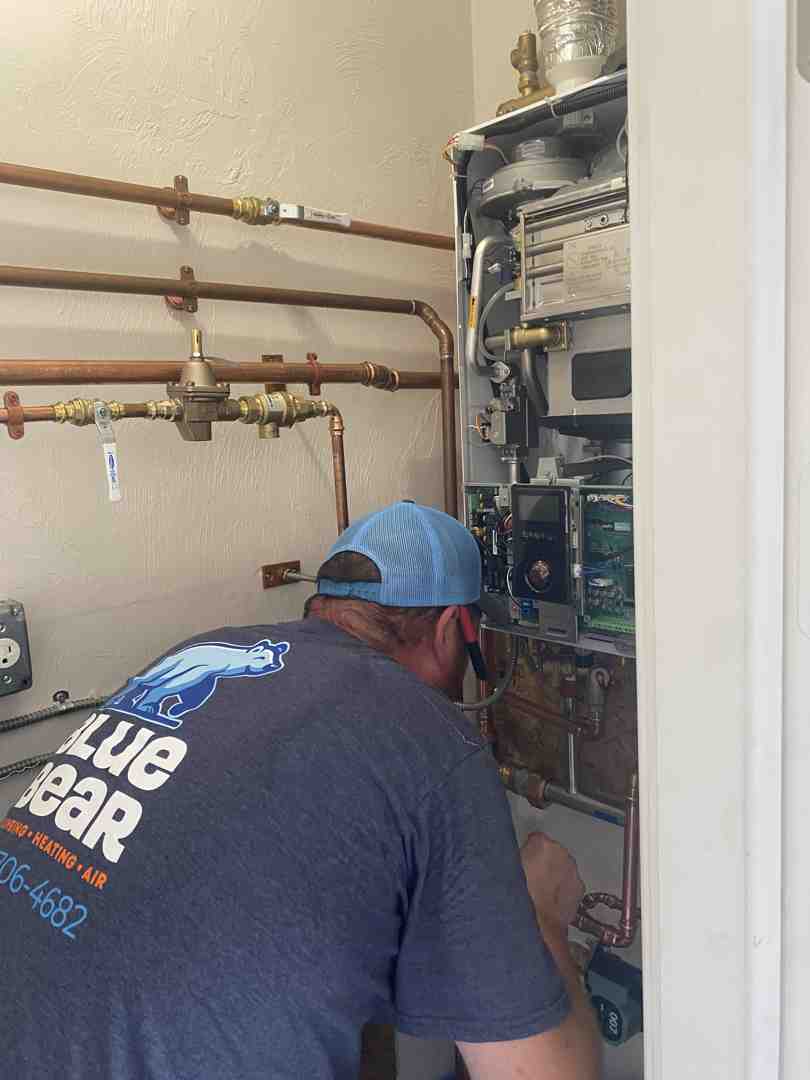
Why Furnace Repair in Norwell, MA Matters Before Winter Hits
Furnace repair in Norwell, MA is something no homeowner wants to deal with in the middle of a harsh South Shore winter — but knowing where to turn makes all the difference. Norwell’s cold season is no joke. Temperatures regularly drop well below freezing, and a failing furnace can go from a minor inconvenience to a genuine safety concern in a matter of hours.
Here are the most important things to know right away:
- Signs you need repair: Uneven heating, strange noises, higher energy bills, a yellow pilot light, or a gas smell
- Who to call: Look for a licensed, insured local HVAC company with 24/7 emergency availability
- When to repair vs. replace: If your furnace is under 15 years old, repair is usually the right call — beyond that, replacement may save more money long-term
- What to do right now: Check your thermostat settings and air filter first — if the problem persists, call a professional
There are over 55 rated heating and air professionals serving the Norwell area, so finding help is possible — but finding the right help takes a little guidance.
I’m Marc Provenzano, Marketing Manager at Blue Bear Plumbing, Heating & Air, and I’ve spent years working alongside our team of certified technicians to help South Shore homeowners navigate exactly this kind of situation — including understanding when and how to act on furnace repair in Norwell, MA. Whether it’s a sudden breakdown at midnight or a system that’s been quietly losing efficiency for years, this guide will walk you through everything you need to know.
Recognizing the Signs You Need Furnace Repair in Norwell, MA
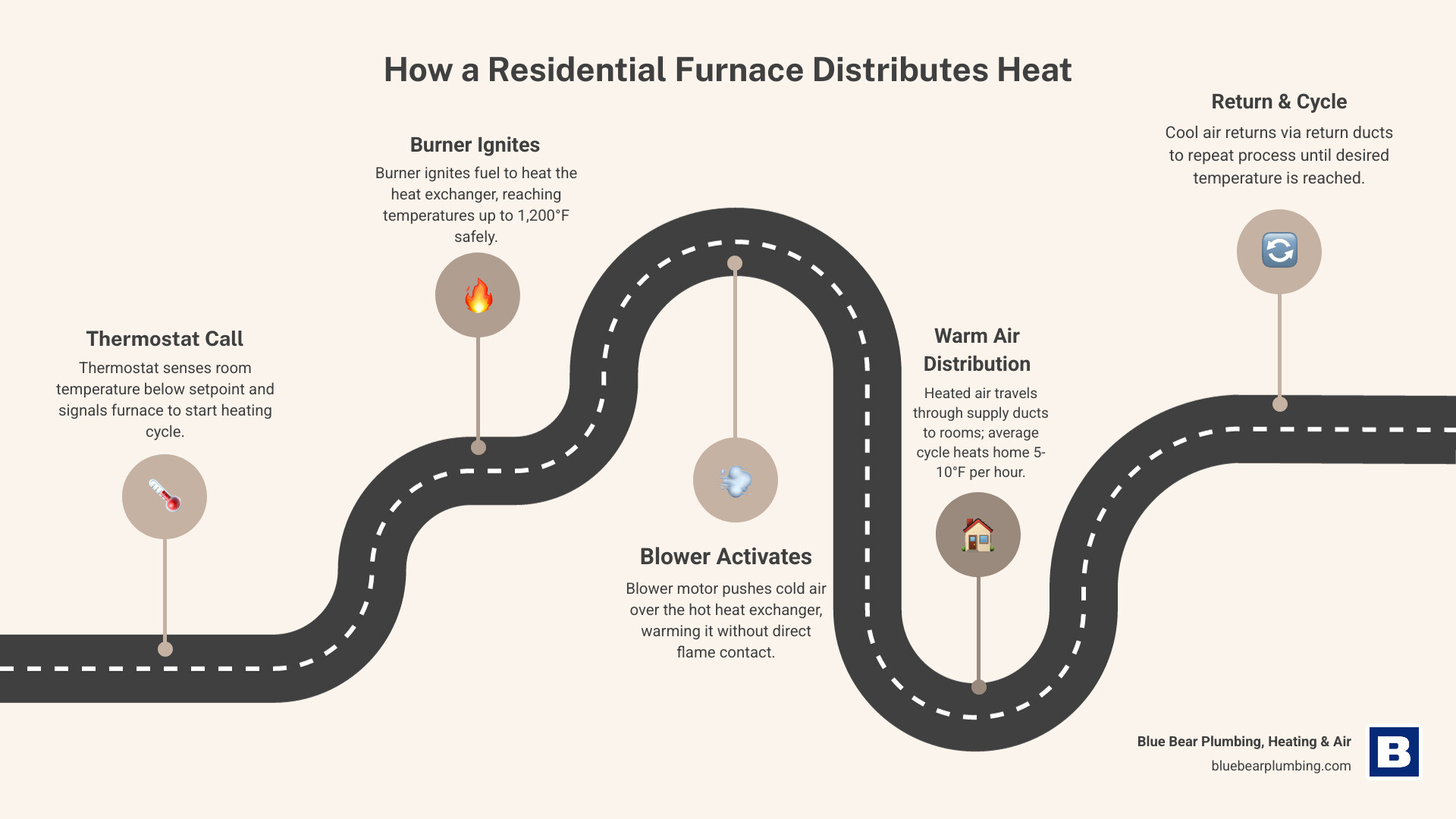
In Norwell, our furnaces are the unsung heroes of the household. They work tirelessly from October through April, but they don’t always fail all at once. Often, your system will whisper (or clank) for help before it finally gives up the ghost. Recognizing these early warning signs can save you from a frigid night and a more expensive bill later.
Uneven Heating and Cold Spots
Have you noticed that your living room feels like a sauna while your bedroom feels like the North Pole? Uneven heating is a classic sign of a struggling furnace. It could be a failing blower motor, ductwork issues, or a thermostat that isn’t communicating correctly with the unit.
Strange Noises
Your furnace should operate with a steady, predictable hum. If you start hearing banging, screeching, or whistling, it’s time to pay attention.
- Banging: Often indicates a delayed ignition issue.
- Screeching: Usually points to a worn-out fan belt or motor bearing.
- Whistling: Could mean there is a restriction in airflow or a leak in the ductwork.
Persistent Odors
A faint “dusty” smell when you first turn the heat on in the fall is normal. However, a persistent metallic, burning, or “rotten egg” smell is a major red flag. A gas smell (mercaptan) is an emergency—evacuate the home and call for help immediately.
Frequent Cycling
If your furnace turns on and off every few minutes, it’s “short-cycling.” This places immense strain on the components and is often caused by an oversized unit, a faulty thermostat, or a dangerously clogged filter. If you’re wondering What’s Causing Your Furnace to Blow Cold Air?, short-cycling is a frequent culprit.
Yellow Pilot Light
A healthy gas flame should always be crisp and blue. A yellow or flickering flame suggests that the gas is not burning completely, which can lead to the production of carbon monoxide—a colorless, odorless, and deadly gas.
Increased Energy Usage
If your utility bills are skyrocketing but your habits haven’t changed, your furnace is likely working harder than it should to produce the same amount of heat. This loss of efficiency is a clear indicator that internal components are wearing down.
Maximizing Efficiency Through Regular Maintenance
We always tell our neighbors in Norwell that the best furnace repair in Norwell, MA is the one you never have to schedule. Preventive maintenance is the secret to a long-lasting, efficient heating system. In fact, many manufacturers require annual professional maintenance to keep your warranty valid.
Annual Tune-Ups
A professional tune-up involves more than just a quick look. It includes cleaning the burners, inspecting the heat exchanger for cracks, and ensuring all safety controls are functioning. We recommend scheduling this every 6 to 12 months—ideally in the early autumn before the first frost hits.
Component Lubrication
Moving parts like the blower motor and bearings need regular lubrication to reduce friction. Without it, these parts generate heat, wear out prematurely, and can eventually seize up, leading to a total system failure.
Thermostat Calibration
Sometimes the furnace is fine, but the “brain” is confused. We check to ensure your thermostat is properly calibrated so that it accurately reads the room temperature and communicates effectively with your heating unit.
Airflow Optimization
Clogged filters and dirty coils restrict airflow. When your furnace can’t “breathe,” it has to run longer and hotter, which drastically shortens its lifespan. Keeping Your New Furnace Running Smoothly starts with something as simple as changing your filter every 30 to 90 days.
Maintenance Comparison Table
| Task | DIY (Homeowner) | Professional (Technician) |
|---|---|---|
| Filter Replacement | Yes (Every 1-3 months) | Yes (During visit) |
| Thermostat Check | Yes (Check batteries/settings) | Yes (Calibration/Wiring) |
| Cleaning Burners | No (Safety risk) | Yes (Deep cleaning) |
| Heat Exchanger Inspection | No (Requires specialized tools) | Yes (Check for cracks/leaks) |
| Gas Line Testing | No (Safety risk) | Yes (Check for leaks) |
| Lubrication | No | Yes (All moving parts) |
Navigating Heating Emergencies and System Longevity
When the snow is piling up on Main Street and your heat goes out at 2:00 AM, it’s easy to panic. Knowing the immediate steps to take can help you stay calm and potentially resolve the issue without a service call.
Immediate Steps for Emergency Furnace Repair in Norwell, MA
Before you call for furnace repair in Norwell, MA, run through this quick checklist:
- Check the Power Switch: Many furnaces have a switch that looks like a light switch nearby. Ensure it hasn’t been accidentally flipped off.
- Inspect the Circuit Breaker: Check your home’s electrical panel to see if the furnace circuit has tripped.
- Verify Thermostat Settings: Ensure it’s set to “Heat” and the temperature is higher than the current room temp. If the screen is blank, try changing the batteries.
- Examine the Air Filter: A completely blocked filter can trigger a safety shut-off.
- Check the Gas Valve: Ensure your gas supply hasn’t been interrupted or the valve hasn’t been bumped into the “off” position.
If these steps don’t work, it’s time to call the pros. If you find yourself in a bind, we have a guide on What to Do if the Heat Goes Out to help keep your family safe while you wait for a technician.
When to Choose Replacement Over Furnace Repair in Norwell, MA
No furnace lasts forever. While we always aim to repair your system, there comes a point where “throwing good money after bad” becomes a reality.
Consider replacement if:
- Age: Your gas furnace is over 15–20 years old (electric units may last slightly longer, up to 20–30 years).
- Frequency of Repairs: You’ve had more than two significant repairs in the last two years.
- The “50% Rule”: If the repair cost is more than 50% of the cost of a new unit, replacement is usually the smarter financial move.
- Diminishing Returns: Your energy bills are climbing every month despite regular maintenance.
For more details on making this big decision, check out Norwell Furnace Installation: Everything You Need to Know and our guide on Beyond the Basics: Finding Professional Furnace Installation in Norwell.
Safety First: Protecting Your Norwell Home
At Blue Bear Plumbing, Heating & Air, your safety is our absolute priority. A malfunctioning furnace isn’t just a comfort issue; it can be a safety hazard involving fire or gas leaks.
Carbon Monoxide Prevention
Carbon monoxide (CO) is the biggest threat associated with gas furnaces. It is produced when fuel doesn’t burn completely, often due to a cracked heat exchanger or blocked flue. Because you can’t see or smell it, you must have working CO detectors on every level of your home. We’ve put together a list of 10 Ways to Prevent Carbon Monoxide Leaks in Your Furnace to help you stay proactive.
Electrical Inspections
Modern furnaces rely on complex electrical components. Over time, wires can become brittle or connections can loosen, leading to sparks or system failure. During a professional inspection, we check all electrical terminals and motor capacitors to ensure everything is tight and safe.
Ventilation and Fire Hazards
Your furnace needs a clear path to exhaust fumes outside. In Norwell, heavy snow can sometimes block these exterior vents. Always ensure your intake and exhaust pipes are clear of snow, ice, and bird nests to prevent fumes from backing up into your home.
Frequently Asked Questions
How long do residential furnaces typically last?
On average, a residential gas furnace lasts between 15 and 30 years. Electric furnaces often have a slightly longer lifespan because they don’t deal with the corrosive effects of combustion. However, many homeowners choose to upgrade after about 12 to 15 years because modern units are so much more energy-efficient that they eventually pay for themselves in utility savings. If you’re looking for a cost-effective path forward, read about Budget-Friendly Warmth: Finding Affordable Furnace Installation in Norwell.
Why is my heater blowing cold air?
This is one of the most common calls we get! It can be caused by something as simple as a thermostat set to “On” instead of “Auto” (which keeps the fan blowing even when the heat isn’t on). Other causes include a dirty air filter, a pilot light that has gone out, or a faulty ignition sensor. For a deeper dive into this specific problem, see Why is My Heater Blowing Cold Air?
Can I perform furnace repairs on my own?
You should definitely handle basic maintenance like changing your air filters, clearing snow from exterior vents, and checking thermostat batteries. However, for anything involving gas lines, electrical wiring, or the heat exchanger, you should always call a professional. DIY repairs on these components can void your warranty, lead to expensive mistakes, or create dangerous conditions in your home.
Conclusion
Living on the South Shore means respecting the winter, and that starts with a reliable heating system. At Blue Bear Plumbing, Heating & Air, we are proud to be a part of the Norwell community. Our friendly, local team is committed to high-quality workmanship and the kind of integrity you’d expect from a neighbor. We provide upfront pricing and reliable solutions so you never have to guess what you’re paying for.
Don’t wait for the next Nor’easter to find out your furnace isn’t up to the task. Whether you need a routine tune-up or an urgent furnace repair in Norwell, MA, we are here to help keep your home warm and your family safe.
Schedule your professional furnace service today or give us a call to experience the Blue Bear difference.
Contact Us Today
Routine maintenance is vital for the longevity of your plumbing, heating, and air conditioning systems. Sign up for our Blue Care Maintenance Plan for annual service and exclusive membership benefits, including:
- Priority scheduling
- Waived service fee during normal business hours
- 10% discount on service calls
- 3% discount on new installations
- Two-year parts and labor warranty on new equipment