




The Hard Truth: How Iron and Hard Water Attack Your Home
Plumbing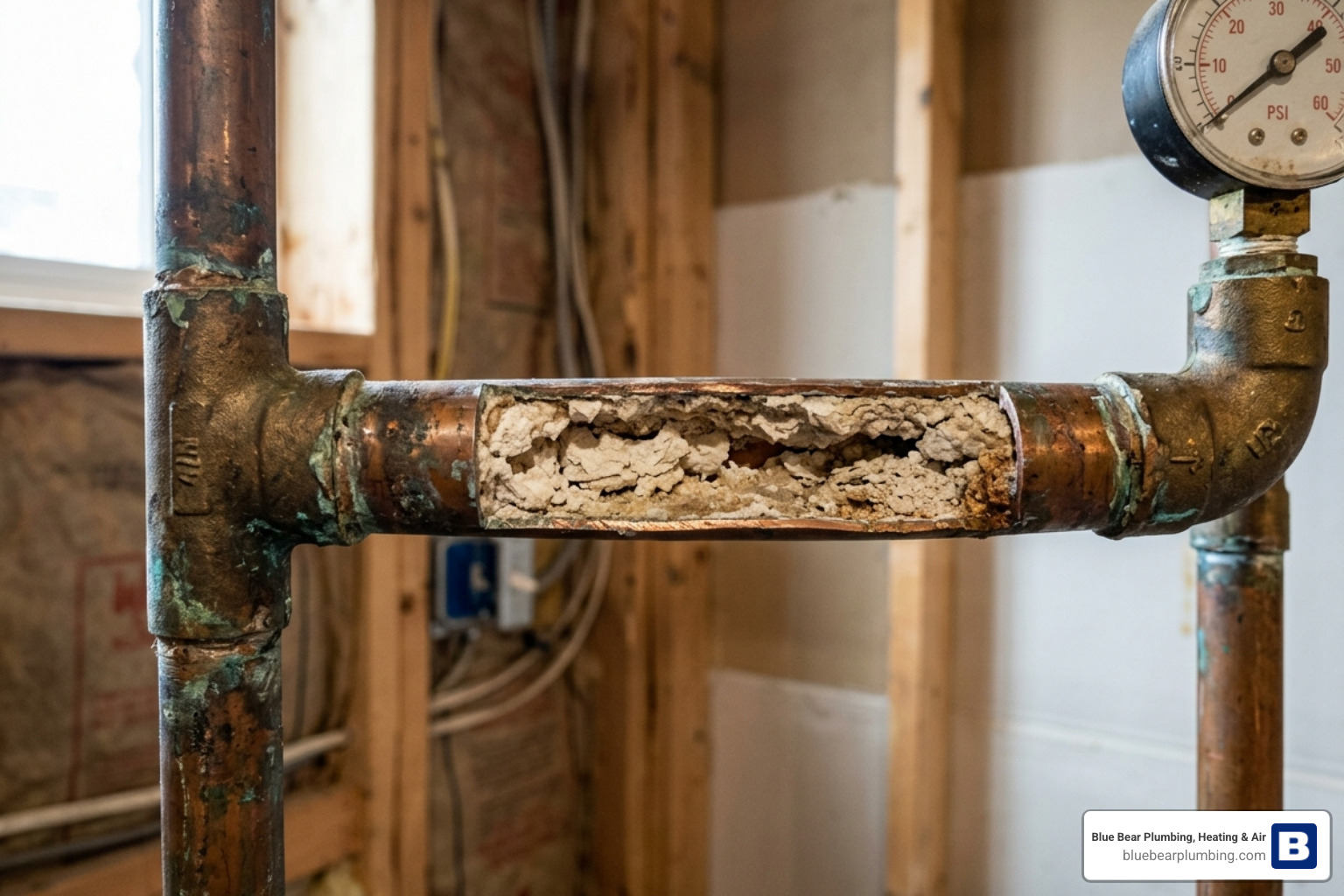
The Hard Truth About How Water Quality Affects Your Plumbing and Appliances
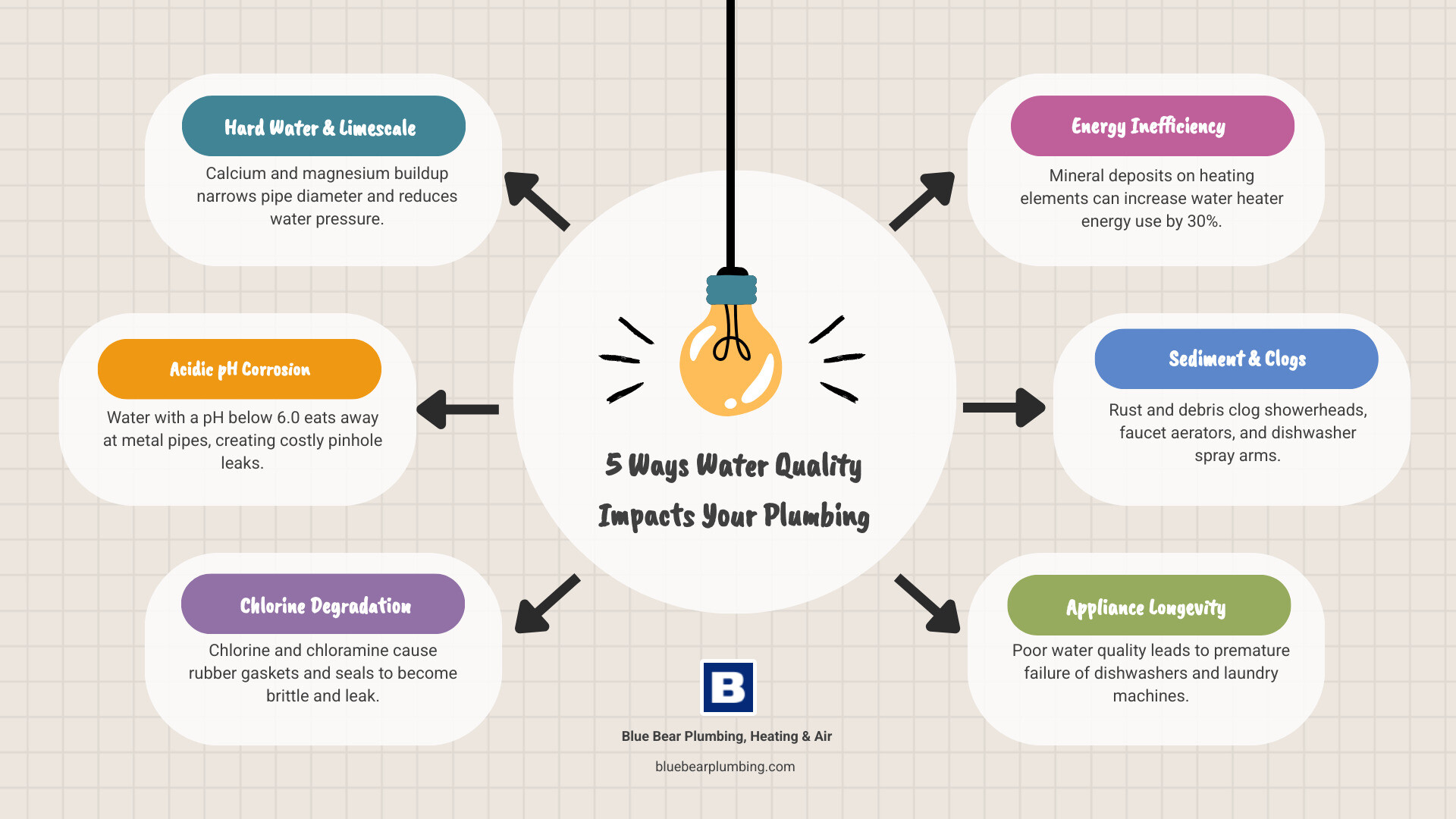
How water quality affects your plumbing and appliances is one of the most overlooked issues homeowners face — and one of the most expensive to ignore. Here’s a quick breakdown:
- Hard water (above 7 grains per gallon) causes limescale to build up inside pipes and appliances, reducing water pressure and forcing appliances to work harder
- Acidic water (pH below 6.0) corrodes metal pipes, leading to pinhole leaks and metal leaching into your water supply
- Chlorine and chloramine in municipal water break down rubber seals and gaskets, causing drips and leaks at fixtures
- Sediment and rust clog aerators, showerheads, and appliance components like dishwasher spray arms
- Mineral buildup on heating elements can cause appliances like water heaters to consume up to 30% more energy than normal
The damage rarely happens overnight. It builds quietly, inside your walls and appliances, until a small inefficiency becomes a costly repair or a premature replacement.
For homeowners across Massachusetts’s South Shore — from Quincy to Norwell to Natick — the local groundwater picks up calcium, magnesium, and other minerals as it moves through the soil and rock. That means what looks like perfectly clear tap water can still be working against your pipes every single day.
I’m Marc Provenzano, Marketing Manager at Blue Bear Plumbing, Heating & Air, and through my work alongside our licensed plumbing technicians I’ve seen how how water quality affects your plumbing and appliances in ways most homeowners never connect to their rising energy bills or failing fixtures. Let’s walk through exactly what’s happening inside your pipes — and what you can do about it.
How Water Quality Affects Your Plumbing and Appliances
Most of us think of water quality in terms of health—is it safe to drink? Does it taste okay? While those are vital questions, your plumbing system has a different set of priorities. To a copper pipe or a dishwasher’s heating element, “quality” is defined by chemical balance.
When water is “hard,” it contains high concentrations of dissolved minerals, specifically calcium carbonate and magnesium. In the plumbing industry, we measure this in grains per gallon (gpg). Any water source measuring above 7 gpg is officially classified as hard. As this water flows through your home, these minerals don’t just stay dissolved; they fall out of solution and stick to surfaces, creating a rock-like crust known as limescale.
The consequences are physical and mechanical. Limescale acts like cholesterol in an artery, narrowing the path for water and forcing your system to work under higher stress. This is one of the 10 reasons for low water pressure in your home.
Beyond minerals, the pH level of your water—the measure of how acidic or alkaline it is—plays a massive role. Ideally, your home’s water should sit between 6.0 and 8.0. If it dips below that range, the water becomes “hungry,” literally eating away at the metal in your pipes to balance itself out.
Comparison: Hard Water vs. Acidic Water Impacts
| Feature | Hard Water (High Mineral) | Acidic Water (Low pH) |
|---|---|---|
| Primary Issue | Limescale buildup (Scaling) | Corrosion and metal leaching |
| Internal Pipe Effect | Narrowing of diameter/clogging | Thinning of pipe walls/pinhole leaks |
| Appliance Impact | Reduced efficiency, burnt elements | Degraded seals and internal metal parts |
| Visual Signs | White chalky residue, spots on glass | Blue-green stains, metallic taste |
| Water Pressure | Gradual decrease over time | May remain normal until a leak occurs |
How water quality affects your plumbing and appliances in the South Shore
In our corner of Massachusetts, from the coastal homes in Quincy to the wooded lots in Norwell and the suburban stretches of Natick, water quality varies significantly depending on whether you are on municipal city water or a private well.
Much of the South Shore sits atop aquifers rich in limestone and iron. As rainwater filters through the ground, it naturally absorbs these minerals. By the time it reaches your tap, it’s often “very hard”—containing more than 181 milligrams per liter of calcium carbonate. Additionally, iron is a common “mystery guest” in local water. Iron doesn’t just stain your porcelain; it can encourage the growth of iron bacteria, which creates a thick, slimy biofilm. If you’ve ever wondered why your drains have a strange scent, this biofilm is one of the 9 reasons that your plumbing smells.
Identifying visible signs of poor water quality
You don’t always need a laboratory test to know your water quality is subpar. Your home leaves clues everywhere:
- Soap Scum: If you find yourself scrubbing a thick, gray film off your shower doors, that’s not just “dirt.” It’s a chemical reaction between hard water minerals and soap that prevents a proper lather.
- Blue-Green Stains: These are a “red alert” for acidic water. The blue tint is actually oxidized copper being stripped from the inside of your pipes and deposited in your sink or tub.
- Metallic Taste: This often indicates that your pipes are corroding, or your water has a high iron content.
- Cloudy Water: This can indicate high sediment levels or “turbidity,” which acts like sandpaper on your faucet’s internal washers.
- White Spots: If your “clean” glasses come out of the dishwasher looking foggy or spotted, you are seeing the literal remnants of rock left behind after the water evaporates.
The Silent Pipe Killer: Limescale and Mineral Buildup
We often call hard water a “silent killer” because the damage is hidden behind your walls. When hard water is heated—which happens in your water heater, dishwasher, and washing machine—it triggers a chemical reaction that forces minerals to solidify.
This solid rock, or limescale, attaches itself to the inner walls of your pipes. Over years, a 1-inch pipe can be restricted to the diameter of a straw. This restriction causes a massive drop in water flow and pressure. If you are currently struggling with a weak shower, diagnosing and dealing with low water pressure often starts with looking at the age of your pipes and the hardness of your water.
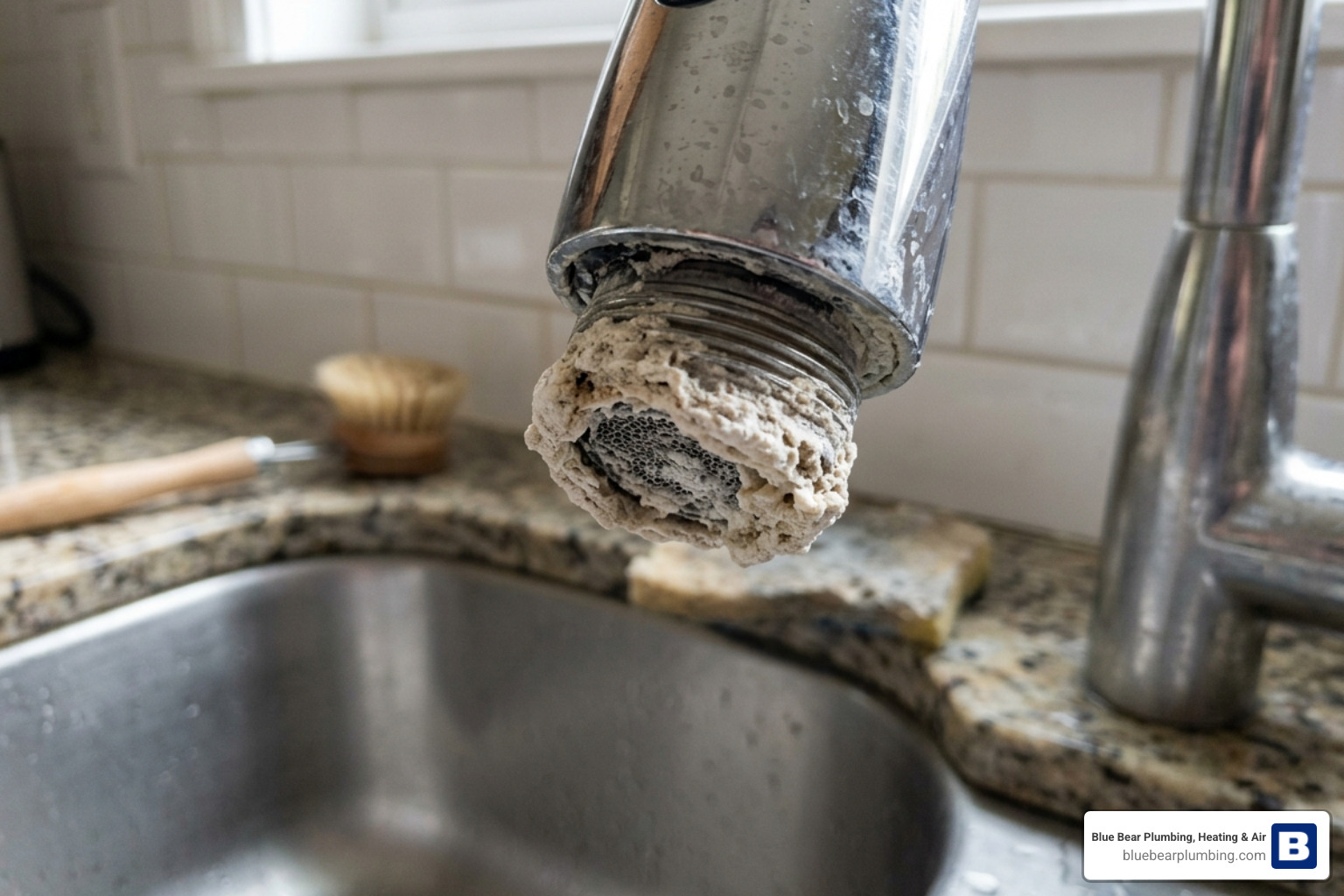
Furthermore, these deposits don’t just sit still. They can flake off and travel through the system, clogging the tiny screens in your faucet aerators and showerheads. Knowing how to prevent limescale in your home is the first step in saving your plumbing infrastructure from a total “clog from the inside out.”
Chemical Warfare: How Chlorine and pH Levels Corrode Your System
While minerals build things up, chemicals and pH imbalances tear them down. Most municipal water systems in the South Shore use chlorine or chloramine to disinfect water and keep it safe from bacteria. While this is great for your health, it’s tough on your plumbing.
Chlorine is an oxidizer. Over time, it dries out and degrades the rubber components in your plumbing system. This includes:
- Toilet flappers (leading to “phantom flushing”)
- Faucet O-rings and gaskets (causing persistent drips)
- Washing machine hoses (increasing the risk of a burst pipe)
Then there is the issue of pH. When water is acidic, it lacks minerals, making it “aggressive.” It seeks to balance itself by dissolving the metal it touches. In a home with copper piping, this leads to “pinhole leaks”—tiny, needle-sized holes that can develop anywhere in your system. These leaks are particularly dangerous because they can drip slowly behind a wall for months, causing mold and structural rot before you ever see a puddle.
Why Your Water Heater is Most at Risk
If your plumbing system were a battlefield, the water heater would be the front line. Because heat acts as a catalyst for mineral precipitation, your water heaters bear the brunt of poor water quality.
Inside a standard tank, minerals settle at the bottom, creating a thick layer of “sediment.” This sediment acts as a thermal insulator. If you have a gas heater, the burner has to heat that layer of rock before it can even start heating the water. This forces the tank to run longer and hotter, which can eventually cause the glass lining of the tank to crack.
One of the most common symptoms of a failing water heater is a popping or rumbling sound. That’s actually steam bubbles escaping from beneath the sediment layer—it’s the sound of your water heater struggling to breathe.
Additionally, every tank has a “sacrificial anode rod” designed to rust so your tank doesn’t have to. In areas with high chlorine or very soft, acidic water, this rod dissolves much faster. Once the rod is gone, the water starts attacking the tank itself.
How water quality affects your plumbing and appliances like dishwashers
Your dishwasher is essentially a specialized water heater with a motor. Hard water is particularly brutal here for three reasons:
- Spray Arms: The tiny holes that spray water can become blocked by lime deposits, meaning your dishes don’t actually get rinsed.
- Heating Elements: Just like in your water heater, the element in your dishwasher can become coated in scale, leading to burnout.
- Detergent Efficiency: Hard water minerals “tie up” the cleaning agents in detergent, meaning you have to use more soap to get the same level of clean.
To understand how these systems work together, it’s worth learning all about water heaters: types, parts, and how they work to see just how many internal components are vulnerable to “bad” water.
Proactive Maintenance and Water Treatment Solutions
The good news is that you aren’t helpless against your water chemistry. We recommend a multi-tiered approach to protecting your home:
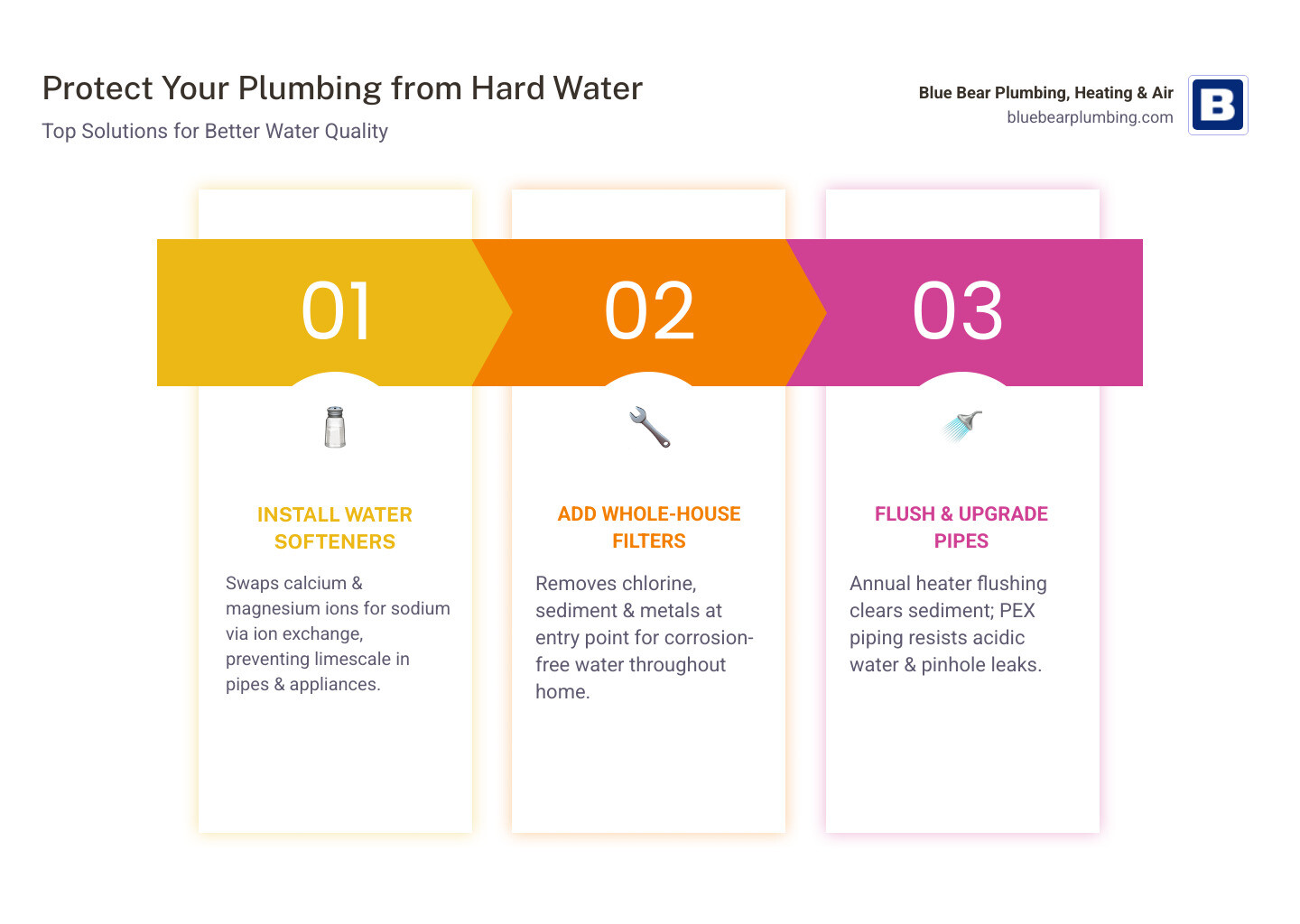
- Water Softeners: For homes with high mineral content, a whole-house water softener is the gold standard. It uses a process called ion exchange to swap calcium and magnesium for tiny amounts of sodium, effectively “erasing” the hardness before it enters your pipes.
- Whole-House Filtration: If your primary concern is chlorine, sediment, or a metallic taste, a carbon-based filtration system can strip these chemicals out at the main shutoff valve.
- Annual Flushing: One of the simplest things you can do is flush your water heater once a year. This removes the “loose rock” and sediment before it has a chance to harden into a permanent layer of scale.
- Material Upgrades: If you are dealing with acidic water and frequent leaks, we often recommend repiping vulnerable sections with PEX (cross-linked polyethylene). Unlike copper, PEX is chemically inert and won’t corrode when exposed to low pH water.
Frequently Asked Questions
What are the primary components of water quality that affect a home’s plumbing?
The big three are minerals (calcium and magnesium), pH levels (acidity vs. alkalinity), and disinfectants (chlorine and chloramine). Secondary factors include dissolved iron, which causes staining and bacterial growth, and physical sediment like sand or rust from aging municipal mains.
How does hard water lead to limescale buildup?
When hard water is heated or sits still, the dissolved calcium carbonate reverts to a solid state. These microscopic crystals “glue” themselves to the hot surfaces of heating elements and the rough interior surfaces of metal pipes, eventually forming a thick, rock-like crust.
What is the ideal pH level for home water to prevent corrosion?
The “sweet spot” for residential plumbing is between 6.5 and 8.5. Water that falls below 6.5 is considered acidic and will aggressively leach metals from your pipes. Water that rises above 8.5 is highly alkaline and can contribute to increased scale formation and a “slippery” or “salty” taste.
Conclusion
At Blue Bear Plumbing, Heating & Air, we believe that your plumbing system is only as healthy as the water flowing through it. Whether you are in Quincy, Norwell, or anywhere else on the South Shore, understanding how water quality affects your plumbing and appliances is the key to avoiding “sudden” emergencies that have actually been years in the making.
Our team of licensed, local technicians is dedicated to more than just fixing leaks; we want to help you prevent them. From installing high-efficiency water softeners to performing the preventative maintenance that keeps your water heater running for its full lifespan, we bring integrity and expert workmanship to every job.
Don’t let “hard” water give you a hard time. Protect your home with expert water heater services and water quality solutions today. Give us a call, and let’s make sure the water in your home is working for you, not against you.
Contact Us Today

Routine maintenance is vital for the longevity of your plumbing, heating, and air conditioning systems. Sign up for our Blue Care Maintenance Plan for annual service and exclusive membership benefits, including:
- Priority scheduling
- Waived service fee during normal business hours
- 10% discount on service calls
- 3% discount on new installations
- Two-year parts and labor warranty on new equipment