



How High Indoor Temperature Disparities Expose Poor Duct Insulation
general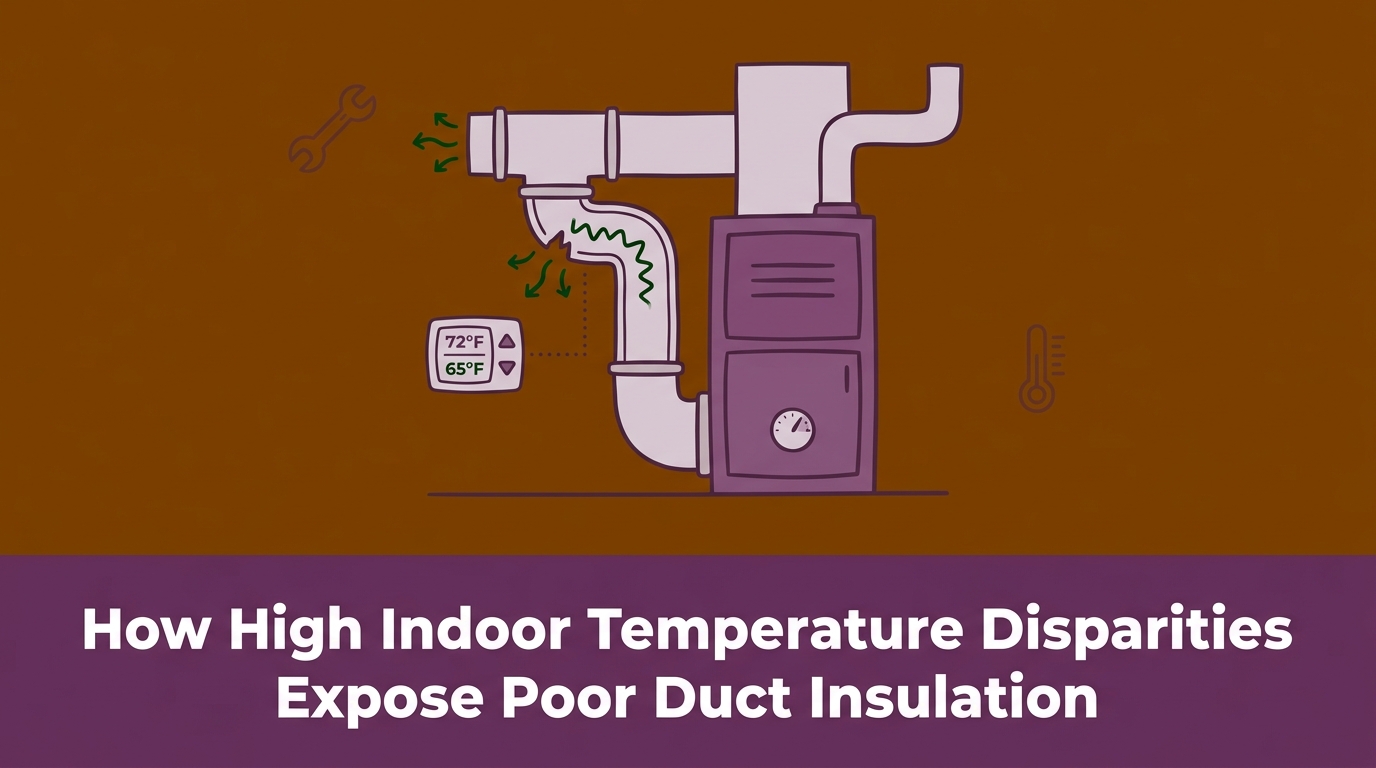
The Frustration of Hot Bedrooms and Freezing Hallways
Your thermostat reads a crisp 70 degrees, but while your hallway feels like an icebox, the master bedroom is sweltering. If you are tired of sweating in one room and freezing in another, understanding how high indoor temperature disparities expose poor duct insulation is the first step to finally getting comfortable. In our experience servicing HVAC systems across Massachusetts, we often see homeowners immediately blame their air conditioning unit when this happens. You might assume the system is old, failing, or simply too small to handle the square footage of your home.
However, the real issue often lies completely out of sight. The core decision you face is determining whether your air conditioner is actually broken, or if the delivery system—your ductwork—is simply losing all of its cooling capacity before the air reaches your living space. During the peak summer cooling season, your air conditioner works incredibly hard to remove heat and humidity from your indoor air. It sends that newly chilled air into the ductwork, expecting it to arrive at its destination at the exact same temperature.
Unfortunately, if those ducts are running through an unconditioned space without adequate protection, that chilled air is under constant attack from extreme ambient heat. Before you assume you need a completely new air conditioning unit, our professional team providing comprehensive HVAC services will look at how your ductwork handles thermal loss. By examining the physics of heat transfer, it becomes clear that generating cold air is only half the battle; protecting that air until it reaches your bedroom is what actually determines your comfort.
Understanding the Reverse-Radiator Effect in Unconditioned Spaces
To understand why your home cools unevenly, you have to look at the environment where your ductwork lives. In many homes, the primary trunk lines and branch ducts run through unconditioned spaces like attics or crawlspaces. These areas are not cooled by your air conditioner, which means they are entirely at the mercy of the outdoor weather.
When uninsulated or poorly insulated ductwork sits in a hostile environment, it creates what is known as a “reverse-radiator” effect. A traditional radiator is filled with hot water or steam and radiates heat outward to warm a cold room. An uninsulated duct does the exact opposite. It is filled with cold air and absorbs intense heat from its surroundings. Because heat naturally moves toward colder areas, the thin sheet metal of your ductwork acts like a giant magnet for ambient thermal energy.
The U.S. Department of Energy reports that 10% to 30% of the energy used to cool a home is completely lost through uninsulated or poorly insulated ducts. This massive loss actively warms the air inside the duct before it ever reaches your living space.
The Physics of Thermal Transfer
The speed and severity of this heat transfer depend entirely on the temperature differential, known in physics as the Delta-T. The larger the difference in temperature between the inside of the duct and the outside of the duct, the faster the heat moves.
| Environment | Typical Temperature | Thermal Impact on Ductwork |
|---|---|---|
| Inside the Duct (Conditioned Air) | 55°F | Highly vulnerable to heat absorption without a thermal barrier. |
| Surrounding Attic Space | 120°F+ | Aggressively transfers heat into the colder duct material. |
| Temperature Differential (Delta-T) | 65°F Difference | Causes rapid, severe loss of cooling capacity. |
When dealing with 120-degree attic temperatures, the Delta-T is massive. The extreme heat forces its way through the thin metal of the duct, raising the temperature of the 55-degree air inside. By the time that air reaches your bedroom register, it is no longer cold enough to lower the room’s temperature, leaving you frustrated and uncomfortable.
Why Air Conditioner Capacity Means Nothing Without Thermal Retention
When our technicians at Blue Bear Plumbing Heating & Air evaluate homes struggling during July heatwaves, a common misconception we encounter is that a bigger, more powerful air conditioner will solve the problem of hot and cold spots. This stems from a misunderstanding of the difference between the generation of cold air and the delivery of that air. Your air conditioning unit is responsible for generation. It uses refrigerant to absorb heat from your indoor air, cooling it down to roughly 55 degrees. If the unit is properly sized and functioning correctly, it is doing its job perfectly.
However, an air conditioner’s rated capacity—measured in tons or BTUs—is effectively erased if the delivery system cannot protect the conditioned air. You can upgrade to the most efficient, highest-capacity system on the market, but if you connect it to bare metal ducts in a boiling attic, you will still experience severe temperature disparities.
The consequences of ignoring thermal retention include:
- Wasted energy consumption: The system runs longer to try and cool distant rooms, driving up your monthly utility bills.
- Premature equipment wear: Forcing an AC unit to compensate for duct heat gain causes the compressor to work overtime, shortening its lifespan.
- Destructive short-cycling: The thermostat, usually located in a central hallway near the indoor unit, registers that the immediate area is cool and shuts the system off before distant rooms ever receive adequate cooling.
During the peak summer cooling season, this dynamic becomes painfully obvious. The AC unit operates flawlessly, producing the exact tonnage of cooling it was rated for, but the lack of thermal retention in the ductwork sabotages the entire process.
The Distance Penalty: How Duct Length Multiplies Heat Gain
If you have ever wondered why the rooms located furthest from the indoor air handler suffer the most severe temperature disparities, the answer lies in cumulative heat exposure. The longer the conditioned air travels through an unconditioned space, the more heat it absorbs along the way. This creates a severe “distance penalty” for bedrooms at the end of the house or on the second floor.
Rooms closest to the indoor unit receive air that has only spent a few seconds traveling through the ductwork. Because the air hasn’t had time to absorb significant heat from the 120-degree attic temperatures, it blasts into the room at full cooling capacity. This is why your central hallway or living room might feel freezing cold while the rest of the house suffers.
Mapping the Thermal Journey
To visualize how this distance penalty ruins your home’s comfort, track the journey of the air as it moves through an uninsulated delivery system:
- At the Evaporator Coil: The air is freshly cooled to an optimal 55 degrees Fahrenheit.
- Entering the Main Trunk Line: The air enters the uninsulated duct in the attic. The intense ambient heat immediately begins transferring through the metal.
- Midway Through the Run: After traveling 15 feet, the continuous heat exposure has raised the air temperature inside the duct to 65 degrees.
- At the Furthest Bedroom: By the time the air travels 30 feet to the end of the line, it has absorbed so much thermal energy that it exits the supply register at 75 degrees.
This cumulative heat gain creates the classic “hot upstairs, cold downstairs” dynamic even in single-zone systems. The air conditioner is working, but the delivery system is bankrupting the cooling capacity before it reaches the finish line.


Secondary Threats: Condensation and Sweating Ducts
Thermal loss and hot bedrooms are not the only consequences of poor duct insulation. When you mix cold sheet metal with a hot, humid environment, you introduce a serious secondary threat: condensation. Massachusetts summer humidity levels are notoriously high. During our peak summer service calls, our team frequently discovers that the heavy moisture content in the air drastically increases the risk of your ductwork sweating in unconditioned spaces.
The physics of condensation are straightforward. When the warm, moisture-heavy attic air comes into contact with the 55-degree surface of an uninsulated duct, the air rapidly cools. Cold air cannot hold as much moisture as warm air, so the water vapor condenses into liquid droplets on the surface of the metal. This is the exact same process that causes a glass of ice water to sweat on a hot summer afternoon.
The dangers of sweating ducts include:
- Ruined Attic Insulation: Water dripping from the ducts compresses fiberglass and blown-in insulation, destroying its R-value and making your home even less efficient.
- Ceiling Damage: Persistent dripping eventually soaks through the attic floor, leading to ugly brown water stains or even structural failure in your ceiling drywall.
- Degraded Indoor Air Quality: Dark, damp environments are the perfect breeding ground for mold and mildew, which can eventually impact the air quality throughout your home.
Proper duct insulation does more than just retain the cold temperature of the air inside. It features an integrated vapor barrier—usually a foil outer layer—that prevents the humid ambient air from ever touching the cold metal surface, completely stopping the condensation cycle.
Diagnosing Insulation Failure vs. Equipment Breakdown
Because the symptoms of duct heat gain closely mimic the symptoms of a failing air conditioner, proper diagnosis requires a logical, step-by-step approach. This is where our local expertise at Blue Bear Plumbing Heating & Air proves invaluable. Our technicians know how to accurately diagnose hidden ductwork inefficiencies that standard inspections often miss, ensuring you don’t pay for a new air conditioner when you actually just need better delivery protection.
A professional evaluation relies on concrete measurements rather than guesswork to prove whether the issue is generation or delivery. The diagnostic process typically includes:
- Measuring the Delta-T at the Coil: A technician will measure the temperature of the air entering the return grille and compare it to the air immediately leaving the evaporator coil. If the unit is properly dropping the temperature by 15 to 20 degrees, the generation equipment is working perfectly.
- Testing the Furthest Supply Registers: Next, the technician measures the temperature of the air coming out of the vents in the hottest rooms. If the air left the coil at 55 degrees but arrives in the bedroom at 72 degrees, it proves the cooling capacity is being lost in transit.
- Inspecting the Outdoor Unit: Before finalizing the diagnosis, professionals will verify that the outdoor condenser is operating efficiently. This includes checking refrigerant levels, cleaning coils, and ensuring the unit is stable—which sometimes involves upgrading condenser pads to prevent vibration damage and maintain optimal airflow.
- Evaluating the Unconditioned Space: Finally, the technician will physically inspect the ductwork in the attic or crawlspace to identify missing insulation, tears in the vapor barrier, or disconnected joints that are exposing the system to 120-degree attic temperatures.
By relying on advanced diagnostic tools and temperature mapping, professionals can pinpoint the exact location of the thermal loss and prescribe a targeted solution.
Common Questions About Ductwork Heat Gain and Uneven Cooling
Why is my AC blowing cold but some rooms are still hot?
This usually happens because the cold air is losing its chill as it travels through uninsulated ducts. If the ductwork runs through a hot attic, the air absorbs that intense heat before it reaches the distant rooms. The air conditioner is doing its job, but the delivery system is failing to protect the conditioned air.
Does duct insulation make a noticeable difference for AC performance?
Yes, insulating your ductwork makes a massive difference in how effectively your home cools. Proper insulation acts as a thermal barrier, locking the cold air inside the duct and keeping the intense ambient heat out. This ensures that the air arriving in your bedroom is just as cold as the air leaving the indoor unit.
How much cooling capacity is lost through uninsulated ducts?
According to the U.S. Department of Energy, homes can lose between 10% and 30% of their cooling energy through uninsulated or leaky ductwork located in unconditioned spaces. During the peak summer cooling season, this massive loss of efficiency directly translates to higher utility bills and uncomfortable living spaces.
How does intense attic heat affect air conditioning ductwork?
Intense attic heat acts like an oven around your cold ductwork. Because heat naturally moves toward colder surfaces, the high ambient temperatures aggressively transfer through the thin sheet metal of the ducts. This “reverse-radiator” effect actively warms the chilled air inside, destroying your system’s cooling capacity.
Why is one room in my two-story house so much hotter than the rest?
Rooms located furthest from the indoor air handler suffer from cumulative heat exposure, often called the distance penalty. The longer the cold air has to travel through hot, uninsulated ducts, the more ambient heat it absorbs. By the time it reaches a distant second-story bedroom, the air has warmed up significantly.
Can uninsulated ductwork cause my AC to run constantly?
Absolutely. If uninsulated ducts are losing your cooling capacity to the attic, the distant rooms will never reach the temperature set on the thermostat. As a result, the thermostat keeps calling for cooling, forcing the air conditioner to run non-stop in a futile attempt to overcome the thermal loss in the delivery system.
Restoring True Cooling Balance to Your Home
Achieving whole-home comfort requires a logical, physics-based approach to your HVAC system. It is not enough to simply generate cold air; you must protect that air as it travels through the harsh environment of your attic or crawlspace. When you understand that 120-degree attic temperatures will easily overpower the thin metal of an uninsulated duct, the solution to your hot and cold spots becomes clear.
Protecting your conditioned air from extreme ambient heat is the absolute key to eliminating temperature disparities and lowering your energy bills. Stop paying to cool your attic and start enjoying the comfort you deserve. If you are ready for a comprehensive evaluation of your entire cooling delivery system, it is time to contact our HVAC technicians to diagnose your ductwork and restore true balance to your home.

Contact Us Today

Routine maintenance is vital for the longevity of your plumbing, heating, and air conditioning systems. Sign up for our Blue Care Maintenance Plan for annual service and exclusive membership benefits, including:
- Priority scheduling
- Waived service fee during normal business hours
- 10% discount on service calls
- 3% discount on new installations
- Two-year parts and labor warranty on new equipment