

The Hidden Cost of Running a Single-Stage AC on 95-Degree Days
general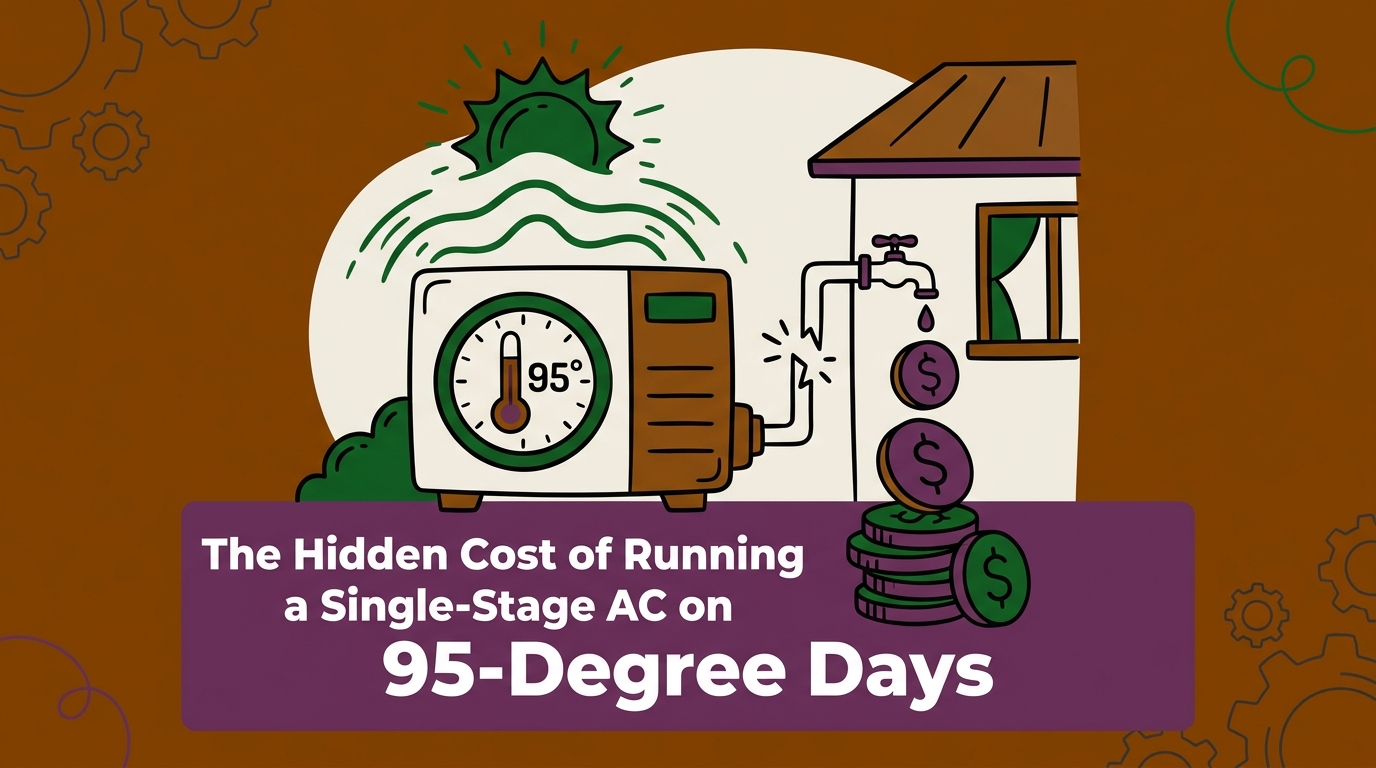
The Costly Illusion of an AC That Constantly Turns Off
A common misconception among homeowners is that the hidden cost of running a single-stage AC on 95-degree days comes from the unit running too much, when the real financial drain actually happens every time it shuts off and starts back up. Many people believe that when their air conditioner cycles off, it is successfully conserving electricity and saving them money. The reality of mechanical cooling is far more complex. During extreme heat, a system that frequently stops and starts is actually losing ground against the outdoor temperatures, forcing the internal components to work substantially harder just to maintain a baseline level of comfort.
In our years of serving Massachusetts communities, the team at Blue Bear Plumbing Heating & Air frequently hears from homeowners tired of high utility bills and uneven cooling. Exploring modern HVAC services can help you find a better path forward. Reach out to contact our HVAC team for a professional assessment of your home’s unique cooling needs.
When our technicians respond to service calls during peak July heatwaves, the high humidity quickly exposes the glaring flaws of outdated, single-stage cooling systems. A single-stage compressor only has one operational speed: 100 percent capacity. When the thermostat detects that the room has reached the target temperature, the system powers down completely. However, during a Massachusetts peak summer (95-degree days), the heavy heat load on your home immediately begins warming the indoor air the second the system stops. Within minutes, the thermostat triggers the system to turn back on.
This constant stopping and starting creates massive energy spikes while failing to adequately cool the home over the long term. Understanding these mechanical realities is the first crucial step in deciding whether an equipment upgrade is justified for your property. By looking past the illusion of the “resting” air conditioner, you can begin to see exactly where your summer electricity budget is actually going.
The Cycle of Losing Ground
To understand why this frequent cycling is so detrimental, you have to look at the thermal dynamics of a house under a heavy heat load. Heat naturally moves toward colder spaces. When the sun is beating down on your roof and walls, thermal energy is constantly pressing into your living areas.
- The short blast: A single-stage unit blasts maximum cold air, rapidly dropping the ambient air temperature near the thermostat.
- The false positive: The thermostat reads the sudden drop in air temperature and shuts the system off, even though the furniture, walls, and floors are still retaining heat.
- The rapid rebound: Because the physical objects in the room are still warm, the air temperature rebounds almost immediately, demanding another cooling cycle.
Our team typically sees this rapid rebound force the system into a loop of short, inefficient cycles that stress the mechanical parts and drain your electrical panel.
Unmasking ‘In-Rush Current’: The Hidden Electrical Drain
A pattern we see often when diagnosing high energy consumption in older air conditioners is that the core of the financial drain comes down to a mechanical concept known as “in-rush current.” In the HVAC industry, this is often referred to as Locked Rotor Amps (LRA). In-rush current is the massive, momentary surge of electrical power required to jump-start a heavy single-stage compressor from a complete standstill. Overcoming the physical inertia of a heavy mechanical motor requires vastly more energy than simply keeping that motor spinning once it is already moving.
Single-stage compressors can draw up to five to seven times their normal running current during this initial startup phase. If you have ever noticed the lights in your house briefly dim or flicker when the air conditioner kicks on, you have witnessed in-rush current in action. That brief dimming is the compressor pulling a massive volume of electricity from your electrical panel all at once. When a system is short-cycling during a Massachusetts peak summer (95-degree days), it is demanding this massive surge of power multiple times an hour.
The Science of Locked Rotor Amps
Think of a single-stage compressor like a heavy car that has stalled in an intersection. Pushing that car to get it rolling takes a tremendous amount of physical exertion. However, once the car is moving at a steady walking pace, it takes very little effort to keep it rolling forward. Your air conditioner operates on the exact same physical principles.
When the system cycles off, the refrigerant pressures inside the lines equalize. Starting the compressor back up requires the motor to instantly fight against those high pressures to get the refrigerant flowing again. Multiplying this massive power surge by dozens of start-and-stop cycles throughout a hot afternoon turns the AC into a heavy financial drain. Contrast this chaotic power demand with the steady, predictable power consumption of more advanced mechanical systems, which aim to keep the “car rolling” rather than constantly stopping and pushing it again.
Providing transparent, educational breakdowns of these mechanical realities is how we help homeowners maximize their indoor comfort while lowering their utility costs. When you understand exactly how your equipment uses power, you can make informed decisions that protect your budget.
The Humidity Trap: Why Your House Feels Cold but Clammy
Beyond the electrical costs, our team typically sees rapid short-cycling connect directly to a major comfort issue: the failure of single-stage units to dehumidify the indoor air. Temperature is only one half of the comfort equation. The other half is relative humidity. An air conditioner does not just cool the air; it is designed to condition the air by removing excess moisture.
For an air conditioning system to effectively pull moisture out of the indoor environment, it must run for extended, uninterrupted periods. The indoor evaporator coil needs time to get extremely cold so that the warm, moist air blowing across it can condense into water droplets. Those droplets then collect in a drain pan and flow out of your house. If the cooling cycle is too short, the coil never gets cold enough for a long enough duration to extract meaningful amounts of water.
Because single-stage units blast cold air at 100 percent capacity, they drop the ambient air temperature very quickly and shut off before the dehumidification process can truly begin. This results in a “cold but clammy” indoor environment. Your thermostat might read a perfectly acceptable 72 degrees, but because the relative humidity remains high, the air feels heavy, sticky, and uncomfortable.
The Evaporator Coil Condensation Cycle
Local summers frequently bring high relative humidity alongside 95+ degree temperatures, making moisture removal just as important as temperature control. When the air is saturated with moisture, your body cannot sweat effectively, which makes the room feel much hotter than the thermostat indicates.
The mechanics of poor dehumidification:
- Brief run times: The system runs for only 10 to 15 minutes before shutting down.
- Incomplete condensation: Moisture begins to collect on the indoor coil, but the cycle ends before the water can drip down the drain.
- Moisture re-evaporation: When the system shuts off, the fan often continues to blow for a minute or two, re-evaporating the moisture right back into your living space.
Proper humidity control during a Massachusetts peak summer (95-degree days) requires longer, slower cooling cycles that give the evaporator coil the time it needs to wring the moisture out of the air like a sponge.
How a Variable-Speed Inverter System Changes the Game
The mechanical solution to massive in-rush current spikes and poor humidity control is found in modern inverter technology. A variable-speed inverter system completely changes the way a home is cooled. Instead of operating on a basic “all-or-nothing” principle, an inverter-driven compressor can precisely adjust its operating speed to match the exact cooling demand of the house at any given moment.
You can think of inverter technology as cruise control for your home’s climate. When you drive on the highway with cruise control engaged, the car’s engine makes tiny, continuous adjustments to the throttle to maintain a steady speed, even as you go up and down hills. A variable-speed inverter system does the same thing with your indoor temperature. Instead of shutting down and restarting, these systems can run continuously at much lower capacities—often ramping down to just 25 or 30 percent of their maximum power.
Eliminating the Hard-Start Surge
By running continuously at a low speed, a variable-speed inverter system effectively eliminates the hard-start surge entirely. Because the motor never completely stops during the heat of the day, it never has to draw those massive Locked Rotor Amps to get moving again. This continuous, low-power operation drastically reduces overall energy consumption, smoothing out your electrical demand and preventing the meter from spinning out of control.
Furthermore, because the system is running almost constantly at a low, quiet speed, the indoor evaporator coil remains consistently cold. This allows the system to naturally remove significantly more moisture from the air. The result is a home that is precisely cooled and thoroughly dehumidified, creating a crisp, comfortable environment even on the most oppressive summer afternoons.
Head-to-Head: Single-Stage vs. Variable-Speed Performance
When evaluating whether an upgrade makes sense for your home, we recommend looking at a direct, side-by-side comparison of the two technologies. The differences in mechanical operation directly translate to differences in comfort, longevity, and operating costs.
| Performance Metric | Single-Stage Air Conditioner | Variable-Speed Inverter System |
|---|---|---|
| Power Draw | Massive startup spikes (5-7x running amps); high overall power consumption. | Steady, low-capacity energy use; eliminates hard-start electrical surges. |
| Humidity Control | Poor moisture removal due to rapid short cycles; leaves homes feeling clammy. | Excellent dehumidification due to long, continuous, low-speed run cycles. |
| Run Cycles | Constant, loud on-and-off cycling; noticeable temperature swings. | Quiet, uninterrupted background cooling; maintains precise temperatures. |
| Wear and Tear | High mechanical stress on contactors, capacitors, and the compressor motor. | Reduced mechanical strain due to soft-starting; extends equipment lifespan. |
Understanding the Long-Term Efficiency Gains
Upgrading your cooling equipment is not just about chasing higher SEER (Seasonal Energy Efficiency Ratio) ratings; it is about fundamentally changing how your home consumes power. Eliminating the hidden startup costs associated with older equipment is a strategic move.
Consistent, low-capacity operation reduces the historical burden of high residential electricity rates. When you rely on a variable-speed inverter system, you are paying for the precise amount of cooling you actually need at that exact moment, rather than paying for the massive electrical jolts required to constantly stop and start a heavy mechanical motor.


Protecting Your Equipment Under Heavy Load
Extreme heat and constant cycling take a severe physical toll on older system components. The mechanical reality of a single-stage system is that every startup is a violent event for the machinery. The vibration and stress of hard-starting can degrade exterior components over time, loosening electrical connections, stressing refrigerant lines, and wearing out capacitors at an accelerated rate.
This constant vibration also impacts the physical environment around the unit. Ensuring the physical foundation of the outdoor unit is stable is critical for any system, but it is especially important for units that shake and shudder every time they power on. A sinking or unlevel condenser pad forces the compressor to run at an angle, which can starve the internal mechanisms of necessary lubricating oil, leading to premature mechanical failure.
When our crews help homeowners prepare for a Massachusetts peak summer (95-degree days), we stress that assessing the physical stability of your outdoor equipment is just as important as checking the electrical components. In fact, evaluating and upgrading your condenser pad often goes hand-in-hand with installing modern, quieter equipment. A stable, level foundation ensures that your new system can operate smoothly, quietly, and efficiently for years to come without unnecessary physical strain.
Frequently Asked Questions About AC Efficiency and Upgrades
Why does my AC use so much electricity when it starts?
Your air conditioner uses a massive amount of electricity on startup to overcome the physical inertia of the heavy compressor motor. This phenomenon, known as in-rush current or Locked Rotor Amps, can draw five to seven times the normal running power. Once the motor is spinning and the refrigerant is flowing, the electrical demand drops significantly. Systems that constantly turn on and off multiply this high-power startup demand throughout the day.
Does a variable-speed AC dehumidify better than a standard unit?
Yes, a variable-speed inverter system provides vastly superior dehumidification compared to a standard single-stage unit. Because variable-speed units run continuously at lower capacities, they keep the indoor evaporator coil consistently cold for long periods. This extended run time gives the system the opportunity to pull significantly more moisture out of the indoor air, whereas standard units shut off too quickly to effectively dehumidify.
Why is my house cold but still humid in the summer?
A house feels cold but humid when the air conditioner is short-cycling, meaning it drops the air temperature rapidly and shuts off before it can remove moisture. Single-stage units running at 100 percent capacity cool the air faster than they can dehumidify it. Upgrading the system or addressing airflow issues can help lengthen the cooling cycles, allowing the equipment to properly extract the humidity.
Do variable speed ACs run all the time?
Variable-speed ACs are designed to run almost continuously during hot weather, but they do so at very low, energy-efficient speeds. Instead of blasting at full power and shutting down, they act like cruise control, ramping down to 25 or 30 percent capacity to maintain the exact temperature you set. This continuous operation uses less electricity overall than a system that constantly stops and restarts.
Is it worth upgrading to a variable speed AC for extreme heat?
Upgrading to a variable-speed AC is highly beneficial in regions that experience extreme heat and high humidity. These systems eliminate the massive electrical surges of hard-starting, lower overall energy consumption, and provide far superior moisture removal. By keeping the indoor temperature and humidity perfectly stable, they offer a level of comfort and efficiency that older single-stage units simply cannot match.
Stop Paying for Inefficiency: Secure Your Comfort Today
Eliminating heavy startup surges and improving indoor humidity control provides a clear, measurable path to better home comfort. You do not have to settle for a house that feels cold but clammy, nor do you have to accept the electrical spikes caused by outdated equipment grinding through constant on-and-off cycles.
Stop letting an outdated single-stage unit drain your power during extreme heat. By seeking a professional assessment for a variable-speed inverter system, you can take control of your indoor environment and your utility bills. Understanding the hidden cost of running a single-stage AC on 95-degree days is the first step; the next step is reaching out to secure a reliable, high-efficiency solution that keeps your home perfectly conditioned all summer long.
Contact Us Today
Routine maintenance is vital for the longevity of your plumbing, heating, and air conditioning systems. Sign up for our Blue Care Maintenance Plan for annual service and exclusive membership benefits, including:
- Priority scheduling
- Waived service fee during normal business hours
- 10% discount on service calls
- 3% discount on new installations
- Two-year parts and labor warranty on new equipment