


Choosing Between a Hard Start Kit and a New Compressor for an Aging AC
general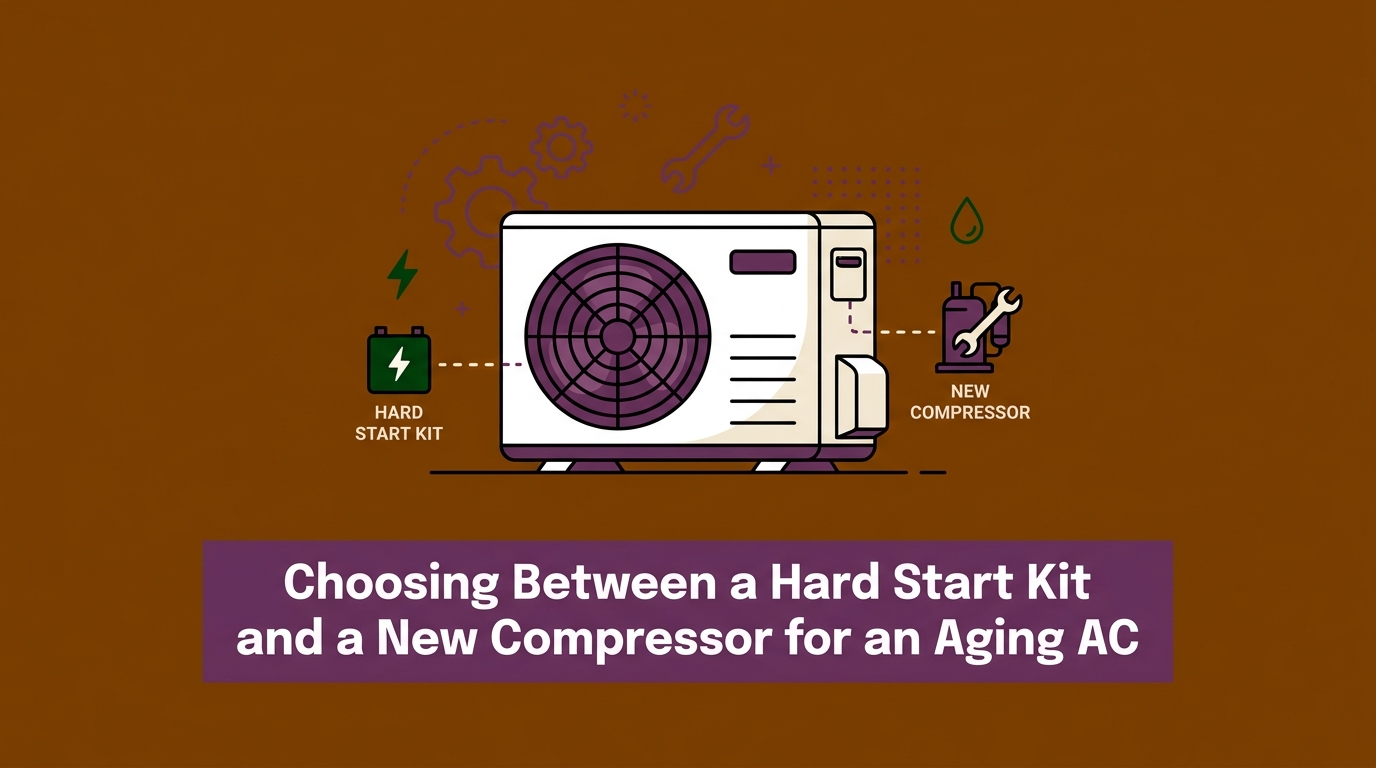
Is Your Aging AC Struggling to Start? The Big Diagnostic Dilemma
Are you currently choosing between a hard start kit and a new compressor for an aging AC that makes a loud, struggling click before it finally kicks on? That hesitation is a clear sign your system is fighting a serious battle. If you rely on a 10-year-old compressor, you are standing at a critical crossroads. You need to know if a relatively simple electrical boost will actually solve the problem, or if the internal machinery is simply too far gone to save.
Making the wrong call means throwing good money at a doomed system. We believe in providing honest, transparent assessments rather than pushing immediate replacements, so you get the exact diagnostic truth about your equipment. When your air conditioner hesitates, it draws massive amounts of electricity from your home’s panel, causing lights to dim and stressing the entire electrical system. This immediate symptom requires a careful look to determine the root cause before you spend a single dollar on repairs.
To get a definitive answer right away, you can explore our comprehensive HVAC services or contact our team for an honest AC assessment.
Electrical Hurdles vs. Mechanical Failure in Older Units
To understand why your 10-year-old compressor is struggling, we have to look past the thermostat and examine the heavy machinery sitting outside your home. Air conditioning compressors require a massive jolt of electricity to start moving. As these units age, the internal components wear down, and the electrical demand changes drastically. The key to fixing your system is identifying whether the motor just needs a boost, or if the internal parts are physically seized.
Understanding Locked Rotor Amps (LRA)
Every compressor has a rating called Locked Rotor Amps, or LRA. This number represents the massive power draw needed to overcome initial physical inertia and get the motor spinning. When a compressor is brand new, it hits this LRA spike for just a fraction of a second. However, as a 10-year-old compressor ages, the internal bearings wear down and the lubricating oil degrades. This physical wear increases the friction inside the unit, meaning the motor requires that massive power draw for a longer period just to start moving.
The Role of Capacitor Degradation
Your air conditioner uses standard run capacitors to store and deliver the energy required to keep the motor running smoothly. Over a decade of heavy use, these factory capacitors slowly lose their ability to hold a charge. This degradation contributes heavily to starting struggles. When the capacitor is weak and the physical friction is high, the compressor experiences an electrical hurdle.
This is exactly where a hard start kit functions best. A hard start kit acts like a powerful battery backup that delivers a concentrated jolt of electricity directly to the compressor. By providing this extra surge, the kit reduces the required electrical pull from your home by 50% to 70%. It helps the motor overcome that initial friction quickly, preventing the system from overheating during startup.
When a Hard Start Kit is a Smart, Cost-Effective Lifeline
Adding a starting assist device is not a magic cure-all, but under the right circumstances, it is a highly effective repair strategy. If your system still cools your home effectively once it is running, the issue might be entirely related to the startup sequence. Here are the specific scenarios where installing a hard start kit makes perfect sense:
- The compressor is mechanically sound but suffers from voltage drops: If your home experiences slight voltage drops, or if the wiring run from your electrical panel to the outdoor unit is exceptionally long, the compressor might just be starved for power during startup. A kit bridges this gap perfectly.
- The factory capacitor is weak: When the internal valves and bearings of your 10-year-old compressor are still in good working order, but the original capacitor has lost its capacitance, a hard start kit provides the missing punch needed to get things moving.
- Combating frequent short-cycling: During early Massachusetts summer heatwaves, your system might turn on and off rapidly. This frequent short-cycling causes intense electrical fatigue. A kit can temporarily alleviate this strain, ensuring the motor starts quickly and cleanly every single time.
- Protecting the remaining lifespan: By easing the electrical burden during startup, you prevent the compressor from overheating. This reduces the wear and tear on the motor windings, effectively protecting the remaining lifespan of a system that still has a few good years left in it.
Signs That Installing a Kit is Just Throwing Money Away
While an electrical boost is helpful for a healthy motor, it cannot fix broken machinery. There are objective signs of terminal mechanical failure where a hard start kit will fail to extend the unit’s life. Transparent diagnostics prevent you from paying for a kit today only to need a compressor tomorrow. If your system shows any of the following symptoms, investing in a band-aid solution is a financial risk.
- Grounded compressors: Inside the compressor, copper wires are tightly wound to create an electromagnetic field. Over time, the insulation on these wires can melt or break down, causing the raw wire to touch the metal casing. This is called a grounded compressor, and it is a fatal electrical failure. No start kit can fix this.
- Physically seized bearings: If the internal bearings have completely failed due to a lack of lubrication, the motor becomes physically locked in place. If a 10-year-old compressor is mechanically locked, no amount of electrical boosting will force it to run.
- Internal valve failures: The compressor pumps refrigerant vapor through your system using internal valves. If these valves break, the motor might still run, but it will not compress the refrigerant. The system will blow warm air, and a hard start kit will do absolutely nothing to restore your cooling.
- Loud metal-on-metal grinding: A struggling electrical hum is one thing, but if your outdoor unit sounds like metal grinding or violently shaking, the internal components have broken apart.
How Peak Heat and Humidity Accelerate Compressor Wear
You cannot evaluate the health of your air conditioner without looking at the environment it operates in. The local climate plays a massive role in how quickly mechanical parts wear down, and how long a band-aid repair will actually last.
The Problem: Continuous run times are absolutely required to dehumidify the air during peak July heat. Air conditioners do not just cool the air; they remove moisture. When the air is thick and heavy, the system has to work twice as hard.
The Cause: The thick Massachusetts summer humidity means your unit cycles on and off two to three times per hour under heavy load. This constant stopping and starting maximizes the startup strain on the compressor. Once it finally starts, it has to run for long, continuous cycles to pull the dense moisture out of your home’s air.
The Solution: You have to look at the reality of these environmental demands. A band-aided compressor is highly likely to fail under these extreme continuous run conditions. If your 10-year-old compressor is already struggling to start on a mild spring day, it will likely collapse when the heavy humidity forces it to run for hours at a time.
Criteria: Hard Start Kit vs. Compressor Replacement
To help you make an objective choice, we have broken down the exact criteria professionals use to determine the best path forward. Use this checklist to see where your specific situation falls.
| Diagnostic Factor | Hard Start Kit is Viable | Replacement is Required |
|---|---|---|
| Age of the Unit | Under 10 years old | Over 10 to 15 years old |
| Nature of the Failure | Electrical hesitation or humming | Mechanical grinding or seizing |
| Overall System Condition | No leaks, good airflow, clean coils | Multiple failing components, refrigerant leaks |
| Long-Term Home Plans | Staying in the home for 1 to 2 years | Staying in the home for 5+ years |


Evaluating Overall System Health and Lifespan
When you are dealing with a 10-year-old compressor, you cannot just look at the motor in isolation. You have to broaden your perspective to the entire HVAC system’s health to make a holistic, financially sound decision. According to ASHRAE equipment life expectancy charts, central AC compressors average a lifespan of 10 to 15 years. If your unit is already hitting that decade mark, fixing the compressor might just be the first of many expensive repairs.
You must evaluate the condition of the condenser coils and the refrigerant lines. If the coils are heavily corroded or if the system has a history of slow refrigerant leaks, installing a hard start kit is simply delaying the inevitable. Furthermore, the physical installation site plays a role in system longevity. For instance, replacing the outdoor unit often requires addressing the surrounding infrastructure for optimal performance, such as upgrading contractor-grade condenser pads to ensure the unit sits level and drains properly.
If the rest of the system is pristine, a hard start kit makes sense. But if the outdoor cabinet is rusting, the fan motor is loud, and the indoor coil is freezing up, investing in a new compressor or a completely new system is the only way to secure reliable cooling for the next decade.
Common Questions About Hard Start Kits and Failing Compressors
Will a hard start kit fix a bad compressor?
The short answer is no; a hard start kit will not fix a mechanically broken compressor. It is designed to deliver an electrical boost to a motor that is struggling to overcome initial friction. If the internal bearings are seized or the internal valves are shattered, the compressor is dead. An electrical surge cannot repair broken metal components.
Is it worth replacing a compressor on a 10 year old AC?
Most industry guidelines suggest that replacing a compressor on a 10-year-old AC is usually not worth the investment. Because the average lifespan of an AC unit is 10 to 15 years, putting a brand-new compressor into an aging system means the new part will outlast the rest of the equipment. You are often better off putting that money toward a completely new, energy-efficient system.
How long will a hard start kit extend the life of an AC?
If the compressor is otherwise healthy but suffering from electrical fatigue, a hard start kit can extend the life of the AC by one to three years. However, this varies wildly based on your local climate. Surviving a mild season is one thing, but enduring the heavy workload of a thick Massachusetts summer will test the limits of any aging system.
What are the signs a compressor is going bad?
A failing compressor will usually give you warning signs before it completely dies. You might notice the system blowing warm air, tripping the circuit breaker repeatedly, or making loud grinding and clanking noises during operation. Additionally, if you notice a sudden, massive spike in your monthly energy bills, it usually means the compressor is working twice as hard to produce the same amount of cooling.
Does a hard start kit lower energy bills?
A hard start kit does not lower your overall energy bills in any noticeable way. While it does reduce the massive spike of electricity needed for a fraction of a second during startup, it does not change how much power the system uses while it is actively running and cooling your home. Your energy bills are determined by the running efficiency of the unit, not the startup sequence.
Get a Transparent Assessment for Your Struggling AC
Guessing between a temporary kit and a full replacement can be a costly mistake. You need an objective, mechanical evaluation of your system’s electrical draw and bearing health to make the right call. Don’t leave your comfort to chance. Reach out and contact our team for an honest AC assessment to get a clear, definitive answer today.
Contact Us Today
Routine maintenance is vital for the longevity of your plumbing, heating, and air conditioning systems. Sign up for our Blue Care Maintenance Plan for annual service and exclusive membership benefits, including:
- Priority scheduling
- Waived service fee during normal business hours
- 10% discount on service calls
- 3% discount on new installations
- Two-year parts and labor warranty on new equipment