



Everything You Need to Know About Hydronic Heating Worth It
HVAC
Is Hydronic Heating Worth It for Your Home? Here’s What You Need to Know First
Is hydronic heating worth it for your home? For most homeowners in cold climates like Massachusetts, the short answer is yes — especially if you plan to stay in your home long-term and want consistent, quiet, energy-efficient warmth. Here’s a quick breakdown:
Hydronic heating is likely worth it if you:
- Want even, draft-free heat throughout your home
- Have allergies or asthma and want to reduce airborne dust
- Plan to stay in your home for 7+ years to realize energy savings
- Are building new or doing a major renovation (lowest installation cost)
- Live in a cold climate like the South Shore of Massachusetts
Hydronic heating may not be the right fit if you:
- Need a fast, low-upfront-cost heating solution
- Are in a poorly insulated home without plans to improve it
- Plan to move in the next few years
Hydronic systems circulate hot water through pipes to warm your home from the floor up — or through radiators and baseboards — rather than blasting warm air through ducts. That difference matters a lot when it comes to comfort, efficiency, and air quality. But like any major home investment, the answer depends on your specific home, budget, and goals.
I’m Marc Provenzano, Marketing Manager at Blue Bear Plumbing, Heating & Air, and I’ve spent years working alongside our team of licensed technicians who help South Shore homeowners answer exactly this question: is hydronic heating worth it for your home? In this guide, we’ll walk you through everything you need to make a confident, informed decision.
What is Hydronic Heating and How Does It Work?
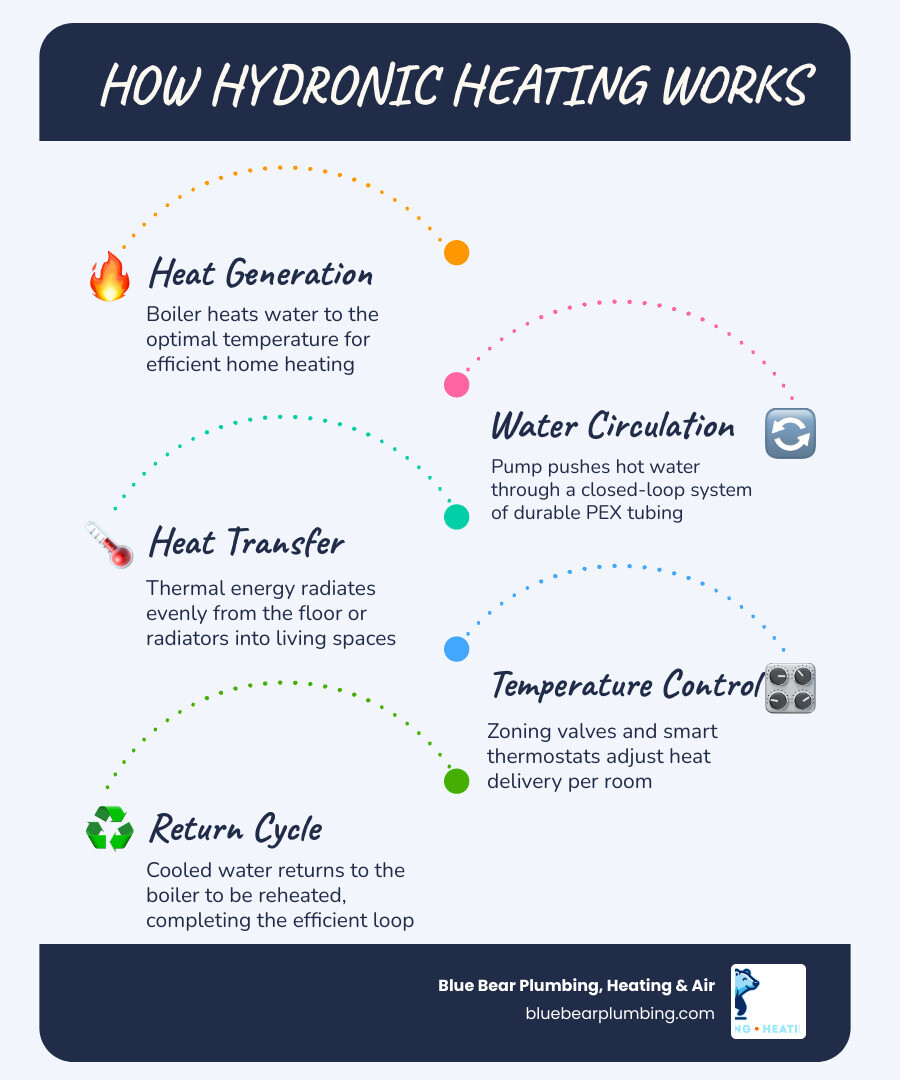
To understand whether this system is a smart choice for your Massachusetts property, you first need to understand how it operates. Unlike traditional forced-air systems that rely on a furnace to heat air and blow it through a network of sheet-metal ducts, hydronic heating is a water-based system.
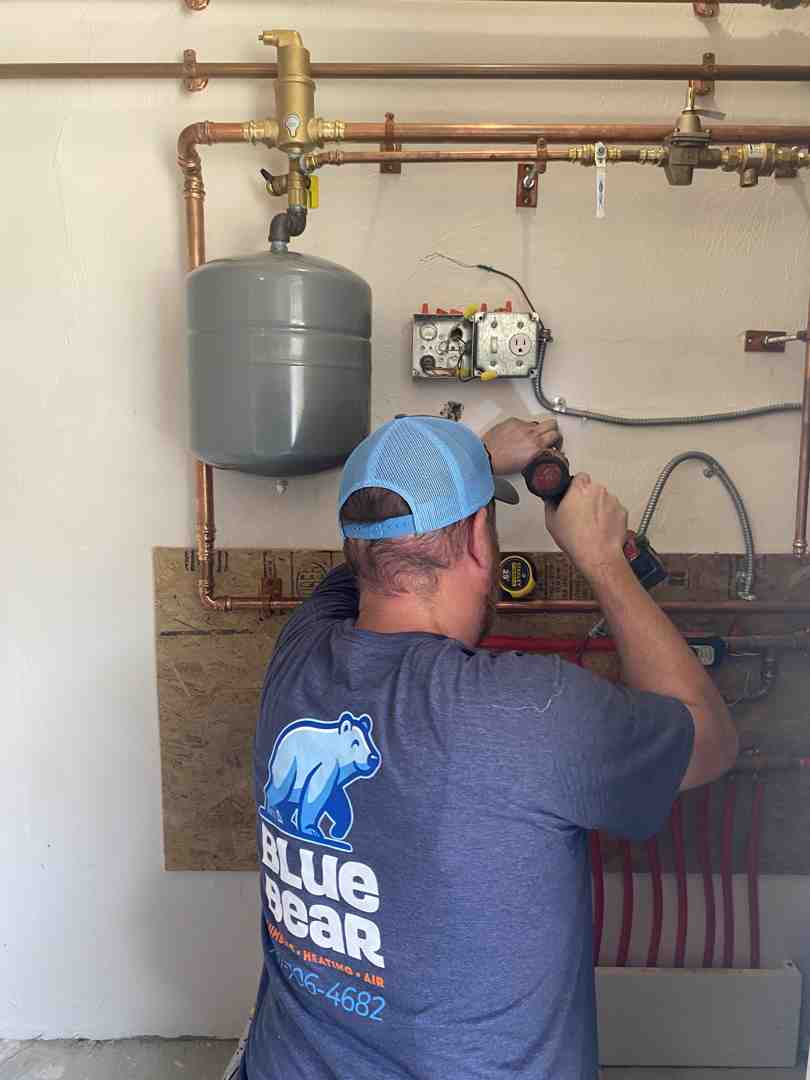
At its core, a hydronic system uses a central heat source—most commonly a high-efficiency boiler—to heat water. Once the water reaches the optimal temperature, a series of quiet circulator pumps push it through a closed loop of flexible, oxygen-barrier PEX tubing or copper piping. This piping runs to various heat emitters throughout your home, such as underfloor tubing, baseboard units, or wall-mounted radiator panels.
As the hot water flows through these emitters, it transfers its thermal energy to the surrounding space. Once the water cools, it travels back to the boiler to be reheated and recirculated. This closed-loop design is highly efficient because water is a far better heat conductor than air. Water can hold about four times more heat energy by volume than air, meaning it takes much less energy to move warmth from your basement boiler to your living room.
If you are considering upgrading your home’s central heating plant, learning about the installation process is a great place to start. You can explore the step-by-step journey in The Homeowners Roadmap to Boiler Installation in Natick MA.
Hydronic Radiant Floor Heating vs. Forced-Air Systems
The physical difference between living in a hydronically heated home and a forced-air heated home comes down to how the heat is distributed: convection heat versus radiant heat.
Forced-air systems rely on convection. The furnace blasts hot air out of registers, which quickly rises to the ceiling, cools, and drops back down. This cycle creates drafty air currents, temperature swings, and cold spots—especially near the floor where your feet are. Furthermore, forced-air systems suffer from duct losses. Up to 30% of the energy used to heat your air can escape through uninsulated or poorly sealed ductwork in your attic, crawlspace, or walls.
Hydronic radiant floor heating, on the other hand, warms your home from the ground up. It directly heats the objects and people in the room rather than just warming the air. It creates a highly consistent thermal profile: your feet stay warm, your living zone remains perfectly comfortable, and the air near the ceiling remains slightly cooler, which is actually how the human body naturally prefers to experience warmth.
| Feature | Hydronic Heating | Forced-Air Systems |
|---|---|---|
| Heat Distribution | Radiant (even, floor-to-ceiling warmth) | Convection (warm air rises, leaving floors cold) |
| Energy Medium | Hot water (high thermal capacity) | Heated air (low thermal capacity) |
| Duct Losses | None (closed-loop piping) | Up to 30% energy loss through ductwork |
| Air Movement | Silent, zero drafts | Drafty, high velocity |
| Dust & Allergens | Minimal (no blowing air) | High (circulates dust, pet dander, and mold spores) |
| Response Time | Slower to heat up, but retains heat longer | Fast heat-up, but cools down rapidly |
Types of Hydronic Systems: Radiators, Baseboards, and Radiant Floors
Hydronic systems are incredibly versatile because they can deliver warmth through several different types of heat emitters:
- Radiant Floor Heating: This is the gold standard of hydronic comfort. PEX tubing is installed directly beneath your finished floors. In a “wet installation,” the tubing is embedded in a concrete slab or a thin layer of gypsum underlayment, which acts as a massive thermal battery. In a “dry installation,” the PEX tubing is attached beneath a subfloor using aluminum heat-transfer plates.
- Baseboard Heaters: Modern hydronic baseboard heaters are quiet, low-profile units that run along the perimeter of your rooms. They use copper pipes fitted with aluminum fins to draw cold air from the floor, warm it, and release it gently into the room.
- Radiator Panels: Forget the clunky, banging steam radiators of the early 20th century. Modern European-style radiator panels are sleek, wall-mounted, and whisper-quiet. They can be individually controlled with thermostatic radiator valves (TRVs) to allow room-by-room zoning.
Choosing the right combination of emitters is key to maximizing both comfort and aesthetics. If you’re planning an upgrade on the South Shore, you can read more about selecting professional installation services in From Affordable to Expert The Best Boiler Installation in Norwell MA.
Key Benefits: Why Is Hydronic Heating Worth It for Your Home?
When homeowners ask us if a hydronic system is worth the investment, they are usually looking at more than just the utility bills. They are looking at how the system changes the daily experience of living in their home.
The primary benefit of hydronic heating is its extraordinary efficiency. Because water is an elite heat-transfer medium and there are no duct losses to worry about, switching to a well-designed hydronic system can reduce your heating bills by 15% to 30% compared to traditional forced-air furnaces.
Additionally, hydronic systems excel at zone control. By using multiple thermostats and motorized zone valves, you can easily divide your home into separate heating zones. You can keep your bedrooms cool at night while keeping your main living areas warm, or shut off heating entirely to guest rooms that are rarely used. This level of precise control ensures you never waste money heating unoccupied spaces.
To keep these high-efficiency systems running smoothly year after year, routine care is essential. Regular maintenance helps protect your investment, and you can learn how proactive service models save you money by reading Do Maintenance Plans Actually Save You Money in the Long Run?.
Unmatched Comfort, Quiet Operation, and Indoor Air Quality
If you have ever been woken up in the middle of a freezing Massachusetts night by a loud furnace kicking on, or if you hate the dry, itchy skin that comes with winter heating, hydronic heat is a game-changer.
Because hydronic systems do not rely on blowing air, they operate in complete silence. There are no whistling registers, rattling ducts, or sudden blasts of hot wind. The warmth is just there, steady and unchanging.
This lack of air movement also has profound health benefits. Forced-air systems act like giant dust-recycling loops, constantly blowing pet dander, pollen, dust mites, and other allergens through your rooms. Hydronic systems eliminate this “dust cycle” entirely. For homeowners with asthma or severe seasonal allergies, the improvement in indoor air quality is often the single most important factor that makes hydronic heating worth it.
Furthermore, hydronic systems do not strip natural moisture from your indoor air, helping you maintain comfortable humidity levels without the need for noisy, high-maintenance whole-house humidifiers.
Energy Efficiency and Long-Term Value
From an engineering perspective, modern hydronic systems represent the pinnacle of residential heating. When paired with a modern condensing boiler, these systems can achieve Annual Fuel Utilization Efficiency (AFUE) ratings of over 95%. This means that 95% of the fuel consumed is directly converted into useful heat for your home, with only a tiny fraction escaping through the exhaust vent.
Condensing boilers achieve this by capturing heat from the water vapor in the exhaust gases—energy that older, non-condensing boilers simply wasted. When operated at lower water temperatures (which is ideal for radiant floor systems), condensing boilers run at peak efficiency, maximizing your long-term return on investment (ROI).
Beyond monthly utility savings, a high-quality hydronic system is a premium feature that adds real, tangible value to your property. Discerning homebuyers recognize hydronic radiant heat as a luxury upgrade, making your home stand out in the competitive Massachusetts real estate market.
Installation and Suitability: New Construction vs. Retrofits
One of the most important factors in determining whether hydronic heating is worth it is the current state of your home. Are you building a new home, or are you looking to retrofit an existing one?
In new construction, installing a hydronic radiant floor system is highly cost-effective. The PEX tubing can be laid directly onto the subfloor or tied to the steel reinforcement mesh before a concrete slab is poured. This “wet” installation is fast, straightforward, and allows you to design the entire home around the ultimate comfort of heated floors.
In a renovation or retrofit, the process is more complex. Installing radiant flooring in an existing home often requires pulling up existing finished floors to install the tubing from above, or accessing the floor joists from an unfinished basement or crawlspace to install “staple-up” PEX tubing from below.
If tearing up your floors isn’t practical, retrofitting with sleek panel radiators or low-profile baseboards is an excellent alternative. These can be installed with minimal disruption to your home’s structure. If you are experiencing issues with an existing system or planning a retrofit in the Natick area, check out Quality Boiler Repair Without Breaking the Bank in Natick for cost-effective repair and upgrade solutions.
Is Hydronic Heating Worth It for Your Home in Cold Climates?
In cold, northern climates like the South Shore of Massachusetts, heating systems have to work hard for several months out of the year. This is where hydronic systems truly shine.
Because cold climates require sustained, long-term heating rather than short bursts of warmth, the high thermal mass of a hydronic system is incredibly beneficial. Once a concrete slab or gypsum floor is brought up to temperature, it retains that heat for hours. This steady background warmth keeps your home at a consistent, comfortable temperature even when the outdoor thermometer plummets below freezing.
Unlike forced-air systems, which turn on and off frequently (short-cycling) and cause rapid temperature swings, a hydronic system provides a smooth, flat line of comfortable heat all winter long.
Combining Hydronic Heating with Air Conditioning
One common question we hear from homeowners is: “If I install a hydronic system, how will I cool my home in the summer?”
Since hydronic systems do not use ductwork, they cannot directly provide traditional central air conditioning. However, this is actually an advantage for many homeowners, as it allows you to separate your heating and cooling systems for maximum efficiency.
The most popular and effective way to pair hydronic heating with summer cooling is by installing a ductless mini-split system. Mini-splits use small, quiet indoor air handlers mounted on the wall or ceiling, connected to an outdoor compressor. This setup allows you to enjoy the unparalleled comfort of radiant floor heating in the winter and high-efficiency, zoned air conditioning in the summer—all without sacrificing closet space or historic architectural details to bulky ductwork.
Maintenance and Lifespan of Hydronic Systems
A heating system is a long-term investment, and you want to be sure it will stand the test of time. Fortunately, hydronic systems are legendary for their durability and long-term reliability.
While a traditional forced-air furnace typically lasts 15 to 20 years, a high-quality, well-maintained hydronic boiler can easily last 20 to 30 years or more. Even better, the radiant PEX tubing installed under your floors is incredibly tough and is designed to last the lifetime of your home—often 50 years or more.
To ensure your system reaches its maximum lifespan, keeping up with seasonal maintenance is vital. For a complete guide on how to prepare your home’s systems for the changing New England seasons, refer to our Seasonal Plumbing HVAC Maintenance Checklist for South Shore Residences.
Essential Maintenance for Boilers and Radiant Loops
While hydronic systems are generally low-maintenance, they do require annual professional attention to maintain peak efficiency and safety.
Key maintenance tasks for a hydronic system include:
- Boiler Servicing: Cleaning the heat exchanger, checking safety controls, and inspecting the burner assembly.
- Pressure Checks: Ensuring the system’s expansion tank and water pressure are at optimal levels.
- Radiator Bleeding: Releasing any trapped air from the lines or radiators, which can block hot water flow and cause cold spots.
- Water Quality Testing: Checking the pH and inhibitor levels in the system water to prevent corrosion and scale buildup inside the boiler and pipes.
- Power Flushing: Every few years, a professional technician should flush the system to remove any accumulated sludge or debris.
Wondering what to expect during a professional maintenance visit? We have put together a comprehensive guide in The Ultimate HVAC Maintenance Visit Checklist to help you stay informed.
Lifespan and Long-Term Reliability
With fewer moving parts than a forced-air system (no blower motors, belts, or extensive duct dampers), there is simply less that can go wrong with a hydronic system on a day-to-day basis. This translates to fewer emergency repair calls and greater peace of mind during the coldest months of the year.
At Blue Bear Plumbing, Heating & Air, we make it easy for homeowners to stay on top of this critical maintenance. Our preventative maintenance plans are designed to keep your boiler operating at peak efficiency while catching minor issues before they turn into costly repairs. Learn more about how we protect your home by reading How the Blue Care Plan Keeps Your Home Systems Humming.
Frequently Asked Questions About Hydronic Heating
Navigating home heating can be overwhelming. Here are clear, direct answers to some of the most common questions homeowners ask our team.
Is hydronic heating worth it for your home if you have allergies?
Yes, absolutely. If anyone in your household suffers from asthma, severe allergies, or respiratory sensitivities, hydronic heating is one of the best investments you can make. Traditional forced-air systems constantly blow dust, pet dander, pollen, and mold spores through your living spaces. Hydronic systems do not move air to distribute heat, which keeps these airborne irritants settled. Many homeowners report a noticeable reduction in allergy symptoms and nighttime coughing after switching to hydronic heat.
Is hydronic heating worth it for your home in a smaller 1,300 sq ft layout?
Yes, it can be highly beneficial. While radiant floor heating is often associated with large, custom luxury homes, it is incredibly efficient in smaller layouts. In a 1,300 sq ft home—such as a cozy Cape or ranch on the South Shore—space is at a premium. Hydronic baseboards or radiant floors eliminate the need for bulky ductwork, freeing up valuable closet and wall space.
Additionally, because smaller homes often have distinct living zones (like a main living area and a couple of compact bedrooms), the precise zoning capabilities of a hydronic system allow you to heat only the rooms you are using, keeping your energy bills exceptionally low.
How long does a hydronic heating system typically last?
A well-maintained hydronic system is built for the long haul:
- The Boiler: Typically lasts 15 to 20 years for high-efficiency condensing models, and up to 30 years for high-quality cast-iron boilers.
- PEX Tubing: Designed to last 50 years or more, often outlasting the home itself.
- Radiators and Baseboards: Can easily last 30 to 50 years as they have no moving parts.
To achieve this level of longevity, you need the right team to handle your system’s design, installation, and ongoing care. If you are in the Natick area, you can find expert support by reading Mastering the Heat Professional Boiler Technicians in Natick. If you ever run into an unexpected issue with an existing boiler in Quincy, we also have you covered with The Homeowners Guide to Reliable Boiler Repair in Quincy.
Is Hydronic Heating Worth It for Your Home? The Final Verdict
So, is is hydronic heating worth it for your home?
If you plan to stay in your home for several years, value whisper-quiet operation, want to improve your indoor air quality, and desire the ultimate luxury of warm floors underfoot, then hydronic heating is absolutely worth the investment. It is a premium, durable, and highly efficient heating solution that will keep your family perfectly comfortable through the harshest New England winters while lowering your monthly energy consumption.
While the initial installation requires a thoughtful design and a higher upfront commitment than a basic furnace replacement, the long-term energy savings, unmatched comfort, health benefits, and increased home resale value make it a winning choice for many South Shore homeowners.
Partnering with Local Experts for Your Home Comfort
Designing and installing a hydronic heating system is a highly specialized craft. To get the maximum efficiency and reliability out of your system, you need a team that understands heat-loss calculations, proper pipe sizing, zone balancing, and high-efficiency boiler technology.
At Blue Bear Plumbing, Heating & Air, our friendly, local team is committed to delivering high-quality workmanship, attentive customer care, and absolute integrity. We serve homeowners throughout South Boston and the South Shore—including Norwell, Natick, Quincy, and the surrounding communities—providing upfront pricing and reliable, long-term solutions.
Ready to experience a new level of home comfort this winter? Contact the experts at Blue Bear Plumbing today to schedule a personalized home comfort consultation!



Contact Us Today

Routine maintenance is vital for the longevity of your plumbing, heating, and air conditioning systems. Sign up for our Blue Care Maintenance Plan for annual service and exclusive membership benefits, including:
- Priority scheduling
- Waived service fee during normal business hours
- 10% discount on service calls
- 3% discount on new installations
- Two-year parts and labor warranty on new equipment