




The Case for Relocating Your Thermostat Away from Direct Summer Sunlight
general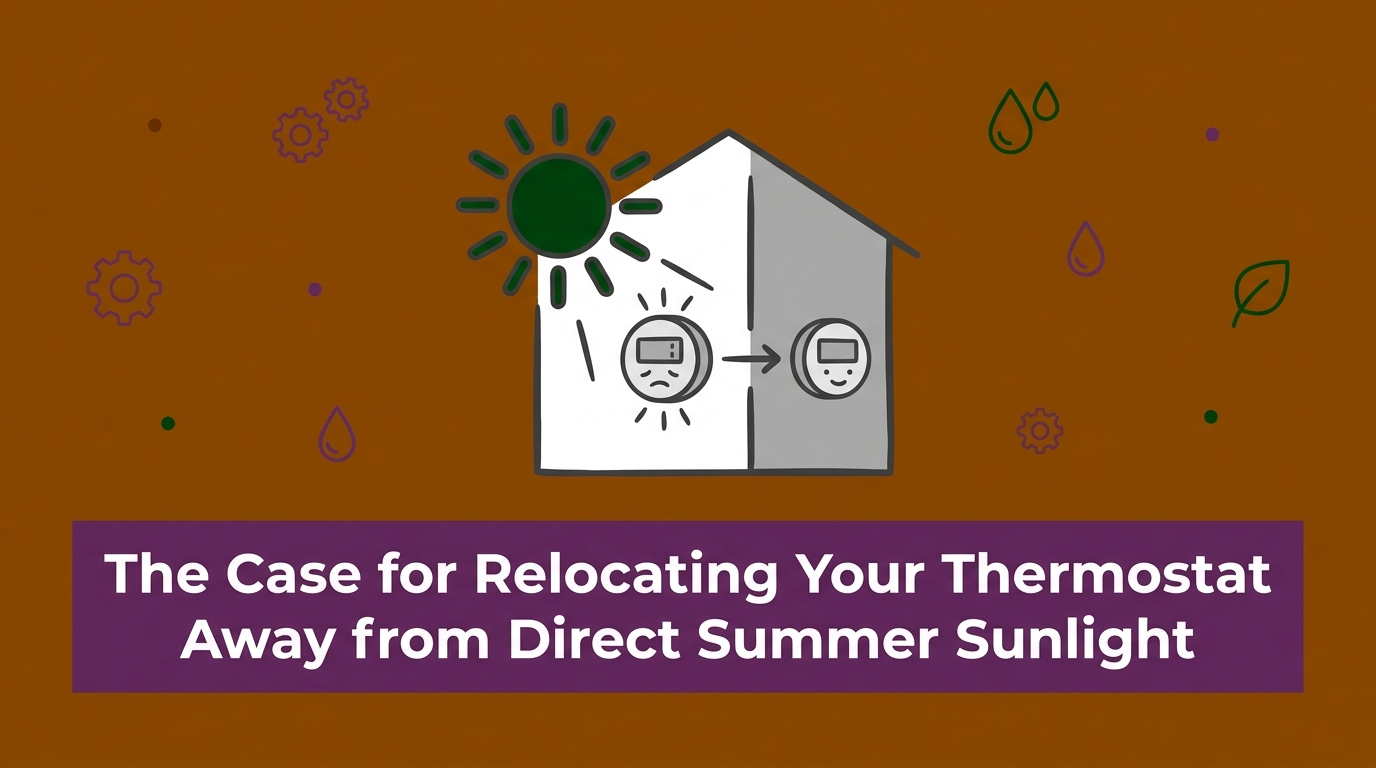
When the AC Won’t Quit: The Summer Thermostat Trap
As July peak summer approaches and your air conditioning system refuses to shut down, understanding The Case for Relocating Your Thermostat Away from Direct Summer Sunlight becomes critical for homeowners. If your living room feels like a walk-in freezer but the temperature on the wall still reads eighty degrees, you are likely dealing with a placement issue rather than a mechanical failure. In these situations, addressing this sensor disconnect is the key to restoring your home’s comfort and efficiency.
When you need an expert assessment to determine if you are dealing with a placement issue or a mechanical failure, reaching out for professional HVAC services is the best first step. At Blue Bear Plumbing Heating & Air, our team frequently sees this exact scenario play out across Massachusetts during peak-heat months.
Many homeowners immediately assume the worst when their AC runs non-stop during the hottest parts of the day. A common reaction is to suspect that the cooling unit is completely broken, leaking vital refrigerant, or simply undersized for the square footage of the house. These assumptions often lead to unnecessary anxiety about impending, extensive repair bills. However, a pattern we see often is that the root cause is much simpler and entirely external to the air conditioner itself.
The true culprit is often a thermostat mounted on a wall that receives direct afternoon sunlight, perhaps near a large unshaded window or directly beneath a skylight. When the sun beats down on the plastic casing of the thermostat, it artificially heats the internal sensors. This creates a severe disconnect between what the thermostat “feels” and the actual ambient temperature of your home. Recognizing this phenomenon is a critical decision point. Once you identify that your system is battling solar heat gain rather than a failing compressor, you can take the appropriate steps to have a professional relocate the device, saving your equipment from unnecessary wear and tear.
The Science of Solar Heat Gain on Indoor Sensors
To understand why a sunlit wall causes such drastic cooling issues, it helps to look at the mechanics of solar radiation and radiant heat transfer. When sunlight passes through the glass of a window or skylight, it carries radiant energy. This energy does not primarily heat the air it passes through; instead, it heats the solid objects it strikes. When that solid object happens to be your home’s central climate control sensor, the results disrupt the entire cooling cycle.
The problem: The physical casing of the thermostat absorbs this radiant heat energy rapidly. Because the internal thermistor (the component that measures temperature) is housed inside this casing, it begins to register the temperature of the heated plastic rather than the ambient air circulating through the hallway or living room. This phenomenon produces what HVAC professionals refer to as “ghost readings.”
The cause: A ghost reading tricks the system into believing the entire house is significantly hotter than it actually is. If your home is a comfortable 72 degrees, but the sun is baking the thermostat casing to 82 degrees, the sensor will report an artificially high ambient temperature reading to the control board. The U.S. Department of Energy strictly advises against placing thermostats in direct sunlight, near drafty windows, or close to exterior doors precisely to avoid these localized temperature distortions.
The solution: Mitigating this requires physically removing the sensor from the path of radiant heat. While drawing the blinds can offer a temporary reprieve, the permanent solution is moving the control unit to an interior wall that remains shaded and experiences natural, unobstructed airflow from the home’s return vents.
How Ghost Readings Trick Your System
The internal mechanics of a thermostat are highly sensitive, and they operate strictly on the data they collect in their immediate micro-environment.
- Localized measurement: The sensor measures the localized air and the casing temperature, not the average temperature of the entire room or house.
- Rapid temperature spikes: A direct, intense sunbeam can raise the localized temperature of the plastic casing by several degrees within a matter of minutes, far faster than the actual room air is warming up.
- Continuous signaling: Because the thermostat is programmed to reach your setpoint, it sends a continuous, uninterrupted cooling signal to the air conditioner based on this false data, locking the system into an endless cycle.


The Cascade Effect: How a Sun-Baked Thermostat Overworks Your AC
When a ghost reading locks your air conditioner into a continuous cooling cycle, the consequences extend far beyond a chilly living room. The mechanical cascade effect places immense strain on the entire HVAC infrastructure. Air conditioning systems are designed to operate in cycles—running until the set temperature is reached, then resting. When that resting phase is eliminated by a sun-baked sensor, the wear and tear on your equipment accelerates exponentially.
The toll on the blower motor: The indoor air handler’s blower motor is responsible for pushing conditioned air through your ductwork. While these motors are robust, continuous operation without a cooldown period forces them to run hot, degrading the internal bearings and shortening the lifespan of the unit. Over time, this constant strain can lead to premature motor failure.
Compressor and electrical strain: Outside, the compressor—the heart of the cooling system—is forced to run relentlessly. The compressor is designed to handle heavy loads, but it requires off-cycles to manage internal heat and pressure. Furthermore, the electrical components, such as contactors and capacitors, remain engaged constantly, increasing the likelihood of electrical fatigue and unexpected breakdowns during peak summer heat.
The efficiency impact: Beyond the mechanical degradation, a constantly running system results in a massive spike in summer utility bills. You are paying to cool a house that is already cold, simply because the sensor is confused. This is distinctly different from systemic airflow issues, such as why your upstairs bedrooms stay hot despite the central AC running constantly, which usually points to ductwork restrictions, poor insulation, or an undersized unit. A sun-baked thermostat is an entirely localized issue causing a system-wide overreaction.
Is Your AC Broken, or Just Confused by the Sun?
Diagnosing the difference between a broken air conditioner and a poorly placed thermostat can save you significant time and stress. When an AC system experiences a genuine mechanical failure—such as a refrigerant leak, a failed compressor, or a frozen evaporator coil—the symptoms usually manifest as a lack of cooling power. Conversely, a sun-baked thermostat results in an overabundance of cooling.
Understanding these distinct symptoms is crucial before you assume your system needs a total replacement.
| Symptom Category | Sun-Baked Thermostat (Ghost Reading) | Mechanical AC Failure |
|---|---|---|
| Airflow Temperature | Vents blow exceptionally cold air continuously. | Vents blow lukewarm, room-temperature, or warm air. |
| Overall Home Comfort | House feels like an icebox; severely overcooled. | House remains hot, humid, and uncomfortable. |
| System Cycling | Runs non-stop during sunny afternoons; normal at night. | Short-cycles rapidly or runs constantly with no cooling effect. |
| Thermostat Display | Shows an artificially high ambient temperature reading despite the cold room. | Shows a high temperature because the room is actually hot. |
Observational tips for homeowners: The easiest way to verify if solar heat gain is the culprit is to monitor the system’s behavior at different times of the day. If the air conditioner runs endlessly at 3:00 PM when the sun is hitting the wall, but cycles normally at 10:00 PM when the sun is down, the location of the sensor is almost certainly the issue. You can take comfort in knowing that the cooling unit itself is likely functioning perfectly—it is simply following bad instructions.
The Unseen Consequences of Overcooling in Summer
While an endlessly running air conditioner might sound like a minor annoyance, the secondary consequences of severe overcooling can negatively impact your home’s indoor environment and structural integrity. An AC unit that refuses to cycle off doesn’t just lower the temperature; it fundamentally alters the indoor climate.
In our experience serving Massachusetts homeowners, the combination of intense summer sun and high ambient humidity means that continuous AC operation from false readings can quickly turn a warm day into a freezing, clammy indoor environment. When the system pushes indoor temperatures to uncomfortably frigid levels, it forces the indoor air below the natural dew point. This interaction with high ambient humidity often leads to indoor condensation.
The risks of indoor condensation: When cold air continuously blasts through the ductwork and the ambient humidity outside is high, condensation can form on the exterior of metal ducts, around vent registers, and even on the interior panes of your windows. Over time, this persistent moisture can encourage mold growth, damage drywall, and ruin window sills.
Furthermore, overcooling creates a highly unbalanced living environment. The room with the sun-baked thermostat might be freezing, while upstairs bedrooms remain stuffy, completely throwing off the home’s thermal equilibrium. Proper temperature control is about achieving a delicate balance of sensible cooling (lowering the temperature) and latent cooling (removing humidity) to maintain consistent comfort, not just delivering raw, uninterrupted cooling power.
Why Professional Thermostat Relocation is the Ultimate Solution
When you confirm that direct sunlight is causing ghost readings, the most effective and permanent solution is relocating the thermostat to a more suitable area of the home. This process requires technical precision and an understanding of systemic HVAC communication.
At Blue Bear Plumbing Heating & Air, our comprehensive approach to home comfort means true HVAC expertise looks beyond just the mechanical AC unit to systemic factors like sensor placement and overall system communication. A whole-home assessment ensures that the new location will provide accurate readings for years to come.
Our professional relocation process involves several critical steps:
- Strategic site selection: Our technicians will identify an ideal interior wall. The perfect spot is typically in a central hallway, away from direct sunlight, exterior doors, supply vents, and heat-generating appliances like lamps or televisions.
- Safe wire routing: The process involves handling low-voltage wiring, safely disconnecting it from the current location, and routing new wire through the wall cavity or attic to the new destination.
- Wall patching and finishing: Once the wires are moved, our team ensures the old location is safely capped and ready for minor drywall patching, leaving the home exactly as we found it.
- System recalibration: Finally, the professional will mount the new baseplate, connect the wiring to the correct terminals, and recalibrate the system to ensure accurate communication between the sensor and the air handler.
The Risks of DIY Thermostat Wiring
While moving a small plastic box might seem like a simple weekend project, the risks of DIY thermostat relocation are significant.
- Electrical shorts: Mishandling the low-voltage wires without cutting power correctly can easily short out the control board inside the furnace or air handler, turning a simple relocation into a major repair.
- Improper calibration: If the wires are crossed or the new baseplate is not leveled (which affects older mercury switches and some digital sensors), the system will continue to operate inefficiently.
- Missed opportunities: Having a professional handle the relocation provides the added value of a system health check, verifying that the air conditioner hasn’t suffered premature wear from the previous continuous running cycles.
Frequently Asked Questions About Thermostat Placement
Does direct sunlight affect a thermostat?
Yes, direct sunlight significantly affects a thermostat by heating its outer casing. This causes the internal sensor to register the temperature of the hot plastic rather than the actual air in the room. As a result, the thermostat sends false data to the HVAC system, causing the air conditioner to run much longer than necessary.
Why is my thermostat reading higher than the room temperature?
If your thermostat reads higher than the room feels, it is likely absorbing heat from an external source. Direct sunlight, a nearby lamp, an uninsulated exterior wall, or a draft from a hot attic can all artificially inflate the reading. The sensor is accurately measuring its immediate environment, but that environment does not reflect the rest of the house.
Where is the best place to put a thermostat?
The absolute best place for a thermostat is on an interior wall in a frequently used central area, such as a main hallway or living room. It should be positioned about five feet off the floor to measure average air temperature. It must be kept away from direct sunlight, exterior doors, air vents, and heat-generating appliances to ensure accurate readings.
Why is my AC running constantly in the summer?
Your AC may run constantly due to a ghost reading caused by solar heat gain on the thermostat, tricking the system into thinking the house is hot. Alternatively, constant running can be caused by dirty air filters, low refrigerant levels, or a system that is too small for the home. If the house is freezing cold but the AC won’t stop, poor thermostat placement is usually the culprit.
Can I just shade my thermostat to fix a ghost reading?
Shading the thermostat with blinds or a small cover can provide a temporary reduction in solar heat gain, but it is not a permanent fix. Covers can actually trap heat generated by the thermostat’s own electronics, leading to different inaccuracies. The most reliable, long-term solution is to have a professional relocate the unit to an interior, shaded wall.
Restore Your Home’s Comfort with Strategic Sensor Placement
Ultimately, solar heat gain tricking your indoor sensor is a highly solvable placement issue, not a mechanical death sentence for your air conditioning unit. By recognizing that an artificially high ambient temperature reading is causing your system to overwork, you can prevent unnecessary wear and tear on your equipment.
A straightforward professional relocation offers immediate benefits: accurate cooling cycles, lower summer energy bills, and a perfectly balanced indoor climate. Additionally, if you upgrade to a smart thermostat during this service, generic utility incentive programs or energy efficiency rebates may apply, so we always advise checking with your local utility provider. If your AC refuses to stop running on sunny afternoons and your home feels like an icebox, do not wait for the system to burn itself out. Reach out to schedule an expert assessment and restore true comfort to your home.

Contact Us Today

Routine maintenance is vital for the longevity of your plumbing, heating, and air conditioning systems. Sign up for our Blue Care Maintenance Plan for annual service and exclusive membership benefits, including:
- Priority scheduling
- Waived service fee during normal business hours
- 10% discount on service calls
- 3% discount on new installations
- Two-year parts and labor warranty on new equipment