




Navigating Structural Integrity: Upgrading Outdated Cast Iron Plumbing Stacks in Natick, MA Renovations
general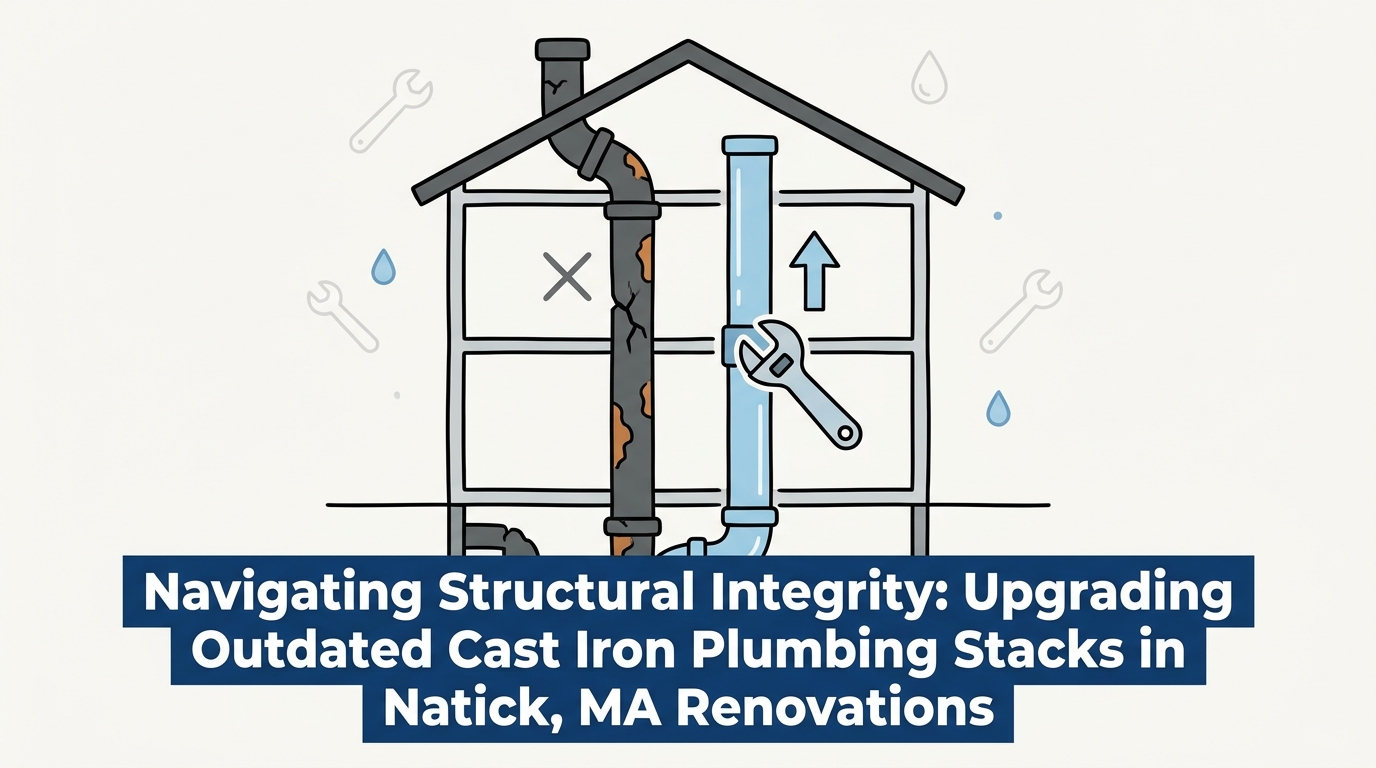
The Hidden Renovation Risk: Aging Infrastructure Behind Your Walls
At Blue Bear Plumbing, our team typically sees that nearly 75% of unexpected plumbing failures in historic homes trace back to original infrastructure that was left untouched during cosmetic updates, which is why upgrading outdated cast iron plumbing stacks in Natick renovations is a critical priority. Open walls during a remodel often reveal hidden infrastructure issues that were previously out of sight. A common discovery we make in older homes is deteriorating pipe systems that are quietly failing behind the drywall, covered up by decades of quick fixes and minor aesthetic changes.
As a homeowner, you face a critical decision point when our plumbers uncover these aging pipes: do you attempt a temporary patch on the exposed section, or do you invest in a full replacement while the walls are already open? The plumbing stack is the main vertical artery of your home’s drainage and venting system. In our professional experience, if it is compromised, the entire network is at risk.
Delaying this decision risks the integrity of the new renovation. Future leaks will require tearing down freshly finished walls, destroying custom tile work, and warping new flooring. By having our team address these cast iron plumbing stacks now, you secure the structural foundation of your home before the new drywall goes up, ensuring that what sits behind the walls is just as reliable as the beautiful finishes on the outside.
The 50-to-100-Year Lifespan of Classic New England Plumbing
Homes built before the 1980s typically feature heavy metal pipe systems that were designed with a 50-to-100-year functional lifespan. According to residential plumbing lifespan guidelines established by housing authorities, many of these systems are currently reaching or exceeding their expiration dates. Based on a pattern we see often in mid-twentieth century properties, the main drainage arteries are likely operating on borrowed time.
Decades of internal corrosion, rust, and chemical degradation slowly eat away at the pipe walls. Every time wastewater flows down the drain, small amounts of hydrogen sulfide gas are released. This gas turns into mild sulfuric acid, which attacks the upper ridge of the pipe in a process known as channel rot. When our technicians inspect these lines, we frequently find that while the bottom of the pipe might look solid to the naked eye, the top is paper-thin and ready to collapse under minimal pressure. Furthermore, tuberculation—the buildup of rust nodules inside the pipe—snags debris and restricts water flow, leading to chronic backups.
External environmental factors in New England significantly accelerate this natural deterioration process. With extreme seasonal temperature fluctuations and relentless freeze-thaw cycles, the ground around older Natick homes shifts. This causes the rigid metal in the plumbing system to expand and contract. This constant thermal movement stresses the brittle metal, accelerating cracking and structural failure at the joints. Unlike modern materials that have a degree of flexibility, we consistently see legacy metal simply snap under sustained environmental pressure.

Why Patching Deteriorating Stacks is a Costly Gamble
The Problem: When our team uncovers a weeping joint or a small vertical crack during a remodel, the immediate temptation for many homeowners is to request a quick fix to keep the project moving. However, patching a localized leak on an old pipe ignores the systemic degradation occurring throughout the rest of the line.
The Cause: Applying modern sealants, epoxy putties, or heavy-duty rubber clamps to brittle, rusted metal often creates uneven pressure points. Because the pipe wall is already compromised from decades of internal corrosion, tightening a mechanical clamp over a crack simply transfers the physical stress to the next weakest point. We recommend avoiding this because the rigid nature of cast iron plumbing stacks means that fixing one section often causes a new fracture to form just inches away.
The Solution: Full replacement is the only structurally sound method to ensure the plumbing outlasts the new cosmetic upgrades. A temporary fix leaves the surrounding renovation work vulnerable to sudden water damage. Upgrading the entire vertical stack eliminates this hidden threat entirely, ensuring your investment is protected for the long haul.
| Factor | Patching Old Metal Pipes | Full PVC Replacement |
|---|---|---|
| Structural Integrity | Creates uneven pressure points; risks new cracks. | Uniform strength; flexible and durable. |
| Longevity | Temporary stopgap (months to a few years). | Permanent solution (decades of reliable use). |
| Risk to Renovation | High risk of future leaks destroying new drywall. | Eliminates hidden water damage risks. |
| Flow Quality | Interior rust continues to snag debris and clog. | Smooth interior prevents buildup and blockages. |
Structural Challenges: Safely Extracting Heavy Metal from Historic Framing
Legacy metal pipes are exceptionally heavy, often weighing several pounds per linear foot. Removing them requires careful structural support to prevent damage to the surrounding wood framing. Older homes often feature classic, rigid construction framing that has settled over decades, complicating the extraction process. Simply pulling the old stack out is never an option; it requires a methodical, engineered approach that our licensed professionals are trained to execute safely.
Our crews must safely cut and dismantle the old system in sections to avoid shifting the home’s structural load. Rather than standard demolition, here are the critical safety measures our experts manage during the extraction process in older Natick properties:
- Assessing the Load-Bearing Path: Before any cuts are made, our plumbers evaluate the structural joists and studs surrounding the pipe. Decades of settling mean the pipe itself might be inadvertently supporting weight.
- Securing the Upper Stack: We install heavy-duty riser clamps above the extraction point. This prevents the upper floors of the plumbing system from crashing downward once the lower section is severed.
- Managing Weight Shifts: Using specialized snap cutters or heavy-duty reciprocating saws, our team scores and snaps the metal into manageable, two-to-three-foot sections to prevent massive structural shifts.
- Controlling Vibration: Vibration and brute force during removal can easily crack adjacent horsehair plaster or compromise historic joists. We utilize controlled cuts to minimize shaking and protect the surrounding architecture.
Navigating Massachusetts Building Standards and the PVC Transition
We recommend modern PVC because it provides superior resistance to corrosion, chemical degradation, and root intrusion compared to legacy materials. Its smooth interior walls prevent the buildup of scale and debris, ensuring consistent flow rates for decades. However, swapping out cast iron plumbing stacks for modern plastics involves strict adherence to regional building codes, which our team navigates daily.
Transitioning between different pipe materials requires specific compliant fittings to ensure a watertight, code-approved seal. You cannot simply slide a piece of plastic over old metal. Our professionals use shielded transition couplings—heavy rubber sleeves encased in a stainless steel shear ring—to ensure the connection remains rigid and aligned, even if the house settles.
Proper pitching is strictly regulated to ensure gravity-fed drainage functions correctly without clogging. Older metal pipes sometimes relied on the sheer weight of the water, but modern plumbing codes require a precise quarter-inch drop per foot for horizontal runs tying into the vertical stack. Failing to adhere to local building codes during the transition can result in failed inspections, costly rework, and common plumbing code violations that halt your renovation progress.
Capitalizing on the ‘Open Wall’ Window During Your Remodel
In our experience, the most cost-effective time to upgrade vertical plumbing lines is when the drywall is already removed for other renovation work. Access is the single largest hurdle in any major plumbing replacement. When the walls are open, the labor required for our team to reach the system drops significantly.
The Economics of Open-Wall Access
Waiting for a pipe to fail after the remodel is complete means paying for both the plumbing repair and the reconstruction of the finished walls. In many older Natick properties we service, the cost of demolition, drywall finishing, texturing, and repainting far exceeds the cost of the actual plumbing materials. Doing the work now leverages the demolition you have already paid for.
Aligning with the Construction Schedule
Coordinating the plumbing upgrade with the general construction timeline keeps the overall project on schedule. Our team works seamlessly alongside your general contractor, ensuring that the new PVC stack is properly installed, inspected, and signed off by local authorities before the insulation and drywall contractors arrive to close up the space.
Securing Long-Term Property Value
Proactive replacement secures the long-term value of the home. Future buyers and home inspectors are increasingly wary of legacy plumbing systems. Upgrading the stack now removes a major red flag during future property inspections and provides total assurance that your new renovation rests on a solid, reliable foundation.
Frequently Asked Questions About Local Plumbing Upgrades
Can you patch a cast iron plumbing stack?
In our professional opinion, while temporary patches exist, they are not viable long-term solutions for pipes suffering from systemic, age-related deterioration. Rubber clamps and epoxy sealants can stop a localized leak for a short time, but they do not address the internal rusting or the brittle nature of the surrounding metal. The pressure from a patch often causes the weakened cast iron plumbing stacks to crack further down the line.
Why replace cast iron pipes with PVC during a remodel?
Replacing them while walls are open avoids the massive expense of tearing down new drywall later when the aging pipes inevitably fail. The labor required to access plumbing behind finished walls is substantial. By having our plumbers do it during a remodel, you leverage the open space, making the upgrade significantly more efficient.
How long do cast iron pipes last in older homes?
They typically last 50 to 100 years, meaning homes built before the 1980s are currently in the danger zone for failure. Factors like harsh chemical drain cleaners and hard water can reduce this lifespan even further. If your home still has its original metal drainage system, our team can almost guarantee it is reaching the end of its structural integrity.
Is it worth replacing cast iron pipes with PVC?
Yes, we highly recommend PVC because it is highly resistant to corrosion, lighter, and ensures reliable drainage without the risk of rust buildup. It will not suffer from channel rot or tuberculation, meaning your drains will flow smoothly for decades. The transition to PVC is a standard upgrade that significantly modernizes your home’s infrastructure.
What are the signs of a failing plumbing stack behind closed walls?
Signs our technicians look for include slow drains, foul sewer odors, unexplained moisture or mold on walls, and gurgling sounds from fixtures. You might also notice peeling paint or warped baseboards near the vertical pipe run. If you experience any of these symptoms, the pipe is likely compromised and weeping moisture into the wall cavity.
Securing Your Renovation Investment with Expert Code Compliance
Upgrading aging infrastructure is a vital step in protecting the investment of a modern renovation. Ensuring the safe extraction of old materials and the code-compliant installation of new systems requires professional oversight. We always advise consulting with a local expert early in the remodeling process to prevent costly surprises down the road.
Working with Blue Bear Plumbing means you are partnering with a team that has specialized expertise in local building codes and proven experience safely updating plumbing in older, historic homes. We understand the specific structural nuances of a Natick property and know exactly how to manage the transition to modern PVC without compromising your home’s framework. By having us address these hidden vulnerabilities now, you receive a clear, objective breakdown of the replacement process and the lasting assurance that your beautifully renovated home is fully protected from the inside out.



Contact Us Today

Routine maintenance is vital for the longevity of your plumbing, heating, and air conditioning systems. Sign up for our Blue Care Maintenance Plan for annual service and exclusive membership benefits, including:
- Priority scheduling
- Waived service fee during normal business hours
- 10% discount on service calls
- 3% discount on new installations
- Two-year parts and labor warranty on new equipment