

Decoding Short-Cycling: When Your Furnace Turns Off After Just Three Minutes
general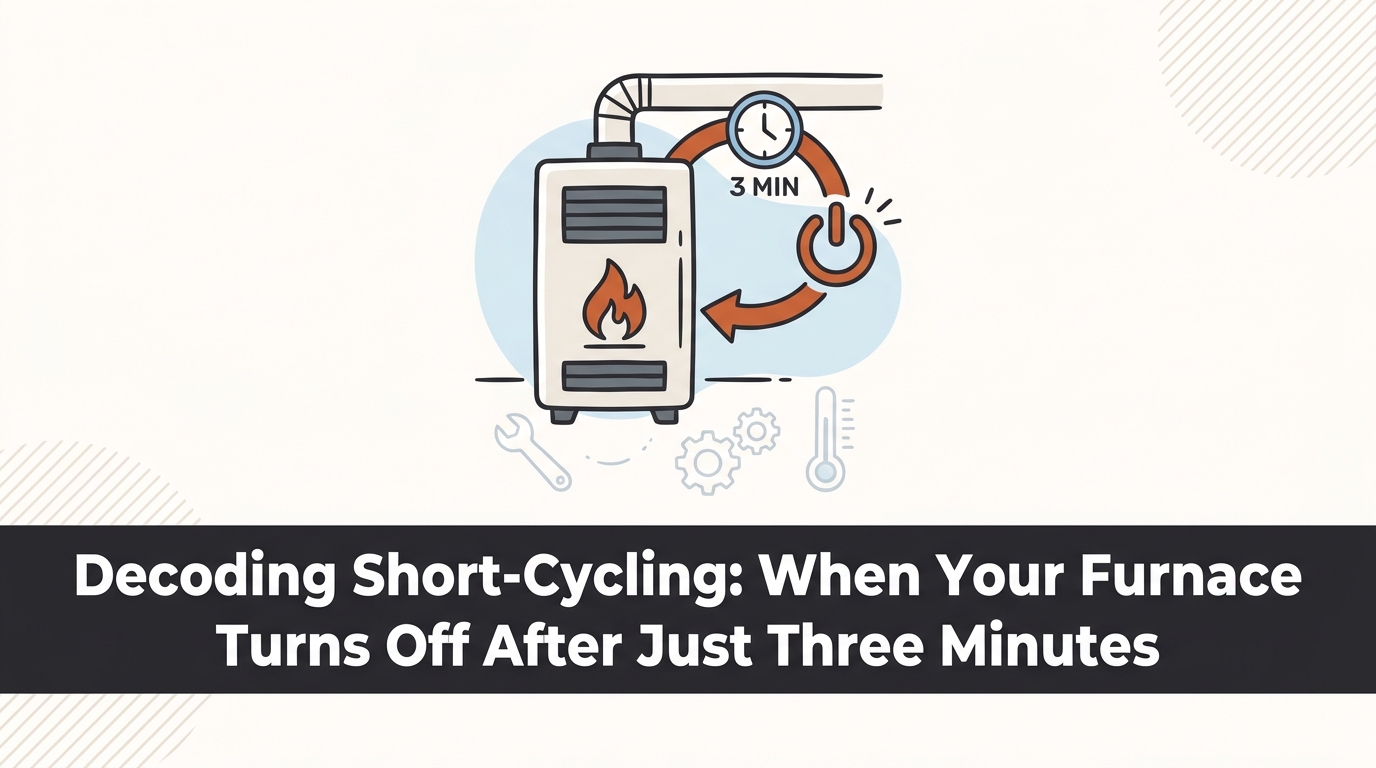
The Frustration of the Three-Minute Furnace Shutdown
Before the first true winter freeze hits, you expect your heating system to run smoothly. That is why Decoding Short-Cycling: When Your Furnace Turns Off After Just Three Minutes is such a critical topic for homeowners. When local winter temperature drops suddenly pull the heat from your home—especially during those bitter January nights—a reliable furnace is absolutely necessary. Hearing the system fire up, feeling a brief wave of warm air, and then listening to it shut down moments later leaves your house cold and creates immediate anxiety.
The key to solving this issue is understanding the exact timing of your 3-minute run cycle. In our years serving the local area, our team typically sees homeowners immediately assume the entire furnace is broken, but this specific timing points to very specific internal mechanisms. You need to know which basic components, like standard 1-inch or 4-inch pleated air filters, are safe to check on your own, and when you must call a professional to handle internal safety switches. Taking the right steps early prevents minor airflow issues from turning into major, expensive repairs.
Why Short-Cycling is Actually a Life-Saving Safety Feature
It is easy to view a furnace that constantly turns off as a mechanical nuisance. However, modern heating systems—especially high-efficiency models rated at 90% AFUE or above—are built with incredibly strict safety tolerances designed to protect your home. A repetitive 3-minute run cycle is almost never a random glitch. Instead, it is your furnace actively shutting itself down to prevent a catastrophic failure.
Furnaces burn combustible gas to generate heat. If any part of the ignition, venting, or heating process falls out of alignment, the risks escalate quickly. We often explain to our customers that the shutdown happens specifically around the 3-minute mark because that is exactly how long it takes for the internal sensors to register faults after the initial ignition sequence. By cutting the power or the gas supply, the system stops the heating cycle before a dangerous situation can develop.
| The Frustrating Symptom | The Danger Being Prevented |
|---|---|
| Burners shut off after 5-10 seconds | Raw gas pooling in your home (Explosion hazard) |
| System shuts down after 3 minutes | Heat exchanger overheating (Fire hazard) |
| Blower runs constantly with no heat | Cracked heat exchanger (Carbon monoxide leak) |
While a cold house is incredibly uncomfortable, the alternative is far worse. Understanding that your furnace is actually doing its job by shutting down helps reframe the problem. The 3-minute run cycle is a clear signal that a safety sensor has detected an unsafe condition, requiring immediate attention to restore proper function.

Flame Sensors: Guarding Against Hidden Gas Leaks
The Problem: Rapid Ignition Failure
One of the most common reasons a furnace falls into a repetitive 3-minute run cycle actually happens within the first few seconds of that window. When your thermostat calls for heat, the gas valve opens, and the igniter lights the burners. If you hear the system ignite but then hear a click and the flames die almost immediately, our technicians find that the flame sensor is usually the culprit.
The Cause: Carbon Buildup and Oxidation
The flame sensor is a small, thin metal rod sitting directly in the path of the burner flames. Its only job is to detect whether a live fire exists after the gas valve opens. Because it sits in an open flame reaching temperatures of up to 3,500°F, it is subjected to intense heat and combustion byproducts. Over time, microscopic carbon buildup or oxidation coats the metal rod. This thin layer of soot acts as an insulator, preventing the sensor from reading the 2 to 10 microamps of electrical current that confirm the presence of a flame.
The Solution: Professional Diagnostics
The exact sequence of events is highly controlled. If no flame is detected within seconds to minutes of the 3-minute run cycle starting, the control board immediately shuts the gas valve. This prevents raw, unburned gas from flooding your combustion chamber and pooling inside your home. Because the sensor is directly tied to the gas valve, cleaning or replacing it requires a licensed professional to ensure the gas fittings and electrical readings remain safe and accurate.
The High Limit Switch: Preventing Catastrophic Overheating
If your furnace successfully ignites and runs for a short time before shutting down, a pattern we see often is the high limit switch stepping in. This switch is a temperature-sensing probe that monitors the exact heat level inside the heat exchanger. The heat exchanger is the metal chamber that gets hot from the burner flames; your blower motor then pushes air over this hot metal to warm your home.
When airflow is restricted, the heat generated by the burners has nowhere to go. It becomes trapped inside the furnace cabinet, causing the internal temperature to spike rapidly—sometimes exceeding 200°F in just minutes. The high limit switch is designed to trip the moment that temperature crosses a safe threshold. When it trips, it immediately shuts down the burners to stop the heat source, but it often leaves the blower motor running to help cool the dangerously hot metal down. This specific sequence is what commonly creates a repetitive 3-minute run cycle.
Restricted airflow issues are closely tied to a variety of heating complaints, including causing your furnace to blow cold air once the burners shut down but the fan keeps running. The high limit switch is the final line of defense against the heat exchanger getting so hot that the metal warps, cracks, or creates a serious fire hazard in your home.
Safe Homeowner Checks Before Calling a Professional
When you are stuck in a 3-minute run cycle, there is a strict boundary between safe homeowner maintenance and hazardous internal repairs. Because furnaces deal with high-voltage electricity, combustible gas, and extreme heat, opening the cabinet to tinker with sensors is highly dangerous. However, our business always recommends checking a few basic items first, as the most common cause of overheating is something you can fix yourself.
- Step 1: Check and replace dirty air filters. A clogged air filter—especially dense MERV 11 or higher filters left in too long—is the number one cause of restricted airflow. When the blower motor cannot pull enough air through a wall of dust, the furnace overheats and trips the limit switch. Pull your filter out and hold it up to a light. If you cannot see light passing through it, replace it immediately.
- Step 2: Ensure all supply and return vents are open. Walk through every room in your house. Make sure no heavy furniture, thick rugs, or heavy curtains are blocking your floor or wall vents. Even in unused rooms, closing the vents traps heat in the ductwork and forces the system into a 3-minute run cycle.
- Step 3: Verify your thermostat settings. Check that your thermostat is set to “Heat” and that the fan is set to “Auto” rather than “On.” Sometimes, a dying battery or a loose wire in the thermostat can prematurely signal the furnace to stop heating.
Explicit Warning: Never attempt to bypass safety switches or clean flame sensors without a license. Bypassing a limit switch removes the only protection your home has against a furnace fire. If you have changed the filter and opened the vents, and the system still short-cycles, you must bring in a professional.
The Long-Term Risks of Ignoring a Short-Cycling Furnace
Accelerated Mechanical Wear and Tear
Allowing a furnace to continually start and stop takes a massive toll on the moving parts. The ignition sequence requires a surge of power. The blower motor has to overcome inertia to start spinning. The gas valve has to open and close mechanically. When a system is stuck in a 3-minute run cycle, these components are working five to ten times harder than they would during a normal, steady heating cycle. In our experience, this excessive wear leads to premature failure of the igniter and blower motor, often cutting a 15-year lifespan down to just a few years.
Severe Structural Damage
The most severe risk of ignoring an overheating furnace is a cracked heat exchanger. Metal expands when it gets hot and contracts when it cools. A short-cycling furnace forces the heat exchanger to undergo rapid, extreme temperature swings. Over time, this stress causes the metal to crack. A cracked heat exchanger allows deadly carbon monoxide to leak directly into the air circulating through your home. During peak winter cold snaps, ignoring a short-cycling furnace can lead to total system failure right when heating demand is at its absolute highest.
Spiking Energy Bills
Furnaces use the most energy during the startup phase. They are designed to reach a steady, efficient operational state and maintain it for 15 to 20 minutes. A system trapped in a 3-minute run cycle never reaches that efficient state. It burns fuel to start up, shuts down before warming the house, and then has to start all over again, causing your monthly energy bills to skyrocket.
How Expert Diagnostics Target the Root Cause
When basic homeowner checks do not resolve a 3-minute run cycle, professional diagnostics are required to test the internal safety mechanisms. HVAC professionals do not just guess which part is failing; our team uses specialized tools to measure exact electrical currents, temperatures, and pressures.
To test a flame sensor, a technician uses a multimeter capable of reading microamps. They measure the exact direct current passing through the sensor rod to determine if it is reading the flame correctly. For the high limit switch, technicians test for electrical continuity to see if the internal bi-metal disc has failed or stuck open due to repeated overheating.
More importantly, expert local technicians prioritize safety and correctly diagnose root causes rather than just treating the symptoms by blindly swapping out parts. If a high limit switch is tripped, simply installing a new switch does not solve the problem. The technician must find out why the heat exchanger is getting too hot. This might involve diagnosing hidden duct blockages, testing the blower motor’s capacitor, or measuring the gas pressure in inches of water column (in. w.c.). Professional diagnostics ensure that your home’s safety mechanisms remain intact, functional, and ready to protect you.
Frequently Asked Questions About Furnace Short-Cycling
Why does my furnace run for 3 minutes and shut off?
This rapid shutdown is a designed safety feature built into your furnace control board. It is usually triggered by a dirty flame sensor failing to detect fire, or a high limit switch detecting severe overheating in the system. The 3-minute run cycle is exactly enough time for the sensors to recognize a fault and cut the power to prevent a fire or gas leak.
How do I know if my flame sensor is bad?
The most obvious symptom of a bad flame sensor is hearing the burners ignite successfully, only to shut off completely after just a few seconds. Because the sensor cannot feel the heat of the flame through a layer of carbon buildup, it shuts the gas valve immediately. Confirming a bad sensor requires a professional to test the microamp reading with a specialized multimeter.
What causes a furnace high limit switch to trip?
A high limit switch trips primarily because restricted airflow is trapping intense heat inside the furnace cabinet. When the blower motor cannot push the hot air into your ductwork, the internal temperature spikes past safe limits. This restriction is most often caused by dirty air filters, blocked return vents, or a failing blower motor.
Can a dirty filter cause short cycling?
Yes, a dirty air filter is the most common homeowner-preventable cause of a short-cycling furnace. The thick layer of dust acts like a wall, starving the furnace of the air it needs to cool the heat exchanger. This restricted air leads directly to overheating, forcing the high limit switch to trigger a 3-minute run cycle shutdown.
Is it dangerous if my furnace keeps short-cycling?
The short-cycling itself is actually preventing immediate danger by shutting down unsafe operations. However, the underlying cause—whether it is unburned gas issues or severe overheating—is highly hazardous if left unresolved. Continuing to let the system short-cycle will eventually cause permanent damage, such as a cracked heat exchanger, which can leak carbon monoxide.
Securing Reliable Heat for the Rest of Winter
Dealing with a furnace that refuses to stay on is stressful, especially when temperatures begin to drop. However, recognizing that a 3-minute run cycle shutdown is a sign your furnace is actively protecting your home can provide some peace of mind. The safety mechanisms are doing exactly what they were designed to do: stopping a minor airflow or sensor issue from becoming a major household hazard.
Once you have checked your air filters and ensured your vents are fully open, any ongoing shutdowns require a deeper look. Internal sensors like flame rods and high limit switches demand professional attention to ensure your system operates safely. Reach out to our business to schedule a professional furnace diagnostic. Finding the root cause today ensures you have safe, consistent, and reliable heat for the rest of the local winter season.
Contact Us Today
Routine maintenance is vital for the longevity of your plumbing, heating, and air conditioning systems. Sign up for our Blue Care Maintenance Plan for annual service and exclusive membership benefits, including:
- Priority scheduling
- Waived service fee during normal business hours
- 10% discount on service calls
- 3% discount on new installations
- Two-year parts and labor warranty on new equipment