



The Ultimate Guide to Higher Efficiency Rating Worth the Extra Cost
HVAC
Is a Higher Efficiency Rating Worth the Upgrade? Here’s the Short Answer
Is a higher efficiency rating worth the upgrade for most South Shore homeowners? In many cases, yes – but the right choice depends on your home, your hot water usage, the condition of your plumbing, and how long you plan to stay.
Here’s a quick breakdown to help you decide at a glance:
| Your Situation | Worth the Upgrade? |
|---|---|
| Staying 5+ years in a cold climate like Massachusetts | Yes – strong long-term value and lower energy use |
| Replacing an old, inefficient storage tank water heater | Yes – a larger efficiency gap can mean better performance |
| Planning to sell within 1-2 years | Maybe – a modern system and transferable warranty may appeal to buyers |
| Low hot water usage | Possibly not – the benefits may be less noticeable |
| Eligible for Mass Save rebates or federal tax credits | Yes – incentives can improve the overall value of the upgrade |
The core trade-off is straightforward: high-efficiency plumbing and water heating systems are designed to use less energy and water during everyday operation. The real question is whether your household uses enough hot water to make that added efficiency meaningful – and for many Massachusetts homeowners running water heaters through long, cold winters, the answer is often yes.
Upgrading from a standard storage tank water heater to a high-efficiency tankless model can reduce fuel and water consumption while improving day-to-day comfort. A high-efficiency system is substantially more efficient than a standard unit – a difference many homeowners notice through more consistent performance and reduced energy waste.
But raw efficiency numbers only tell part of the story. Installation quality, pipe condition, system sizing, water quality, and available rebates all play a major role in whether you actually see those benefits in real life. That’s what this guide is here to help you figure out.
At Blue Bear Plumbing, we’ve spent years helping South Shore homeowners cut through the noise around whether a higher efficiency rating is worth the upgrade – separating marketing claims from real-world plumbing and water heating performance. In this guide, we’ll walk you through what to consider before choosing a new high-efficiency water heater for your home.
Understanding Water Heater and Plumbing Efficiency Metrics
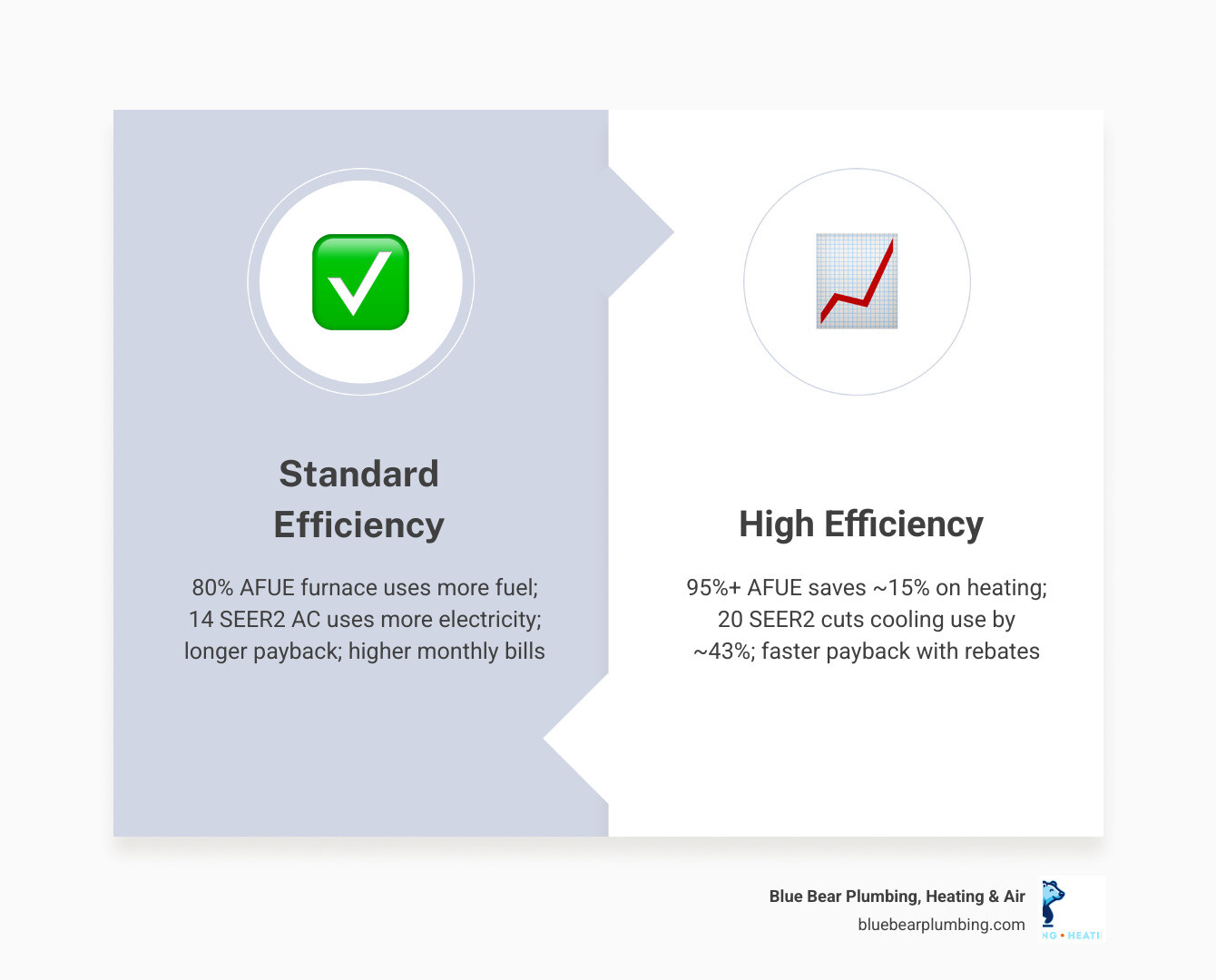
When you start researching a new water heating system, you will often see efficiency metrics like UEF. Understanding what these numbers actually mean is the first step in determining whether a higher efficiency rating is the right fit for your specific home.
These ratings are standardized measurements established by the Department of Energy (DOE) to help homeowners compare water heaters more clearly.

| Rating Metric | What It Stands For | What It Measures | Standard Efficiency | High Efficiency |
|---|---|---|---|---|
| UEF | Uniform Energy Factor | Water heater overall energy efficiency | 0.58 – 0.64 (Standard Tank) | 0.81 – 0.96+ (High-Efficiency Tankless) |
When you are planning a water heater replacement, reviewing your current equipment and household hot water needs is the best way to decide whether a high-efficiency model makes sense. You can also use Blue Bear’s related home comfort guidance, such as planning repair or replacement decisions, as a helpful starting point for thinking through equipment age and performance.
How Uniform Energy Factor (UEF) measures water heating performance
The Uniform Energy Factor (UEF) is the standard metric used to measure the overall energy efficiency of residential water heaters. A higher UEF rating indicates a more efficient system that converts a greater percentage of energy into usable hot water.
Standard storage tanks use energy to keep 40 to 50 gallons of water hot throughout the day, even when no one is using hot water. This results in standby energy loss. High-efficiency tankless water heaters, on the other hand, heat water on demand. By reducing standby energy losses, tankless systems can improve efficiency and support reliable hot water performance over their service life.
To determine if your current water heating system is reaching the end of its productive life, it is helpful to evaluate your equipment age and replacement options before an emergency breakdown forces a rushed decision.
Determining if a higher efficiency rating is worth the upgrade for your home
Deciding whether to choose a high-efficiency water heating system requires weighing several variables: your hot water usage, your home’s plumbing infrastructure, your water quality, and how long you plan to live in the property.
When you are trying to make a confident repair-or-replace decision, reviewing the condition of your existing system is important. Blue Bear’s guide on how to decide between repair and replacement can help you think through timing, reliability, and long-term home comfort.
When is a higher efficiency rating worth the upgrade based on your hot water needs?
Your household’s hot water demand is a major factor. In Massachusetts, our incoming tap water is very cold, especially during the winter months. This means your water heater has to work harder to raise the water temperature to a comfortable level.
Because of this heavy demand, upgrading from a standard storage tank to a high-efficiency tankless water heater is often a smart choice for households with consistent hot water use. Families with multiple showers, laundry loads, dishwashing cycles, and busy morning routines may notice the strongest benefits.
A high-efficiency water heater can be especially appealing when homeowners want better performance, reduced standby energy waste, and a more dependable supply of hot water.
To support energy-efficient home upgrades, you can explore the 2023 home efficiency tax credit guidance for Massachusetts as a helpful reference point for understanding available incentive programs.
When is a higher efficiency rating worth the upgrade if you plan to move soon?
Your homeownership timeline is a critical piece of the puzzle. If you plan to stay in your home for several years, a high-efficiency water heater may be a strong long-term choice. You are more likely to benefit from improved efficiency, reliable hot water, and modern equipment features.
If you plan to sell your home within the next 1 to 2 years, the decision may come down to buyer appeal and overall home readiness. A modern, high-efficiency tankless water heater can improve the way buyers view your home’s plumbing infrastructure.
Today’s home buyers often appreciate energy-conscious features. Listing a home with a newer, high-efficiency water heater – especially one that carries a transferable manufacturer warranty – can be a useful selling point.
The Comfort, Environmental, and Installation Factors of High-Efficiency Water Heaters
While energy use is easy to track, the non-financial benefits of high-efficiency plumbing systems often provide the highest level of day-to-day satisfaction.
Investing in your home’s plumbing infrastructure is also about comfort, peace of mind, and dependable performance. Blue Bear’s guidance on choosing the right long-term service approach can help homeowners think about maintenance, reliability, and system care.
Enhanced comfort and endless hot water
Standard storage tank water heaters can run out of hot water during peak usage times, leaving the last person in line with a cold shower. This creates a frustrating experience for busy households.
High-efficiency tankless water heaters solve this problem by heating water on demand. They provide a continuous supply of hot water, so you do not have to worry about running out during back-to-back showers or other daily routines. Additionally, because they do not store large volumes of standing water, they reduce the risk of a major tank rupture and basement flooding, providing added peace of mind.
Environmental impact and future-proofing
Upgrading to high-efficiency plumbing equipment is one practical way to reduce household energy waste. High-efficiency water heaters can help lower fuel consumption compared to older, inefficient models.
Investing in a modern, high-efficiency system also helps keep your home aligned with current energy-efficiency expectations and plumbing best practices.
The critical role of professional installation and maintenance
The nameplate efficiency rating on a piece of equipment is only a theoretical maximum. To achieve dependable performance in your home, the system must be designed, sized, and installed correctly by licensed plumbing professionals.
At Blue Bear Plumbing, we start every project with a thorough assessment of your home’s hot water demands, fixture flow rates, venting needs, water quality, and gas line capacity when applicable. An improperly sized water heater may fail to deliver adequate hot water or may experience unnecessary wear.
Once installed, keeping your system running at peak performance requires regular attention. Neglecting simple upkeep, such as flushing the system to remove mineral scale buildup, can cause even the most advanced water heater to degrade more quickly. Understanding why preventative maintenance protects your plumbing investment is key to long-term performance.
To make this process easier, many homeowners find that structured service agreements help keep plumbing systems running smoothly. You can read more about how maintenance plans support long-term system reliability year after year.
Frequently Asked Questions about Water Heater and Plumbing Efficiency
What is a good UEF rating for a water heater in Massachusetts?
For standard storage tank water heaters, a UEF rating above 0.64 is considered highly efficient. For tankless water heaters, you should look for a UEF rating of 0.81 to 0.96 or higher. Installing high-efficiency equipment helps homeowners improve energy performance and get reliable hot water for daily use.
Do high-efficiency water heaters require more frequent maintenance?
High-efficiency systems do not necessarily require more frequent maintenance, but they do require more specialized care.
For example, tankless water heaters should be flushed regularly to remove mineral scale buildup, especially in areas with hard water. Condensing water heaters also produce acidic condensate liquid, requiring dedicated drain lines and neutralizers that should be checked during routine service. Skipping this essential care can lead to system issues. Learning about why dependable repairs and maintenance matter highlights why proactive, professional service is the smarter approach.
How do utility rebates and tax credits affect the decision?
Utility rebates and federal tax credits can be important when evaluating a high-efficiency water heater upgrade. In Massachusetts, the Mass Save program may offer rebates for qualifying high-efficiency water heaters. When paired with eligible federal tax incentives, these programs can improve the overall value of choosing efficient plumbing equipment.
Conclusion
So, is a higher efficiency rating worth the upgrade? For many homeowners in Quincy, Norwell, Natick, and the surrounding South Shore communities, the answer is yes. The combination of our demanding New England climate, the comfort benefits of dependable hot water, and the incentives available through programs like Mass Save can make high-efficiency water heaters a strong choice.
However, the key to unlocking those performance benefits lies in the quality of the installation. A high-efficiency system is only as good as the team that installs and maintains it.
At Blue Bear Plumbing, we are proud to serve our local communities across Quincy, Norwell, Natick, and the entire South Shore with integrity, clear communication, and dependable workmanship. Our friendly, licensed team is committed to helping you find reliable plumbing and water heating solutions for your home’s unique needs.
Ready to improve your home’s hot water performance? Schedule your high-efficiency home comfort consultation today and let us help you maximize your home’s comfort and efficiency for years to come.
Contact Us Today

Routine maintenance is vital for the longevity of your plumbing, heating, and air conditioning systems. Sign up for our Blue Care Maintenance Plan for annual service and exclusive membership benefits, including:
- Priority scheduling
- Waived service fee during normal business hours
- 10% discount on service calls
- 3% discount on new installations
- Two-year parts and labor warranty on new equipment