



A Homeowner’s Guide to Stress-Free Hydronic System Care
HVAC
What Are the Best Hydronic Heating Maintenance Tips for Homeowners?
Following the right hydronic heating maintenance tips can mean the difference between a system that runs smoothly for decades and one that quietly drains your energy budget and breaks down mid-January. If you just need the quick version, here it is:
Quick Hydronic Heating Maintenance Checklist:
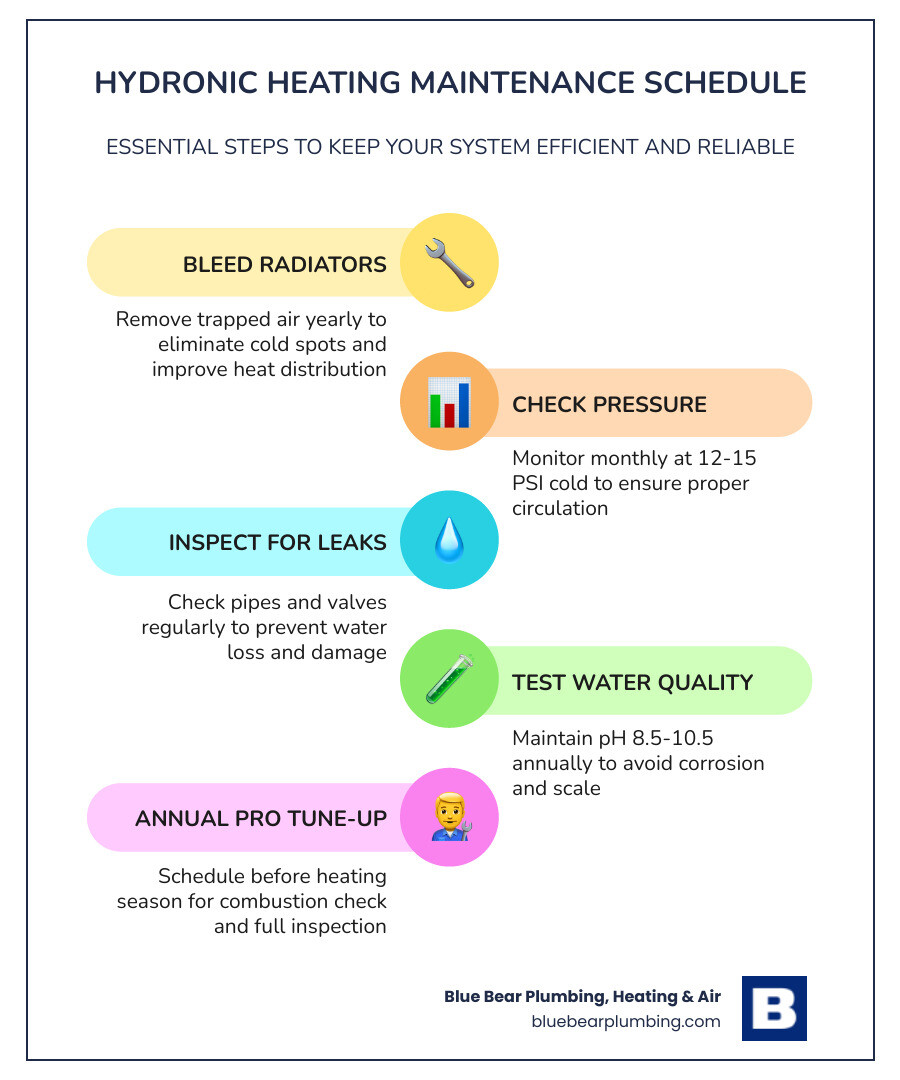
- Bleed radiators at least once a year to remove trapped air causing cold spots
- Check system pressure monthly — ideal cold operating range is 12–15 PSI
- Inspect for leaks around pipes, valves, and radiator connections regularly
- Test water quality annually — maintain pH between 8.5 and 10.5
- Flush the system every 3–5 years to clear sediment and scale buildup
- Exercise zone valves and circulator pumps during the off-season to prevent seizing
- Schedule a professional tune-up once a year, ideally before the heating season begins
For homeowners in Massachusetts, a well-maintained hydronic system isn’t just a comfort upgrade — it’s a smart investment. These systems are known for quiet, even heat distribution and superior energy efficiency compared to forced-air alternatives. But like any complex system, they reward attention and punish neglect. Untreated water alone can reduce system efficiency by up to 40% over time, and skipping annual servicing leaves real money on the table — research suggests proper maintenance can save homeowners $100–$300 every year on heating costs, while extending system life by 5–10 years.
Whether your home has cast iron radiators, baseboard heaters, or radiant floor loops, the core principles of care are the same: stay consistent, catch problems early, and know when to call in a pro.
I’m Marc Provenzano, Marketing Manager at Blue Bear Plumbing, Heating & Air, and while my background is in marketing strategy and brand storytelling, I’ve spent years working alongside the licensed heating technicians here — learning what separates a system that lasts from one that fails at the worst possible moment. Everything in this guide on hydronic heating maintenance tips reflects the real-world expertise of our team serving Norwell, Natick, Quincy, and the broader South Shore area.
Why Regular hydronic heating maintenance tips Matter for Your Home
When the temperature drops in May 2026 across the South Shore, you want to know your boiler is ready to work. Regular maintenance isn’t just about avoiding a cold house; it’s about mechanical and financial logic. A well-tuned hydronic system operates 15–30% more efficiently than a neglected one. In an era where energy consciousness is at an all-time high, those gains translate directly into lower monthly bills.
Beyond the immediate savings, preventative care is the secret to longevity. While a standard system might last 15 years, consistent care can extend that lifespan by 5–10 years. Think of it like an oil change for your car; skipping it won’t kill the engine today, but it will certainly lead to an early retirement for your equipment. Our South Shore Winter Heating Checklist highlights how these small steps prevent the emergency “no-heat” calls that always seem to happen on the coldest Sunday of the year.
By following 10 Steps To Prepare Your Heating System For The Cold Season, you can identify minor issues like a dripping relief valve or a noisy pump before they escalate into major repairs. In Quincy or Natick, where winters can be relentless, this proactive approach is your best defense against high costs and home discomfort.
Essential DIY hydronic heating maintenance tips for Homeowners
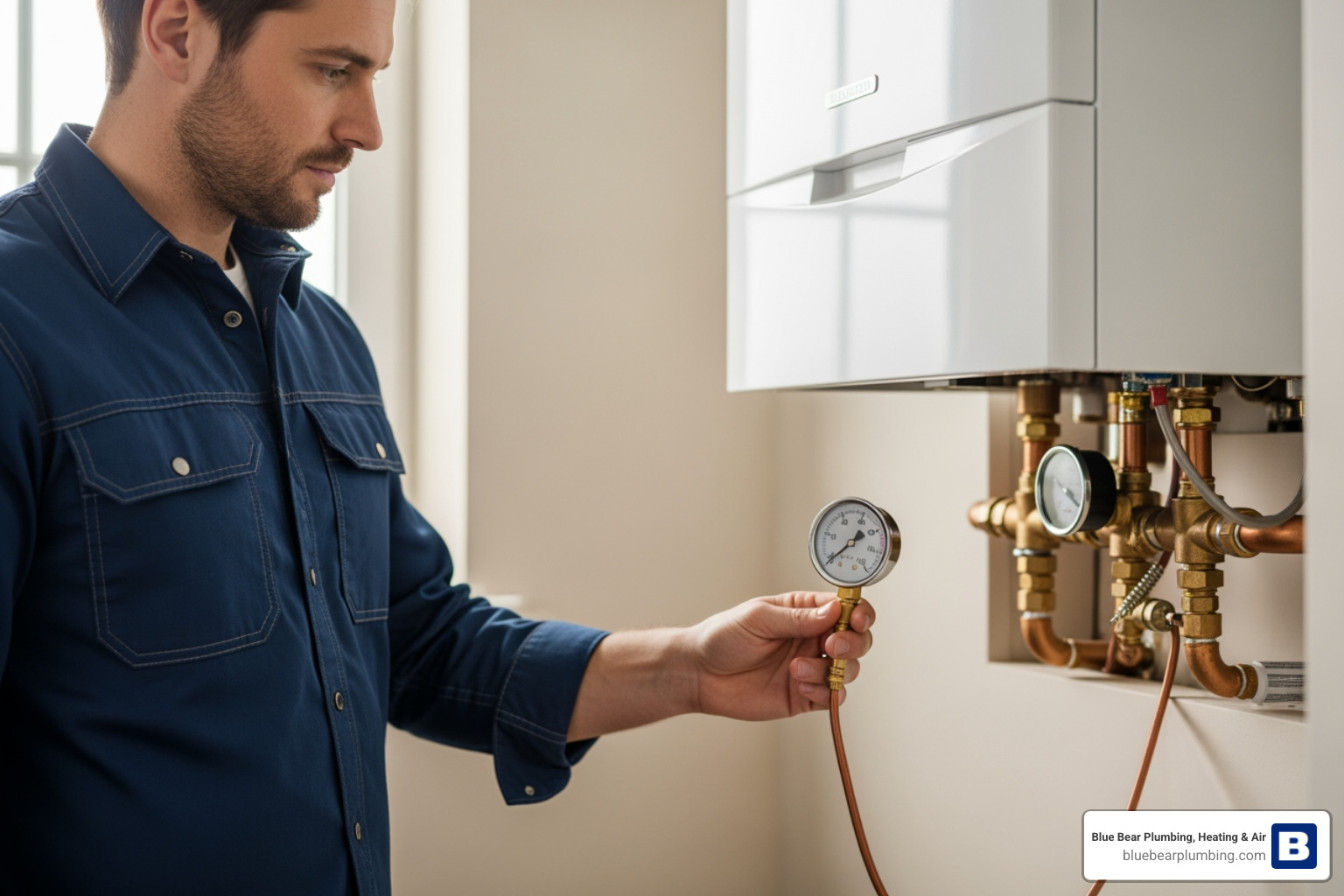
You don’t need to be a licensed technician to keep your system in top shape. There are several high-impact tasks you can handle safely. Start with a visual inspection once a month. Walk around your boiler, check the piping for signs of “green” corrosion (oxidation) or white crusty mineral deposits, and ensure the area around the unit is clear of clutter. Dust is also a hidden enemy; vacuuming the fins of your baseboard heaters or the surfaces of your radiators ensures that heat can actually escape into the room rather than being trapped by a layer of insulation-like grime.
As you prepare for the changing seasons, knowing How To Winterize Your Plumbing System is vital, especially if you have pipes running through unheated crawlspaces or attics. Additionally, testing your thermostat is a simple but effective DIY task. Check it against an independent thermometer to ensure it’s calibrated correctly; a 2-degree variance can lead to significant energy waste. For a comprehensive look at what you can handle, refer to our Seasonal Plumbing Hvac Maintenance Checklist For South Shore Residences.
Bleeding Radiators and Air Removal
Air is the natural enemy of a hydronic system. When air bubbles get trapped in your radiators, they prevent hot water from filling the unit, leading to “cold spots” where the top of the radiator stays chilly while the bottom is hot. This forces your boiler to work harder to reach the desired temperature.
To fix this, you’ll need a radiator key (available at most hardware stores in Norwell or Natick). With the heat off and the system cool, insert the key into the bleed valve at the top of the radiator. Turn it slowly counter-clockwise. You’ll hear a hissing sound as the air escapes. As soon as a steady stream of water starts to drip out, close the valve. Keep a towel handy! If you notice gurgling sounds or uneven heat, these are clear Signs You May Have Frozen Pipes or, more likely, air locks that need immediate bleeding.
Monitoring Water Levels and System Pressure
Your system relies on a delicate balance of pressure to move water from the basement to the top floor. Most residential systems in Massachusetts operate best at a cold operating pressure of 12–15 PSI. If the pressure is too low, the water won’t reach the upper radiators; if it’s too high, the safety relief valve will start dripping to prevent the tank from bursting.
A quick “tap test” on your expansion tank can tell you a lot. Tap the top and bottom of the tank. The top should sound hollow (filled with air), and the bottom should sound solid (filled with water). If the whole thing sounds solid, the internal bladder may have failed, and it’s time for a professional replacement. While you’re at it, consider whether you Should You Insulate The Water Pipes In Your Home to maintain that water temperature as it travels through your house, further boosting efficiency.
Professional Care and Advanced hydronic heating maintenance tips
While DIY tasks keep the system running, professional intervention ensures it runs optimally. There are technical aspects—like combustion analysis—that require specialized tools. A technician can measure the fuel-to-air ratio, ensuring your boiler isn’t wasting gas or oil. This single check can boost efficiency by 5–10%.
| Task | Homeowner (DIY) | Professional |
|---|---|---|
| Visual Leak Inspection | X | X |
| Dusting/Cleaning Radiators | X | |
| Bleeding Air | X | X |
| Combustion Analysis | X | |
| System Power Flush | X | |
| pH & Chemical Testing | X | |
| Safety Valve Testing | X |
Finding The Best Boiler Repair Technicians In Norwell Ranked involves looking for experts who understand the nuances of local water quality and older New England home structures. We recommend a full system flush every 3–5 years to remove the “black sludge” (iron oxide) that naturally builds up in closed-loop systems. For more on what to expect during a pro visit, check out The Homeowners Guide To Reliable Boiler Repair In Quincy/.
Managing Water Quality and Chemical Balance
The water inside your pipes isn’t just “water”—it’s a chemical solution designed to protect your investment. The ideal pH range for hydronic water is 8.5 to 10.5. If the water becomes too acidic, it will eat through your copper pipes and cast iron heat exchanger. If it’s too alkaline, it can cause scaling.
Professionals add corrosion inhibitors and, in some cases, propylene glycol (antifreeze) to prevent freezing in vulnerable zones. Testing these levels annually is essential Keeping Your Home Warm Essential Boiler Repair Services In Natick. Untreated water is the leading cause of premature boiler failure, making water chemistry one of the most important hydronic heating maintenance tips we can offer.
Advanced Component Testing
During a professional service call, we don’t just look at the boiler. We test the zone valves to ensure they open and close fully, preventing some rooms from being too hot while others are too cold. We also check the circulator pumps for bearing wear and verify the safety relief valve’s integrity. Mastering The Heat Professional Boiler Technicians In Natick involves checking wiring continuity and ensuring that all safety limits are functioning, providing you with peace of mind that your system is safe for the winter.
Troubleshooting Common Hydronic Issues in Massachusetts
Even with the best maintenance, issues can arise. Knowing the “language” of your boiler helps you describe problems to us when you call.
- Gurgling or Bubbling: Usually indicates air in the lines. Bleeding the radiators should solve it.
- Kettling: If your boiler sounds like a tea kettle, it likely has lime or scale buildup on the heat exchanger. This requires a professional descaling.
- Uneven Heating: If one room is cold and others are hot, it could be a failed zone valve or a circulator pump issue.
- Frequent Cycling: If the boiler turns on and off every few minutes, it might be “short-cycling,” often caused by an oversized boiler or a faulty thermostat.
In extreme cold snaps, if you lose heat entirely, you need to act fast. Knowing How Plumbers Fix Frozen Pipes can help you understand the risks of burst lines. For those in Norwell, our Your Norwell Emergency Boiler Repair Survival Guide is a must-read for handling mid-winter crises.
Frequently Asked Questions about Hydronic Maintenance
How often should I flush my hydronic heating system?
We recommend a professional power flush every 3–5 years. Over time, the water in your system reacts with the metal components, creating a magnetic sludge called magnetite. This sludge settles in the bottom of radiators and inside the boiler’s heat exchanger, creating “cold spots” and reducing efficiency. A flush restores the system to its original performance levels.
What is the ideal pressure for a residential boiler?
For a standard two-story home in the South Shore area, the cold operating pressure should be between 12 and 15 PSI. As the water heats up and expands, the pressure will naturally rise, but it should stay well below 30 PSI (which is where most safety relief valves trigger). If your pressure gauge is “bouncing” or constantly dropping, you likely have a leak or a failed expansion tank.
Why are some of my radiators cold at the top?
This is almost always due to trapped air. Because air is lighter than water, it rises to the highest point in the radiator. Simply use your radiator key to bleed the air out. If the radiator is cold at the bottom but hot at the top, that usually indicates a blockage of sludge, which means it’s time for a system flush.
Conclusion
At Blue Bear Plumbing, Heating & Air, we believe that a little bit of prevention goes a long way. By following these hydronic heating maintenance tips, you’re doing more than just keeping the house warm — you’re protecting your home, your budget, and your family’s comfort. Whether you’re in Norwell, Natick, or Quincy, our team of licensed experts is here to provide the high-quality workmanship and transparent communication you deserve.
Don’t wait for the first frost to find out your system is struggling. From simple radiator bleeding to advanced combustion analysis and system flushes, we have the local expertise to keep your home cozy all year long. Ready to ensure your system is in peak condition? Visit us at bluebearplumbing.com to schedule your annual maintenance today.
Contact Us Today
Routine maintenance is vital for the longevity of your plumbing, heating, and air conditioning systems. Sign up for our Blue Care Maintenance Plan for annual service and exclusive membership benefits, including:
- Priority scheduling
- Waived service fee during normal business hours
- 10% discount on service calls
- 3% discount on new installations
- Two-year parts and labor warranty on new equipment