




Nor’easter Proofing: Stress-Testing Your Home Systems
HVAC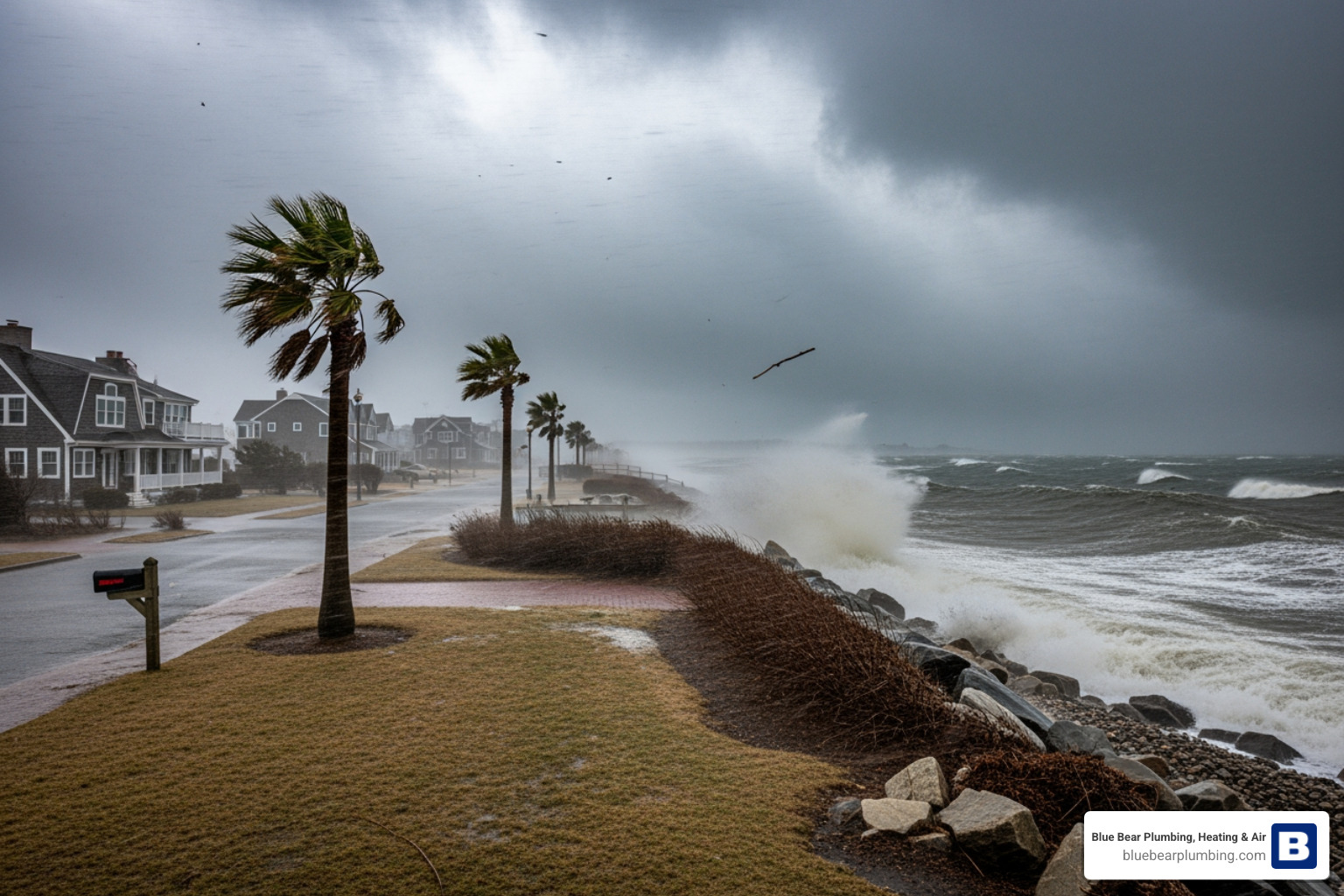
Why Living Near the Water Is Harder on Your Home Than You Think
How coastal proximity affects your home systems is one of the most underestimated challenges South Shore homeowners face. The same ocean breeze that makes waterfront living so appealing carries salt, moisture, and wind that quietly degrade your HVAC equipment, plumbing, insulation, and building envelope — often years before you notice the damage.
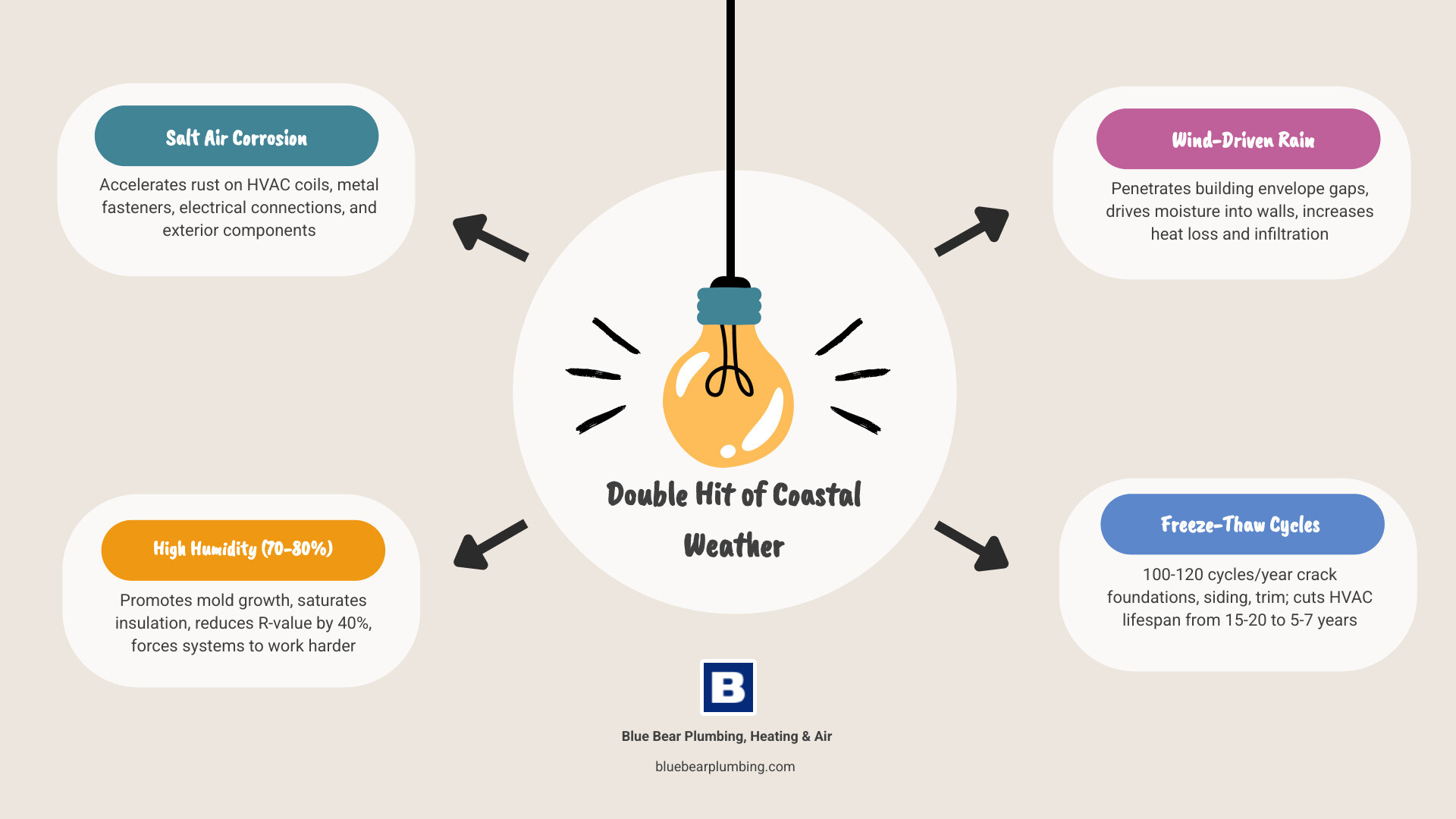
Here is a quick look at the primary ways coastal conditions stress your home:
- Salt air corrosion – Accelerates rust and metal degradation on HVAC coils, fasteners, electrical connections, and exterior components
- High humidity (70-80% average) – Promotes mold growth, saturates insulation, and forces heating and cooling systems to work harder
- Wind-driven rain – Penetrates gaps in the building envelope, drives moisture into wall cavities, and increases heat loss
- Freeze-thaw cycles – The South Shore experiences up to 100-120 freeze-thaw cycles per year, cracking foundations, siding, and trim
- Storm surge and rising groundwater – Threatens sump pumps, drainage systems, and below-grade plumbing
Without the right materials, equipment, and maintenance habits, these forces can cut an HVAC system’s lifespan from 15-20 years down to just 5-7 years — and cause damage across nearly every system in your home.
Think of it as a “double hit”: salt degrades materials at the surface while humidity attacks them from within. Most inland maintenance schedules simply aren’t designed to keep up with that kind of sustained pressure.
I’m Marc Provenzano, Marketing Manager at Blue Bear Plumbing, Heating & Air, and working alongside our South Shore service teams has given me a front-row seat to exactly how coastal proximity affects your home systems in ways most homeowners don’t see coming. In the sections ahead, we’ll walk through each major system — from HVAC and insulation to plumbing and structural components — so you know what to watch for and how to stay ahead of it.
Understanding How Coastal Proximity Affects Your Home Systems
When we talk about the “coastal environment,” we aren’t just talking about the view. From a mechanical and structural perspective, the South Shore is a high-stress zone. Salt-laden air is chemically aggressive; it doesn’t just sit on surfaces—it reacts with them. This is particularly true for homeowners in towns like Scituate, Quincy, and Marshfield, where the proximity to the Atlantic means your home is in a constant state of “weathering.”
To stay protected, you need to Prepare HVAC and Plumbing Systems for Hurricanes in Massachusetts well before the first storm warning of the season.
Regional Climate Stressors in May 2026
As of May 2026, we are seeing more pronounced climate shifts affecting our local infrastructure. While inland Massachusetts might experience 80-90 freeze-thaw cycles annually, coastal areas like the South Shore average between 100 and 120 cycles. This happens because the ocean acts as a giant heat sink, keeping coastal temperatures hovering right around the freezing mark. Every time the temperature dips below 32°F and then rises above it, moisture trapped in your siding or foundation expands and contracts, accelerating deterioration.
Furthermore, our local relative humidity averages a staggering 70-80%. This is significantly higher than interior regions, leading to persistent condensation in wall cavities and saturated insulation. When you combine this with year-round winds averaging 8-10 mph, you have a recipe for rapid system wear.
The Impact of Salt Spray on Building Materials
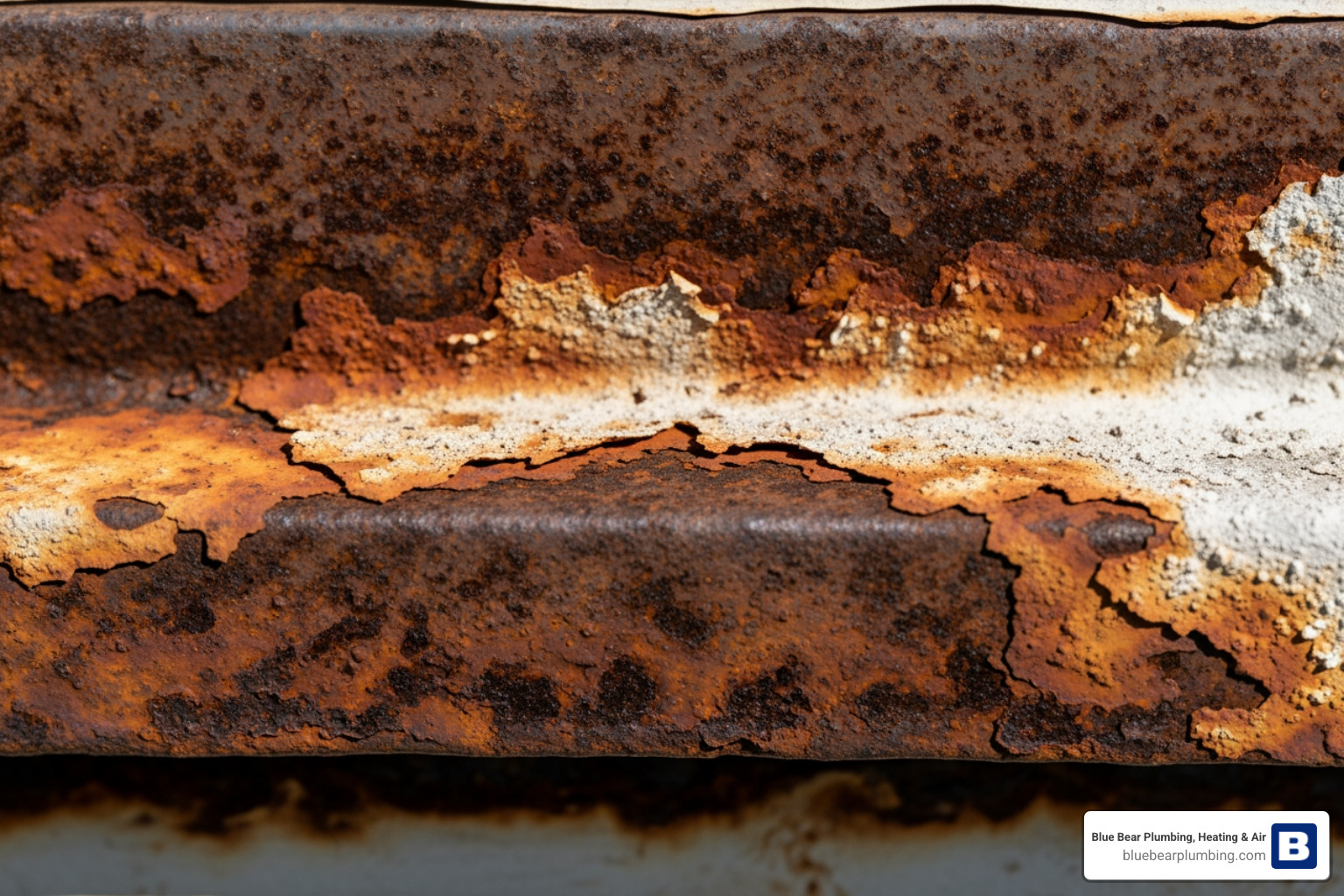
Salt air is the primary driver of galvanic corrosion. This chemical process occurs when salt and moisture act as an electrolyte between different types of metal, such as galvanized nails in a cedar shingle or steel lintels above a window.
In coastal environments, the lifespan of standard sealants—like silicone or polyurethane—is often cut in half. While an inland home might see 15-20 years of life from its caulking, coastal homes often experience sealant degradation in just 8-12 years. Once these seals fail, wind-driven rain can enter the building envelope, leading to structural rot that is often hidden behind the siding.
| System Component | Inland Lifespan | Coastal Lifespan (Unprotected) |
|---|---|---|
| HVAC Condenser | 15–20 Years | 5–7 Years |
| Exterior Sealants | 15–20 Years | 8–12 Years |
| Fiberglass Insulation | 25+ Years | 10–15 Years (due to moisture) |
| Metal Fasteners | 30+ Years | 10–15 Years |
The Invisible Threat: Salt Air Corrosion and HVAC Longevity
Your HVAC system is perhaps the most vulnerable victim of coastal living. The outdoor condenser unit relies on a series of thin aluminum fins and copper coils to dissipate heat. Salt air is exceptionally efficient at “eating” these components. When salt particles settle on the coils, they create a layer of oxidation that acts as an insulator, preventing the system from releasing heat properly.
To keep your system running, following a Seasonal Plumbing HVAC Maintenance Checklist for South Shore Residences is not just a suggestion—it’s a necessity for financial survival.
Signs of Salt Damage and How Coastal Proximity Affects Your Home Systems
How do you know if the salt is winning? There are several warning signs:
- Reduced Airflow: As fins corrode and “pockmark,” they can actually disintegrate or become clogged with salt crystals, choking the system.
- Unusual Noises: Corrosion on the fan blades or motor housing can lead to grinding or squealing sounds.
- Refrigerant Leaks: Tiny “formicary” corrosion holes can develop in the copper coils, leading to slow refrigerant leaks that are difficult to find.
- Electrical Malfunctions: Salt is conductive. When it builds up on circuit boards or terminal connections, it can cause short circuits or erratic thermostat behavior.
Coastal-Rated Equipment and Protective Coatings
If you are replacing a system in a coastal town like Hingham or Duxbury, standard equipment won’t cut it. We recommend “coastal-rated” units that feature specialized protection:
- Gold Fin/Blue Fin Technology: These are epoxy-based coatings applied to the coils at the factory to provide a barrier against salt spray.
- Stainless Steel Cabinets: Standard painted steel will rust through in a few seasons; stainless steel or heavy-duty composite cabinets are essential.
- BTU Buffering: Because coastal units lose efficiency faster as they age, we often suggest a 10-15% BTU buffer when sizing the unit. This ensures the system can still meet your cooling needs even after a few years of inevitable salt exposure.
During your Essential Spring Maintenance for South Shore Comfort, we check these coatings to ensure they are still intact and providing the protection you paid for.
Moisture Management: Humidity and the Building Envelope
Humidity is a quiet killer of home efficiency. In our area, the high ambient moisture doesn’t just make it feel “sticky”—it physically changes the materials in your walls.
Insulation Performance and Dehumidification
Fiberglass batts are the most common insulation material, but they are also the most susceptible to coastal moisture. When fiberglass insulation becomes damp from high humidity, it can lose 40% or more of its stated R-value. Essentially, your R-19 wall becomes an R-11 wall, causing your heating and cooling bills to skyrocket.
To combat this, many South Shore homeowners are switching to dense-pack cellulose. Cellulose is treated with borates, which not only provides fire resistance but also acts as a powerful mold inhibitor. It handles moisture much better than fiberglass, maintaining its shape and insulating properties even in a humid marine layer. Managing this is key to Understanding How Humidity Impacts Indoor Air and ensuring your family stays comfortable.
Furthermore, your AC system has to deal with a high “latent heat load.” This means it spends a significant portion of its energy removing water from the air rather than just lowering the temperature. Learning How to Keep Your House from Getting Too Humid often involves installing whole-home dehumidifiers to take the strain off your primary HVAC unit.
Air Sealing Strategies for High-Wind Areas
In coastal towns like Hull or Cohasset, wind pressure is a constant. This pressure drives outside air through every tiny gap in your home’s “envelope”—the sill plates, rim joists, and attic penetrations. Professional air sealing can reduce this infiltration by 25-40%. By using spray foam or specialized caulking to close these gaps, you prevent moisture-laden air from entering your wall cavities, where it would otherwise condense and cause mold.
Storm Resilience: Protecting Plumbing and Structural Integrity
The physical force of a Nor’easter is immense. While most people worry about their roof shingles, the integrity of your windows and plumbing systems is equally at risk.
Winterizing Coastal Plumbing Systems
Coastal winters are notoriously unpredictable. One week is mild, and the next brings a “flash freeze.” Because many coastal homes are older or built on piers/pilings, they are at an increased risk for frozen pipes. We always recommend keeping your thermostat set to at least 60°F when you are away to ensure the “envelope” stays warm enough to protect the plumbing.
Following a South Shore Winter Plumbing Checklist can save you from the nightmare of a burst pipe in February. If you live in high-density areas, it’s even more critical to Prevent Frozen Pipes South Boston style, where older infrastructure can be less forgiving.
Sump Pumps and Flood Prevention
Proximity to the coast often means a high water table. During a storm surge or high tide, groundwater can rise rapidly, putting immense pressure on your foundation and basement floor. This is known as tidal pressure.
A single sump pump is rarely enough for a coastal home. We recommend a primary pump with a battery-powered backup, and ideally, a secondary pump set slightly higher in the pit. Additionally, coastal groundwater can be “harder” or contain more minerals; knowing How to Prevent Limescale in Your Home will keep your pump’s valves and sensors from seizing up when you need them most.
Preventive Maintenance Strategies for Coastal Homeowners
Maintenance is the only way to beat the “coastal clock.” If you treat your home like an inland property, you are essentially choosing to replace your systems twice as often.
Professional Inspections and How Coastal Proximity Affects Your Home Systems
We recommend a “Salt Rinse” protocol. Once a month, homeowners should gently rinse their outdoor HVAC condenser with a low-pressure garden hose (after turning off the power). This removes the salt crystals before they can bond to the metal.
However, DIY rinsing can’t reach everything. Professional biannual tune-ups are essential. During these visits, we use specialized coil cleaners to neutralize salt deposits and inspect electrical connections for signs of oxidation. In some cases, we even use ultrasonic testing to check the thickness of metal components and detect internal corrosion before a failure occurs. This is a core part of the South Shore Winter Heating Checklist we provide to our regular customers.
Material Choices for Longevity
When it comes to upgrades, material choice is everything:
- Type 316 Stainless Steel: This is “marine-grade” steel. If you are replacing deck hardware, HVAC brackets, or exterior fasteners, accept nothing less.
- Fiberglass Windows: Unlike vinyl, which can warp in extreme temperature swings, or wood, which rots, fiberglass is incredibly stable and resistant to salt air.
- Window Ratings: Standard windows are often PG15 (rated for 27mph winds). Coastal homes should have at least PG35 to PG45 ratings, which can withstand 45-55mph wind-driven rain.
It’s also important to stay informed about local beach nourishment subsidies. While these programs help maintain property values by rebuilding dunes, they can sometimes mask the underlying climate risks. As a homeowner, you should prioritize your internal home resilience over the temporary protection of a subsidized sand dune.
Frequently Asked Questions about Coastal Home Systems
Why do coastal HVAC systems fail so much faster than inland units?
The primary reason is galvanic corrosion. Salt air acts as a catalyst that causes the aluminum fins on the outdoor unit to oxidize and eventually turn to powder. This prevents the system from transferring heat, leading to compressor failure. Without protective coatings and monthly rinsing, a system that should last 15 years may fail in 5.
What window rating is required for homes on the Massachusetts coast?
While building codes vary, we recommend windows with a Performance Grade (PG) of 35 to 45. Standard PG15 windows are only rated for winds around 27mph, which a typical Nor’easter easily exceeds. PG45 windows are designed to handle 55mph winds and heavy rain without leaking.
How does high humidity affect my home’s insulation effectiveness?
High humidity saturates fiberglass insulation, causing the fibers to clump together. This reduces the amount of trapped air (which is what actually does the insulating). Saturated fiberglass can lose up to 40% of its R-value, making your home much harder to heat and cool.
Conclusion
Living on the South Shore is a privilege, but it comes with a maintenance “tax” that cannot be ignored. Understanding how coastal proximity affects your home systems is the first step toward protecting your investment and your comfort. Whether it’s the invisible creep of salt air corrosion or the sudden pressure of a winter storm, your home needs a specialized defense strategy.
At Blue Bear Plumbing, Heating & Air, we live and work in these same coastal communities. We understand the unique challenges of a South Shore winter and the relentless salt spray of a New England summer. Our team is committed to providing the high-quality workmanship and integrity you need to keep your home systems resilient year-round.
Don’t wait for the next Nor’easter to find the weak spots in your home. Contact our local team for expert coastal home system maintenance today and let us help you stress-test your property for the years ahead.
Contact Us Today

Routine maintenance is vital for the longevity of your plumbing, heating, and air conditioning systems. Sign up for our Blue Care Maintenance Plan for annual service and exclusive membership benefits, including:
- Priority scheduling
- Waived service fee during normal business hours
- 10% discount on service calls
- 3% discount on new installations
- Two-year parts and labor warranty on new equipment