



Beginner’s Guide to Diagnosing Failing AC Symptoms
HVAC
Is Your AC Going Bad? Here’s How to Tell Before It Breaks Down
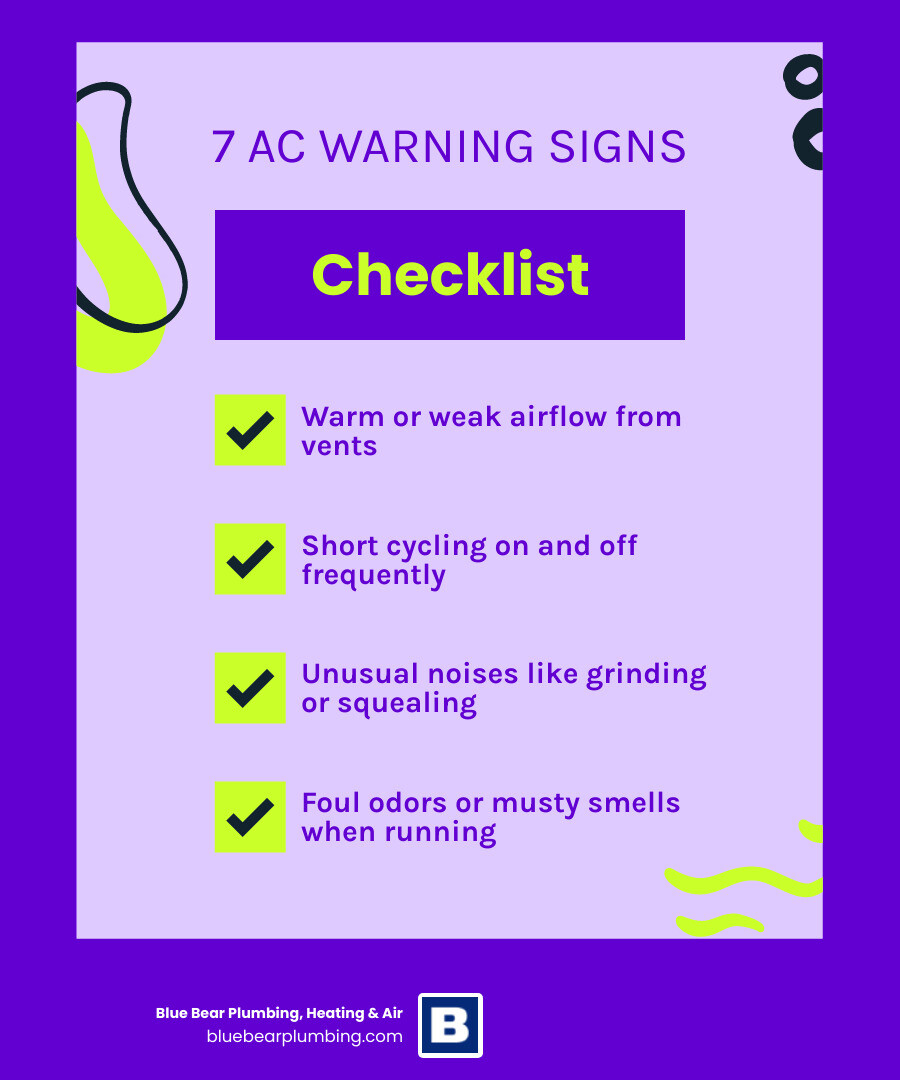
How to know if your AC is going bad comes down to a handful of warning signs most homeowners can spot without any special tools or training. Here’s a quick look at the most common ones:
- Warm or weak airflow from your vents when the system is running
- Short cycling — the unit turns on and off more frequently than normal
- Unusual noises like grinding, squealing, or banging from the unit
- Foul odors when the AC kicks on, suggesting mold or electrical issues
- Water leaks around the indoor unit or condensate drain line
- High humidity indoors despite the system running
- Unexplained spikes in your energy bills — a 15-20% increase is a red flag
If you’re checking off more than one of those, your system is likely struggling — and the longer you wait, the worse (and more expensive) it gets.
A broken AC isn’t always obvious right away. You might feel like something is just a little off — the house isn’t quite as cool as it used to be, or you notice a faint musty smell when the system kicks on. The truth is, most air conditioners don’t fail all at once. They send warning signals for days or weeks before a full breakdown, and knowing what to look for can be the difference between a simple repair and a costly emergency replacement on the hottest day of the year.
Nearly 30% of homeowners are already running systems that are 10 years old or older — and while a well-maintained central AC can last between 10 and 20 years, age and neglect tend to catch up fast, especially during the long, humid Massachusetts summers on the South Shore.
I’m Marc Provenzano, Marketing Manager at Blue Bear Plumbing, Heating & Air, and I’ve spent years working alongside our HVAC team helping South Shore homeowners understand exactly how to know if your AC is going bad — before it turns into a bigger problem. In this guide, I’ll walk you through the most common warning signs and what to do about each one.
How to know if your ac is going bad terms to know:
7 Common Signs of How to Know If Your AC Is Going Bad
When we talk to our neighbors in Quincy or Norwell, the most frequent complaint we hear is that the house just isn’t getting comfortable. But comfort is subjective—mechanical failure isn’t. Here are the seven definitive signs that your system is on its way out.
1. Warm Air Coming from the Vents
If you feel warm air blowing out of your supply vents, it’s a clear SOS from your system. This often happens because the compressor has failed or there is a refrigerant leak. The Cold Hard Truth About Why Your AC Isn’t Cooling Properly is that an AC doesn’t “use up” refrigerant like a car uses gas; if it’s low, there is a hole in your lines that needs professional attention.
2. Weak Airflow
Sometimes the air is cold, but it’s barely a whisper coming out of the vents. This usually points to a failing blower motor or a major blockage in your ductwork. In some cases, it can even be a sign of leaky ducts where 20-30% of your conditioned air is escaping into your attic or crawlspace before it ever reaches your living room.
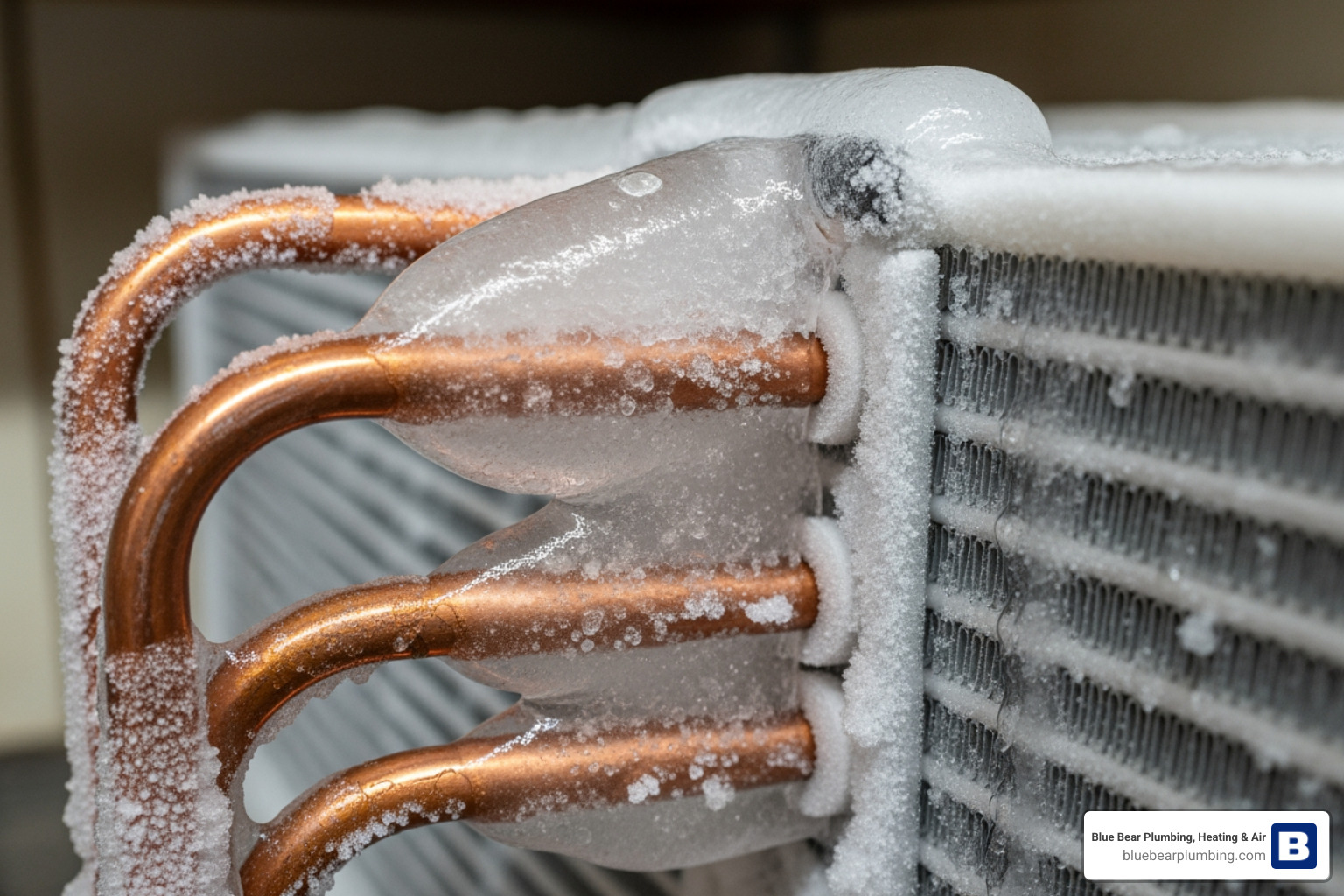
3. Frozen Evaporator Coils
You might think ice on an air conditioner is a sign that it’s working extra hard to stay cool, but it’s actually the opposite. Ice buildup on the copper lines or the indoor evaporator coil indicates that the system isn’t absorbing heat correctly. This is usually caused by restricted airflow (like a very dirty filter) or low refrigerant levels.
4. Excessive Water Leaks
While condensation is a natural byproduct of the cooling process, that water should stay inside the drain lines. If you see puddles around your indoor furnace or air handler, your condensate drain is likely clogged. In our humid Massachusetts climate, these clogs can lead to mold growth or even structural water damage if not addressed quickly.
5. Foul Odors
If your home starts smelling like “dirty socks,” you likely have microbial growth on your evaporator coils. If you smell something acrid or “metallic,” it could be a sign of wire insulation burning or a motor overheating. Neither should be ignored.
6. Frequent Circuit Breaker Trips
If your AC is constantly tripping the breaker in your electrical panel, it’s drawing too much power. This often happens when the compressor is struggling to start or there is a short circuit in the wiring.
7. Poor Humidity Control
In towns like Braintree or Hingham, summer humidity can be brutal. Your AC’s job is to pull that moisture out of the air. If your skin feels “sticky” or the air feels “heavy” even when the temperature is low, your AC is failing its secondary mission of dehumidification.
Identifying Airflow and Temperature Issues
A great DIY way to check your system’s health is the “15-degree rule.” Using a simple thermometer, measure the temperature at a return register (where the air goes in) and a supply vent (where the cold air comes out).
A healthy system should show a difference of at least 15 to 20 degrees Fahrenheit. If the difference is only 5 or 10 degrees, your system is struggling to exchange heat. This could mean your blower motor is failing or your coils are too dirty to function. When these symptoms persist, you have to ask yourself, Do I Need a New AC?
How to Know If Your AC Is Going Bad Based on Unusual Noises
Your air conditioner should be felt, not heard. While a gentle hum is normal, certain sounds are a cry for help. Understanding What Those Weird Air Conditioner Sounds Are Trying to Tell You can save you from a total system meltdown.
- Grinding: This usually indicates that the bearings in your blower motor or condenser fan are shot.
- Squealing: Often a sign of a belt that has slipped or is fraying, or high pressure within the compressor.
- Banging or Clanking: This typically means a component has come loose—like a fan blade or a connecting rod—and is hitting other parts inside the unit.
- Hissing: A classic sign of a refrigerant leak or an internal valve failure.
Troubleshooting Short Cycling and Constant Running
One of the most annoying symptoms of a failing AC is “short cycling.” This is when the system turns on, runs for a few minutes, and then shuts off before the house is actually cool—only to turn back on again moments later. This puts immense strain on the compressor and the capacitor.
| Feature | Normal Cycling | Short Cycling Symptoms |
|---|---|---|
| Frequency | 2–3 times per hour | 6+ times per hour |
| Run Time | 15–20 minutes | 2–5 minutes |
| Indoor Comfort | Consistent temperature | Hot and cold spots; high humidity |
| Energy Usage | Stable | Massive spikes |
Before you panic, check your thermostat settings. Ensure it isn’t placed near a heat source (like a sunny window) that might be tricking it into thinking the room is hotter than it is. Also, learning How to Clean Your AC—specifically changing your filters every 30 to 90 days—can often solve airflow-related short cycling. However, if the filters are clean and it’s still cycling, you likely have a failing electrical relay or a dying capacitor.
How to Know If Your AC Is Going Bad Due to High Energy Bills
In May 2026, energy efficiency is more important than ever. If you notice a 15-20% spike in your utility bills compared to the same month last year (accounting for weather changes), your AC is likely losing its efficiency.
As mechanical components wear down, the system has to work longer and harder to achieve the same cooling effect. Modern SEER2 standards mean that a new unit today is vastly more efficient than a unit from 2011. If your system is over 12 years old, the mechanical strain is likely costing you more in monthly bills than the cost of an upgrade would.
When to Call a Professional for AC Symptoms
While we love a proactive homeowner, HVAC systems are complex and involve high-voltage electricity and pressurized chemicals. There are times when DIY troubleshooting needs to stop and a pro needs to step in.
You should call us immediately if you notice:
- A burning smell: This is a fire hazard and indicates electrical wiring is melting.
- Persistent breaker trips: Do not keep resetting the breaker; you could cause a house fire or fry the entire system.
- Refrigerant leaks: Handling refrigerant requires EPA certification. It is illegal and dangerous to attempt a DIY recharge.
- Complete failure: If the unit won’t turn on at all after you’ve checked the batteries in the thermostat and the breaker.
Knowing When to Get AC Tuned Up in Massachusetts is the best way to avoid these emergencies. A spring tune-up allows us to catch worn-out capacitors or small leaks before they leave you sweating in July.
Frequently Asked Questions about Failing AC Units
Why is my AC blowing warm air instead of cold?
The most common culprits are a tripped outdoor breaker, a failed compressor, or low refrigerant levels. First, check your thermostat to ensure it’s set to “Cool” and “Auto.” If those are correct, it’s time for a professional diagnostic.
Is it normal for an air conditioner to leak water?
A small amount of water dripping from the condensate pipe outside is normal. However, water pooling inside your home or overflowing from the drain pan is a sign of a clog or a cracked pan, which can lead to major water damage.
How long do residential AC systems typically last in Massachusetts?
In the South Shore area, most central air conditioners last between 10 and 15 years. While some can last up to 20 with perfect maintenance, the salt air in coastal towns like Scituate or Marshfield can sometimes shorten that lifespan due to corrosion.
Conclusion
Understanding how to know if your ac is going bad is the first step toward maintaining a comfortable, safe home. Whether it’s a strange grinding noise, a spike in your electric bill, or the dreaded “dirty sock” smell, your AC is usually trying to tell you something. Catching these symptoms early can save you from the stress of a total system failure during a heatwave.
At Blue Bear Plumbing, Heating & Air, we take pride in serving our local communities from Norwell to Natick and everywhere in between. Our team is committed to high-quality workmanship and transparent communication. We don’t just fix units; we provide reliable solutions that keep your family comfortable year-round.
Don’t wait until the mercury hits 90 degrees to find out your system is failing. Schedule your high-mileage HVAC checkup today and let our friendly, local experts ensure your AC is ready for the summer ahead!
Contact Us Today
Routine maintenance is vital for the longevity of your plumbing, heating, and air conditioning systems. Sign up for our Blue Care Maintenance Plan for annual service and exclusive membership benefits, including:
- Priority scheduling
- Waived service fee during normal business hours
- 10% discount on service calls
- 3% discount on new installations
- Two-year parts and labor warranty on new equipment