




The Dry Truth: Sump Pump Benefits for Homeowners
Plumbing
Why Understanding How a Sump Pump Protects Against Basement Flooding Could Save Your Home
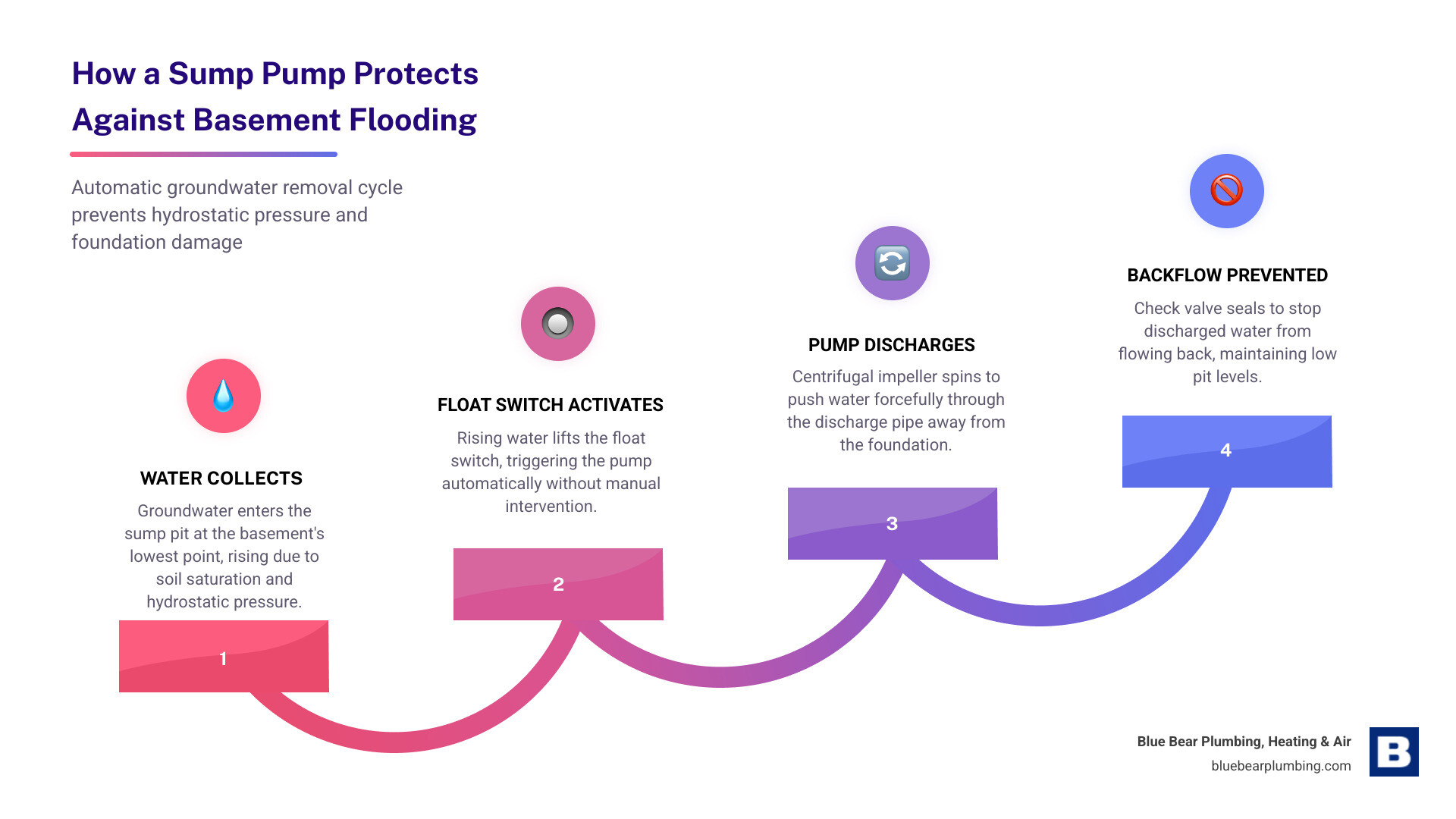
How a sump pump protects against basement flooding comes down to one simple job: collecting groundwater before it reaches your basement floor and pumping it safely away from your foundation. Here’s a quick breakdown of how it works:
- Water collects in a pit (called a sump basin) dug into the lowest point of your basement
- A float switch rises with the water level and automatically triggers the pump
- The pump activates, using a spinning impeller to push water through a discharge pipe
- Water exits away from your home’s foundation — at least 10 feet out
- A check valve prevents the discharged water from flowing back into the pit
Without this system, groundwater and stormwater have nowhere to go — and your basement pays the price. Mold can begin growing within 24 to 48 hours of water exposure, and a single flooding event can cause serious structural damage and costly repairs.
For South Shore homeowners, this isn’t a hypothetical. Heavy spring rains, rapid snowmelt, and the region’s naturally high water table make basement water intrusion a real and recurring risk — not just an occasional nuisance.
I’m Marc Provenzano, Marketing Manager at Blue Bear Plumbing, Heating & Air, and I’ve worked closely with our licensed technicians to understand exactly how a sump pump protects against basement flooding in Massachusetts homes. In the sections ahead, we’ll walk you through everything you need to know — from system mechanics to smart installation and maintenance.
How a Sump Pump Protects Against Basement Flooding
To understand the value of this equipment, we first have to look at the forces of nature working against your foundation. In areas like Quincy, Norwell, and Natick, the soil surrounding your home can become saturated during heavy New England rainstorms. This creates “hydrostatic pressure”—essentially, the weight of the water in the soil pushing against your basement walls.
Without a release valve, that pressure eventually forces water through tiny cracks in the concrete or up through the floor. This is where the sump pump steps in as your home’s personal drainage hero.
The Mechanics of Automatic Water Removal
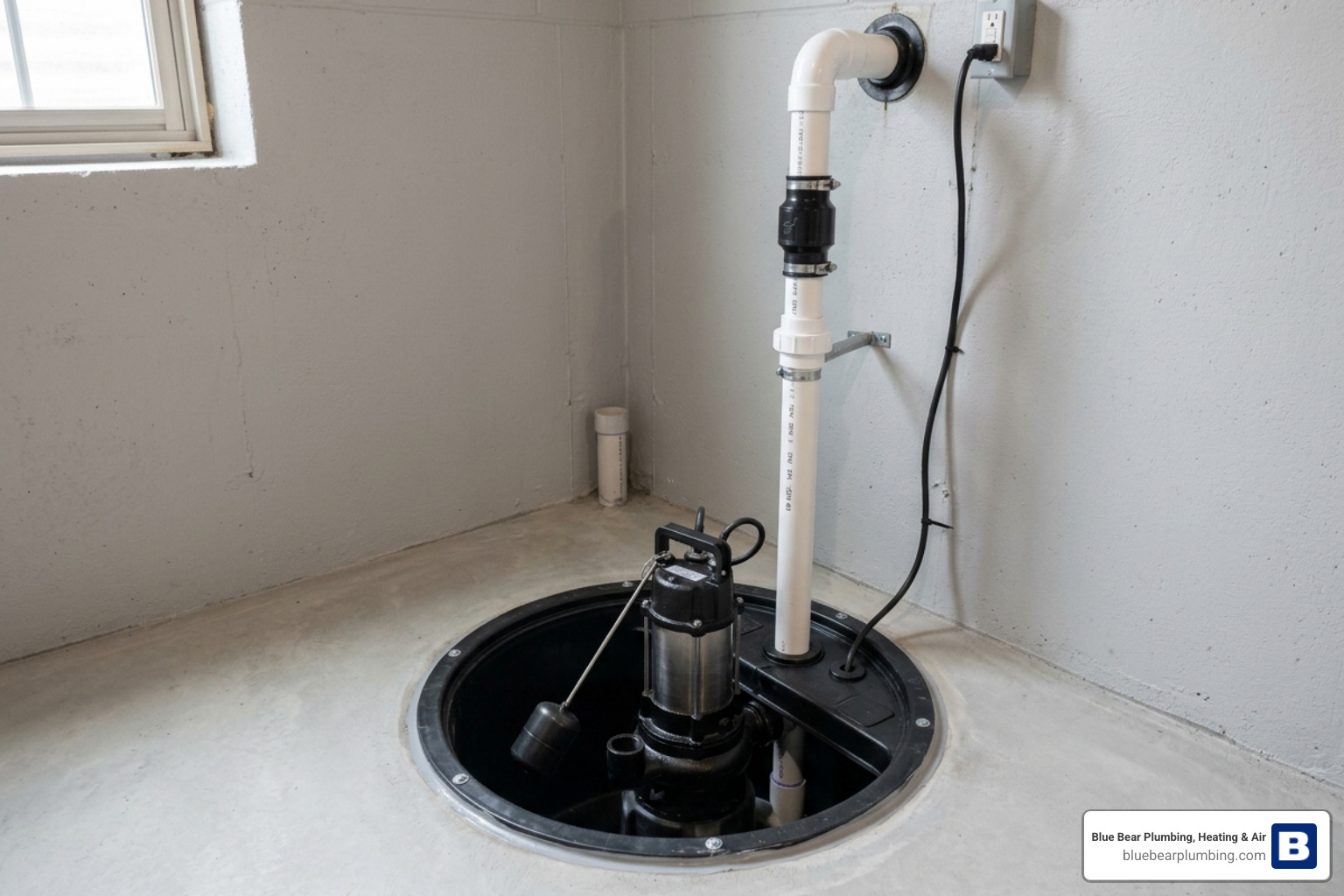
The system begins with the sump pit, or basin. This is a hole typically about two feet deep and 18 inches wide, lined with a plastic or metal sleeve. As groundwater rises, it naturally flows into this low point rather than seeping across your floor.
Inside the pit sits the pump. Most modern residential units are centrifugal pumps. When the water reaches a pre-set level, a float switch (which looks a bit like the float in your toilet tank) or a pressure sensor triggers the motor. A spinning impeller creates a vacuum that draws water in and flushes it out through the discharge pipe.
A critical but often overlooked component is the check valve. This one-way valve ensures that once water is pumped out, it stays out. Without it, gravity would pull the water remaining in the pipe back into the pit once the pump stops, causing the system to “short cycle” and wear out prematurely. Knowing What to Do in a Plumbing Emergency is important, but having a functioning check valve is a great way to prevent one from happening in the first place.
Choosing the Right System for Your Massachusetts Home
Not all sump pumps are created equal. Depending on the size of your basement and the volume of water you typically deal with, you’ll need to choose between two primary styles.
| Feature | Submersible Pump | Pedestal Pump |
|---|---|---|
| Location | Sits entirely inside the sump pit | Motor sits on a pole above the pit |
| Noise Level | Very quiet (water muffles sound) | Louder (motor is exposed) |
| Lifespan | Approx. 10 years | 25–30 years |
| Safety | Sealed unit, safer for kids/pets | Exposed moving parts |
| Efficiency | High (handles solids/debris better) | Moderate |
For most finished basements in the South Shore, we recommend submersible models. They are less obtrusive and allow the basin to be covered with a lid, which helps manage humidity and can even reduce radon gas intrusion. When selecting a pump, look for cast iron housing rather than plastic; it dissipates heat better and lasts much longer under heavy use.
Horsepower (HP) is another factor. Most homes require a 1/3 HP or 1/2 HP motor. If you live in an area with a very high water table or your discharge pipe has to lift water more than 10 feet vertically, a 1/2 HP model provides the extra “head pressure” needed to move water effectively. Keeping your system updated is a key part of our South Shore Winter Plumbing Checklist to ensure you’re ready for the spring thaw.
How a Sump Pump Protects Against Basement Flooding During Power Outages
The biggest irony of sump pumps is that they are most needed during severe storms—the exact time the power is likely to go out. A standard pump runs on your home’s AC electricity. If the grid fails, your basement is defenseless.
This is why a backup sump pump system is non-negotiable for many Massachusetts homeowners. We often recommend Aquanot systems or similar battery-powered backups. These use a dedicated marine-grade battery to power a secondary pump if the primary one loses power or becomes overwhelmed.
Some high-end backup systems even include alarm sensors that will text your phone if the pump activates or if the battery is low. For homes with municipal water, a water-powered backup is another option; it uses the Venturi effect and city water pressure to suction out the pit without needing any electricity at all.
Strategic Installation and Complementary Drainage
Installation isn’t just about plopping a pump in a hole. Strategic placement is everything. The pit must be located at the absolute lowest point of the basement floor. In many South Shore homes, we integrate the sump pump with French drains or perforated perimeter piping. This ensures that water from every corner of the foundation is channeled directly to the pump.
We also ensure the pump is plugged into a dedicated GFCI (Ground Fault Circuit Interrupter) outlet. Since water and electricity are a dangerous mix, this safety feature is a must-have to prevent electrical shocks or fires.
Beyond the pump itself, we look at the “big picture” of your home’s drainage. This includes:
- Exterior Grading: Ensuring the ground slopes away from your foundation.
- Gutter Maintenance: Keeping downspouts clear so they don’t dump gallons of water right next to your basement walls. Our Fall Plumbing Checklist covers these essential outdoor tasks.
Proper Discharge Placement in Quincy and Norwell
Where the water goes is just as important as getting it out of the basement. If the discharge line dumps water right outside the wall, it will simply soak back into the ground and return to the pit, creating a never-ending cycle that burns out your motor.
In towns like Quincy and Norwell, municipal codes often dictate where you can discharge water. It is usually illegal (and can lead to fines) to pump sump water into the sanitary sewer system. Instead, we aim for “daylight”—discharging the water at least 10 to 20 feet away from the house, ideally toward a storm drain or a downward slope. We also install anti-freeze protection on the exterior line to ensure that if the pipe freezes in January, the water has an emergency escape path and won’t back up into your basement.
Proactive Maintenance for Long-Term Reliability
A sump pump is a “set it and forget it” tool until the day it doesn’t work. To ensure yours is ready for the next Nor’easter, we recommend a few simple maintenance steps:
- The Bucket Test: Once a season, slowly pour a five-gallon bucket of water into the pit. The pump should kick on, drain the water, and shut off quickly.
- Clean the Inlet Screen: Over time, silt and small pebbles can clog the screen at the bottom of the pump.
- Check the Float: Make sure the float switch can move up and down freely and isn’t pinned against the side of the basin by a stray wire or debris.
- Inspect the Discharge Pipe: Ensure the exit point isn’t blocked by leaves, mulch, or ice.
How a Sump Pump Protects Against Basement Flooding from Snowmelt
In Massachusetts, the “Fifth Season” is the spring thaw. As feet of snow melt rapidly over a few days, the ground becomes oversaturated while the deeper soil might still be frozen. This forces water to move laterally—straight into your foundation.
A reliable sump pump manages this surge, preventing moisture migration through foundation cracks. By keeping the area under your floor dry, the pump also provides secondary benefits like humidity control and mold prevention. Mold and mildew thrive in damp basements, often starting within 24 hours of moisture exposure. By keeping the “water table” under your house low, you’re protecting your family’s respiratory health and preventing that classic “musty basement” smell.
Frequently Asked Questions about Sump Pumps
How long does a typical sump pump last?
Most submersible sump pumps have a lifespan of about 7 to 10 years. While they are robust, they live in a harsh, damp environment. Pedestal pumps can last longer—sometimes 25 years or more—because the motor stays dry, but they are less efficient at moving large volumes of water quickly. If your pump is making strange noises or cycling more often than usual, it’s likely reaching the end of its reliable life.
Do I need a sump pump if my basement hasn’t flooded yet?
Yes! Many homeowners install them as proactive protection. If you’ve noticed damp spots on the walls, cracks in the floor, or high humidity, these are signs that hydrostatic pressure is building up. Furthermore, many insurance companies offer premium discounts for homes with professionally installed sump pumps and backup systems. It’s an investment that increases your property value and provides unmatched peace of mind.
Can a sump pump run without rain?
It definitely can. If your home is built over an underground spring or in an area with a naturally high water table, the pump may run year-round to relieve hydrostatic pressure. This is actually a good sign—it means the pump is doing its job and preventing groundwater from ever reaching your floor level.
Conclusion
Understanding how a sump pump protects against basement flooding is the first step toward a drier, healthier home. Whether you’re dealing with the rapid snowmelt of a New England spring or the flash floods of a summer thunderstorm, this single piece of equipment is your most effective line of defense.
At Blue Bear Plumbing, Heating & Air, our team of licensed technicians is dedicated to keeping the homes of South Boston and the South Shore safe and dry. From choosing the right horsepower to installing advanced battery backup systems, we provide the local expertise and high-quality workmanship you can rely on.
Don’t wait for the next big storm to find out if your basement is protected. For expert sump pump installation, repair, or maintenance in Quincy, Norwell, Natick, and beyond, Blue Bear Plumbing is here to help. Give us a call today to ensure your home stays “Blue Bear dry” all year long!


Contact Us Today

Routine maintenance is vital for the longevity of your plumbing, heating, and air conditioning systems. Sign up for our Blue Care Maintenance Plan for annual service and exclusive membership benefits, including:
- Priority scheduling
- Waived service fee during normal business hours
- 10% discount on service calls
- 3% discount on new installations
- Two-year parts and labor warranty on new equipment