




The Great Spring Switch: Transitioning Your HVAC System
HVAC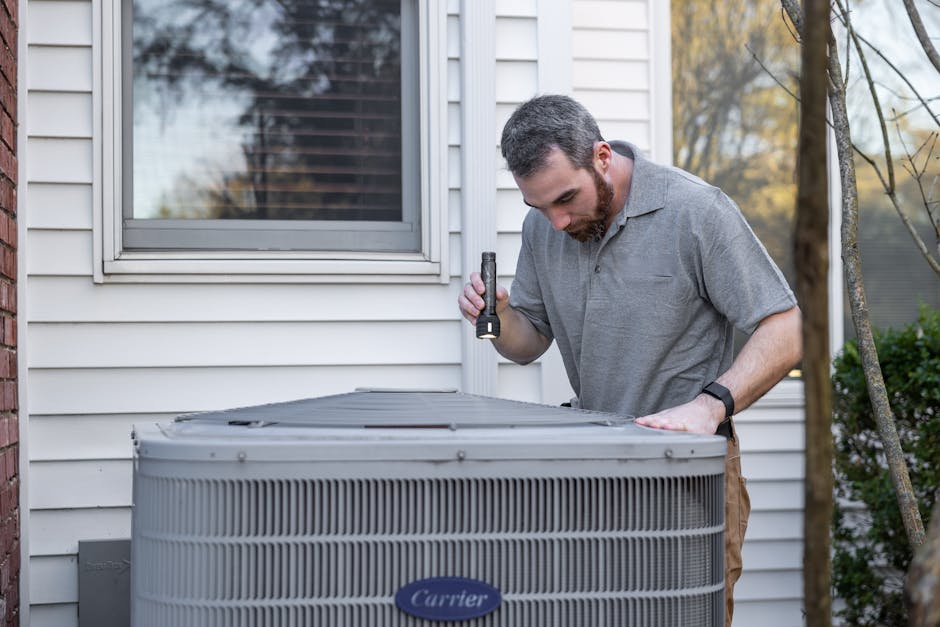
Why the Spring HVAC Transition from Heating to Cooling Is Worth Your Attention
The spring HVAC transition from heating to cooling is something most Massachusetts homeowners deal with every April — and getting it right can mean the difference between a comfortable, efficient summer and an unexpected breakdown when you need cool air most.
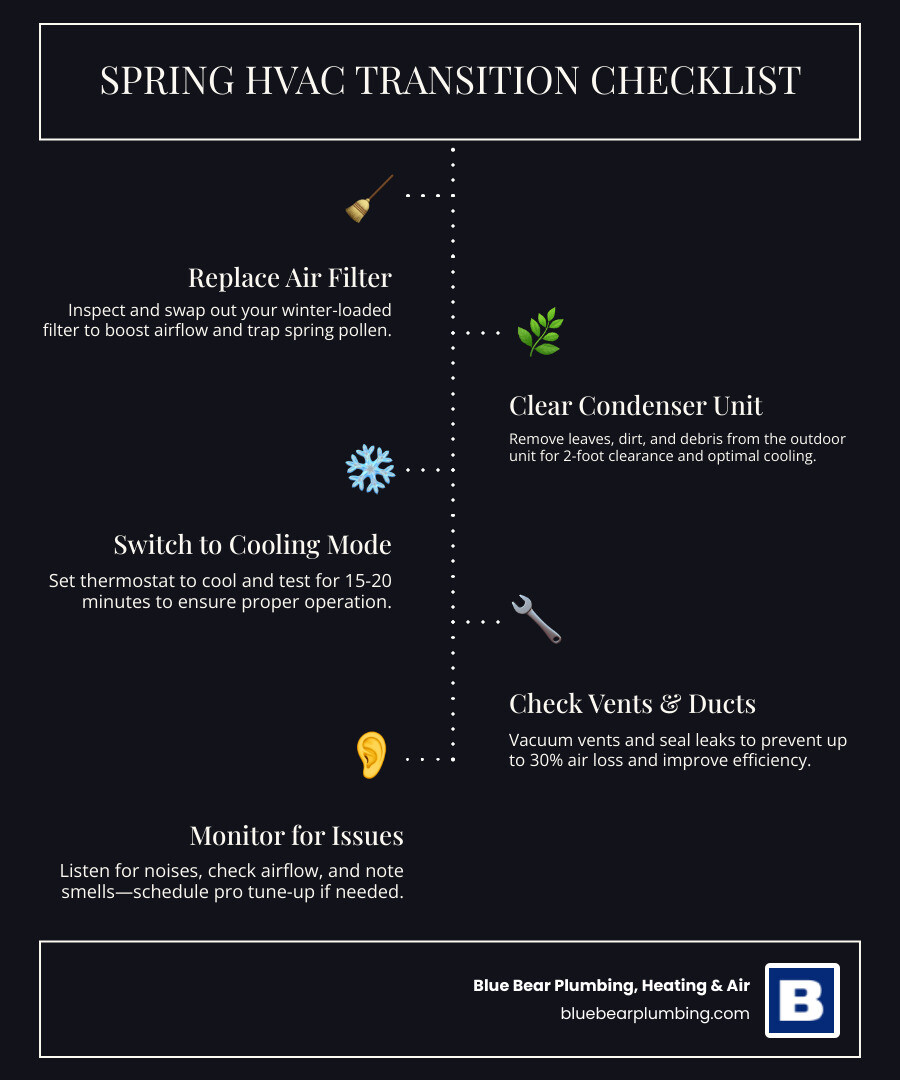
Here’s a quick overview of the key steps:
- Replace or inspect your air filter — winter use loads it with dust and debris
- Clear the outdoor condenser unit — remove leaves, dirt, and anything that built up over winter
- Switch your thermostat to cooling mode — test the system for 15–20 minutes
- Check vents and ducts — look for blockages or leaks that reduce airflow
- Watch for warning signs — unusual noises, weak airflow, or strange smells mean trouble
- Schedule a professional spring tune-up — especially before peak summer demand hits
Spring is the ideal time to do this because your system is under low demand — giving you a window to catch problems before they turn into expensive summer repairs.
I’m Marc Provenzano, Marketing Manager at Blue Bear Plumbing, Heating & Air, where I’ve spent years working alongside some of the most knowledgeable HVAC technicians in the South Shore area and learning what homeowners really need to know about the spring HVAC transition from heating to cooling. I’ll walk you through every step so you can head into summer with confidence.
Why the Spring HVAC Transition from Heating to Cooling Matters
As we move into April 2026, the shift from chilly Norwell mornings to mild afternoons signals that it’s time to think about your home’s comfort. Transitioning your system isn’t just about flipping a switch on the wall; it’s a vital piece of home maintenance that impacts your system’s longevity and your wallet.
When your HVAC system sits idle or switches roles, inactive components can struggle to kick back into gear. Dust and debris that accumulated during the heavy heating months can restrict airflow, forcing your unit to work harder and consume more energy. By taking the time for a proper transition, you improve your indoor air quality—which is essential during the Massachusetts allergy season when pollen counts begin to soar.
Furthermore, a proactive approach helps in preventing mid-summer breakdowns. It is much better to identify a worn belt or a refrigerant leak now than during a record-breaking July heatwave. If you are wondering about the right timing, checking out our guide on When to Get AC Tuned Up in Massachusetts can help you stay ahead of the curve.
Essential DIY Steps for Your Seasonal Switch
You don’t need to be a master technician to perform some basic “health checks” on your system. These DIY steps are the foundation of a successful spring hvac transition from heating to cooling.
Managing your spring hvac transition from heating to cooling with air filters
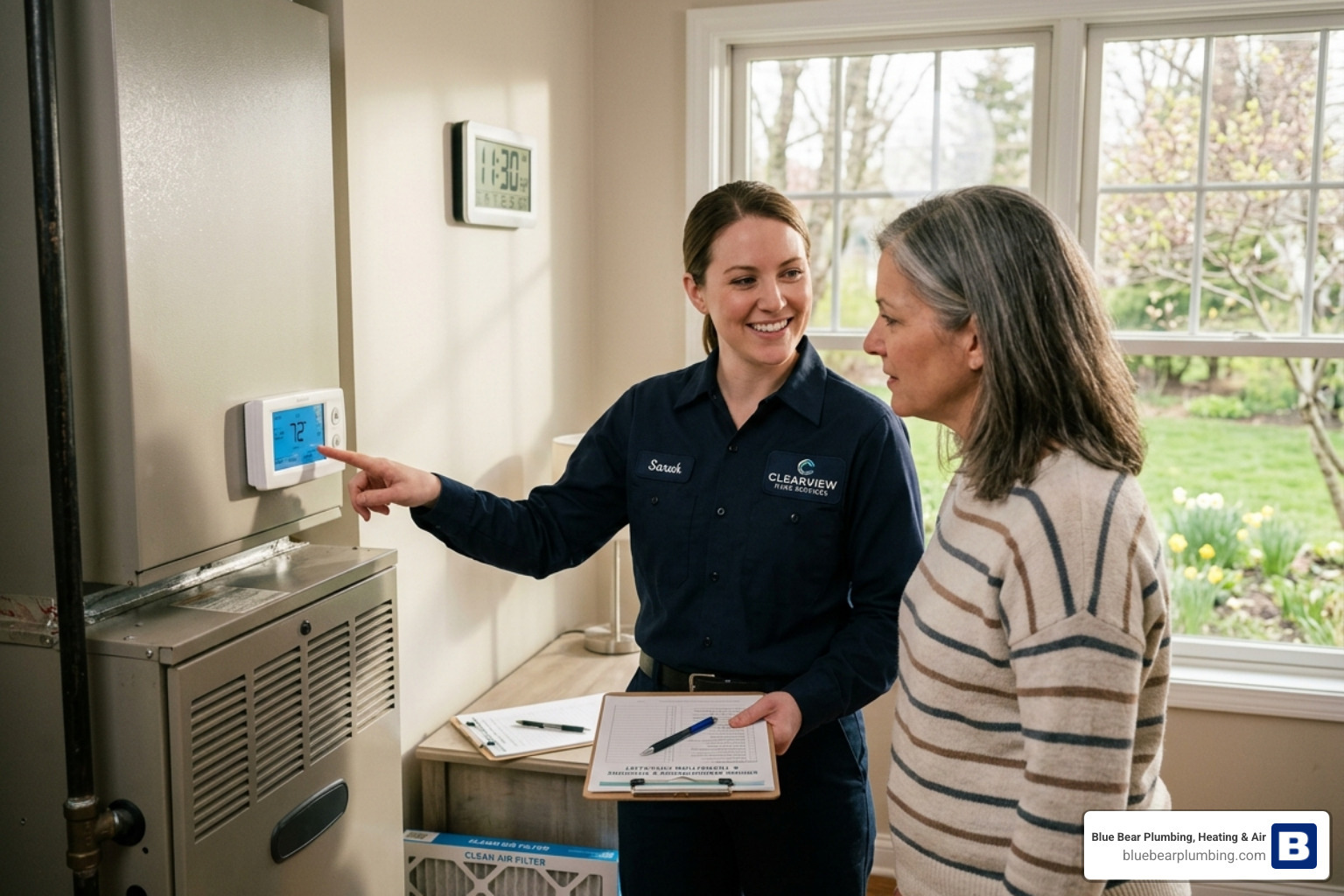
Your air filter is essentially the “lungs” of your HVAC system. Throughout the winter, it has been trapping dust, pet dander, and soot from your furnace. By spring, it is often clogged. A dirty filter restricts airflow, which can lead to your cooling coils freezing over once the AC starts running.
We recommend checking your filters once a month. During the spring transition, this is even more critical because of high pollen levels. If you or your family suffer from allergies, consider using a filter with a higher MERV rating (provided your system is compatible) to trap finer particles. For those living in areas like Natick, staying on top of this can significantly improve your home’s breathability. You can find more tips on this in our article on How to Master AC Maintenance in Natick MA.
Preparing the outdoor condenser unit
While you were cozy inside all winter, your outdoor condenser unit was braving the Massachusetts elements. Fallen leaves, twigs, and even winter road salt or dirt can accumulate around the base and inside the fins of the unit.
To ensure proper heat transfer, your outdoor unit needs to “breathe.” We suggest maintaining at least a two-foot clearance of open space around the entire unit. Trim back any shrubs or perennial plants that have grown too close. You can also use a low-pressure garden hose to gently rinse the exterior fins. Avoid using a power washer, as the high pressure can bend the delicate metal fins and restrict airflow. For a deeper dive into this process, see our guide on How to Clean Your AC.
Optimizing Airflow and Thermostat Settings
Once the hardware is clean, it’s time to look at the “brain” of your system: the thermostat. Proper calibration ensures that you aren’t wasting energy cooling an empty house or fighting against lingering heat settings.
Calibrating for the spring hvac transition from heating to cooling
If you haven’t upgraded yet, spring 2026 is a great time to consider a smart thermostat. These devices allow for precise scheduling and can even manage “deadband” settings—a buffer that prevents your system from rapidly switching between heating and cooling during those weeks when Massachusetts weather can’t make up its mind.
Before the first hot day hits, switch your thermostat to “Cool” and set the temperature a few degrees below the current room temperature. Listen for the unit to kick on and feel the vents for cool air. This 15-to-20-minute test run is your early warning system. If you’re in Norwell and want to ensure your settings are optimized for our coastal climate, our Homeowner’s Guide to Norwell AC Maintenance offers excellent localized advice.
Sealing leaks and cleaning vents
Did you know that leaky ducts can lose up to 30% of the air passing through them? That is a massive amount of cooled air—and money—escaping into your attic or crawlspace. During the heating season, the constant expansion and contraction of metal ducts caused by furnace vibrations can sometimes loosen joints.
Check your accessible ductwork for any obvious gaps and seal them with mastic tape or metal-backed tape (avoid standard “duct tape,” as it actually degrades quickly under temperature changes). While you’re at it, grab your vacuum and clear the dust from your floor and wall registers. If you have a wall-mounted unit, it needs love too; learn how to Maintain Aircon Wall Unit systems to keep every room in your home comfortable.
Troubleshooting Common Transition Issues
Sometimes, despite your best DIY efforts, the spring hvac transition from heating to cooling reveals underlying issues. Here are the most common “red flags” we see in the field:
- Musty Smells: If your AC smells like “dirty socks” when it first starts, it could indicate mold or mildew growth on the evaporator coils or a clogged condensate drain line.
- Grinding or Squealing Noises: These often point to worn-out belts or bearings that were stressed during the winter and are now struggling with the higher speeds of the AC blower.
- Weak Airflow: If you’ve changed the filter and cleaned the vents but the air still feels weak, you may have a blockage deep in the ducts or a failing blower motor.
- Heat Pump Specifics: If you use a heat pump, the “reversing valve” is the component that switches the flow of refrigerant from heating to cooling. If your system is blowing warm air while in cool mode, this valve may have failed. You can learn more about why this happens in our article Why Is My Heater Blowing Cold Air.
When to Schedule a Professional Spring HVAC Audit
While DIY maintenance is great, there are technical aspects of your system that require a professional touch. A spring HVAC audit is a comprehensive check that goes beyond the surface.
Our technicians at Blue Bear Plumbing, Heating & Air check refrigerant levels (which must be precise for efficiency), inspect electrical contactors and capacitors for signs of wear, and ensure the condensate system is draining properly to prevent indoor water damage. Systems like the Unico System, which many of our neighbors use for high-velocity cooling, require specialized knowledge to maintain their tight temperature differentials.
Scheduling this service in April or May is a strategic move. It allows us to address “winter wear” and ensure your 2026 summer performance is peak-efficient. For those in the Natick area, we pride ourselves on being The Best AC Maintenance Experts Natick Has to Offer, providing the peace of mind that comes with a professional seal of approval.
Frequently Asked Questions about Spring HVAC Transitions
How often should I replace my air filters during the spring?
You should check your air filter once a month. During the spring, when pollen and dust levels are higher in Massachusetts, you may find that you need to replace it every 30 to 60 days. If you have pets or high occupancy, a monthly change is the safest bet for maintaining airflow.
What is the best thermostat temperature for spring in Massachusetts?
For a balance of comfort and energy savings, we recommend setting your thermostat to 78°F when you are home. If that feels too warm, try using ceiling fans (spinning counter-clockwise) to create a wind-chill effect. When you are away, bumping the temperature up to 82°F can significantly lower your utility bills.
Why does my AC smell like old socks when I first turn it on?
This is often called “Dirty Sock Syndrome.” It’s caused by bacteria and mold buildup on the cooling coils. When the moisture from the air hits the cold coils, it creates a damp environment where these organisms thrive. A professional cleaning of the evaporator coils usually resolves this issue.
Conclusion
The spring hvac transition from heating to cooling is an essential ritual for every Massachusetts homeowner. By following these steps—from changing your filters to clearing your outdoor unit—you are investing in a cooler, more comfortable, and more affordable summer.
At Blue Bear Plumbing, Heating & Air, we are proud to serve our neighbors from Norwell and Quincy to Natick and beyond. Our team is committed to high-quality workmanship and the kind of integrity you expect from a local business. Don’t wait for the first 90-degree day to find out your system isn’t ready. Schedule your 2026 spring HVAC checkup today and let us help you keep your cool all season long!



Contact Us Today

Routine maintenance is vital for the longevity of your plumbing, heating, and air conditioning systems. Sign up for our Blue Care Maintenance Plan for annual service and exclusive membership benefits, including:
- Priority scheduling
- Waived service fee during normal business hours
- 10% discount on service calls
- 3% discount on new installations
- Two-year parts and labor warranty on new equipment