




Don’t Get Left in the Cold with Natick Heat Pump Repair
HVAC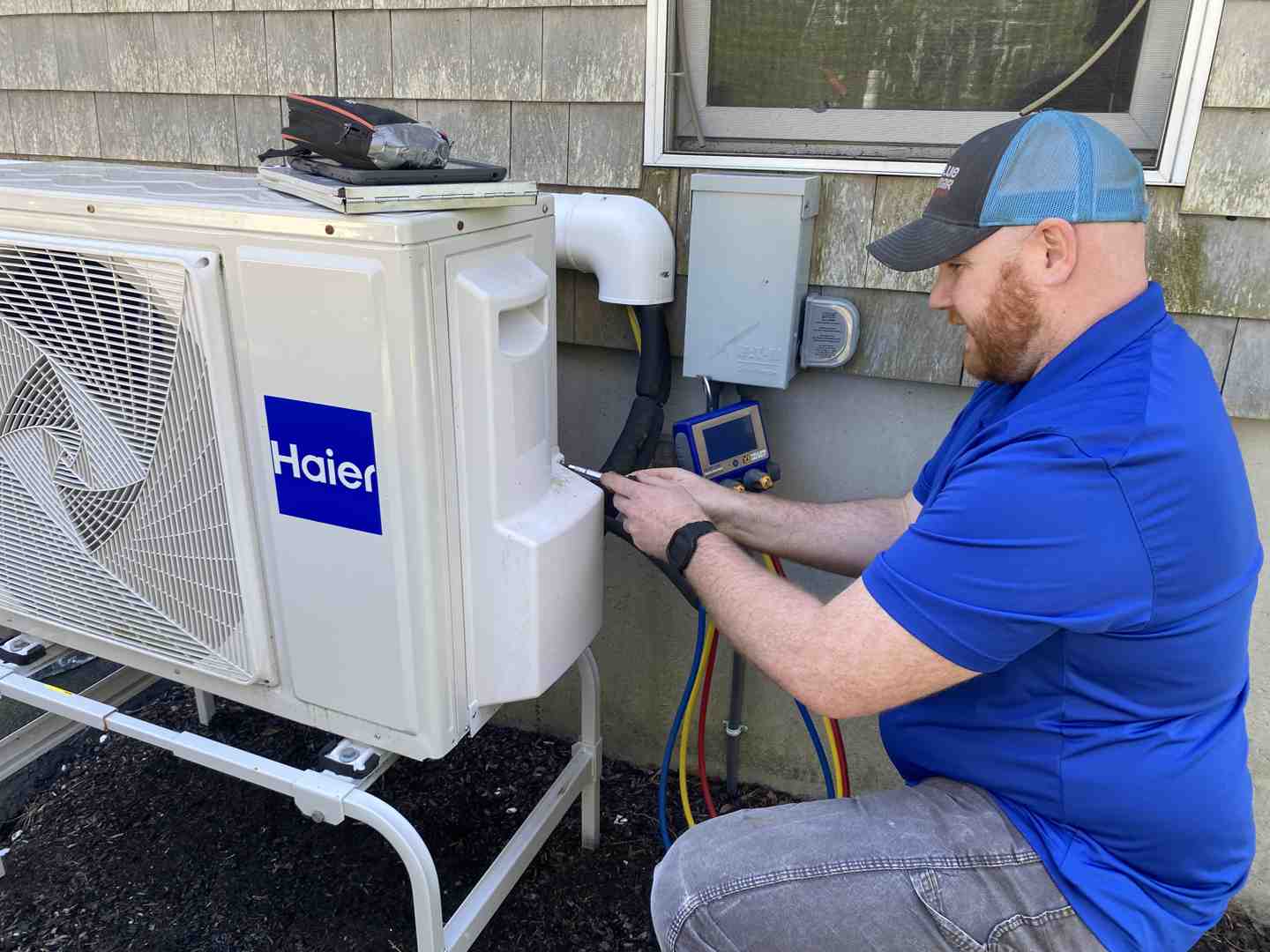
Reliable Heat Pump Repair in Natick, MA: What You Need to Know
Heat pump repair in Natick, MA is something no homeowner wants to deal with — but when your system starts struggling through a January freeze or a muggy August afternoon, getting the right help fast makes all the difference.
Looking for quick answers? Here’s what Natick homeowners need to know:
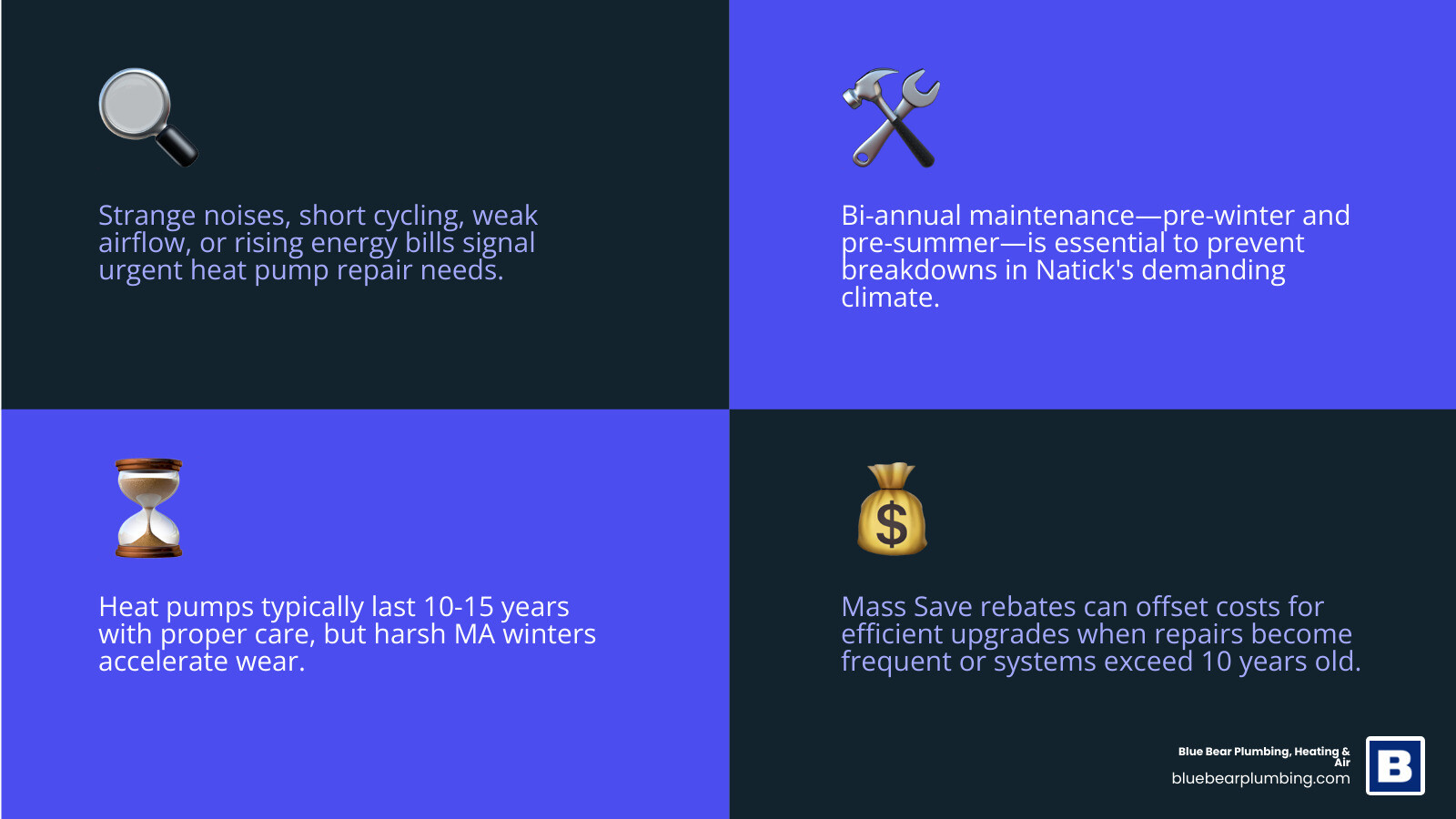
- Signs you need repair: Strange noises, short cycling, weak airflow, rising energy bills, or a unit that won’t turn on
- How often to maintain: At least twice a year — once before winter, once before summer
- Average heat pump lifespan: 10 to 15 years, depending on maintenance and climate conditions
- When to replace instead of repair: If your system is over 10 years old, uses R-22 refrigerant, or repairs are becoming frequent and costly
- Financial help available: Massachusetts residents may qualify for significant rebates through the Mass Save program for high-efficiency heat pump upgrades
- Emergency service: Several local HVAC providers in the Natick area offer 24/7 emergency heat pump repair
Natick’s climate is no joke. Cold, snowy winters and humid summers put serious stress on heat pump systems year-round. A heat pump that’s even slightly off its game can mean uncomfortable temperatures inside your home — and a utility bill that climbs higher than it should. The good news? Most heat pump problems, when caught early, are very fixable.
I’m Marc Provenzano, Marketing Manager at Blue Bear Plumbing, Heating & Air, and I’ve spent years working alongside skilled technicians who handle heat pump repair in Natick, MA every single day — learning what breaks, why it breaks, and what separates a quick fix from a long-term solution. In the sections below, we’ll walk you through everything you need to know to keep your system running strong.
Recognizing the Need for Heat Pump Repair in Natick, MA
In a town like Natick, where the median home was built around 1950, many residents are transitioning from older oil or gas furnaces to modern, high-efficiency heat pumps. While these systems are incredibly efficient, they work hard year-round. Unlike a furnace that sleeps all summer, a heat pump is your primary source of both heating and cooling. This constant operation means wear and tear happen in every season.
Recognizing the early warning signs of a failing system can save you from a total breakdown during a Nor’easter. One of the most obvious red flags is strange noises. If you hear gurgling, it often points to a refrigerant leak. Buzzing sounds usually signal an electrical issue, such as a failing contactor or capacitor. Grinding might mean the bearings in the fan motor are shot, while a loud metallic banging suggests something has come loose inside the cabinet.
Another common symptom is short cycling. This is when the unit turns on and off rapidly without ever completing a full heating or cooling cycle. Not only does this leave your home uncomfortable, but it also skyrockets your utility bills and puts immense strain on the compressor. You might also notice weak airflow or air that simply isn’t the right temperature. If your system constantly switches into “emergency heat” mode even when it isn’t exceptionally cold outside, it’s a sign that the heat pump itself is struggling to keep up.
If you are experiencing these issues, it is essential to seek expert residential furnace and heating repair to ensure your home stays safe.
Common Mechanical Issues Requiring Heat Pump Repair in Natick, MA
When our technicians arrive for a service call in Natick, they often find a few “usual suspects” behind the system failure:
- Reversing Valve Failure: This is the component that allows the heat pump to switch between heating and cooling modes. If it gets stuck, you might have plenty of AC but no heat when October rolls around.
- Refrigerant Leaks: Heat pumps don’t “use up” refrigerant like a car uses gas. If the levels are low, there is a leak. This requires a professional to find, seal, and recharge the system.
- Electrical Component Issues: Capacitors and start relays can wear out over time, especially during Natick’s humid summers when the unit is working overtime to dehumidify your home.
- Frozen Evaporator Coils: While it sounds counterintuitive, a heat pump can freeze up in both summer and winter. This is usually caused by restricted airflow (like a dirty filter) or a malfunction in the defrost board.
If your system fails suddenly in the middle of the night, don’t panic. There are emergency heat pump repair services available to restore your comfort quickly.
Professional Troubleshooting and Heat Pump Repair in Natick, MA
DIY troubleshooting has its limits. While checking your air filter and ensuring your thermostat has fresh batteries is a great start, most heat pump repair in Natick, MA requires specialized tools. Professional technicians use manifold gauges to check pressures, multimeters to test electrical continuity, and leak detectors to find microscopic pinholes in copper lines.
Choosing the best repair professionals ensures that the root cause of the problem is addressed, rather than just patching a symptom. A licensed technician will perform a full system calibration, ensuring that your sensors, motors, and refrigerant levels are all working in perfect harmony to provide maximum efficiency.
The Importance of Timely Repairs in the MetroWest Climate
In the MetroWest area, we experience the full spectrum of New England weather. Our winters can drop well below freezing, and our summers are notoriously humid. This environment makes timely heat pump repair in Natick, MA essential.
When a heat pump isn’t working correctly, it loses its ability to dehumidify in the summer, leading to that sticky, “heavy” air feeling indoors. In the winter, a malfunctioning unit might rely too heavily on expensive auxiliary electric heat strips, causing your electric bill to double or triple in a single month.
| Feature | Heating Mode | Cooling Mode |
|---|---|---|
| Heat Source | Outdoor Air / Ground | Indoor Air |
| Reversing Valve | Position A | Position B |
| Indoor Coil | Acts as Condenser (Releases Heat) | Acts as Evaporator (Absorbs Heat) |
| Common Issue | Ice buildup / Defrost failure | Frozen coils / Clogged drain line |
Addressing repairs early also prevents “secondary damage.” For example, a dying fan motor that is left to labor will eventually draw too much amperage and potentially burn out your expensive control board or compressor. Finding local neighborhood fixers who understand the specific challenges of Natick’s climate can save you thousands in the long run.
Maintenance Strategies to Prevent Major Breakdowns
The best way to handle a repair is to prevent it from happening in the first place. Because heat pumps work year-round, they require more frequent attention than a standard furnace or central AC. We recommend a bi-annual tune-up: once in the spring to prep for the cooling season and once in the fall to ensure you’re ready for the snow.
During these visits, we focus on comprehensive maintenance tasks that homeowners often overlook:
- Cleaning the Coils: Dirt and debris on the outdoor unit act as insulation, preventing the heat transfer process and forcing the system to work harder.
- Lubricating Moving Parts: Reducing friction in the motors extends their lifespan and keeps the unit running quietly.
- Clearing Debris: In Natick, falling leaves and snow can block the outdoor unit. Keeping a two-foot “buffer zone” around the unit is vital for airflow.
- Checking the Condensate Line: Algae and sludge can clog the drain line in the summer, leading to water damage inside your home.
- Filter Replacement: This is the simplest yet most important task. A clogged filter is the leading cause of system “suffocation” and frozen coils.
When to Consider Replacement Over Repair
While we always strive to fix your system, there comes a point where sinking more money into an old unit doesn’t make sense. Most heat pumps in the Natick area last between 10 and 15 years. If your system is approaching the 12-year mark and requires a major repair—like a new compressor or a reversing valve—it may be time to look at new heat pump installation options.
Another critical factor is the type of refrigerant your system uses. Older units often use R-22 (Freon), which has been phased out due to environmental regulations. Repairing a leak in an R-22 system is becoming prohibitively expensive because the refrigerant is no longer produced.
Modern units are significantly more efficient and often come with smart thermostat integration, allowing you to manage your home’s climate from your phone. Plus, there are incredible deals and rebates available for Natick homeowners who upgrade to high-efficiency equipment.
Frequently Asked Questions about Natick Heat Pump Services
How long do heat pumps typically last in the Natick area?
On average, you can expect a heat pump to last 10 to 15 years. In Natick, the lifespan is heavily influenced by how well the system is maintained. Because we experience salt on the roads (which can sometimes mist onto outdoor units) and heavy snow loads, outdoor units take a beating. Regular cleaning and professional inspections can push a system toward that 15-year mark, while neglected systems may fail closer to year 10. For more details on longevity, check out our installation and lifespan guide.
Can a heat pump still provide warmth during extreme Massachusetts freezes?
Yes! Older heat pumps used to struggle when temperatures dropped below 30°F, but modern “Cold Climate” or “Hyper-Heat” technology has changed the game. Many of the systems we install can provide 100% heating capacity down to 5°F and continue operating efficiently all the way down to -13°F. For those truly historic New England freezes, most systems are paired with an auxiliary heat source to ensure you stay toasty. If you’re worried about costs during winter, there are ways to get help without breaking the bank.
What are the benefits of the Mass Save program for local homeowners?
The Mass Save program is one of the best resources for Natick residents. By scheduling a home energy audit, you can become eligible for massive rebates—sometimes up to $10,000—on the installation of high-efficiency heat pumps. These incentives are designed to help Massachusetts reach its goal of reducing carbon emissions. It’s an excellent way to get affordable repair and upgrade options that pay for themselves through lower monthly energy bills.
Conclusion
At Blue Bear Plumbing, Heating & Air, we understand that your home is your sanctuary. When you need heat pump repair in Natick, MA, you deserve a team that shows up on time, explains the problem in plain English, and provides upfront pricing without any hidden surprises.
We are proud to serve the Natick community with integrity and high-quality workmanship. Whether you need a quick sensor replacement or are considering a full system upgrade to take advantage of local rebates, our friendly, local team is here to help. Don’t wait until the next blizzard to find out your heat pump is struggling.
For more information on keeping your home comfortable year-round, explore our guide on repair and replacement in Massachusetts or contact us today to schedule your service.



Contact Us Today

Routine maintenance is vital for the longevity of your plumbing, heating, and air conditioning systems. Sign up for our Blue Care Maintenance Plan for annual service and exclusive membership benefits, including:
- Priority scheduling
- Waived service fee during normal business hours
- 10% discount on service calls
- 3% discount on new installations
- Two-year parts and labor warranty on new equipment