




Don’t Get Burned: Finding Professional Water Heater Repair in Quincy, MA
Plumbing
Why Finding the Right Water Heater Repair Service Matters
When you need water heater repair best in Quincy, MA, you’re likely dealing with cold showers, unpredictable temperatures, or worse—a leaking unit threatening your basement. Here’s how to quickly identify top repair services in your area:
- Look for licensed and insured professionals with proven experience in Quincy
- Check for 24/7 emergency availability to handle urgent breakdowns
- Read customer reviews from local homeowners on platforms like Google and Yelp
- Verify they offer guarantees on both parts and workmanship
- Confirm transparent communication about the problem and repair options
Nothing disrupts your daily routine quite like a broken water heater. Whether it’s that first cold shower that jolts you awake or finding a puddle spreading across your basement floor, water heater problems demand immediate attention. Hot water isn’t just a convenience—it’s essential for cooking, cleaning, bathing, and maintaining a comfortable home, especially during those harsh New England winters.
The challenge isn’t just fixing the problem quickly—it’s finding a repair service you can trust. Quincy homeowners face a crowded marketplace of plumbing companies, each claiming to be the best. Some focus on speed but cut corners on quality. Others provide excellent work but lack emergency availability when you need it most. The key is knowing what separates truly professional service from the rest.
This guide will help you identify the warning signs your water heater needs attention, understand common failure points, and most importantly, recognize the qualities that define exceptional water heater repair service in Quincy. You’ll learn when repair makes sense versus replacement, what to expect from top-rated technicians, and how to make informed decisions about your home’s hot water system.
I’m Marc Provenzano, Marketing Manager at Blue Bear Plumbing, Heating & Air, and I’ve spent years helping Quincy homeowners steer decisions about water heater repair best in Quincy, MA through clear, honest communication about their options. My goal is to give you the information you need to choose confidently and avoid the frustration of poor service or unexpected breakdowns.
For comprehensive guidance on water heater services, check out our water heaters overview, or if you’re facing an urgent issue right now, visit our water heater repair page to schedule immediate service.
Telltale Signs: Is Your Water Heater Crying for Help?
Your water heater might not have a voice, but it certainly has ways of telling you it’s not feeling well. Ignoring these subtle—or not-so-subtle—cries for help can lead to bigger problems down the line, including costly repairs or even premature replacement. For homeowners in Quincy, MA, knowing these signs can save you a lot of headache and hassle.
Let’s explore the common indicators that your water heater is due for a check-up:
No Hot Water: This is perhaps the most obvious and frustrating sign. You hop in for a relaxing shower, only to be greeted by a blast of icy cold water. A complete lack of hot water often points to a major issue, such as no fuel or power supply to the unit, a faulty thermostat, an extinguished pilot light (for gas heaters), or a malfunctioning electric ignition. If you’re experiencing this, it’s a clear signal to call in the professionals.
Inconsistent Water Temperature: Does your shower go from perfectly warm to shockingly cold and back again? This “hot-cold-hot-cold” dance is more than just annoying; it’s a strong indicator of a problem. Inconsistent temperatures can be caused by a faulty thermostat, especially if the lower component is failing, or sediment buildup inside the tank interfering with heating elements.
Strange Noises Like Popping or Banging: Your water heater shouldn’t sound like a haunted house. If you hear banging, popping, rumbling, or even screeching coming from your unit, it’s usually due to sediment buildup at the bottom of the tank. As the heating element attempts to heat water through this layer of sediment, it causes the sediment to shift and make noise, reducing efficiency and eventually damaging the tank.
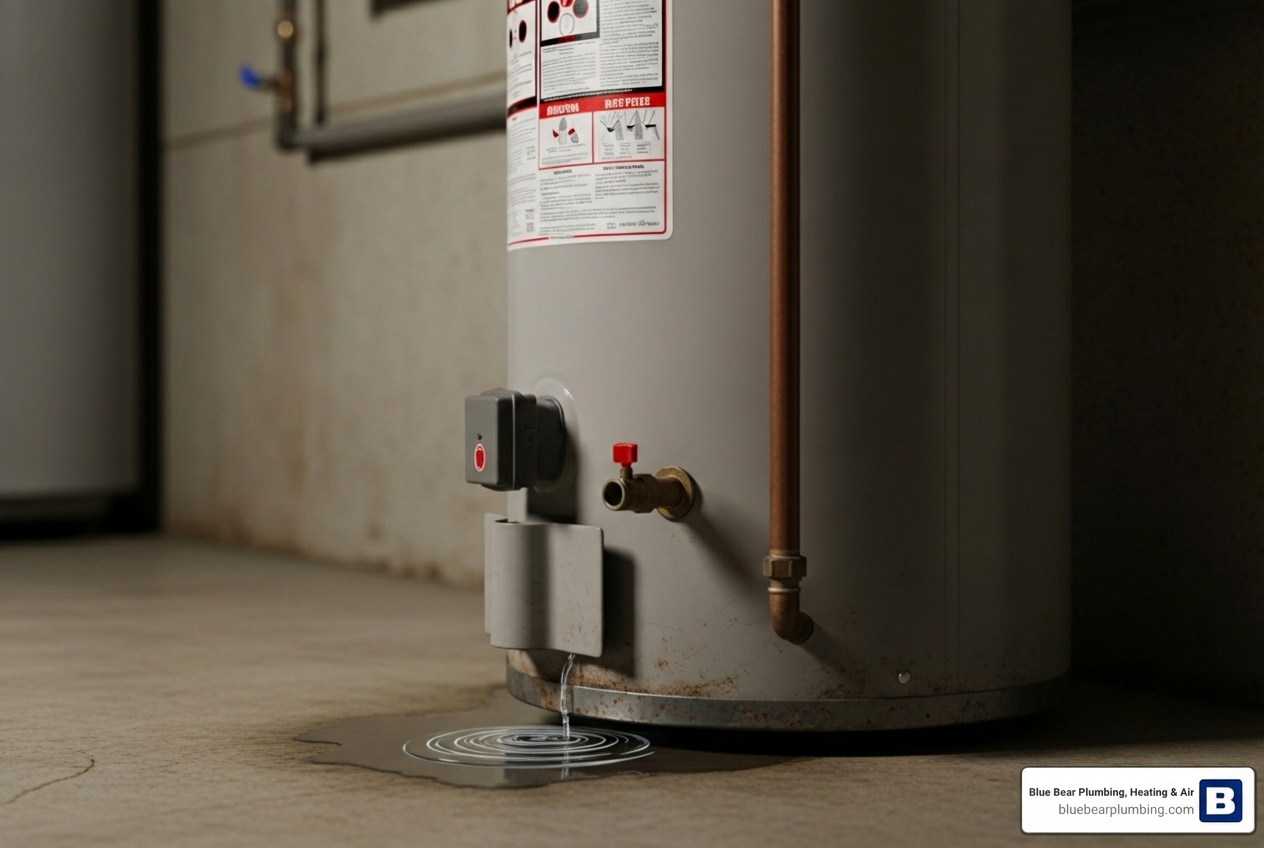
Leaks and Puddles Around the Unit: Seeing water where it shouldn’t be is always a cause for concern. Leaks around your water heater can stem from various issues, including loose connections, a faulty pressure relief valve, or, most alarmingly, a crack in the tank itself. Even a small leak can quickly lead to significant water damage and potential mold growth if not addressed promptly. If you suspect a leak, it’s crucial to investigate immediately. For more insights on this, check out our guide on How to Tell If You Have a Plumbing Leak.
Low Hot Water Pressure: If your hot water isn’t flowing with its usual vigor, but your cold water pressure is fine, your water heater might be the culprit. Sediment buildup can restrict water flow, leading to noticeable drops in pressure. This can make daily tasks like showering or washing dishes feel like an uphill battle. Learn more about this common issue in our article on Diagnosing and Dealing with Low Water Pressure.
Smelly or Discolored Water: Hot water that looks rusty, cloudy, or has an unpleasant odor (often described as rotten eggs) is a definite red flag. Rusty water usually indicates corrosion inside the tank or your pipes. A sulfurous smell, on the other hand, often points to a bacterial issue within the tank, especially if your anode rod is degrading. Neither is something you want to ignore.
These signs are your water heater’s way of telling you it needs some professional attention. Addressing them quickly can prevent minor issues from escalating into major emergencies. For a deeper dive into these warning signs, our Symptoms of a Failing Water Heater article offers more comprehensive details.
Common Culprits: Why Water Heaters Fail in Quincy
Understanding why your water heater might be acting up is the first step toward finding the right solution. In Quincy, MA, like many areas, certain factors commonly contribute to water heater woes. Knowing these “common culprits” can help you be more informed when our team diagnoses the issue.
Here are the most frequent reasons we see water heaters fail:
Sediment Buildup from Hard Water: Quincy’s water supply, while safe, can contain minerals that accumulate inside your water heater tank over time. This sediment forms a layer at the bottom, reducing the unit’s efficiency and causing those strange popping or banging noises we discussed earlier. When the heating element has to work harder through this insulating layer, it leads to increased energy consumption and accelerates wear and tear on the tank. Regular maintenance, including flushing the tank, is crucial to combat this.
Thermostat Failure: The thermostat is the brain of your water heater, regulating the water temperature. If it malfunctions, you could experience anything from lukewarm water to scorching hot water, or no hot water at all. Traditional tank water heaters often have upper and lower thermostats. If the lower one fails, you might still get some hot water, but not enough. If the upper thermostat goes out, all heating typically ceases. A faulty thermostat is a common reason for inconsistent heating.
Worn-Out Heating Elements in Electric Models: Electric water heaters rely on one or two heating elements submerged in the tank to warm the water. Over time, these elements can burn out or become coated with sediment, losing their ability to efficiently heat water. When an element fails, it results in a lack of hot water or significantly longer recovery times.
Gas Pilot Light or Thermocouple Issues: For gas water heaters, an extinguished pilot light is a frequent problem. This can be caused by a draft, a dirty pilot opening, or a faulty thermocouple or thermopile. The thermocouple is a safety device that senses if the pilot light is lit. If it fails, it will shut off the gas supply, preventing unignited gas from accumulating. Some newer gas models use an electronic ignition system, which can also fail due to dirt or mineral buildup.
A Failing Temperature Pressure Relief (TPR) Valve: This small but mighty component is a critical safety feature. The TPR valve is designed to release water if the temperature or pressure inside the tank becomes dangerously high, preventing potential explosions. If you notice water consistently leaking from the TPR valve, it could be malfunctioning and needs immediate inspection. A faulty TPR valve poses a serious safety risk and should never be ignored. Regular inspection of these valves is a best practice to ensure your family’s safety.
Internal Tank Corrosion and Rust: The inside of your water heater tank is typically lined to prevent corrosion. However, over many years, this lining can degrade, exposing the metal to water. Once rust begins, it can lead to discolored water (rusty water from the tap) and, eventually, pinhole leaks in the tank. This is often an irreversible problem that signals the end of your water heater’s life.
Understanding these underlying issues helps us provide a more accurate diagnosis and effective solution for your water heater repair best in Quincy, MA needs. For a detailed look at how these components work, explore our article All About Water Heaters: Types, Parts, and How They Work.
The Big Decision: Repairing vs. Replacing Your Water Heater
When your water heater acts up, the big question often becomes: should I repair it or replace it? This isn’t always an easy call, and it’s one we help many Quincy homeowners make. The best decision depends on several factors, weighing the immediate fix against long-term savings and reliability.
Let’s break down the key considerations:
Age of the Unit: This is one of the most crucial factors. Traditional tank water heaters typically have an average lifespan of 10-15 years. If your unit is approaching or has exceeded this age, especially if it’s already showing signs of decline, replacement often makes more economic sense than repeated repairs. For instance, if your water heater is over ten years old and experiencing significant issues, replacement might be the more practical approach.
Average Lifespan of Tank vs. Tankless Models: While traditional tanks last about 10-15 years, tankless water heaters boast a much longer average lifespan, often exceeding 20 years with proper maintenance. This difference in longevity significantly impacts the repair vs. replacement calculation.
Frequency and Nature of Repairs: Are you calling for repairs every few months? Are the repairs becoming more complex or expensive? If your water heater has become a frequent visitor on our service schedule, or if the repairs involve major components like the tank itself, it’s a strong sign that replacement is on the horizon. A water heater that constantly needs attention is likely nearing the end of its functional life.
Leaking Tank as a Sign for Immediate Replacement: This is almost always a deal-breaker. If your water heater tank itself is leaking, it’s generally not repairable. A leaking tank means its internal integrity has been compromised, and the only reliable solution is replacement. Delaying this can lead to extensive water damage to your home.
Energy Efficiency Considerations: Older water heaters are simply less efficient than newer models. If your energy bills have been steadily climbing, your aging water heater might be a significant culprit. Upgrading to a new, energy-efficient model can lead to substantial savings on your utility costs over its lifespan. For more on making this choice, see our guide on Hot Water Happy Home: Finding the Best Water Heater Replacement in Quincy, MA.
When is replacement the best option for your Quincy home?
Sometimes, the writing is on the wall, or rather, on the water heater. While we always aim to provide cost-effective repairs, there are clear indicators that suggest replacement is the wiser investment for your Quincy home:
- Unit is over 10-12 years old: As mentioned, once your traditional tank water heater hits this age range, its efficiency typically drops, and components are more prone to failure. Investing in a new unit can provide peace of mind and better performance.
- Constant need for repairs: If you find yourself calling for repairs frequently, the cumulative cost can quickly approach that of a new water heater, without offering the longevity or efficiency benefits.
- Visible corrosion on the tank: Rust or corrosion on the outside of the tank, or rusty water coming from your taps, indicates internal corrosion. This is a sign of irreversible damage, and replacement is the only safe option.
- Rising energy bills due to inefficiency: If your water heater is working harder to produce hot water, it’s consuming more energy. Newer models are designed with advanced insulation and heating technologies that can significantly reduce your energy consumption and lower those monthly bills.
Considering these points helps ensure you’re making a decision that’s not just about fixing today’s problem, but also about securing reliable, efficient hot water for years to come. Explore your replacement options further on our Water Heater Replacement page.
The value of professional water heater repair best in quincy, ma
While replacement is sometimes necessary, professional water heater repair can be an excellent, cost-effective solution for many issues. When you choose a skilled technician for water heater repair best in Quincy, MA, you’re investing in:
- Addressing specific part failures: Often, a water heater problem can be isolated to a single faulty component, such as a thermostat, heating element, or pilot light assembly. Replacing these parts can restore full functionality without the need for a complete system overhaul.
- Extending the life of a younger unit: If your water heater is still well within its expected lifespan, a targeted repair can significantly extend its service, allowing you to get the full value out of your investment. Regular maintenance, including annual flushing and anode rod inspection, can also prolong its lifespan.
- Ensuring safe operation: A professional repair ensures that all components, especially critical safety features like the Temperature Pressure Relief (TPR) valve, are functioning correctly. This peace of mind is invaluable.
- Improving performance and efficiency: A properly repaired water heater will operate more efficiently, providing consistent hot water and potentially reducing energy consumption compared to a malfunctioning unit.
For many common issues, repair is not only feasible but also the most practical and budget-friendly choice. Our team specializes in diagnosing and fixing a wide range of water heater problems, ensuring your unit runs safely and efficiently. You can find more detailed information in our Your Go-To Guide for Water Heater Repair in Quincy, MA.
How to Find the Best Water Heater Repair in Quincy, MA
When your hot water goes cold, finding reliable help quickly is paramount. But how do you sift through the options to find the water heater repair best in Quincy, MA? It comes down to a few key factors that signal a company’s commitment to quality, integrity, and customer satisfaction.
Here’s what we recommend looking for:
- Licensed and Insured Professionals: This is non-negotiable. A licensed plumber means they’ve met industry standards and regulations, proving their competence. Insurance protects you from liability in case of accidents or damage during the repair process. Always verify these credentials for your peace of mind.
- Proven Experience in Quincy: Local knowledge matters. A company with extensive experience serving Quincy understands the specific challenges that local homes might face, from water quality issues that contribute to sediment buildup to navigating local building codes. Our team is deeply familiar with the unique needs of Quincy residents.
- 24/7 Emergency Availability: Water heater emergencies don’t stick to business hours. A burst pipe or a complete lack of hot water on a Sunday morning requires immediate attention. Look for a service provider that offers 24-hour emergency services, so you’re never left in the lurch. For more on handling urgent situations, refer to What to Do in a Plumbing Emergency.
- Positive Customer Reviews and Testimonials: Online reviews are a goldmine of information. Look for consistent positive feedback regarding professionalism, promptness, and effective solutions. A high average rating based on a significant number of reviews is a strong indicator of a trustworthy service.
- Clear Communication: From the moment you call to the completion of the job, a reputable company will keep you informed. This includes explaining the problem in understandable terms, outlining the repair process, and being transparent about what to expect.
- Guarantees on Workmanship: A professional service stands behind its work. Look for companies that offer warranties or guarantees on both the parts they install and the labor they provide. This demonstrates confidence in their service and gives you added protection.
When you’re vetting potential plumbers, asking the right questions can make all the difference. Our article, Important Questions to Ask a Plumber Before Hiring One, provides a comprehensive list to guide your decision.
What to expect from the best water heater repair service in Quincy, MA
Choosing the right professionals for your water heater repair means you can expect a smooth, stress-free experience. When our team arrives at your Quincy home, here’s what you can anticipate:
- Thorough Diagnosis: We’ll start with a meticulous inspection to accurately pinpoint the root cause of the problem. We don’t just guess; we investigate.
- Clear Explanation of the Problem: We believe in empowering our customers with knowledge. We’ll explain what’s wrong with your water heater in plain language, avoiding confusing jargon, and answer all your questions.
- Safe and Efficient Repair: Our licensed and experienced technicians will carry out the repair using industry best practices, ensuring your water heater is fixed correctly and safely.
- Respect for Your Home and Property: We treat your home as if it were our own. Our team will take precautions to protect your living space during the repair process.
- Post-Service Cleanup: We’ll leave the work area cleaner than we found it, ensuring all debris is removed and your space is tidy.
Our commitment to high-quality workmanship, attentive customer care, and integrity means you’ll receive reliable solutions custom to your specific needs.
Exploring Your Options: A Guide to Modern Water Heaters
When it comes to water heaters, there’s more than one way to get hot water flowing in your Quincy home. Understanding the different types available can help you make an informed decision, especially if you’re considering replacement or an upgrade. Each type has its own benefits regarding efficiency, capacity, and operational costs.
Let’s explore the main contenders:
| Feature | Traditional Tank Water Heaters | Tankless (On-Demand) Water Heaters | Heat Pump (Hybrid) Water Heaters |
|---|---|---|---|
| How It Works | Stores and preheats a large volume of water in a tank. | Heats water directly as it flows through the unit, on demand. | Extracts heat from the air and transfers it to the water. |
| Energy Source | Gas or Electric | Gas or Electric | Electric (uses less electricity than conventional) |
| Initial Cost | Lower | Higher | Higher |
| Operating Cost | Higher | Lower (up to 35% less energy) | Lowest (twice as efficient as conventional) |
| Lifespan | 10-15 years | 20+ years | 15-20 years |
| Hot Water | Limited by tank size; can run out during peak demand. | Endless supply, as long as demand isn’t excessive. | Limited by tank size, but very efficient. |
| Space | Requires significant space for the tank. | Compact, wall-mounted. | Requires significant space and good airflow. |
| Installation | Easier, simpler replacement. | More complex, may require gas line upgrade or dedicated electrical circuit. | More complex, requires specific installation conditions. |
Traditional storage tank heaters
These are the most common type of water heater found in homes. They consist of an insulated tank that stores and preheats a certain volume of water. When you turn on a hot water tap, hot water is drawn from the top of the tank and replaced by cold water at the bottom, which is then heated. They are generally less expensive to purchase and install upfront and come in various capacities, typically from 20 to 120 gallons. However, they can run out of hot water during periods of high demand and constantly use energy to keep the stored water hot, even when not in use.
Tankless (on-demand) water heaters
As the name suggests, tankless water heaters heat water only when you need it. When a hot water tap is opened, cold water travels through a pipe into the unit, where a gas burner or electric element quickly heats it. This on-demand heating eliminates standby energy losses, making them significantly more energy-efficient—using up to 35% less energy than traditional models. They provide an endless supply of hot water, which is a huge advantage for larger families or during peak usage times. While the initial cost and installation can be higher, especially if a gas line upgrade or dedicated electrical circuit is needed, their longer lifespan (20+ years) and lower operating costs often make them a smart long-term investment. Plus, they save valuable space! Find more about their advantages in our Tankless Water Heater Benefits article.
Heat pump (hybrid) water heaters
These innovative water heaters don’t directly generate heat. Instead, they move heat from the surrounding air to the water in the storage tank using a heat pump technology. This makes them incredibly energy-efficient, often twice as efficient as conventional electric tank-type water heaters. They are an excellent choice for homeowners looking to significantly reduce their energy consumption and carbon footprint. Heat pump water heaters typically require more space and a good amount of clear air around them to operate effectively, making them ideal for basements or utility rooms.
Key factors for choosing a new unit
When considering which type of water heater is best for your Quincy home, our team will help you evaluate:
- Household size: A large family will have different hot water demands than a single person.
- Hot water usage habits: Do you often run the dishwasher, washing machine, and multiple showers simultaneously?
- Energy efficiency goals: Are you looking to maximize savings on your utility bills and reduce your environmental impact?
We’ll guide you through these questions to ensure you select a water heater that perfectly matches your lifestyle and budget, providing reliable hot water for years to come.
Frequently Asked Questions about Water Heaters in Quincy
We often hear similar questions from Quincy homeowners about their water heaters. Here are some of the most common ones, with our expert answers:
How often should I have my water heater serviced?
We recommend scheduling professional maintenance for your water heater at least once a year. Regular maintenance is like an annual check-up for your car—it keeps everything running smoothly and helps prevent unexpected breakdowns. This annual service helps to:
- Prevent sediment buildup: Technicians can flush the tank to remove mineral deposits, improving efficiency and extending the unit’s life.
- Ensures safety: Critical components like the Temperature Pressure Relief (TPR) valve and gas lines (for gas models) are inspected to ensure they are operating safely.
- Maximizes efficiency and lifespan: Regular checks and minor adjustments can keep your water heater working at its peak, reducing energy waste and prolonging its overall service life.
Proactive maintenance can save you from inconvenient cold showers and costly emergency repairs down the road.
What is the average lifespan of a water heater?
The lifespan of your water heater depends largely on its type and how well it’s maintained:
- Traditional tank water heaters typically last between 10 to 15 years. However, some sources suggest they might last only 7-10 years, especially without proper maintenance.
- Tankless water heaters are built to last longer, often reaching 20 years or more with regular maintenance. Their design, which heats water on demand, reduces the constant wear and tear experienced by storage tanks.
Factors like water quality in Quincy, usage patterns, and whether annual maintenance is performed can all influence these averages.
Are there energy efficiency rebates available in Quincy?
Yes, absolutely! Massachusetts is committed to promoting energy efficiency, and Quincy homeowners can often take advantage of various programs. Local utility companies and state initiatives, such as Mass Save, frequently offer rebates and incentives for upgrading to high-efficiency water heaters.
These incentives are designed to encourage homeowners to switch to more energy-efficient models like:
- Heat pump water heaters: These are incredibly efficient, often twice as efficient as conventional tank-type water heaters, making them eligible for significant rebates.
- Tankless water heaters: Their ability to heat water on demand can lead to substantial energy savings, and they often qualify for incentives.
We can help you steer these programs and identify which rebates you might be eligible for when you upgrade your water heater, ensuring you get the most value out of your investment.
Conclusion
We understand that dealing with water heater issues can be a real headache. But remember, hot water isn’t just a luxury; it’s a necessity that keeps your home comfortable and your daily life running smoothly. Don’t wait for a cold-water surprise to realize the importance of a reliable system.
Trusting experienced professionals for your water heater repair best in Quincy, MA and ongoing maintenance ensures not only your comfort but also the safety and efficiency of your home. Our team at Blue Bear Plumbing, Heating & Air is committed to providing high-quality workmanship, attentive customer care, and reliable solutions. We’re here to offer expert service in the Quincy area, ensuring your hot water needs are met with integrity and professionalism.
For all your water heater needs, from routine maintenance to emergency repairs and new installations, we’ve got you covered. Visit our main Water Heaters page to learn more about how we can help keep your hot water flowing. We look forward to bringing warmth and peace of mind back to your Quincy home.

Contact Us Today

Routine maintenance is vital for the longevity of your plumbing, heating, and air conditioning systems. Sign up for our Blue Care Maintenance Plan for annual service and exclusive membership benefits, including:
- Priority scheduling
- Waived service fee during normal business hours
- 10% discount on service calls
- 3% discount on new installations
- Two-year parts and labor warranty on new equipment