




Why We Recommend Upgrading Contractor-Grade Condenser Pads in Natick
general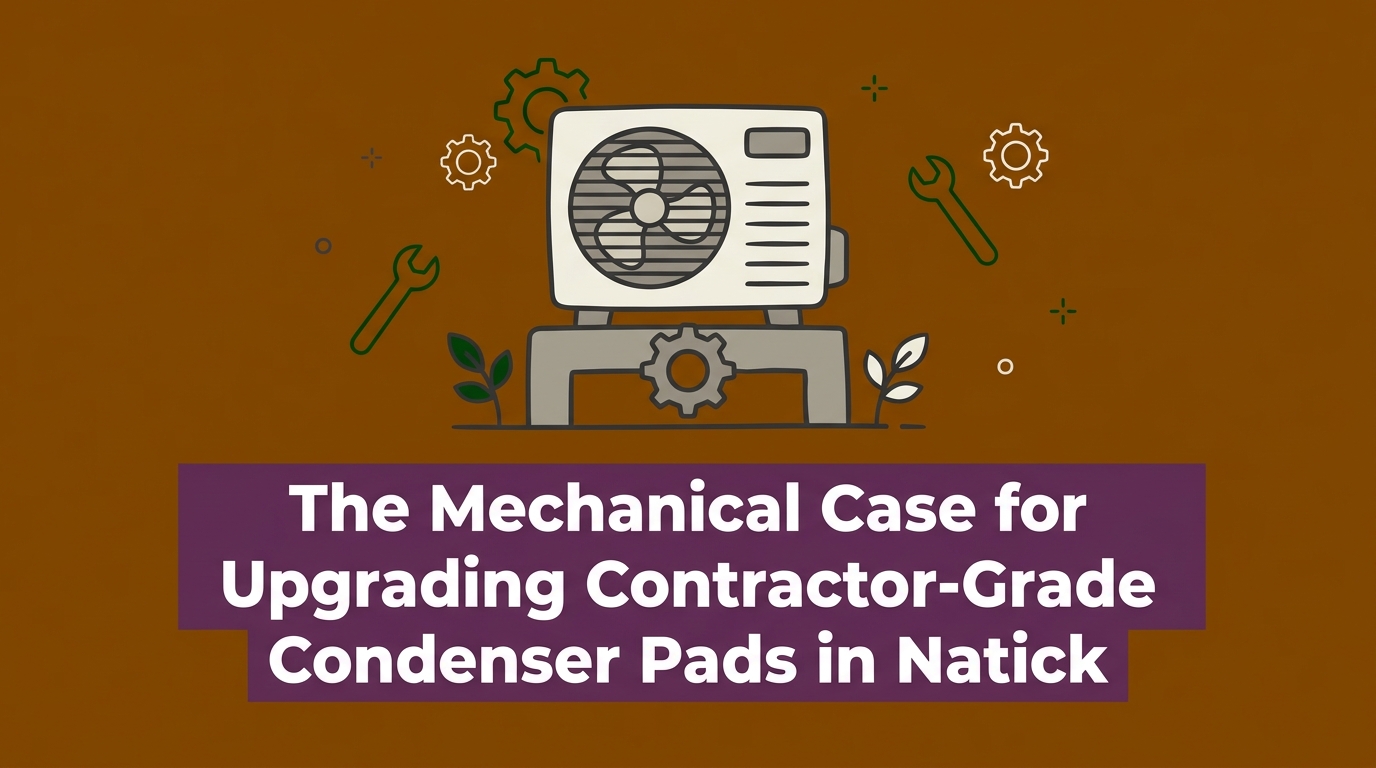
The Hidden Threat to New AC Systems in Peak Summer Heat
You are staring at a replacement quote for your failing air conditioner, and one specific line item catches your eye. If you are preparing for a system replacement this summer, you might be wondering why we recommend upgrading contractor-grade condenser pads in Natick rather than just setting the new unit on the existing block. The old pad looks fine from a distance, so why change it? The reality is that reusing an old, sinking pad introduces immediate mechanical risks to your brand-new cooling equipment. Homeowners replacing their AC units often question the necessity of this foundation upgrade, assuming it is merely a cosmetic choice. It is not.
To protect your investment with professional HVAC services, contact our team for an installation that never cuts corners.
During peak summer heat, a new, high-efficiency AC system operates under maximum stress. Modern air conditioning units are significantly larger and heavier than the models installed ten or fifteen years ago. They feature larger coils and heavier compressors to meet today’s strict energy efficiency standards. When you place a heavy, modern unit on an old pad that has already been subjected to years of weather and soil settling, you are asking for trouble. The existing pad has likely warped or sunk, even if the naked eye cannot easily detect the slope.
The hidden dangers of reusing an old pad include:
- Immediate stress on copper lines: As the heavy new unit settles into the compromised pad, it pulls and stresses the refrigerant lines connected to your home.
- Increased vibration noise: An unlevel surface prevents the unit’s vibration dampeners from working correctly, leading to a loud, rattling system.
- Restricted airflow: If the pad has sunk into the mulch or dirt, the bottom vents of the new unit can become blocked, forcing the system to work harder.
The decision to upgrade is about protecting the internal mechanics of the system from catastrophic failure. In many older Natick neighborhoods, ground settling has occurred over decades, leaving the original pads completely unfit for a new installation. A flawless physical foundation is the only way to ensure your new system performs efficiently and safely through the hottest days of July.
How Massachusetts Freeze-Thaw Cycles Destabilize Hardscaping
The ground beneath your feet is constantly moving, even if you cannot feel it. Massachusetts experiences a deep frost line, typically reaching 48 inches below the surface, which drastically affects ground stability year after year. This geological reality is the primary reason why standard, lightweight condenser pads rarely stay level over the lifespan of an air conditioning system.
Intense winter freeze-thaw cycles cause the soil to heave upward. When moisture in the ground freezes, it expands, pushing the dirt—and anything sitting on top of it—upward. During the spring, when the ground thaws, that ice melts and leaves behind empty pockets in the soil. The ground then rapidly settles, collapsing into those voids. Over several years, these continuous cycles create highly uneven ground beneath lightweight, contractor-grade condenser pads.
How soil shifting impacts your AC foundation:
- Warping and bowing: Lightweight plastic pads lack the structural rigidity to resist the upward force of frost heave, causing them to bow in the center.
- Uneven sinking: Because soil moisture varies, one side of the pad often sinks faster than the other during the spring thaw, creating a dangerous tilt.
- Material degradation: Constant exposure to freezing moisture and ground movement weakens cheap foam and thin plastics over time.
This soil shifting is especially pronounced in established, older Natick neighborhoods where ground settling has occurred over decades. The original topsoil has been disturbed, graded, and replanted many times, creating layers of varying density. When a heavy condenser sits on a cheap pad over this unstable soil, the intense Massachusetts winters guarantee that the unit will eventually sink out of level.
The Danger of Uneven Oil Distribution in the Compressor
The most critical reason your AC unit must remain perfectly level has nothing to do with how it looks from the curb. It is entirely about internal lubrication. HVAC manufacturers strictly require condenser units to be installed with a maximum tilt of 10 degrees, and most recommend a tolerance of no more than a 1/8 inch drop per foot. Exceeding this tilt introduces severe mechanical risks.
The compressor is the heart of your air conditioning system. It acts as a powerful pump that circulates refrigerant through your home. To keep its internal moving parts moving smoothly, the compressor relies on a precise internal oil sump for constant lubrication. This system is designed to operate on a flat plane. When a pad sinks and tilts the unit, gravity causes the oil to pool on the lower side of the compressor shell, pulling it away from the internal pickup tube.
Operating without sufficient oil leads to immediate metal-on-metal friction. Without lubrication, the tight-tolerance metal components inside the compressor grind against one another. This generates extreme internal heat, shears metal shavings into the refrigerant lines, and ultimately leads to irreversible compressor damage. Uneven oil distribution in the compressor is one of the leading causes of premature system death, and it is almost always entirely preventable with a proper foundation.
Why Peak July Heat Accelerates Mechanical Failure
In July, AC units run at maximum capacity for extended periods to combat peak temperatures. Your system might run for hours at a time without cycling off just to maintain a comfortable indoor temperature. If your unit is sitting on a sunken pad, this is the exact moment when disaster strikes.
An unlevel, oil-starved compressor under heavy cooling loads experiences rapid friction buildup. Because the unit is running continuously, the internal components never get a chance to cool down. The combination of high ambient heat from the sun and internal mechanical friction dramatically shortens the lifespan of the equipment. What starts as a slight grinding noise quickly escalates into a complete mechanical lockup, leaving your home without cooling on the hottest day of the year.


Contractor-Grade Pads vs. Upgraded Foundations
Not all condenser pads are created equal. Standard contractor-grade pads are often made of thin, lightweight plastics or foam that lack the rigidity to withstand ground heaving. These cheap materials are designed for easy transport and quick installation, not for long-term durability. Over time, the weight of the condenser combined with soil shifting causes these cheap pads to crack, bow, or sink on one side.
Upgraded pads utilize reinforced materials, better weight distribution, and proper leveling substrates. A proper foundation acts as insurance for the compressor, ensuring the unit remains perfectly level year after year. Installing an upgraded pad is a meticulous process that involves far more than simply dropping a piece of plastic on the grass.
| Feature | Contractor-Grade Pad | Upgraded Foundation Pad |
|---|---|---|
| Material Construction | Thin, injection-molded plastic or foam core. | Heavy-duty composite, reinforced structural plastic, or concrete. |
| Soil Preparation | Often placed directly on existing dirt or grass. | Requires digging down, leveling, and adding compacted crushed stone. |
| Weight Capacity | Prone to bowing under the weight of larger, modern high-efficiency units. | Engineered to easily support the heaviest multi-stage compressors. |
| Long-Term Stability | Highly susceptible to sinking and warping during freeze-thaw cycles. | Resists ground heaving and maintains a perfectly flat surface for decades. |
When you walk through older Natick neighborhoods, you can easily spot the difference. Homes with cheap pads often have units leaning precariously toward the foundation, while homes with proper, upgraded foundations feature units that stand perfectly straight, operating quietly and efficiently.
Treating the Condenser Pad as Essential Equipment Protection
A high-efficiency AC system is a major investment in your home’s comfort and value. Compromising on the foundation puts thousands of dollars of equipment at risk for the sake of saving a minimal amount on the installation day. A proper installation requires assessing the soil, establishing a flat substrate, and utilizing heavy-duty materials that will outlast the equipment itself.
Cutting corners on the pad to lower an installation quote ultimately costs the homeowner more in premature repairs. If a cheap pad sinks and causes uneven oil distribution in the compressor, the resulting mechanical failure will require a massive repair bill. In many cases, a locked-up compressor requires a complete system replacement. Treating the condenser pad as an optional add-on is a dangerous gamble with your comfort.
The steps of a proper foundation installation:
- Site assessment: Evaluating the soil condition and drainage around the installation area.
- Excavation: Removing unstable topsoil and organic matter that will rot and sink over time.
- Substrate leveling: Laying down a thick bed of crushed stone to facilitate drainage and prevent frost heave.
- Pad placement: Installing a heavy-duty, reinforced condenser pad and verifying it is perfectly level with precision tools.
At Blue Bear Plumbing Heating & Air, we refuse to cut corners with cheap contractor-grade materials. We treat the upgraded pad as a non-negotiable foundation for long-term reliability. A meticulous approach to leveling guarantees optimal oil return and maximizes the lifespan of the compressor, ensuring you get the full value out of your new cooling system.
Frequently Asked Questions About AC Condenser Placement
What happens if my AC condenser is not level?
If your AC condenser is not level, the internal compressor oil pools to one side, starving the moving parts of lubrication. This leads to severe metal-on-metal friction, overheating, and eventually a complete compressor failure. Additionally, an unlevel unit can cause the fan blade to strike the housing, create excessive vibration noise, and place dangerous stress on the connected refrigerant lines.
Should I replace my AC pad when I get a new AC?
Yes, replacing the pad during a new AC installation is highly recommended to protect your new equipment. Modern high-efficiency units are typically larger and heavier than older models, and placing them on a compromised, sinking pad risks immediate damage. Starting with a fresh, level, heavy-duty foundation ensures your new system operates exactly as the manufacturer intended.
Does an AC condenser need to be perfectly level?
While perfection is the goal, manufacturers generally allow a very strict tolerance of no more than a 1/8 inch drop per foot, or a maximum tilt of 10 degrees. Anything beyond this slight tolerance disrupts the internal oil sump and prevents proper lubrication. Professional installers use precision levels to ensure the unit sits as close to perfectly flat as possible.
How do professionals fix a sinking AC unit in Massachusetts soil?
Professionals correct a sinking unit by first safely disconnecting the power and carefully lifting the condenser to avoid damaging the copper refrigerant lines. They then remove the old pad, excavate the unstable soil, and lay down a compacted base of crushed stone to improve drainage and resist frost heave. Finally, a new, heavy-duty pad is installed and leveled before the unit is gently set back into place.
Can an unlevel condenser pad void my AC manufacturer warranty?
Yes, an unlevel condenser pad can absolutely void your AC manufacturer warranty. Manufacturers explicitly state in their installation manuals that the unit must be installed on a level surface to ensure proper oil return. If a technician determines that a compressor failed due to oil starvation caused by a sinking pad, the manufacturer will likely deny the warranty claim, leaving you responsible for the total repair cost.
Secure a Reliable Foundation for Your Next AC Installation
Protecting your new AC investment starts from the ground up. By ensuring your new system sits on a perfectly level, reinforced foundation, you avoid the long-term risks of oil starvation and premature compressor failure. The intense weather shifts and soil settling in older Natick neighborhoods demand a rigorous approach to installation, and settling for cheap materials will only cost you more in the long run.
If you are ready to replace your cooling system, this is exactly why we recommend upgrading contractor-grade condenser pads in Natick. Do not risk your home’s comfort on a sinking foundation. Reach out to discuss proper installation standards for your home and ensure your next system is built to last.
Contact Us Today
Routine maintenance is vital for the longevity of your plumbing, heating, and air conditioning systems. Sign up for our Blue Care Maintenance Plan for annual service and exclusive membership benefits, including:
- Priority scheduling
- Waived service fee during normal business hours
- 10% discount on service calls
- 3% discount on new installations
- Two-year parts and labor warranty on new equipment