


The Biology of a Backup: The Impact of Clogged Condensate Drain Lines During High Humidity Weeks
general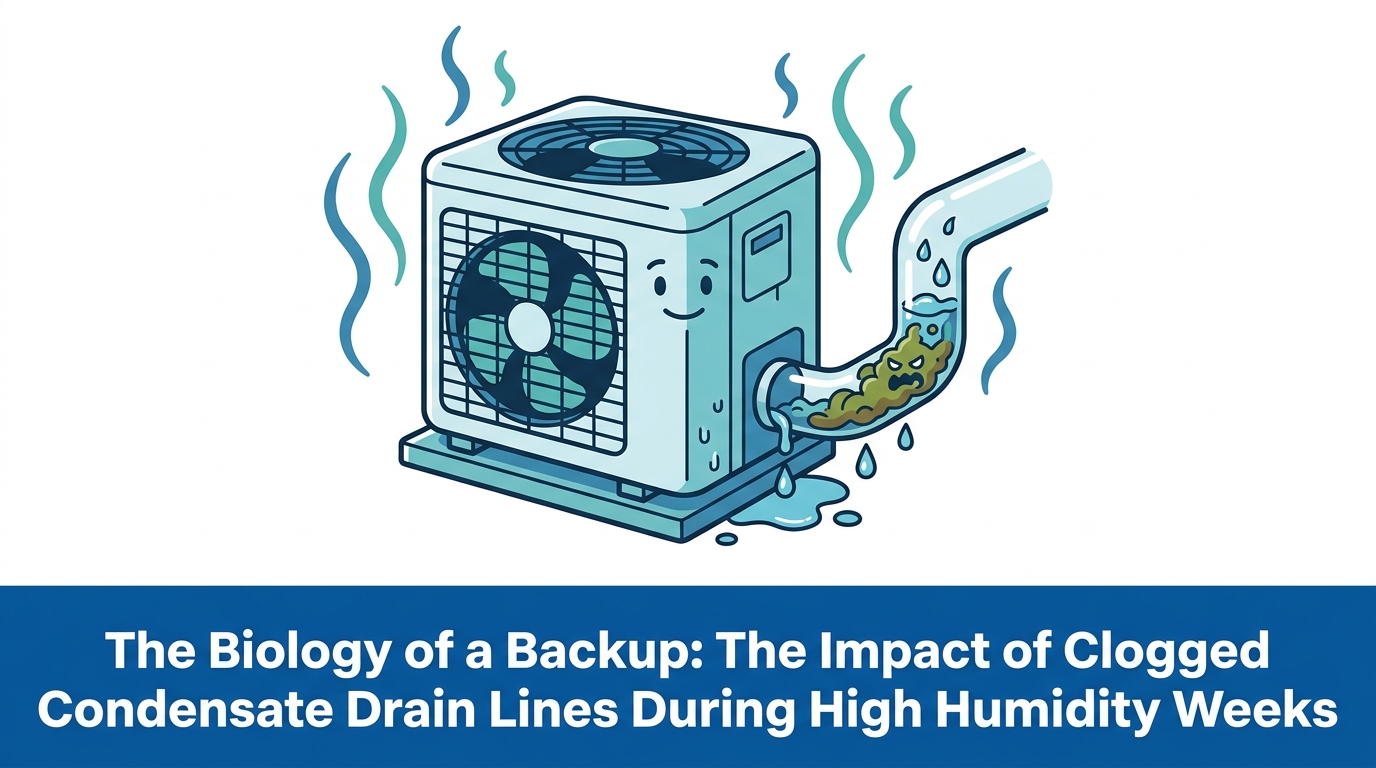
Why the Hottest Days Trigger Sudden AC Water Leaks
Before the heaviest summer weather sets in, understanding the impact of clogged condensate drain lines during high humidity weeks is critical for protecting your home from unexpected water damage. As the season shifts and temperatures climb, your air conditioning system is forced to work overtime. However, it is not just the heat that strains your equipment. The real danger often lies in the invisible moisture suspended in the air. During peak-summer high humidity weeks, homeowners frequently experience sudden AC water leaks, overflowing drip pans, and abrupt system shutdowns that seem to happen without warning.
These sudden failures are rarely random. They are the direct result of rapid biological growth overwhelming the system’s ability to drain away condensation. When you notice water pooling around your indoor air handler or hear a gurgling sound coming from the unit, you are facing an immediate decision point. You must determine whether a slow-draining condensate line is a minor issue you can monitor, or an imminent threat requiring professional intervention to prevent extensive damage to your ceilings, floors, and drywall. The right next step depends entirely on understanding how your system processes water.
The Physics of Condensation: Water Volume in HVAC Systems
Your central air conditioning system performs two primary functions: sensible cooling (lowering the air temperature) and latent cooling (removing moisture from the air). During peak-summer high humidity weeks, the latent cooling workload increases exponentially. To understand why drain lines fail so rapidly under these conditions, you have to look at the sheer volume of water moving through a relatively small PVC pipe.
The 5 to 20 Gallon Reality
According to data from the American Society of Heating, Refrigerating and Air-Conditioning Engineers (ASHRAE) and the Department of Energy (DOE), a standard residential central air conditioner can produce between 5 and 20 gallons of condensation per day.
Here is how the extraction process works:
- Warm air intake: The return vents pull hot, humid indoor air across the chilled evaporator coil inside your air handler.
- Thermal transfer: As the refrigerant absorbs heat, the sudden temperature drop causes moisture in the air to condense directly onto the metal fins of the coil.
- Collection and drainage: This water drips off the coil into a primary drain pan, where gravity pulls it down a three-quarter-inch PVC pipe to the outside of your home.
Processing 20 gallons of water a day is the equivalent of leaving a bathtub faucet running on a slow trickle for 24 hours straight, directly into a narrow plastic tube.
How Sustained Humidity Multiplies the Load
When the weather is mild and dry, the system cycles on and off, giving the evaporator coil and the drain pan time to dry out between cooling cycles. However, sustained regional humidity changes the equation entirely. Continuous high-moisture air entering the return vents forces the system into extended run times. The drip pan and the drain line never get a chance to dry out. This constant flow of water stresses the condensate drain line, creating the perfect environment for blockages to form deep inside the plumbing.
The Biological Accelerant: Algae and Mold in the Drain Line
Peak-summer high humidity weeks act as a rapid accelerant for algae and mold growth in the dark, wet environment of the HVAC system. A clogged drain line is rarely blocked by just dust or dirt. Instead, it is usually choked by a thick, living biological sludge that thrives when specific environmental conditions are met.
Inside the Evaporator Coil Environment
The interior of your indoor air handler is an ideal incubator for biological growth. Airborne biological particulates—including mold spores, algae spores, and bacteria—are naturally present in every home. As your system circulates air, these microscopic spores get pulled into the return ductwork and trapped in the condensation on the wet evaporator coil.
Because the interior of the air handler is completely devoid of UV light and constantly bathed in water, these spores find a permanent home in the primary drain pan. The warm ambient temperatures outside the cabinet combined with the chilled water inside create a highly active biological breeding ground.
The Rapid Transition from Slow Drain to Clog
The transition from a clear pipe to a complete backup happens incredibly fast. High humidity accelerates algae growth in condensate lines because the constant supply of moisture prevents the biological colonies from going dormant. As the algae blooms, it forms a sticky, gelatinous sludge. This slime coats the inside of the narrow PVC pipe, acting like a net that traps secondary debris such as pet hair, dust, and lint. Within a matter of days, this sticky matrix can expand enough to completely block the flow of water, turning a minor maintenance oversight into an urgent water damage risk.

Recognizing the Chain Reaction of a Condensate Backup
When biological sludge chokes off the drain line during peak-summer high humidity weeks, a specific chain reaction begins inside your HVAC system. Modern air conditioners are equipped with built-in safety mechanisms designed to stop water production before it destroys your home, but recognizing the warning signs early can save you from a complete system shutdown.
The Role of the Float Switch
The most important defensive component in your condensate system is the float switch. This small device sits either inside the primary drain pan or clipped onto the side of the drain pipe.
- The water level rises: As the clog thickens, water can no longer exit the pan fast enough, causing the water level to slowly rise.
- The switch activates: A small cork or magnetic float inside the switch rises with the water level.
- The circuit breaks: Once the float reaches the top, it breaks the low-voltage electrical circuit communicating with your thermostat.
- The system shuts down: The outdoor compressor immediately turns off to halt the production of condensation.
Many homeowners assume a sudden AC shutdown on a hot day means the blower motor or compressor has failed. In reality, it is often a protective measure triggered by a blocked drain line.
When the Drip Pan Overflows
If your system lacks a functional float switch, or if the switch has been bypassed or failed, the chain reaction continues into catastrophic territory. The primary pan overflows into a secondary emergency pan (often located under the entire unit in attic installations). If that secondary drain also fails, water pours directly onto the surrounding structures. The structural risks to drywall, flooring, and insulation are severe. A ceiling collapse caused by a saturated attic floor is one of the most common and expensive repairs associated with neglected drain lines.
Risk Assessment: DIY Mitigation vs. Professional Intervention
When your system shuts down or you notice water pooling during peak-summer high humidity weeks, you need to assess the risk immediately. While there are a few safe steps you can take to mitigate the damage, clearing a dense biological clog often requires specialized tools. Knowing the boundaries between safe homeowner maintenance and professional repair is essential.
Safe Immediate Actions for Homeowners
If you suspect a condensate backup, your first priority is stopping the flow of water. Turn your thermostat to the “off” position immediately. This halts the condensation process. Next, clean up any visible surface water around the indoor unit to protect your flooring and baseboards.
If you have access to the outside termination point of the PVC drain pipe, you can attempt to use a wet/dry vacuum to pull the clog out from the outside. While pouring white vinegar down the indoor access pipe is a common recommendation, this is primarily a preventative measure. Vinegar is not strong enough to dissolve a heavy, established algae blockage reactively.
When Specialized Equipment is Required
Opening the air handler cabinet, bypassing electrical safety switches, or attempting to dismantle the PVC plumbing is strictly prohibited for non-licensed individuals. Deep biological sludge cannot be cleared with basic household tools.
| Action / Mitigation Strategy | DIY Homeowner Approach | Professional HVAC Intervention |
|---|---|---|
| Stopping Water Production | Turn thermostat to “Off” immediately. | Isolate power at the breaker; inspect electrical components for water damage. |
| Clearing the Clog | Use a wet/dry vac on the exterior drain pipe end. | Use high-pressure nitrogen blasts to safely clear deep, compacted sludge. |
| Treating Biological Growth | Pour a quarter-cup of vinegar for light prevention. | Apply commercial-grade algaecide treatments and biocides to the pan. |
| System Diagnostics | Check for visible water on the floor. | Test float switches, inspect the evaporator coil, and verify proper slope of the drain line. |
For more information on the broader aspects of cleaning and maintaining your AC, always focus on the external components like filter changes and register cleaning, leaving the internal plumbing and electrical work to trained technicians.
Long-Term Defense Against Humidity-Driven System Failures
Shifting from reactive panic to proactive prevention is the best way to protect your home. Our expert local knowledge of regional humidity challenges means we understand exactly how much stress your system is under. Proactive maintenance is the only reliable way to prevent costly water damage before it occurs.
Upgrading to Proactive Maintenance
Surviving peak-summer high humidity weeks requires a defense strategy that targets biological growth before it accelerates. Implement the following checklist to secure your system:
- Pre-season flushing: Have a professional clear and flush the condensate line before the hottest months begin, ensuring the pipe is completely free of lingering winter debris.
- Algaecide treatments: Ask your technician to install time-release pan tabs. These specialized treatments slowly dissolve in the condensation, actively inhibiting algae and mold growth.
- UV light installation: Consider adding an ultraviolet germicidal light inside the air handler. UV light neutralizes airborne biological particulates before they can colonize the wet evaporator coil.
- Manage indoor moisture: Reduce the latent cooling load on your AC by utilizing bathroom and kitchen exhaust fans, or by installing a whole-home dehumidifier to keep ambient moisture levels manageable.
- Routine filter changes: A clean air filter reduces the amount of dust entering the system. Less dust means less “food” for algae to consume in the drain pan.
Frequently Asked Questions About Summer AC Drain Clogs
Why does my AC drain line keep clogging in the summer?
During peak-summer high humidity weeks, your AC extracts massive amounts of moisture from the air, keeping the drain line constantly wet. This continuous moisture, combined with the dark environment of the air handler, causes algae and mold to grow at an accelerated rate, rapidly choking the pipe.
How do I know if my AC condensate line is clogged?
The most common signs include a sudden, unexplained system shutdown, water pooling around the base of your indoor unit, a musty odor coming from your vents, or a gurgling sound near the air handler. If your thermostat goes blank or the system refuses to turn on during a hot day, a tripped float switch is a likely culprit.
Will my AC stop working if the drain line is clogged?
Yes, modern air conditioning systems are designed to shut down automatically when a clog is detected. A float switch installed in the drain pan will break the electrical circuit to the compressor if the water level rises too high, protecting your home from severe water damage.
How do you unclog an AC drain line?
For a safe homeowner fix, you can attach a wet/dry vacuum to the outside end of the drain pipe to suction out the blockage. If the clog is severe or located deep within the system, a professional technician will need to use a pressurized nitrogen blast to clear the line safely.
Why is my AC leaking water inside the house during humid weather?
When the drain line is blocked by biological sludge, the condensation has nowhere to go and backs up into the primary drip pan. If the system lacks a functional float switch, or if the secondary drain is also compromised, that water will overflow directly into your home.
Can a clogged AC drain line cause mold in my air ducts?
Yes, standing water in the drain pan significantly increases the internal humidity of the HVAC cabinet. This excess moisture can be blown into the ductwork, creating an environment where mold spores can settle and multiply inside your ventilation system.
Secure Your System Before the Next Humidity Spike
The impact of clogged condensate drain lines during high humidity weeks is not just an inconvenience; it is a rapid mechanism for severe water damage. By understanding how massive water volume and biological accelerants interact inside your system, you can stop a slow drain from becoming a catastrophic overflow. Do not wait for a tripped float switch or a wet ceiling to take action. If you suspect your system is struggling to keep up with the moisture load, schedule a professional inspection to clear your lines and secure your home before peak-summer high humidity weeks arrive.
Contact Us Today
Routine maintenance is vital for the longevity of your plumbing, heating, and air conditioning systems. Sign up for our Blue Care Maintenance Plan for annual service and exclusive membership benefits, including:
- Priority scheduling
- Waived service fee during normal business hours
- 10% discount on service calls
- 3% discount on new installations
- Two-year parts and labor warranty on new equipment