




The Ultimate Guide to How South Shore Climate Affects HVAC and Plumbing
HVAC
Why the South Shore’s Coastal Climate Is Hard on Your Home’s Systems
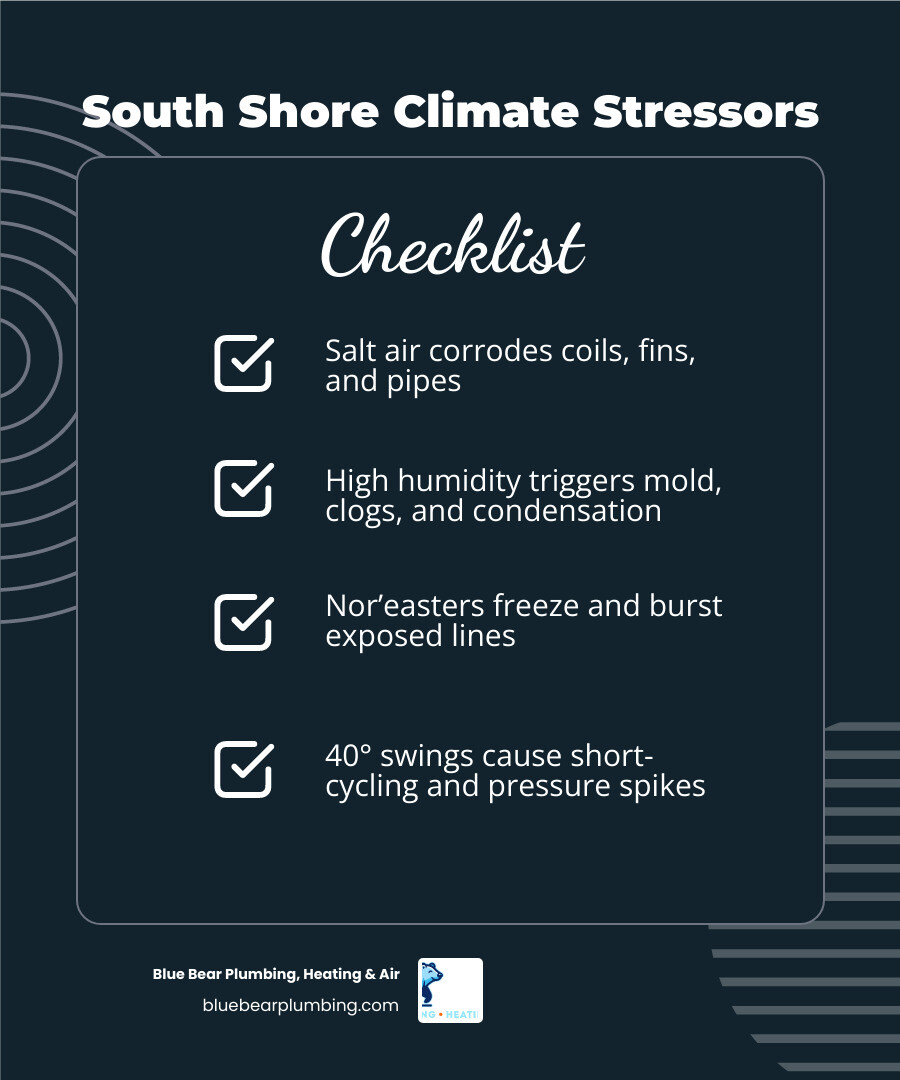
How South Shore climate affects your HVAC and plumbing is something every homeowner between Quincy and Duxbury eventually learns the hard way — usually when a system fails at the worst moment. Salt air rolling in off the Atlantic, humidity that lingers through summer, brutal nor’easters, and temperature swings that can drop 40 degrees in a single week all put your home’s mechanical systems under constant stress.
Here’s a quick snapshot of how the South Shore’s coastal climate impacts your home systems:
| Climate Factor | HVAC Impact | Plumbing Impact |
|---|---|---|
| Salt air | Corrodes coils, fins, and electrical connections | Accelerates rust on metal pipes and fixtures |
| High humidity | Reduces efficiency, promotes mold in ductwork | Causes condensation, drain line clogs, sump pump strain |
| Winter freezes / nor’easters | Overworks heating systems, risks outdoor unit damage | Freezes and bursts exposed pipes in crawl spaces |
| Seasonal temperature swings | Causes short-cycling, accelerates wear | Creates pressure fluctuations in water lines |
| Coastal storms | Can flood and damage outdoor HVAC units | Overwhelms sump pumps and drainage systems |
The combination of these factors means South Shore homes face a level of wear and tear that most inland homes simply don’t. Systems that might last 15–20 years in a drier, calmer climate can degrade significantly faster here without the right protection and maintenance in place.
I’m Marc Provenzano, Marketing Manager at Blue Bear Plumbing, Heating & Air, and working alongside our licensed technicians across Norwell, Quincy, and Natick has given me a front-row seat to exactly how South Shore climate affects your HVAC and plumbing season after season. In this guide, we’ll walk you through everything you need to know to protect your home.
How South Shore Climate Affects Your HVAC and Plumbing: An Overview
Living on the Massachusetts coast is beautiful, but the very things we love about the South Shore—the ocean breezes, distinct seasons, and historic charm—are exceptionally tough on home infrastructure. The primary culprit is our maritime climate.
Salt air is not just a problem for homes sitting directly on the beach in Marshfield or Scituate; salt particles can travel several miles inland, carried by strong Atlantic winds. Salt is highly hygroscopic, meaning it naturally attracts and traps moisture. When salt air settles on your outdoor HVAC condenser or exposed metal plumbing fixtures, it creates a highly corrosive, damp environment that accelerates rust and galvanic corrosion.
Additionally, our summers are incredibly humid, while our winters bring freezing winds and heavy snowstorms. These extreme shifts force your heating and cooling systems to work overtime. To keep track of these changing demands, we recommend following a comprehensive Seasonal Plumbing HVAC Maintenance Checklist for South Shore Residences to catch minor wear before it turns into a major emergency.
Understanding How South Shore Climate Affects Your HVAC and Plumbing Year-Round
Our climate doesn’t take breaks, which means your home systems are constantly adapting to changing environmental stressors.
- Spring: High pollen counts and rising humidity levels put early strain on your air filtration and air conditioning systems. Heavy spring rains also test your basement drainage and sump pump systems.
- Summer: High humidity makes the air feel much warmer than it actually is, forcing air conditioners to run longer cycles to dehumidify the air. This constant operation increases wear on compressors and fan motors.
- Fall: Rapid temperature swings—warm days followed by freezing nights—cause materials to expand and contract. This puts physical stress on pipe joints and causes HVAC systems to fluctuate rapidly between heating and cooling modes.
- Winter: Biting winds and sub-zero wind chills force heating systems to run continuously. If a major winter storm or nor’easter knocks out power, your plumbing is immediately at risk of freezing.
Because extreme weather events are becoming more common in New England, it is crucial to know how to Prepare HVAC and Plumbing Systems for Hurricanes in Massachusetts and severe coastal storms to prevent catastrophic water or structural damage.
Coastal Air and Moisture: The Threat to HVAC Systems
Your outdoor air conditioning or heat pump condenser is the first line of defense against the elements, making it highly vulnerable to coastal weather. The constant exposure to salt spray and moisture triggers a chemical reaction on the metal surfaces of your outdoor unit.

When salt settles on the delicate aluminum fins and copper coils of your condenser, it eats away at the metal. This process, known as galvanic corrosion, causes the fins to disintegrate and crumble. Without healthy fins, your system cannot efficiently release heat, which forces the compressor to run longer and hotter, significantly shortening its lifespan.
While an inland AC unit might easily last 15 years, an unprotected coastal unit on the South Shore can begin failing in as little as 5 to 7 years. This is why local homeowners must prioritize regular professional care; understanding Why South Shore Homes Need a Seasonal HVAC Tune-Up is the best way to extend your system’s life and keep your utility bills manageable.
Vulnerable HVAC Components in Coastal Massachusetts
While the outdoor condenser takes the brunt of the coastal air, several other critical HVAC components are highly vulnerable to salt and moisture damage:
- Evaporator Coils: Located inside your home, these coils can still suffer from corrosion if salt air penetrates your living space or if high indoor humidity levels are left unchecked.
- Copper Tubing: Copper is highly conductive, but salt air causes it to oxidize, leading to microscopic leaks in your refrigerant lines.
- Electrical Connections: Salt deposits can settle on outdoor contactors, breakers, and wiring. This buildup creates electrical resistance, which can cause system short-circuits, component failures, or even fire hazards.
- Ductwork: In coastal homes with high humidity, uninsulated or leaky ducts in crawl spaces and attics can accumulate condensation. This stagnant moisture creates the perfect breeding ground for mold and mildew, which is then circulated throughout your home.
To prevent these issues, it is essential to understand Understanding How Humidity Impacts Indoor Air and take proactive steps to control indoor moisture levels.
Heat Pumps vs. Traditional Systems in Coastal Conditions
When it’s time to upgrade or replace your heating and cooling system, South Shore homeowners must choose between traditional systems (like gas furnaces and central AC) and modern cold-climate heat pumps or mini-splits.
Traditional central AC systems rely on extensive ductwork, which can lose 20% to 30% of its heating and cooling energy through leaks and poor insulation. Ductless mini-split systems completely eliminate this energy loss because they deliver conditioned air directly to individual rooms. Furthermore, modern cold-climate heat pumps are built with advanced, variable-speed inverter technology. Unlike traditional systems that turn completely on and off, inverter systems run continuously at lower speeds, making them exceptionally good at pulling consistent moisture out of the air during humid South Shore summers.
| Feature | Cold-Climate Heat Pumps / Mini-Splits | Traditional Furnace & Central AC |
|---|---|---|
| Energy Efficiency | Extremely high (up to 38 SEER2; 0% duct loss) | Moderate (15–21 SEER2; 20–30% duct loss) |
| Humidity Control | Excellent (continuous low-speed operation) | Moderate (frequent on/off cycling) |
| Corrosion Resistance | High (often feature factory-applied anti-corrosive coatings) | Variable (standard galvanized steel cabinets) |
| Heating Performance | Efficient down to sub-zero temperatures | Reliable, but relies entirely on fossil fuels |
| Mass Save Rebates | Eligible for maximum rebates (up to $10,000–$16,000) | Limited or no rebates available |
Temperature Swings and Humidity: The Impact on Plumbing
While HVAC systems bear the brunt of salt air, your home’s plumbing system is heavily impacted by the South Shore’s intense humidity and rapid temperature swings.
When warm, humid air comes into contact with cold metal water pipes in your basement or crawl space, condensation forms on the outside of the pipes. This is often referred to as “sweating pipes.” Over time, this constant moisture drips onto surrounding wooden joists, floorboards, and drywall, leading to structural rot and mold growth.
Furthermore, high humidity levels can impact your sewer and drain lines. Increased moisture in the soil around your home can cause the ground to shift, putting physical stress on underground pipes. To protect your home’s structure and indoor air quality, learning How to Keep Your House from Getting Too Humid is a vital step for every coastal homeowner.
Summer Humidity and Drainage Challenges
During the summer, your air conditioner extracts gallons of water from the air every day. This water must be safely drained away from your home through a condensate drain line. If high humidity levels cause algae or dust to clog this drain line, the water will back up, leading to water damage on your ceilings or floors.
Additionally, summer humidity and heavy coastal rainstorms put immense pressure on your home’s drainage systems:
- Sump Pumps: High water tables along the South Shore mean basements are highly prone to flooding. Sump pumps must be tested regularly to ensure they can handle sudden downpours.
- Water Heaters: In humid, coastal areas, the outer metal tank of a traditional water heater is susceptible to rusting from the outside in. Hard water minerals common in some local municipal supplies can also build up inside the tank, reducing its efficiency and causing premature failure.
To stay ahead of these seasonal challenges, performing Essential Spring Maintenance for South Shore Comfort ensures your sump pump, drains, and water systems are fully prepared before the summer humidity peaks.
Winter Freeze Risks and Coastal Storms: Protecting Your Pipes
Winters on the South Shore are unpredictable. We can experience mild coastal days followed immediately by biting nor’easters that bring freezing winds, heavy snow, and sub-zero temperatures. For homeowners, the greatest winter plumbing threat is frozen and burst pipes.
When water freezes inside a pipe, it expands. This expansion creates immense pressure within the pipe, eventually causing the metal or plastic to split. The real damage occurs when the ice thaws, allowing water to pour unchecked into your walls, ceilings, and basement. Pipes located in unheated areas—such as crawl spaces, attics, uninsulated basements, and outer walls—are at the highest risk.
To safeguard your property, we recommend reviewing our comprehensive South Shore Winter Plumbing Checklist to identify vulnerable areas in your home before the first freeze hits.
Preventing Frozen Pipes During Nor’easters
Nor’easters bring a dangerous combination of freezing temperatures and high winds that can drive cold air into the smallest gaps in your home’s foundation.
To protect your plumbing during a severe winter storm, take these immediate preventative steps:
- Disconnect Outdoor Hoses: Always disconnect, drain, and store garden hoses. Shut off the indoor valve leading to outdoor spigots and drain the remaining water from the line.
- Seal Drafts: Inspect your basement and crawl spaces for drafts. Use caulk or expanding foam to seal gaps around dryer vents, electrical lines, and outdoor pipes.
- Insulate Exposed Pipes: Wrap pipes in unheated areas with high-quality foam pipe insulation.
- Maintain Consistent Thermostat Settings: Keep your thermostat set to a consistent temperature day and night. According to the U.S. Department of Energy, keeping your home at a steady temperature prevents your heating system from overworking and keeps pipes warm. If you go away, never set your thermostat lower than 60°F.
- Let Faucets Drip: During extreme cold snaps, let a cold-water faucet served by exposed pipes drip slowly. Moving water is much harder to freeze.
- Know Your Main Shutoff: Ensure everyone in your household knows the exact location of the main water shutoff valve so you can stop the flow of water immediately if a pipe does burst.
For a deeper dive into managing your home’s heating during the coldest months, check out our Seasonal Heating Guide Massachusetts.
Preventative Maintenance and Protection Strategies
The key to combating the effects of the South Shore climate is consistent, proactive maintenance. Waiting for a system to break down during a July heatwave or a January blizzard is always more stressful and expensive than investing in preventative care.
Here are the most effective ways to protect your home’s systems from coastal wear:
- Rinse Your Outdoor Unit: Every month, gently rinse your outdoor HVAC condenser with a garden hose to remove salt spray and sandy debris. Always turn off the power to the unit at the breaker before rinsing, and use low pressure to avoid bending the delicate metal fins.
- Apply Anti-Corrosive Coatings: If you live within a few miles of the coast, consider having a professional apply an aftermarket anti-corrosive coating to your condenser coils. Many modern systems also offer factory-applied coastal protection coatings.
- Insulate and Weatherize: Sealing air leaks in your home and insulating your attic and crawl spaces can cut your heating and cooling loads by 15%, reducing the physical strain on your HVAC system.
- Utilize Mass Save Rebates: Since 2021, more than 90,000 Massachusetts households have switched to highly efficient heat pumps. The state is targeting 500,000 installations by 2030. Through the Mass Save program, South Shore residents can qualify for substantial rebates—often ranging from $10,000 to $16,000 for whole-home heat pump upgrades—making it highly affordable to transition to modern, corrosion-resistant heating and cooling technology.
Warning Signs of How South Shore Climate Affects Your HVAC and Plumbing
Keep a close eye on your systems and look out for these common warning signs that salt air, humidity, or temperature swings are causing damage:
- Rust and Corrosion: Check the metal casing of your outdoor AC unit, water heater, and exposed basement pipes for visible rust spots or green oxidation.
- Reduced Airflow: If your HVAC system is blowing weakly or struggling to maintain your set temperature, salt buildup may be clogging the condenser fins or corroding the indoor coils.
- Gurgling or Slow Drains: Gurgling noises from your sinks or toilets can indicate a backup in your drain lines or a sewer line under stress from shifting coastal soil.
- Rising Utility Bills: If your energy bills are climbing but your usage habits haven’t changed, your HVAC system is likely losing efficiency due to dirty, corroded components.
- Short-Cycling: If your air conditioner or heater turns on and off rapidly, it may be overheating or struggling to manage indoor humidity levels.
Frequently Asked Questions about South Shore Climate Impacts
How does salt air accelerate HVAC corrosion?
Salt air carries sodium chloride, which acts as a powerful catalyst for oxidation. When salt settles on the aluminum fins and copper tubing of an outdoor condenser, it creates a chemical reaction that breaks down the metals. This is further accelerated by coastal humidity, which traps the salt against the metal surfaces, leading to rapid galvanic corrosion and premature system failure.
Can cold-climate heat pumps handle harsh Massachusetts winters?
Yes! Modern cold-climate heat pumps utilize advanced variable-speed inverter technology, allowing them to extract heat from the outdoor air even when temperatures drop well below zero. They provide steady, highly efficient heating throughout the winter and double as incredibly efficient air conditioners in the summer, making them an ideal all-in-one comfort solution for South Shore homes.
How do I prevent my plumbing from freezing during a South Shore nor’easter?
To prevent frozen pipes, insulate all exposed plumbing in unheated basements, attics, and crawl spaces. Seal any drafty cracks in your foundation, disconnect outdoor hoses, and keep your home’s thermostat set to a consistent temperature (no lower than 60°F, even when away). During extreme cold snaps, let your furthest faucets drip slowly to keep water moving through the lines.
Conclusion
The unique coastal environment of the South Shore brings incredible beauty, but it also demands a higher level of vigilance when it comes to maintaining your home’s HVAC and plumbing systems. From salt air corrosion in Quincy to frozen pipes during Norwell winters, your home requires localized expertise to stay safe, efficient, and comfortable.
At Blue Bear Plumbing, Heating & Air, our friendly, local team is deeply familiar with the specific challenges of coastal Massachusetts living. Whether you need a seasonal plumbing inspection, a preventative HVAC tune-up, or are ready to upgrade to an energy-efficient heat pump system utilizing Mass Save rebates, we are here to help with upfront pricing, reliable solutions, and unmatched customer care.
Don’t wait for the next coastal storm to test your home’s limits. Schedule your professional seasonal maintenance today with our expert team at Blue Bear Plumbing, Heating & Air!

Contact Us Today

Routine maintenance is vital for the longevity of your plumbing, heating, and air conditioning systems. Sign up for our Blue Care Maintenance Plan for annual service and exclusive membership benefits, including:
- Priority scheduling
- Waived service fee during normal business hours
- 10% discount on service calls
- 3% discount on new installations
- Two-year parts and labor warranty on new equipment